Award-Winning IB Chemistry Tutors
serving Atlanta, GA
IB Chemistry
Tutors in Atlanta
Private 1-on-1 tutoring, weekly live classes for academic support, test prep & enrichment, practice tests and diagnostics, and more to elevate grades and test scores.
Based on 3.4M Learner Ratings
UniversitiesSchools & Universities
DeliveredHours Delivered
ProficiencyGrowth in Proficiency
Who needs tutoring?
No obligation. Takes ~1 minute.
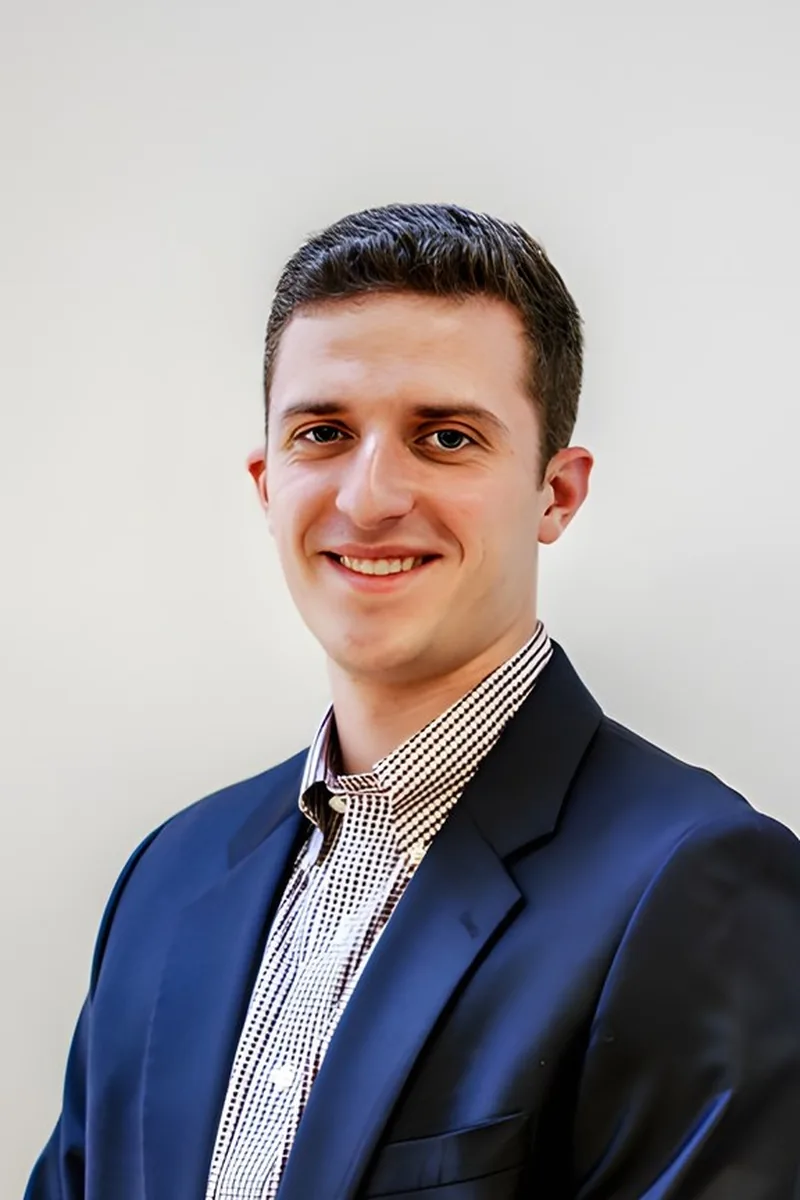
IB Chemistry's internal assessment and extended essay components demand a level of experimental reasoning that goes beyond standard test prep. Marlow tackles both the quantitative rigor — equilibrium constants, redox balancing, energetics calculations — and the scientific communication skills IB examiners specifically look for. A 5.0 student rating speaks to how well that approach lands.
Teaching and tutoring both general and organic chemistry at the University of Tennessee gave Taylor a front-row seat to exactly where students lose the thread — and IB Chemistry's HL syllabus hits many of those same trouble spots, from reaction mechanisms to stoichiometric reasoning. Her B.S. in Chemistry from Georgia College means she can unpack the logic behind multi-step problems rather than just drilling procedures, which matters when IB Paper 2 asks students to justify and explain. Rated 5.0 by students.
Mechanical engineering at UGA means Kayla has worked through thermodynamics, reaction kinetics, and materials chemistry at a level that maps directly onto IB Chemistry's most calculation-heavy SL and HL content — particularly energetics and equilibrium. She's especially comfortable with the quantitative side, turning multi-step problems like enthalpy cycles into clear, methodical sequences that match how IB mark schemes actually award points. Rated 5.0 by students.
Going through the full IB programme from middle school through diploma gave Maria firsthand experience with the curriculum's unique demands — the way IB Chemistry weaves together stoichiometry, bonding theory, and redox into layered exam questions that test understanding, not just recall. She unpacks multi-part problems by isolating each concept so students can see exactly where their reasoning needs tightening. Her biological sciences degree also means she naturally connects chemical principles to biochemical applications students encounter in other IB courses.
Between redox balancing, enthalpy cycles, and equilibrium calculations, IB Chemistry demands more mathematical confidence than most students expect from a science course. Ben pairs his Penn math training with IB Chemistry experience to tackle the quantitative problem types that tend to cost students the most marks. He's rated 5.0 by the students he's worked with.
Periodic trends, VSEPR theory, redox reactions — IB Chemistry covers an enormous range, and Emerson treats each topic as a building block for the next rather than an isolated unit to memorize. He completed IB coursework himself and understands how the program's internal assessments and exam papers reward conceptual depth over rote recall. His biology and psychology double major at UChicago reinforces the chemical foundations he teaches.
Mechanical engineering at the University of Toronto means Hazem works through thermodynamics, stoichiometry, and equilibrium problems daily in contexts that go well beyond what IB Chemistry demands — which gives him a practical fluency with the quantitative side of the syllabus that's hard to fake. He's especially sharp on energetics calculations and the physics-chemistry overlap that shows up in kinetics and gas law questions, areas where his engineering intuition turns multi-step problems into manageable sequences. Rated 5.0 by students.
Holding a Doctor of Science in Chemistry, Subashini has the depth to teach IB Chemistry's most demanding HL content — from thermodynamics and equilibrium to organic mechanisms — with genuine fluency rather than surface-level coverage. She also teaches physics and environmental science, which means she can bridge the cross-disciplinary connections IB examiners increasingly test in data-based and application questions. Rated 4.7 by students.
Between a magna cum laude biochemistry degree from UMBC and three years into medical school at Michigan, Uchenna has worked through every reaction, mechanism, and calculation IB Chemistry can throw at a student — and then applied that knowledge in clinical and NIH research settings where getting the chemistry wrong isn't an option. That real-world grounding is particularly useful for IB's Option B (Biochemistry) and the HL organic chemistry topics, where connecting molecular structure to biological function is exactly what examiners want to see. Rated 4.9 by students.
IB Chemistry's internal assessment alone can make or break a final grade, and the HL content on energetics, equilibrium, and redox demands precise quantitative reasoning. Juan's strength here comes from his statistics and engineering math training — he's comfortable with the calculations behind Hess's law, electrode potentials, and rate-order analysis. He approaches each topic by tying the math to the chemistry so neither half feels disconnected.
IB Chemistry's internal assessment alone requires students to design original experiments, collect data, and analyze results with genuine scientific rigor. Rithi's biotechnology master's involved exactly that kind of independent lab work, so she walks students through experimental design and error analysis from experience. She also tackles the trickiest Higher Level topics — periodicity trends, energetics calculations, organic reaction mechanisms — with a researcher's precision.
Stoichiometry, equilibrium, and redox reactions each have their own logic, and IB Chemistry expects students to switch fluently between all of them under exam pressure. Ehigbor approaches each topic by grounding it in the periodic trends and bonding concepts that explain why reactions behave the way they do. Her premed science training means she can also bridge IB Chem content to the biochemistry topics that show up in Option B and beyond.
IB Chemistry's internal assessment alone demands a level of experimental design and data analysis that most high school courses never require. Andrew earned his PhD in Inorganic Chemistry, so he tackles HL topics like transition metal chemistry, spectroscopic analysis, and energetics with firsthand research knowledge. He also walks students through the structured paper formats and multi-step calculation problems that IB exams are known for.
Arianna's neuroscience degree required deep coursework in chemistry — from molecular interactions and reaction kinetics to the thermodynamic principles that IB Chemistry tests heavily across both SL and HL papers. That background means she can teach topics like bonding, stoichiometry, and organic mechanisms by grounding them in how molecules actually function in living systems, which is the kind of applied reasoning IB examiners consistently reward. Rated 4.8 by students.
Having taken IB Chemistry herself just a couple of years ago and scored a 36 ACT, Sreya knows exactly which HL topics — like stoichiometry, bonding, and organic mechanisms — feel manageable in class but fall apart under exam conditions. She's now a chemistry major at the University of Michigan, which means she can teach the deeper reasoning behind those concepts instead of just drilling past papers. Rated 5.0 by students.
Testimonials
Because the right IB Chemistry tutor makes all the difference.
Average Session Rating – Based on 3.4M Learner Ratings
Nearby IB Chemistry Tutors
Other Atlanta Tutors
Related Science Tutors in Atlanta
Frequently Asked Questions
The IB Chemistry curriculum spans physical, inorganic, and organic chemistry across two years, covering topics like atomic structure, bonding, thermodynamics, kinetics, equilibrium, and reaction mechanisms. It's a rigorous program that requires both deep conceptual understanding and the ability to apply chemistry principles to unfamiliar problems.
Personalized tutoring helps you move beyond memorization by building a coherent understanding of how these concepts interconnect. Tutors work with you to connect theoretical ideas—like Le Chatelier's principle or orbital theory—to real chemical phenomena, which is exactly what the IB exams test.
Lab work is a cornerstone of IB Chemistry. The internal assessment (IA) and practical exam (Paper 3) require you to design experiments, collect and analyze data, evaluate sources of error, and think critically about scientific methodology. Many students find the experimental design and error analysis components particularly challenging.
Tutors can help you develop strong lab technique, understand how to write clear protocols, analyze your data meaningfully, and think through potential improvements to experimental design. They can also walk you through past practical exams so you're comfortable with the timing and expectations on test day.
Stoichiometry and multi-step calculations trip up many IB Chemistry students because they require accuracy, conceptual understanding, and strategic problem-solving all at once. Getting one conversion factor wrong derails your entire answer.
Tutors focus on helping you build a systematic approach: understanding what the question is asking, identifying the relevant relationships, and checking your units at each step. Through targeted practice with increasingly complex problems, you'll develop the fluency and confidence to tackle calculations efficiently on exams.
Abstract concepts in IB Chemistry—bonding models, equilibrium shifts, reaction mechanisms—can feel disconnected from reality, but they all describe observable chemical behavior. The key is building mental models and connecting theory to tangible examples.
Expert tutors use visualization techniques, analogies, and concrete examples to make abstract ideas stick. For instance, understanding equilibrium becomes easier when you see how it applies to everyday situations like dissolving sugar or car exhaust reactions. With the right explanations and practice applying concepts to varied contexts, these topics become much more intuitive.
IB Chemistry exams test three distinct skills: recalling content knowledge, applying concepts to unfamiliar scenarios, and evaluating scientific claims. This means cramming content facts alone won't get you far—you need to practice synthesis and problem-solving under timed conditions.
Most successful IB Chemistry students dedicate consistent study time over months, including regular practice with past papers, timed drills for calculations, and review sessions focused on identifying weak spots. Personalized tutoring accelerates your progress by pinpointing exactly where you're losing points and helping you develop efficient strategies for each exam paper.
Atlanta has strong IB programs across its 19 school districts, and finding a tutor who understands the specific demands of the IB curriculum and exam format is crucial. You want someone with deep chemistry knowledge and experience preparing students for IB assessments.
Varsity Tutors connects you with expert tutors for IB Chemistry who know the curriculum inside and out. Whether you need help with a single difficult topic or comprehensive exam prep, you can get matched with a tutor whose expertise and teaching style fit your needs.
Research on 1-on-1 instruction shows that personalized tutoring can dramatically improve student outcomes because it allows tutors to target exactly what's holding you back. In IB Chemistry, this might be conceptual gaps, calculation skills, exam strategy, or test anxiety.
The most important thing is starting tutoring early enough to work through foundational concepts and build confidence before major assessments. Whether you're aiming to pass, reach a specific grade, or improve from a 4 to a 6 or 7, tutors tailor their approach to your goals and pace of learning.
Let’s find your perfect tutor
Answer a few quick questions. We’ll recommend the right plan and match you with a top 5% tutor.