Award-Winning College Algebra Tutors
serving Houston, TX
College Algebra
Tutors in Houston
Private 1-on-1 tutoring, weekly live classes for academic support, test prep & enrichment, practice tests and diagnostics, and more to elevate grades and test scores.
Based on 3.4M Learner Ratings
UniversitiesSchools & Universities
DeliveredHours Delivered
ProficiencyGrowth in Proficiency
Who needs tutoring?
No obligation. Takes ~1 minute.
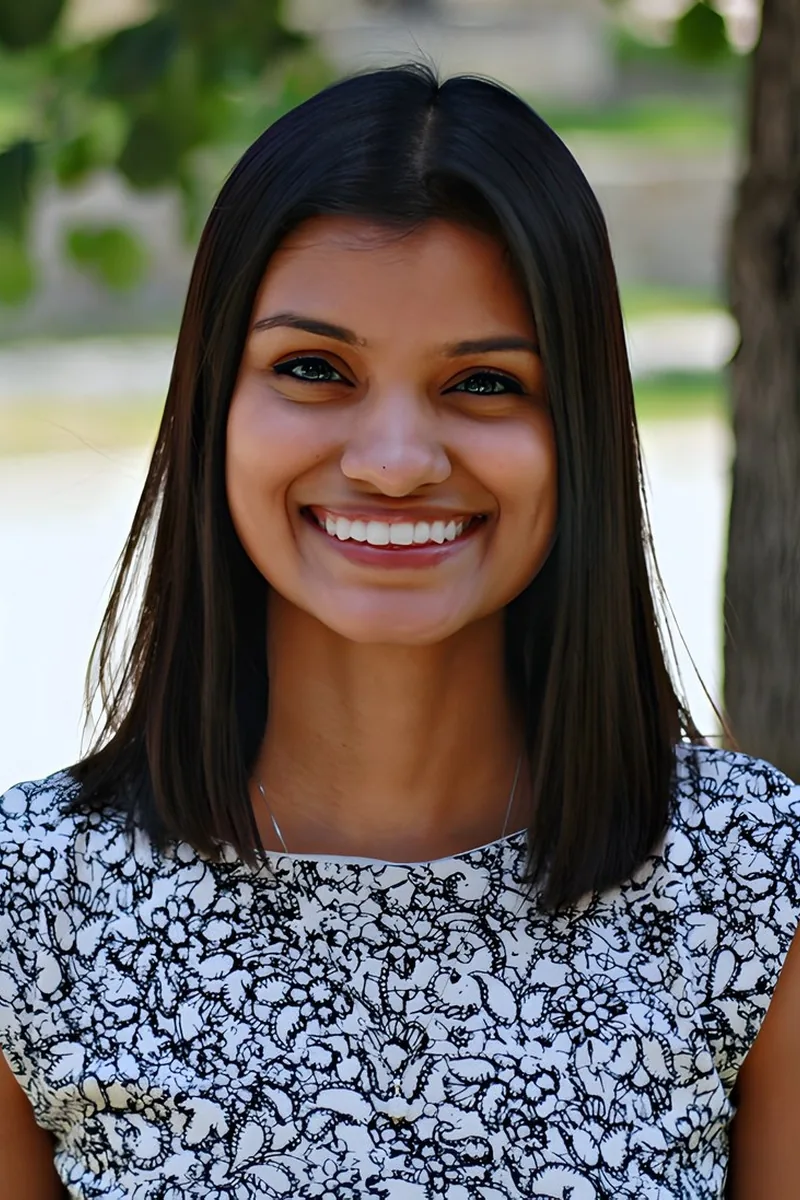
Medical school at Baylor demands constant quantitative reasoning — pharmacokinetic models built on exponential decay, dosage calculations requiring fluency with rational expressions, and data interpretation grounded in logarithmic scales. Sugi's dual Rice degree in Cognitive Science and Biochemistry means she learned college algebra concepts not as isolated exercises but as tools woven into scientific problem-solving, and she teaches them the same way. Rated 5.0 by students.

Biochemistry and molecular biology coursework means Raj regularly solves the exact kinds of exponential, logarithmic, and polynomial equations that trip students up in college algebra — except he's using them to model enzyme kinetics and reaction rates. A perfect 36 ACT and 5.0 student rating back up his ability to break down multi-step problems into clear, repeatable logic that holds up on exams.
Emily's biochemistry research at UTHealth keeps her fluent in the algebraic machinery that college algebra courses demand — she regularly uses polynomial models, exponential functions, and systems of equations to analyze experimental data in the lab. That daily practice means she can unpack a tricky logarithmic equation or a composite function by connecting it to a concrete problem she's actually worked through, not just a textbook example.
Timed essays and test anxiety are usually Kendall's calling card, but a 1580 SAT — with the quantitative muscle that implies — means the algebra chops are real too. She's particularly good at slowing down problems involving logarithmic and exponential equations, walking through the underlying logic step by step so students build genuine fluency instead of pattern-matching their way through homework. Rated 4.9 by students.
Chemical engineering coursework is essentially college algebra on repeat — Jonathan spent years solving material balances, reaction stoichiometry, and process equations that all come down to manipulating functions, working through systems of equations, and handling logarithmic and exponential relationships. He approaches each problem the way an engineer would: identify what you know, figure out what you can assume, and build toward the answer one logical step at a time.
Three bachelor's degrees in science — including bioengineering — mean Casey has been solving algebraic problems in applied contexts for years, from modeling biological systems to analyzing experimental data. That background makes her particularly effective at demystifying topics like logarithmic equations and rational expressions, because she can ground each technique in a concrete scenario instead of leaving it as an abstract rule. She's also known for creating tougher-than-homework practice problems that build real confidence before exam day.
Engineering coursework at Brown means Chelsea solves college-level algebraic problems constantly — systems of equations, polynomial functions, rational expressions, and logarithmic models are part of her daily toolkit. She teaches the underlying logic behind each technique so students can adapt to unfamiliar problems on exams, not just replicate homework examples.
Philosophy and mathematics might seem like an odd pairing, but Alexander's double major at Rice means he approaches college algebra the way he approaches a logical proof — every step in solving a rational equation or simplifying a logarithmic expression needs to follow from the one before it, with no hand-waving. His favorite subject is actually statistics, which keeps him actively using algebraic tools like function manipulation and modeling techniques as building blocks for more advanced work. Rated 5.0 by students.
Preparing for medical school meant Enstin had to sharpen every quantitative skill in the college algebra toolkit — from manipulating exponential and logarithmic functions to solving multi-step systems — and his 1550 SAT score confirms that foundation held up under pressure. His psychology degree from Rice also gave him a research-methods perspective on algebra, where variables and equations aren't abstract exercises but tools for modeling real behavioral data.
Competition math gave Cyrus a habit of looking for shortcuts and structural patterns in algebraic problems — a skill that translates directly to college algebra topics like solving rational equations and working through logarithmic properties efficiently. He's studying business administration at Texas A&M, where quantitative coursework keeps those algebraic tools sharp and applied. Rated 5.0 by students.
Mathilde's linguistics degree trained her to decode formal rule systems — morphological paradigms, syntactic trees, phonological constraints — and she applies that same pattern-finding instinct to college algebra topics like simplifying rational expressions and solving logarithmic equations. Where many students see a wall of symbols, she sees structure, breaking each problem into a sequence of logical moves the way she'd parse a complex sentence. She teaches across the full algebra-through-calculus sequence, so she knows exactly which college algebra skills need to be airtight before the next course.
Petroleum engineering at the University of Houston means Austin is constantly applying algebraic techniques — solving systems of equations for reservoir modeling, working with exponential decay in production curves — so the college algebra toolkit is something he uses under pressure, not just on problem sets. A 1570 SAT and 34 ACT back up that quantitative fluency, and his 5.0 rating suggests he's especially good at untangling the spots where a confusing first explanation made the material harder than it needed to be.
Badru holds both a math degree and an MBA, which means he's worked through college algebra concepts like polynomial manipulation and systems of equations from two very different angles — pure mathematical reasoning and applied business modeling. That dual perspective lets him tailor explanations to how a student actually thinks, whether they need the abstract logic or a concrete scenario to make something like logarithmic properties click. Rated 5.0 by students.
As a Computer Science and Data Science student at Rice, Alex works with algebraic structures constantly — defining functions, transforming variables, and building logical frameworks that mirror exactly what college algebra courses test. That daily fluency with function behavior and symbolic manipulation means he can walk through topics like polynomial operations or rational equations by showing the underlying logic, not just the mechanical steps.
Biology might seem far from algebra, but Amy's coursework required constant fluency with the same tools college algebra tests — modeling population growth with exponential and logarithmic functions, linearizing data sets, and solving systems of equations to analyze experimental results. That science-lab perspective lets her ground abstract algebraic procedures in problems that actually mean something, which tends to make techniques like function transformations and logarithmic properties click faster. Rated 4.9 by students.
As a lab assistant and grader for Rice University's Fundamentals of Computer Engineering course, Omar regularly debugs student work that hinges on algebraic manipulation — solving systems of equations in circuit analysis, applying logarithmic relationships in signal processing, and simplifying complex rational expressions for hardware design models. That daily exposure to algebra as a working language, not a standalone course, gives him a practical lens for teaching topics like polynomial operations and exponential functions. Rated 5.0 by students.
Five years as a corrosion engineer meant Avi was constantly solving real algebraic problems — modeling decay rates, calculating material tolerances, and building equations that predict how systems behave over time. That mechanical engineering background gives him a practical lens for teaching topics like rational expressions and exponential equations, since he can show students exactly how the algebra translates into something tangible. Holds a 5.0 rating.
Engineering graduate programs demand fluency in advanced algebra, and Rahul's petroleum and reservoir engineering training kept him deep in polynomial modeling, logarithmic functions, and systems of equations throughout his academic career. He tackles College Algebra by tying abstract techniques to real problem-solving contexts, making topics like rational expressions and matrix operations feel purposeful rather than arbitrary.
Rational expressions, logarithmic equations, and systems of inequalities all show up constantly in Christi's engineering coursework, so she teaches College Algebra with a clear picture of where each topic leads. She's particularly good at untangling function composition and transformations — skills that trip up students who learned procedures without understanding the underlying structure.
Environmental statistics at Rice meant Alex spent two years building and interpreting regression models, transforming skewed datasets with logarithmic and exponential functions, and solving systems of equations to isolate variables in ecological studies. That graduate-level fluency gives him a practical angle on college algebra — he can ground abstract topics like function behavior and log properties in the kind of real data problems where those tools actually matter.
Mechanical engineering at Rice means Aleksey doesn't just remember college algebra — he's still using it. Polynomial manipulation, rational expressions, and exponential functions are baked into the thermodynamics and dynamics problems he tackles in his master's program, so he can show exactly why a technique works and where it leads. Rated 5.0 by students.
Daniel's physics degree means he's spent years solving problems where getting the algebra wrong means getting the physics wrong — manipulating equations with multiple variables, working through systems, and reasoning about how functions behave under different conditions. That constant pressure to get algebraic steps right in service of something larger gives him a practical, no-nonsense approach to topics like rational expressions and quadratic modeling that purely math-track tutors sometimes lack.
Ali's applied mathematics degree — paired with minors in biology, chemistry, and microbiology — means he didn't just pass college algebra; he kept building on it across four different disciplines that each demand fluency with functions, logarithms, and systems of equations. That cross-disciplinary repetition gives him a sharp sense of which algebraic techniques actually matter and where students tend to lose the thread, especially when problems shift from straightforward computation to multi-step reasoning.
Michael's triple-major background in Asian Studies and Political Science might not scream math, but his 5.0 tutoring rating across dozens of subjects — including calculus — confirms he knows his way around the algebraic toolkit. He's particularly effective at demystifying word problems and translating real-world scenarios into equations, since his policy-oriented training taught him to think in terms of models and variables rather than abstract symbols.
Medical school entrance demands serious algebraic fluency, and Effie built hers through a biochemistry degree that required constant work with exponential models, logarithmic data transformations, and polynomial curve-fitting long before she started her MD. That science-lab grounding means she can unpack a tricky rational equation or a confusing logarithmic property by connecting it to a concrete problem she's actually had to solve.
Engineering coursework at the University of Arizona kept Doug immersed in the algebraic machinery that college algebra students are building for the first time — solving systems, working with rational expressions, and making sense of logarithmic and exponential relationships. He spent his college years tutoring peers through math and logic courses, which sharpened his ability to pinpoint exactly where a problem's logic breaks down and walk someone back to solid ground. Rated 5.0 by students.
Mechanical engineering coursework at UT means Yucheng doesn't just remember college algebra — he's still using it, from solving systems of equations in statics problems to manipulating exponential and logarithmic expressions in thermodynamics models. That constant application gives him a practical sense for why techniques like function transformations or polynomial division actually work, which makes his explanations stick. Rated 4.9 by students.
Computer science at Columbia means Jeremy thinks in functions and variables all day — defining them, composing them, transforming them — which maps directly onto the college algebra curriculum of polynomial operations, function behavior, and equation solving. His perfect 1600 SAT underscores serious quantitative fluency, and his CS training gives him a knack for breaking a tangled algebraic expression into clean, sequential steps the way you'd refactor a messy block of code.
Neuroscience coursework gave Christopher a daily workout in the algebraic machinery that college algebra courses test — modeling neural firing rates with exponential functions, linearizing dose-response curves with logarithms, and solving systems of equations to interpret experimental data. That science-side fluency, backed by a 1530 SAT, means he can walk through topics like function transformations or rational expressions by connecting them to problems where the math actually does something.
Most people who end up loving math didn't start out that way — Megan came to her Applied Mathematics degree from a background steeped in reading, writing, and art, which means she knows firsthand how to make algebraic thinking click for students who don't naturally see themselves as "math people." She's especially good at reframing topics like logarithmic equations and function transformations in intuitive, visual terms that bridge the gap between abstract notation and genuine understanding. Rated 4.9 by students.
Polynomial functions, rational expressions, and logarithmic equations all clicked for Naji during his electrical engineering coursework, where college algebra wasn't just a prerequisite — it was the daily language of circuit analysis. He breaks down problems like systems of equations and function transformations by tying them to concrete applications so the logic sticks.
Steven's biomedical engineering degree had him building mathematical models of biological systems — the kind of work where sloppy algebra on a rational expression or a mishandled logarithmic equation doesn't just lose points, it breaks the whole model. That real-stakes practice with the core college algebra toolkit gives him a practical, no-nonsense way of teaching techniques like solving systems and manipulating functions. Rated 4.7 by students.
Patrick's broad math teaching range — from middle school fundamentals through GRE-level quantitative reasoning — means he's walked dozens of students through the exact transition points where college algebra gets hard, like moving from basic equation-solving to manipulating logarithmic and rational expressions. He zeroes in on the conceptual gap rather than just re-demonstrating the procedure, which makes a real difference for students who understood the steps in class but can't replicate them on homework.
Most college algebra students struggle not because the math is impossibly hard, but because nobody connects the dots between topics — why logarithms undo exponentials, how piecewise functions relate to the simpler ones they already know. Anna's vocal performance training at Furman built her instinct for structured practice and pattern recognition, and she applies that same discipline to walking through algebraic concepts step by step until the logic clicks. She also teaches pre-calculus and calculus, so she knows exactly which college algebra skills matter most going forward.
Frances studied Philosophy, Politics, and Economics alongside English — a combination that meant regularly building and dissecting formal arguments with quantitative structure, from economic models to logical proofs. That training in switching between verbal and symbolic reasoning translates well when she's unpacking college algebra topics like logarithmic properties or rational expressions, since she can articulate the *why* behind each algebraic move in plain, precise language. Her 1540 SAT and 33 ACT confirm the quantitative fluency backing that skill.
Power engineering coursework at the undergraduate level is essentially applied algebra on repeat — impedance calculations, circuit analysis, and load balancing all run on the same polynomial manipulation, systems of equations, and exponential/logarithmic relationships that college algebra courses test. Julian brings that electrical engineering fluency to topics like rational expressions and function behavior, walking through the structural logic of each technique so students can adapt when problems look unfamiliar. Rated 5.0 by students.
Hired by the University of Texas to tutor undergraduates in math, chemistry, and physics, Joshua spent two years walking students through exactly the algebraic manipulation — solving rational equations, working with logarithmic and exponential expressions, simplifying complex fractions — that college algebra courses demand. His chemistry degree means he still thinks in algebraic terms daily, whether balancing reaction stoichiometry or modeling equilibrium systems, so the techniques never feel like abstract exercises when he teaches them.
Between teaching high school physics, tutoring discrete math, and working through calculus II, Alex keeps the core college algebra toolkit — polynomial operations, function behavior, logarithmic and exponential equations — in constant rotation rather than treating it as material he left behind years ago. That ongoing fluency means he can pinpoint exactly which algebraic step is causing confusion in a problem and rebuild the reasoning on the spot.
Rational expressions, logarithmic equations, and systems of inequalities can feel disconnected in a college algebra course unless someone ties them together. Mackenzie's economics training at Northwestern means she's used these tools to model real problems — demand curves, optimization, financial projections — and she brings that applied perspective into every session.
Studying Human Biology at Stanford with a concentration in game theory, Jake regularly works through the algebraic modeling that underpins strategic decision frameworks — optimizing functions, solving systems, and interpreting variable relationships in formal models. That active, applied use of algebra means he can walk through topics like rational expressions or exponential equations with the fluency of someone who relies on them, not someone recalling them from a past course. Rated 5.0 by students.
Testimonials
Because the right College Algebra tutor makes all the difference.
Average Session Rating – Based on 3.4M Learner Ratings
Practice College Algebra
Free practice tests, flashcards, and AI tutoring for College Algebra
Nearby College Algebra Tutors
Other Houston Tutors
Related Math Tutors in Houston
Frequently Asked Questions
College Algebra tutoring covers functions, equations, inequalities, exponential and logarithmic expressions, sequences, and systems of equations. Tutors help students move beyond memorizing procedures to truly understanding how these concepts connect and apply to real-world situations. This deeper understanding is essential for success in calculus and other advanced math courses.
During the first session, a tutor will assess your current understanding of key concepts, identify specific areas where you're struggling (like word problems or graphing), and learn about your learning style. From there, they'll create a personalized plan focused on building both your skills and confidence in College Algebra. This foundation ensures every session is targeted to your needs.
Word problems require translating real-world situations into algebraic equations—a skill many students find intimidating. Tutors teach you a step-by-step strategy: identifying what you know, defining variables clearly, setting up equations, and checking your answer in context. With guided practice and feedback, you'll develop the confidence to tackle any word problem you encounter.
Showing your work reveals your thinking process and helps identify exactly where errors occur—whether it's a computational mistake or a conceptual misunderstanding. Tutors use this visibility to provide targeted feedback and help you develop stronger problem-solving strategies. This approach also prepares you for exams and future math courses where partial credit depends on demonstrated reasoning.
Absolutely. Math anxiety is common, and personalized 1-on-1 instruction in a low-pressure environment is one of the most effective ways to build confidence. Tutors work at your pace, celebrate small wins, and help you see that mistakes are learning opportunities, not failures. Many students discover that understanding the concepts—not just memorizing steps—transforms their relationship with math.
Tutors are experienced with multiple College Algebra curricula and teaching approaches used across Houston's school districts. Whether your class uses a traditional, applied, or technology-integrated approach, tutors can align their instruction to match your textbook and teacher's expectations. This consistency between tutoring and classroom instruction accelerates learning and reduces confusion.
Rather than treating each topic in isolation, tutors help you understand how functions, equations, and transformations relate to each other. For example, you'll see how solving equations connects to finding zeros of functions, or how exponential growth appears in multiple contexts. This conceptual web makes the material more memorable and easier to apply to new problems.
Varsity Tutors connects you with expert tutors who have proven success teaching College Algebra. You'll be matched based on your specific needs, schedule, and learning preferences. Once connected, you can start your first session quickly and begin working toward mastery of the concepts you find most challenging.
Let’s find your perfect tutor
Answer a few quick questions. We’ll recommend the right plan and match you with a top 5% tutor.