Award-Winning Chemistry Tutors
serving Virginia Beach, VA
Chemistry
Tutors in Virginia Beach
Private 1-on-1 tutoring, weekly live classes for academic support, test prep & enrichment, practice tests and diagnostics, and more to elevate grades and test scores.
Based on 3.4M Learner Ratings
UniversitiesSchools & Universities
DeliveredHours Delivered
ProficiencyGrowth in Proficiency
Who needs tutoring?
No obligation. Takes ~1 minute.
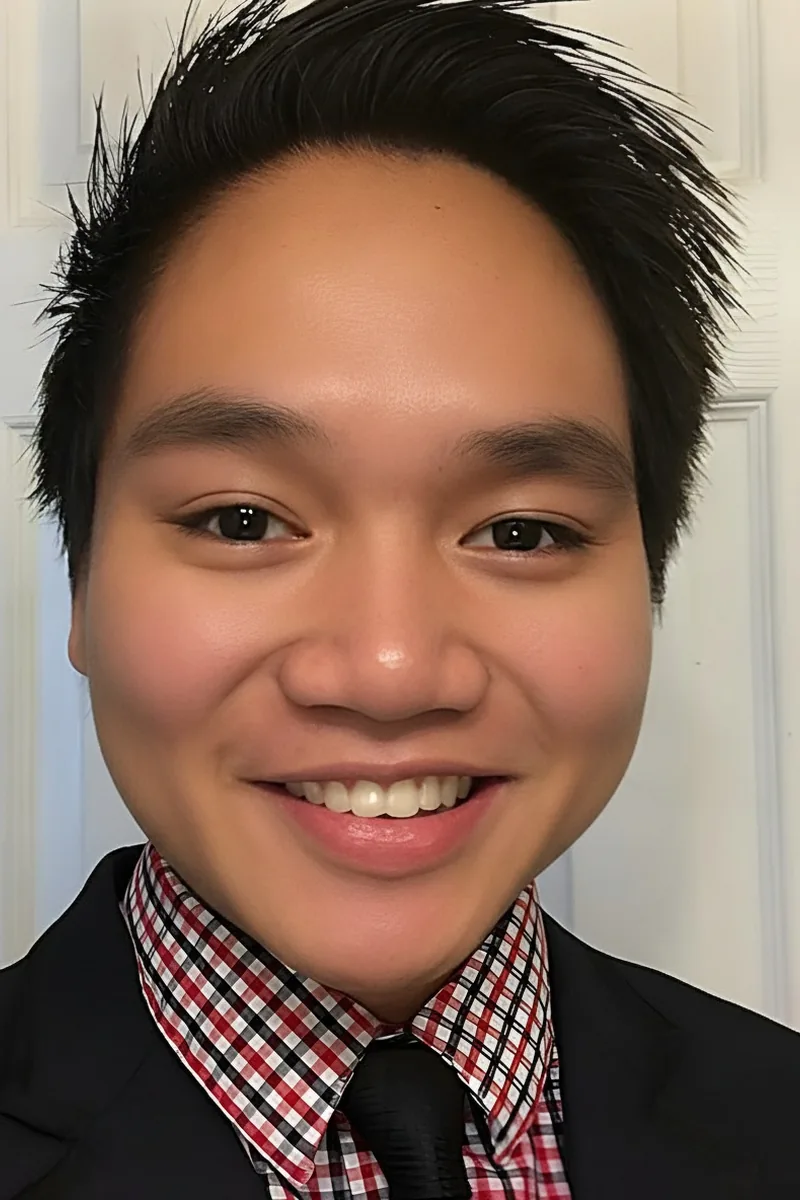
Between his bioinorganic research, his biochemistry degree, and his current role teaching chemistry courses at VCU, Joel has spent years explaining concepts like stoichiometry, molecular orbital theory, and acid-base equilibria to students at every level. He approaches each topic by building up from the atomic-level "why" so that problem-solving becomes intuitive rather than formulaic.
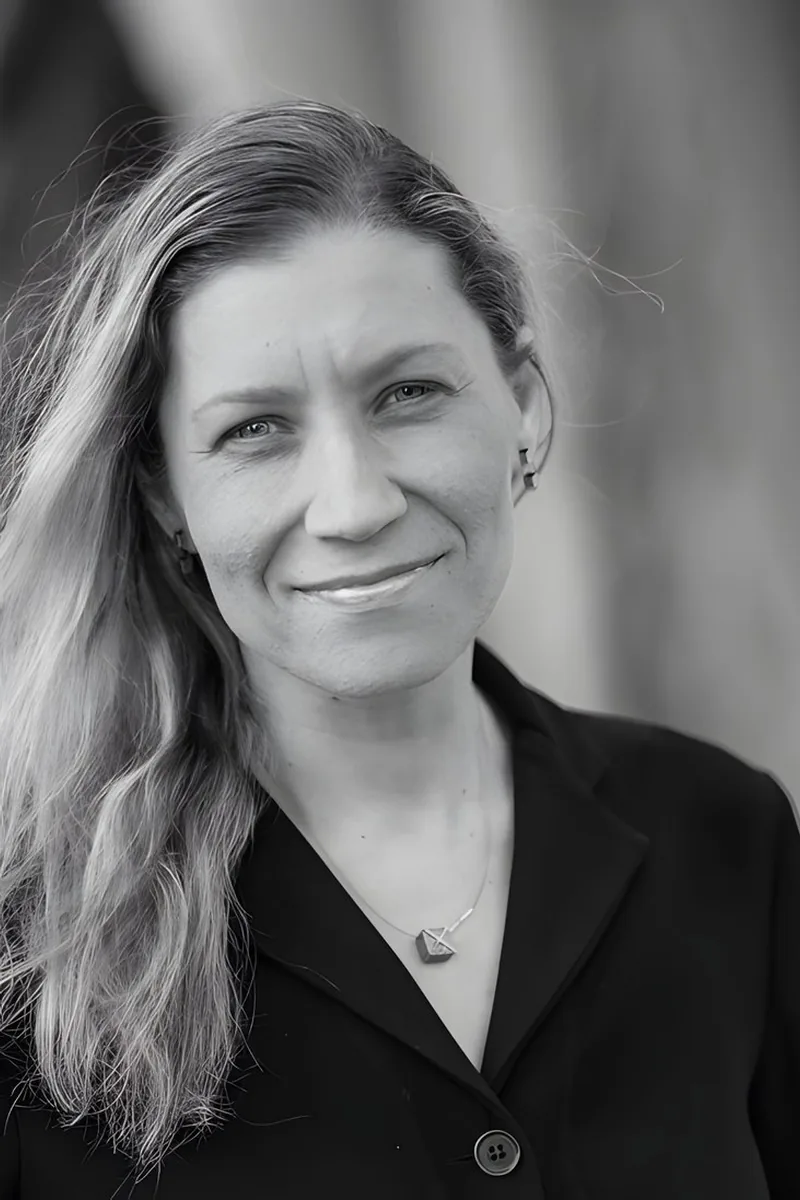
Architecture training at the graduate level requires a surprising amount of chemistry — understanding material properties, how concrete cures, why certain metals corrode, and how environmental conditions affect building envelopes. Christianna draws on that applied knowledge to make topics like chemical reactions, molecular structures, and properties of matter feel less abstract and more grounded in how substances actually behave in the real world. Rated 4.8 by students.
Stoichiometry, equilibrium, acid-base reactions — chemistry clicks once you stop treating each topic as its own island and start seeing the throughlines. Roshni's biology major in a BS/MD program at VCU means she uses chemistry daily and can connect abstract concepts like electron orbitals or thermodynamics to real applications in medicine and biochemistry. Rated 4.9 by students.
Between her chemistry minor and pre-med track at VCU, Shahad has worked through general chemistry from multiple angles — stoichiometry, equilibrium, thermodynamics, and acid-base reactions all show up repeatedly in her coursework. She explains mole conversions and balancing equations by tying each calculation back to what's physically happening at the molecular level.
Balancing equations and converting between moles, grams, and liters trips up nearly every chemistry student at some point — the key is building intuition for what those numbers actually represent. Brittany studies chemistry at UVA and brings that depth to foundational topics like atomic structure, periodic trends, and reaction types. She pinpoints exactly where a student's reasoning breaks down and works from there.
Balancing equations and memorizing periodic trends only gets a student so far in chemistry; the real challenge is understanding why atoms bond the way they do and how stoichiometry connects the microscopic to the measurable. Andrew's engineering background gives him a quantitative instinct for unit conversions, mole calculations, and gas law problems that many students find difficult to develop on their own. He unpacks each calculation step so the logic becomes repeatable.
I'm a graduate of the School of Engineering at Virginia Commonwealth University (2015). I have a Bachelor's of Science degree in Biomedical Engineering, and am pursuing a Masters Degree in Business Administration from the VCU School of Business. I've been a mentor for the past four years and am very active in my method of tutoring. I have helped several students with official tests and homework assignments.
I'm a current medical student at VCU School of Medicine, and a graduate of Johns Hopkins University. I received my Bachelor of Science in Molecular and Cellular Biology. I've had the pleasure of tutoring a diverse range of students for 5 years; while I tutor a broad set of subjects, I'm most passionate about biology, psychology, and chemistry. I'm a big proponent of ensuring understanding over memorization and teaching concepts that last for years to come (particularly for other students interested in medicine!) In my free time, I love to write poetry, edit essays, and gush about game writing with friends.
Having studied chemistry at James Madison University from organic synthesis to analytical techniques, Ava knows the full arc of the subject — which means she can trace a student's confusion in, say, equilibrium or acid-base titrations back to the specific foundational gap causing it. She's especially strong at demystifying the transition from memorizing formulas to actually reasoning through why a reaction favors products or shifts under stress.
I am currently a lead preschool teacher. I received my Bachelor's in Psychology from VCU and am looking to return to school to further my education. While in college, I worked as a Supplemental Instruction leader, teaching general biology and anatomy. I have also worked in an after school program with elementary age children, but I have my fondest memories volunteering as a counselor for Camp Kesem. In my own experience, I loved school and now I love teaching even more at all age levels! I especially enjoy the challenge of getting creative to discover what approach and mediums work best for each student. I am available for in person as well as online tutoring.
I am 22 years old and a recent graduate from Virginia Commonwealth University. I studied Biology and General Science as my majors, and Chemistry and Psychology as my minors when in college. These are my strongest tutoring subjects, however as a current applicant to medical school for the Fall 2018, I am also proficient in many levels of Mathematics up to Calculus 1 and used to be a Teacher's Assistant for College Algebra as well as an Academic Tutor at my university's Campus Learning Center for 3 semesters each. I am passionate about helping students achieve their full learning potential and hope to be able to assist your needs or your child's needs along their academic journey.
I am in graduate school and she is in undergraduate college, we have regular online sessions where I explain her the concepts as best as possible.
From the moment I began helping classmates in middle school study for math quizzes, I realized how much I enjoyed guiding others toward understanding. Over time, that spark grew into a genuine passion for education. What drives me most is witnessing the transformation in a student's confidencethe moment when confusion gives way to clarity, and they begin to believe in their own abilities. Tutoring, for me, is not simply about helping students achieve better grades; it's about empowering them to trust their capacity to learn and grow. My journey as a tutor began in high school, where I volunteered as a math tutor for underclassmen struggling with algebra and geometry. I worked one-on-one with students after school, helping them tackle difficult problems and build foundational skills. This early experience taught me how patience and consistent encouragement could make a lasting difference. In college, I served as a teaching assistant for general chemistry at the University of Virginia.
I am a biology student at the University of Virginia, and I tutor a range of subjects. Each session begins with what you are working on and where you are struggling. I ask questions throughout so you actively work through problems rather than copy answers. When a concept is difficult, I break it into smaller steps and connect it to ideas you already know. If one explanation does not work, I try another. If you are struggling, we slow down, find where the confusion begins, and build from there.
I'm an Interdisciplinary Physics student who focuses on the 'why' behind concepts, not just the steps to an answer because students who understand the reasoning can handle the next problem, not just the one in front of them. I work through material patiently and connect it to how the student actually thinks, not a one-size-fits-all method. My goal for every session is that a student leaves able to explain the concept back to me, not just recognize it.
Balancing equations and predicting reaction products become far more intuitive when you understand the "why" behind electron behavior — that's the lens Katherine brings to chemistry. Her public health degree from UT Austin required deep coursework in general and organic chemistry, and she connects those concepts to real-world applications like drug interactions and environmental science.
Hi, my name is Inaya, and I'm so excited to be a tutor! I have been tutoring for four years and in that time I have learned many different methods of tutoring. Some student need more hands on help and others just need to be guided into working on their own. Every kid is different and that is one of the greats parts of tutoring.
Understanding chemistry means seeing the 'why' behind the math — why certain elements bond the way they do, why energy changes drive reactions forward, why solutions behave differently at varying concentrations. Donya earned her degree at the University of Maryland with heavy science coursework, and she uses that foundation to walk students through topics like stoichiometry, periodic trends, and acid-base equilibria in ways that build real intuition. She's particularly good at translating word problems into clear, solvable setups.
Stoichiometry, equilibrium, and acid-base reactions all require a kind of disciplined reasoning that Jessica developed through years of medical training, where chemistry underpins everything from pharmacology to metabolic pathways. She breaks down each problem type into a clear sequence of decisions rather than a wall of formulas to memorize.
Having taught the science portions of standardized tests at a preparatory school, Moriah knows how to unpack chemistry's trickiest conceptual leaps — balancing equations, stoichiometry, and periodic trends — in language that sticks. She connects each topic to a clear problem-solving framework so students can approach unfamiliar questions with a reliable method rather than guesswork.
Jeremy has taught General Chemistry I, Introductory Chemistry for true beginners, and a combined General/Organic/Biochemistry sequence for health professions students — so he's seen every entry point into the subject. He unpacks topics like stoichiometry, molecular geometry, and acid-base equilibria by connecting each concept to concrete, observable phenomena. Rated 4.6 by students.
The periodic table isn't just a chart to memorize — it's a map that predicts bonding behavior, reactivity, and molecular geometry if you know how to read it. Matthew teaches chemistry through that lens, connecting electron configuration to the "why" behind everything from Lewis structures to acid-base reactions. His biochemistry research at Yale keeps these ideas grounded in real applications.
Understanding stoichiometry or molecular geometry becomes much easier when a student can visualize what's happening at the atomic level, not just balance numbers on a page. Emily's computational biology work at Cornell keeps her deeply engaged with chemical principles, and she brings that perspective to topics from bonding and Lewis structures through acid-base equilibria.
A solid grasp of mole conversions, Lewis structures, and acid-base equilibria sets the stage for everything else in chemistry. Abrahim earned his biology degree cum laude from UCLA with heavy chemistry coursework and now applies that knowledge in medical school, so he explains foundational concepts with precision and quickly identifies which specific skill — whether it's dimensional analysis or electron geometry — needs attention.
Stoichiometry, electron configurations, thermodynamics — Chemistry asks students to think at the atomic level while solving problems that feel like math puzzles. Michelle spent four years at Rice immersed in chemistry coursework as a biochemistry major and now applies that knowledge daily in medical school, so she can explain not just how to balance equations but why the underlying principles matter.
From balancing redox equations to working through stoichiometry and equilibrium problems, Brittany breaks chemistry down into repeatable problem-solving steps. She tutored both undergraduate and graduate students in General Chemistry I and II at the University of Pennsylvania's Tutoring Center, so she's seen the full range of places where concepts fall apart and knows how to rebuild them.
Stoichiometry and mole conversions trip up most chemistry students because they look like pure math divorced from anything real. Caroline connects these calculations to tangible examples — like how much reactant a chemical plant actually needs — drawing on her years working at an ExxonMobil refinery. That industrial context makes balancing equations and predicting yields feel purposeful.
Mechanical engineering at Harvard means Christopher lives in the overlap between chemistry and physics — material properties, thermodynamics, and reaction energetics show up constantly in his coursework. He breaks down topics like bonding, gas laws, and enthalpy calculations by tying them to tangible engineering problems, which gives abstract concepts a concrete anchor. Rated 4.8 by students.
Whether it's balancing redox reactions or figuring out why gases behave the way they do, chemistry clicks once students stop treating it as memorization and start seeing the patterns. Aditi unpacks topics like mole conversions, periodic trends, and acid-base chemistry by tying each one back to a few core principles. Her premed track at Rice means she's working through advanced chemistry herself right now.
Balancing redox reactions or predicting products from a solubility table requires a kind of structured problem-solving that doesn't always come naturally. Akarsh's molecular biology training gave him deep fluency in chemical bonding, stoichiometry, and reaction kinetics, and he teaches students to approach each problem type with a clear, repeatable method.
Testimonials
Because the right Chemistry tutor makes all the difference.
Average Session Rating – Based on 3.4M Learner Ratings
Practice Chemistry
Free practice tests, flashcards, and AI tutoring for Chemistry
Other Virginia Beach Tutors
Related Science Tutors in Virginia Beach
Frequently Asked Questions
Many students struggle with visualizing abstract concepts like molecular structures, bonding, and electron behavior—topics that are hard to grasp without hands-on experience. Balancing chemical equations, unit conversions, and stoichiometry are also frequent pain points, especially when students try to memorize formulas instead of understanding the underlying principles. Personalized tutoring helps students build conceptual understanding so they can apply chemistry knowledge to new problems rather than just memorizing procedures.
Tutors help students understand the scientific method, design experiments, and interpret results—skills that go beyond just following lab procedures. They can explain why certain reactions occur, what to expect before you enter the lab, and how to troubleshoot when results don't match predictions. This deeper understanding makes lab work more meaningful and helps students develop the scientific reasoning skills that teachers assess.
Chemistry requires both, but understanding is what actually sticks and transfers to new situations. Memorizing the periodic table or reaction types won't help you solve unfamiliar problems, but understanding atomic structure, bonding principles, and reaction mechanisms will. Expert tutors focus on building conceptual understanding first, which makes memorization easier and more meaningful—and helps you succeed on tests and in advanced courses.
The first session is about understanding your specific challenges—whether you're struggling with equilibrium, acid-base chemistry, organic reactions, or test preparation. Tutors will assess your current understanding, identify gaps, and create a personalized plan that targets your needs. You'll leave with clarity on what's ahead and concrete strategies to tackle the topics that are giving you trouble.
Chemistry isn't just about reactions in a lab—it's the science behind batteries, medications, climate change, cooking, and materials. Tutors help you see these connections, which makes the subject more engaging and helps concepts stick. Understanding why chemistry matters makes it easier to stay motivated and to remember key principles when you need them.
Ideally, tutoring starts as soon as you notice confusion or falling grades—waiting until right before an exam is harder than building understanding gradually. Many students benefit from tutoring at the start of a unit to establish strong foundations, or mid-course if they're falling behind. If you're taking AP Chemistry or honors chemistry in Virginia Beach schools, starting early gives you time to master challenging topics like thermodynamics and equilibrium.
Look for tutors with strong chemistry backgrounds—ideally a degree in chemistry, biochemistry, or a related science—and experience teaching students at your level. They should be able to explain concepts clearly, answer your questions thoroughly, and help you develop problem-solving skills, not just show you how to solve specific problems. Varsity Tutors connects you with expert tutors who have proven teaching experience and understand how to make chemistry accessible.
Yes—tutors help you review material strategically, identify weak areas, and practice problem-solving under test conditions. Rather than cramming, effective test prep focuses on understanding key concepts and practicing varied problems so you can handle questions you haven't seen before. Tutors can also help you develop time-management and test-taking strategies specific to chemistry, which makes a real difference on standardized tests like the SAT and AP Chemistry exams.
Let’s find your perfect tutor
Answer a few quick questions. We’ll recommend the right plan and match you with a top 5% tutor.