Award-Winning Biology Tutors
serving Chicago, IL
Biology
Tutors in Chicago
Private 1-on-1 tutoring, weekly live classes for academic support, test prep & enrichment, practice tests and diagnostics, and more to elevate grades and test scores.
Based on 3.4M Learner Ratings
UniversitiesSchools & Universities
DeliveredHours Delivered
ProficiencyGrowth in Proficiency
Who needs tutoring?
No obligation. Takes ~1 minute.
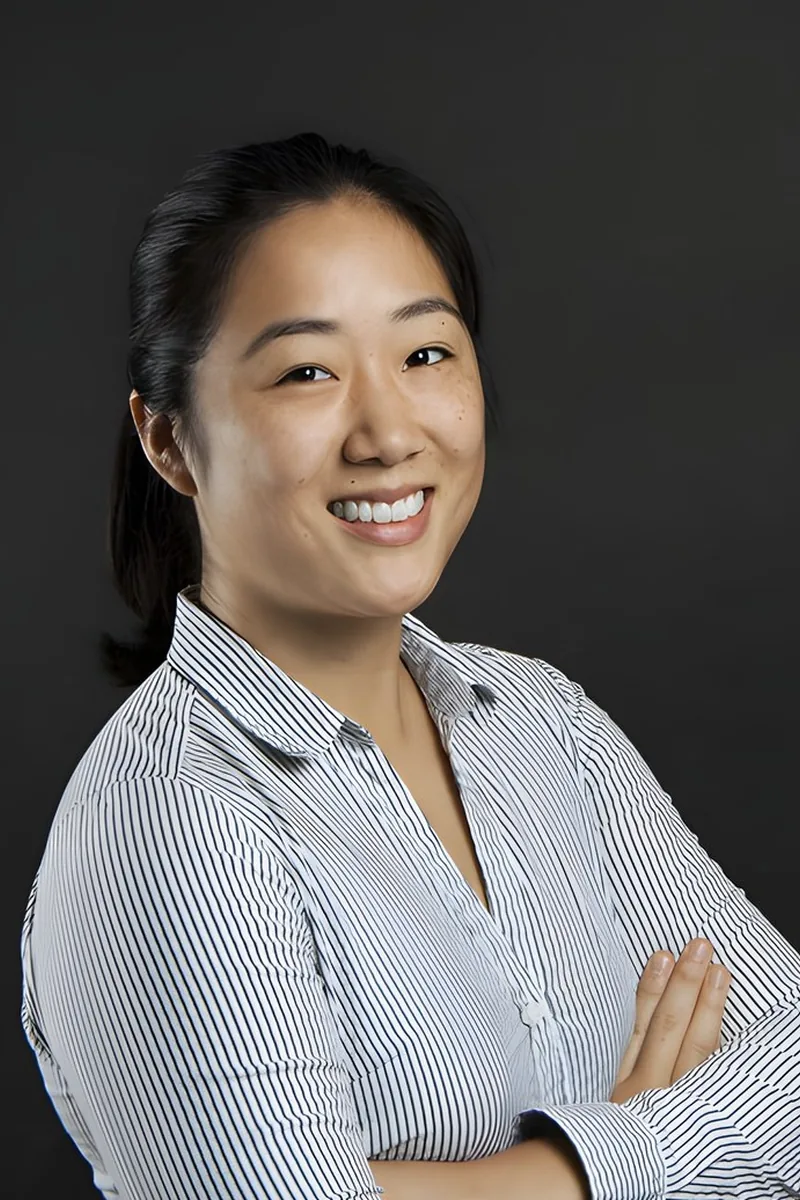
From cell respiration pathways to genetics crosses, biology rewards students who can organize large amounts of interconnected information rather than memorize isolated facts. Asta's University of Chicago training in research and analytical writing translates directly to how she teaches students to map relationships between biological systems — linking, say, DNA replication to protein synthesis to gene expression in a coherent chain.
Ethan's background is in economics and public policy rather than the life sciences, but his rigorous coursework at the University of Chicago — where even non-science students face demanding analytical standards — means he approaches biology the way a strong student would: by building logical connections between concepts like cellular respiration, genetics, and ecology rather than treating each unit as its own silo. His 1550 SAT reflects the kind of disciplined reading and reasoning skills that translate well to parsing dense biology passages and experiment-based questions.
Ruthie's degree in Biological Basis of Behavior means she studied biology through the lens of how living systems produce behavior — tracing pathways from gene expression and neural signaling all the way to organism-level responses. That angle makes her especially sharp at teaching the connections between cell biology, genetics, and physiology that most intro courses treat as separate units. Rated 5.0 by students.
Between his neuroscience major and hands-on electrophysiology research at NYU's Center for Neural Science, Gabriel approaches biology from the molecular level up — cell signaling, gene expression, neural circuitry. He unpacks complex biological systems by connecting structure to function, making dense material like membrane transport or protein synthesis easier to reason through rather than just memorize.
Jhonatan's neuroscience specialization means he built his biology knowledge from one of the most demanding corners of the discipline — tracing how ion channels, neurotransmitter cascades, and gene expression all converge to produce something as simple as a reflex arc. That depth translates well when teaching broader biology topics like cell signaling, homeostasis, or genetics, because he can show students the mechanistic "why" behind each process instead of leaving them with a diagram to memorize. Rated 5.0 by students.
A double major in biology at Emory followed by a PhD at Northwestern means Richard has encountered nearly every corner of the discipline, from molecular genetics to ecosystem ecology. He's particularly skilled at teaching students how to interpret experimental results and connect cellular-level processes to organism-level outcomes. His 5.0 rating speaks to how clearly he communicates even the densest material.
I am a graduate of Cornell University's College of Arts and Sciences. I received my Bachelor of Arts in Chemistry with Distinction in 2015. Since graduation, I was a physics/chemistry teacher and soccer coach at a private school in Virginia for a year, where I led the soccer team to an undefeated season. Before teaching and coaching professionally, I was a Teaching Assistant for the Cornell Math and Physics Departments, where I taught many subjects including calculus, mechanics, electromagnetism. Throughout my time at Cornell and as a teacher, I tutored subjects ranging from the SAT to AP Physics and Algebra II, which is where my true talents lie: in small group or one-on-one settings where I can give students the full attention they deserve and tailor my approach specifically to their learning styles. This is why I am now pursuing tutoring as a part-time occupation at Varsity Tutors. I embrace teaching all math and science subjects, especially physics and calculus, at both the college and high school level and will go above and beyond to make sure all of my students succeed, according to their definition of success. In my spare time, I enjoy playing league soccer, basketball, tennis and guitar, and also like to travel and see as much of the world as I can.
Amber concentrated in genetics and genomics during her biological sciences degree at Northwestern and is now completing a Master's specifically in biology teaching — so she's spent years thinking about how to make topics like DNA replication, Mendelian inheritance, and gene expression genuinely understandable. She connects molecular details to bigger biological stories, which turns memorization-heavy units into something logical. Her 32 ACT composite reflects the broad analytical skills she brings to science instruction.
Sparsh's path from biomedical engineering to medical school at Northwestern means he's studied biology from both the molecular and systems level — cell signaling, genetics, organ physiology, and everything in between. He connects biological concepts to engineering applications and clinical scenarios, which makes topics like the Krebs cycle or membrane transport feel purposeful rather than like a list to memorize.
Nicki's public health research at George Washington University required deep fluency in biology — from cellular mechanisms to population-level ecology. She teaches biology by connecting molecular-scale processes like DNA replication and protein synthesis to the larger systems they support, giving students a framework that makes memorization far less overwhelming.
Three associate degrees in science — including one specifically in microbiology — mean Felix has spent serious time with the small-scale biology that underpins bigger concepts like infection, immunity, and ecological nutrient cycling. He teaches microbiology-adjacent topics with the confidence of someone who's studied them as a primary discipline, and broader biology topics like genetics or cell structure benefit from that same attention to mechanistic detail. Rated 5.0 by students.
Iris's anthropology background means she already thinks in terms of systems — how organisms interact with environments, how populations shift, how structures serve functions. She applies that same systems-level thinking to biology topics like cell signaling, genetics, and ecology, making connections across chapters that textbooks often leave implicit.
Whether it's cellular respiration, genetics, or ecology, biology rewards students who can see how systems connect rather than treating each chapter as isolated facts. Callie's degree in the History and Philosophy of Science and Technology at the University of Chicago trained her to think about *how* scientific knowledge fits together, which shapes the way she teaches everything from Punnett squares to phylogenetic trees. She prefers letting students drive the session and stepping in only when they need a new angle on a tough concept.
Working in a neurobiology lab caring for fifty octopuses gives Sofia a daily, hands-on connection to the biology she teaches — animal behavior, nervous system function, and the kind of ecological thinking that ties organisms to their environments. Her Biological and Physical Sciences degree at UChicago, with its ecology focus, means she's particularly sharp at showing how concepts like energy flow, population dynamics, and natural selection link together rather than sitting in separate chapters.
A psychology degree means Christopher already thinks in terms of biological systems — neurons, hormones, genetics — and he brings that lens to teaching biology at every level. He's especially effective at unpacking topics like cell signaling and gene expression, where students need to trace cause and effect across multiple steps.
Grant's infectious disease focus in medical school means he thinks about biology through the lens of host-pathogen interactions — how microbes invade, how immune systems respond, and how evolutionary pressures shape both sides of that arms race. That angle makes him especially useful for students tackling microbiology, immunology, or ecology units where the material suddenly feels less like memorization and more like a war story with molecular stakes.
A current neuroscience major and research assistant in UIC's neurobiology department, Pal lives inside biological concepts daily — from cellular signaling pathways to genetics to organ system physiology. He unpacks dense biology material by tying molecular details to bigger-picture processes, which makes topics like mitosis, DNA replication, and homeostasis easier to retain.
Most biology students struggle not with individual facts but with keeping the layers straight — how a mutation in a gene becomes a change in a protein becomes a shift in cell behavior. Masooma's coursework in molecular biology, cell biology, and microbiology means she can walk through those cause-and-effect chains at whatever level a student needs, whether that's introductory bio or college-level detail. Her 4.9 rating speaks to how well that layered approach lands.
Irene's background is squarely in mathematics and computer science, not the life sciences — but her PhD-level training in quantitative reasoning and data analysis translates surprisingly well to the parts of biology that trip students up most: interpreting experimental results, working through Punnett square probabilities, and making sense of population genetics models. She approaches biological concepts with the structured, logical scaffolding of a mathematician, which can be exactly what a student needs when memorization alone isn't cutting it.
A degree in microbiology, immunology, and molecular genetics means Matthew sees biology as an interconnected system rather than a list of vocabulary words. He unpacks topics like cell signaling, gene expression, and ecological relationships by asking layered questions that build from simple recall to genuine analysis. Students come away understanding how biological concepts link together, not just what each term means in isolation.
From cell respiration to genetics to ecology, biology covers an enormous range, and Ian approaches each unit by anchoring it to a few core principles — energy flow, structure-function relationships, and information transfer. His dual background in biological sciences and psychology means he also understands how students learn, which makes his explanations stick. He holds a 5.0 rating from past students.
Riya's science coursework at UIC, paired with her strong math background, means she approaches biology problems quantitatively — calculating expected phenotype ratios in genetics crosses, interpreting growth curves in ecology, or working through the stoichiometry of photosynthesis and respiration. That analytical bent is especially useful for students who understand the vocabulary but freeze when a biology question asks them to actually do something with the data.
From cellular respiration pathways to ecological systems, biology requires toggling between memorization and genuine understanding of how processes connect. Dhrumil's public health major at UIC means he encounters biological concepts daily — epidemiology, human physiology, genetics — and can explain them with the kind of applied context that textbooks often skip. He teaches students to build mental maps linking concepts rather than treating each chapter as isolated material.
A self-described science nerd with a neuroscience degree, Gabe treats biology as a story about how living systems solve problems — how cells divide, how genes get expressed, how organisms maintain homeostasis under pressure. He unpacks each concept by tying it back to something tangible, which makes topics like ecology, evolution, and cell biology stick long after the exam.
Studying bioengineering requires mastering biology at every scale, from DNA replication inside a single cell to the physiology of entire organ systems. Kishore breaks down topics like cellular respiration, ecology, and genetics by tying each concept back to concrete examples from his coursework and Alzheimer's research at UIC.
Smith's academic home is theatre, not the lab — but his self-described deep amateur interest in the life sciences, combined with a 33 ACT that includes the Science section, means he can break down biology topics like genetics or cell structure for students who need a patient, non-specialist perspective. Sometimes the clearest explanations come from someone who learned to love the subject on their own terms rather than through a degree program.
I am passionate for the sciences, specifically biology. Tutoring helps me directly engage with students in a way that is both fulfilling for the student and myself.
Youngbin's teaching background spans a wide range of subjects — math, science, writing, Korean — which has given him practice translating unfamiliar material into clear, digestible explanations, a skill that pays off when tackling biology topics like cellular processes or ecological relationships. He approaches the subject by building visual and conceptual models, drawing on the same storytelling instincts his MFA in Film Production sharpened. Rated 5.0 by students.
From cellular respiration and DNA replication to ecology and evolutionary mechanisms, Ellen covers the full sweep of biology as a biological sciences major at Marquette. She's especially skilled at connecting molecular-level details to bigger-picture concepts, which is exactly the kind of thinking college and AP biology exams reward.
As a biochemistry and molecular biology student at the University of Chicago, Ramkumar lives inside the material most biology students are trying to learn — cell signaling, gene expression, metabolic pathways. He unpacks dense topics like DNA replication and protein synthesis by connecting each step to a bigger biological story rather than presenting them as isolated facts.
I'm a junior studying nursing at the University of Illinois at Chicago. I'm currently working towards a BSN degree, and hope to get a DNP (Doctorate of Nursing Practice) in the future. Nursing in itself is a very collaborative major, so my peers and I have spent a lot of time tutoring each other through our tougher courses.
Oberlin gave Ellen a biology major and chemistry minor — a combination that pays off when students hit topics like cellular respiration or photosynthesis, where the chemistry underneath the biology is exactly what makes the process click. She digs into the "why" behind each mechanism rather than letting students skate by on diagram labels alone, building the kind of reasoning that transfers across units. Rated 5.0 by students.
Few biology tutors bring Sareen's combination of a neuroscience degree and active medical training — she can walk through everything from cellular respiration to neural signaling with the kind of depth that turns memorization into genuine understanding. Her honors psychology research at Pitt also means she's comfortable tackling the behavioral and ecological sides of biology, not just the molecular.
Understanding biology means learning to think in systems — how a cell membrane controls what enters, why energy flows through an ecosystem the way it does. Emily's science background and Northwestern training in research-driven thinking let her unpack these connections clearly, turning dense material into something that actually makes sense.
Anthropology trained Matthew to think about living systems in terms of adaptation and environment — a lens that translates surprisingly well to biology topics like ecology, evolution, and natural selection, where understanding context matters as much as memorizing definitions. He also teaches across neuroscience and life sciences, so he can connect a concept like genetic drift or cellular organization to the broader questions about why organisms work the way they do.
Kurt's Physician Assistant training covered biology from the molecular scale up through organ systems, giving him an unusually integrated view of the subject. Whether a student is struggling with mitosis, Mendelian genetics, or cellular respiration, he connects each topic to a bigger biological story rather than treating chapters as isolated units. Rated 5.0 by students.
A current medical student with a biochemistry degree, Jacob teaches biology with the kind of depth that comes from using it daily. Whether the topic is mitosis, Mendelian genetics, or enzyme kinetics, he connects each concept to how living systems actually function rather than treating chapters as isolated facts to memorize.
I am comfortable tutoring a variety of subjects, I am most passionate about writing and language, and I truly believe that strong writing skills are an asset in every area of life. Through my experience as an after-school program manager, I learned to build relationships and work well with students, parents, and teachers to meet student goals. In response to the pandemic, I quickly learned ways to adapt my educational youth work to a virtual setting. My social work background helps me connect with students on a personal and social-emotional level, which lays a trusting foundation for real growth and learning.
I am Gabriela Angellotti, a fourth year student at the University of Chicago. I am currently studying Neuroscience and Health and Society with hopes on attending med-school in the future. Also, I am a member of the women's varsity softball team at the university, and am involved in volunteer tutoring programs.
I am a graduate student at Northwestern University in the Masters of Biotechnology Program. After I graduate in 2021. I plan on attending law school. I attended Emory University in Atlanta where I studied Chemistry and Ancient Mediterranean Archaeology. Working through ChEmorythe Emory university chemistry cluband private networking I tutored students in high school and college throughout my undergraduate career.
Testimonials
Because the right Biology tutor makes all the difference.
Average Session Rating – Based on 3.4M Learner Ratings
Practice Biology
Free practice tests, flashcards, and AI tutoring for Biology
Nearby Biology Tutors
Other Chicago Tutors
Related Science Tutors in Chicago
Frequently Asked Questions
Your first session is all about understanding your current level, learning goals, and specific challenges—whether that's grasping cell structure, mastering the scientific method, or preparing for the AP Biology exam. Tutors will assess what concepts are clicking and where you need support, then create a personalized plan to help you succeed. This foundation ensures every session after that is focused and productive.
Many students struggle to picture molecules, cellular processes, or ecosystem dynamics—concepts that are hard to grasp from textbooks alone. Tutors use diagrams, models, animations, and real-world examples to make abstract ideas concrete and memorable. Breaking down complex systems step-by-step helps you build mental models that stick, rather than just memorizing terms.
Memorizing the Krebs cycle or mitochondrial structures won't help you apply that knowledge on an exam or in real situations. Expert tutors focus on building genuine understanding—explaining the "why" behind processes, connecting concepts across units, and teaching you to think like a scientist. When you understand the underlying principles, you naturally retain information longer and can tackle new problems confidently.
Absolutely. Tutors can help you understand lab procedures, interpret results, design experiments that test your hypotheses, and apply the scientific method to real investigations. Whether you're preparing for a lab practical, struggling with data analysis, or trying to understand how your experiment connects to classroom concepts, personalized instruction makes the connection clear and builds your confidence in hands-on science.
AP Biology requires deep understanding of eight major units—from cellular biology to ecology—plus strong scientific reasoning and data analysis skills. Tutors help you master the content, practice free-response questions, learn to interpret graphs and experiments, and develop test-taking strategies specific to the AP format. With Chicago's average student-teacher ratio of 17.7:1 in classrooms, personalized tutoring gives you the focused attention needed to excel on this challenging exam.
Students often struggle with balancing chemical equations in biochemistry, visualizing how cellular structures relate to their functions, connecting molecular-level processes to organism-level outcomes, and understanding energy flow through ecosystems. Many also find it hard to shift from memorization to analytical thinking. Tutors address these specific pain points with targeted explanations, practice problems, and strategies that build both content knowledge and scientific reasoning skills.
Varsity Tutors connects you with tutors who have strong backgrounds in biology—whether through advanced degrees, teaching experience, or demonstrated expertise in the subject. Tutors are vetted for their ability to explain complex concepts clearly and adapt their teaching to your learning style. You're matched with someone who understands both the content and how to help you truly grasp it.
Pricing varies based on the tutor's expertise, your location in Chicago, and the type of support you need—whether that's ongoing help throughout the year or intensive exam prep. There's no long-term commitment required; you can work with a tutor for as long as it serves your goals. Varsity Tutors helps you find a tutoring plan that fits your needs and budget.
Let’s find your perfect tutor
Answer a few quick questions. We’ll recommend the right plan and match you with a top 5% tutor.