Award-Winning Latin Tutors
serving Virginia Beach, VA
Award-Winning
Latin
Tutors in Virginia Beach
Private 1-on-1 tutoring, weekly live classes for academic support, test prep & enrichment, practice tests and diagnostics, and more to elevate grades and test scores.
Based on 3.4M Learner Ratings
UniversitiesSchools & Universities
DeliveredHours Delivered
ProficiencyGrowth in Proficiency
Who needs tutoring?
No obligation. Takes ~1 minute.

Biomedical sciences coursework means Sam encounters Latin daily — anatomical nomenclature, pharmacological terms, and disease classifications all trace directly back to the language's vocabulary and word-formation rules. That constant exposure to Latin roots and prefixes in a scientific context gives him a practical angle on teaching vocabulary acquisition, while his SAT verbal preparation (1530 composite) sharpened the grammatical parsing skills that make declensions and sentence structure click.
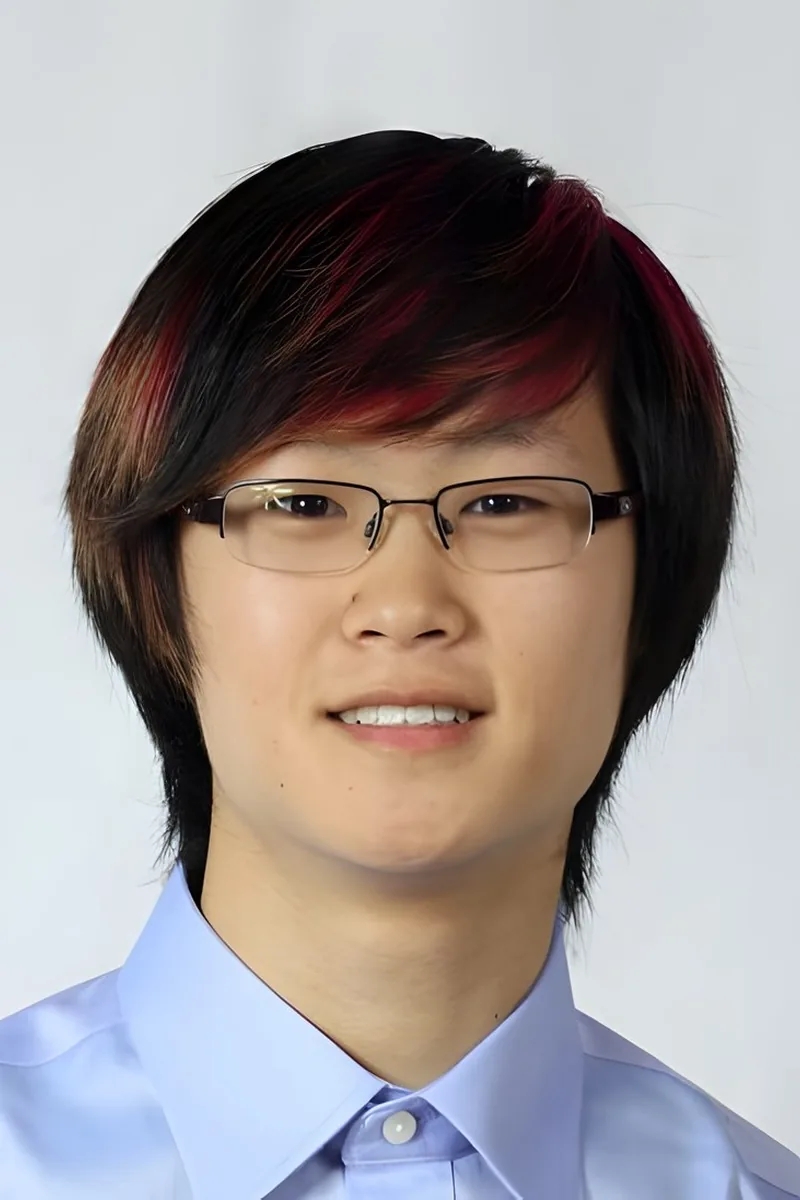
Dennis's Latin studies through AP level sit alongside his physics and math work at Princeton — an unusual combination that means he treats Latin grammar the way he treats a physics problem, breaking complex sentence structures into their component parts and solving them systematically. He's especially effective with the kind of precise syntactic parsing that AP Latin demands, where identifying an ablative absolute or untangling a periodic sentence requires the same logical rigor as modeling turbulent plasmas.
Charles teaches both Latin 1 and Latin 2 alongside a full slate of English grammar and literature courses, which means he's constantly working at the intersection of Latin's grammatical structures and their echoes in modern English. That dual focus sharpens his ability to walk students through conjugation patterns and case endings by linking them to syntax rules they already use every day. His two years as a high school peer tutor built an instinct for spotting exactly where a translation starts to fall apart.
Having tutored high school Latin students while studying English and journalism at the University of Pennsylvania, Amy knows how to bridge the gap between memorizing paradigm charts and actually reading Latin with confidence. She zeroes in on building the kind of grammatical intuition — recognizing how a subjunctive signals purpose, or why word order shifts in poetry — that turns translation from a grind into something that clicks.
Paula's psychology and communication studies background means she's constantly bumping into Latin roots — in clinical terminology, rhetorical frameworks, and the academic vocabulary that underpins both fields. She leans on that familiarity to make vocabulary acquisition and grammatical patterns feel connected to words students already use, turning declension drills into something closer to code-breaking. Rated 4.8 by students.
Studying political science at Penn means Alessia regularly encounters Latin in its natural habitat — legal maxims, constitutional terminology, and the Roman political vocabulary that still shapes how we talk about governance today. She teaches Latin 1 through 4 and uses that real-world context to anchor grammar lessons, so students learning subjunctive mood or indirect statement constructions can see exactly where those forms show up outside a textbook. Rated 5.0 by students.
Studying Classics alongside Physics at Vanderbilt means Dylan reads Latin daily as part of his actual degree work — not as a side interest but as a core discipline. That dual training sharpens his ability to teach grammar as a logical system, walking students through subjunctive constructions, indirect statements, and the kinds of prose passages where precision with every case ending matters.
Having taught Latin 1 through Latin 4, Cassandra covers everything from first-declension nouns to translating Virgil and Cicero at an advanced level. Her literary training means she doesn't just parse grammar mechanically — she unpacks how word order, meter, and rhetorical figures create meaning in the original text.
Classics majors don't just study Latin — they live in it, and Sarah's undergraduate work means she's spent years translating original texts across genres from poetry to philosophy. She teaches all four levels with particular strength in helping students internalize the subjunctive mood and indirect discourse, two areas where rote memorization fails but understanding the underlying logic pays off.
As a Classics major at Carleton who aspires to teach high school Latin full-time, Emma has spent years immersed in the language — not just grammar drills, but reading original texts alongside Ancient Greek and the historical contexts that bring both languages to life. She covers all four levels plus AP Latin, and her weekly tutoring at a nearby high school means she's constantly refining how she explains everything from first-year noun declensions to the subjunctive constructions that trip up advanced students.
Having studied Latin through all four levels and prepped for the SAT Subject Test in it, Mahalia knows the language well enough to walk students through everything from first-declension nouns to sight-reading passages of original text. Her creative writing background gives her a sharp ear for how sentences are built — a skill that translates directly to parsing Latin word order, identifying clause boundaries, and making sense of authors who bury their main verbs three lines deep. Rated 5.0 by students.
Few students realize how much Latin overlaps with engineering thinking — every sentence is a system of interlocking parts where case endings, verb forms, and clause boundaries have to be identified and assembled in the right order. June studied Latin through four levels and prepared for the SAT Subject Test in it, giving her fluency with everything from basic noun declensions to reading original texts. Her electrical engineering training at Brown reinforces the same methodical, structure-first approach that makes complex translations manageable.
Three years of peer tutoring in Latin gave Brooke a clear sense of where students get stuck: noun declensions blurring together, ablative absolute constructions, the difference between purpose and result clauses. She walks through translations methodically, connecting each grammatical structure to how Romans actually built their sentences.
Reading original Latin manuscripts is central to James's paleography work at Yale, giving him a relationship with the language that goes well beyond grammar drills. He breaks down complex constructions — ablative absolutes, indirect discourse, purpose clauses — by connecting them to real passages from Vergil, Caesar, and Cicero so the syntax starts to feel intuitive.
Ruth's University of Chicago English degree and SAT Subject Test preparation in Latin mean she's spent serious time with the language's grammar, vocabulary, and literary roots — not just skimming declension charts but actually working through how Latin sentence structure operates. Her high school teaching background gives her a practical sense of where students get tripped up on things like verb conjugations and case identification, and she builds lessons that make those sticking points click. Rated 4.9 by students.
Zachary's PhD work at Harvard sits squarely at the intersection of German philosophy and classics, meaning he reads Latin not as a classroom exercise but as a daily tool for engaging with primary texts in their original language. He teaches all four levels and is especially sharp on the grammatical precision needed for dense philosophical and literary passages — ablative constructions, purpose clauses, and the kinds of nested relative clauses that make students' eyes glaze over until someone unpacks the logic holding them together.
An honors thesis on linguistic relativity among bilinguals gave Mary a researcher's eye for how languages encode meaning differently — exactly the kind of thinking that makes Latin's case system and word order feel logical rather than arbitrary. She teaches all three levels and draws on her speech-language pathology training at Vanderbilt to break down how Latin's morphological patterns actually work at a structural level, not just as rules to memorize. Rated 5.0 by students.
Most Yale students encounter Latin roots in passing — Joshua actually studied the language itself, covering all four levels and preparing for the SAT Subject Test in Latin. His Ethics, Politics, and Economics coursework keeps him reading texts steeped in Roman legal and philosophical terminology, which gives him a practical anchor for teaching everything from first-declension basics to translating dense prose passages.
Forgetting about right and wrong answers is where Latin actually starts — William treats translation as an act of interpretation, encouraging students to play with how a sentence's meaning shifts depending on how they read a subjunctive or resolve an ambiguous ablative. His BA in Classical Languages and Literature means he's spent years inside the original texts, not just parsing grammar exercises, and he also reads Ancient Greek, which sharpens his eye for the cross-linguistic patterns that make Latin's structures click. He covers all four levels plus the SAT Subject Test in Latin.
Latin's case system and verb conjugations can feel overwhelming until someone maps out the patterns clearly. Zora teaches declensions and syntax by showing how each grammatical structure signals meaning in a sentence, turning translation from a guessing game into a systematic process of decoding.
Holding a PhD in English, Craig has spent years tracing how Latin's grammatical architecture — its case system, subjunctive moods, and participial constructions — shaped the literary traditions he studies professionally. He teaches Latin 2 and 3 with particular attention to how reading fluency develops, walking students through the process of holding a complex periodic sentence in their head long enough to render it into natural English. Rated 5.0 by students.
Sarah's liberal arts training across music, theology, and world religions means she's spent years reading texts where Latin isn't just a classroom subject — it's the language sacred music, liturgical history, and philosophical ethics were written in. That lived context makes teaching declensions and conjugations stick, because every grammar concept connects to real hymns, prayers, and historical documents students can actually engage with. Rated 4.8 by students.
Four years of Latin at Notre Dame — enough to earn a minor — gave Lauren deep fluency with declensions, conjugations, and the grammatical logic that makes translating Virgil or Caesar feel less like guesswork. She teaches students to parse sentence structure methodically, starting with verb identification and working outward, so even complex passages become manageable. Rated 5.0 by students.
Grace's AP Latin coursework and political science studies at Vanderbilt mean she's read Roman oratory and governance texts in their original language — the kind of dense, clause-heavy prose where getting ablative absolutes and indirect statements right actually matters. She brings that firsthand experience with politically charged Latin passages to her teaching, walking students through how to decode complex syntax by anchoring each grammatical choice in what the author was trying to argue.
Classics majors don't just dabble in Latin — Rebecca is building her entire undergraduate degree around the language and its literary tradition, covering all four levels plus AP. That depth means she can walk a first-year student through basic conjugation patterns and then, in the next session, tackle the syntactic complexity of reading Vergil or Cicero in the original. Rated 5.0 by students.
A college English professor with dual degrees in the field, Toni knows how deeply Latin roots and grammatical structures run through the English language — every lesson on cases, conjugations, or syntax doubles as a window into why English works the way it does. She teaches Latin as a discovery process, encouraging students to piece together translations by recognizing patterns rather than relying on word-for-word lookup. Her 4.9 rating speaks to how well that active, student-driven approach lands.
Peter's history degree means he's spent years working with primary sources where Latin isn't decorative — it's the language of legal charters, church records, and the political documents that shaped Western civilization. That historical grounding gives him a concrete reason to teach case endings and verb forms: students learn to parse real inscriptions and texts, not just textbook exercises. Rated 4.8 by students.
Psychology's technical vocabulary is packed with Latin — terms like "affect," "stimulus," "ego," and "corpus callosum" all come straight from the language, and Aneri's neuroscience coursework at Cornell means she hits these roots constantly. She teaches Latin 1 and 2 with a knack for turning conjugation and declension patterns into something systematic, drawing on the same analytical rigor that earned her a 1520 SAT. Her SAT Subject Test preparation in Latin adds direct experience with the kind of grammar and reading comprehension the language demands.
Studying Classics at Yale means Maddie doesn't just translate Latin — she lives inside the language, reading original Roman texts as part of her daily coursework across all four levels and beyond. Her Socratic instinct kicks in during translation work especially: rather than correcting a misidentified subjunctive or misread ablative, she asks targeted questions that lead students to catch the error themselves and internalize the grammar rule behind it.
Declining nouns and conjugating verbs is just the entry point — Kelsey's BA in Latin means she's spent years reading Virgil, Ovid, and Cicero in the original and understands the grammar at a structural level. She breaks down tricky constructions like ablative absolutes and indirect discourse by connecting them to how Latin authors actually used them, making the language feel purposeful instead of purely mechanical.
Antony holds both a bachelor's and a master's degree in Classics, which means years of sustained reading in Latin prose and verse — not just a semester or two of grammar drills. That depth shows when he teaches syntax: he can walk a student through a dense periodic sentence from Cicero and explain exactly why the subjunctive appears where it does, connecting grammatical rules to how Roman authors actually wrote. Rated 5.0 by students.
Working in Sewanee's writing center gave Wallis a sharp eye for how Latin grammatical structures — particularly case usage and participial constructions — surface in English academic prose, making her explanations feel grounded rather than abstract. She also studied at the European University at St. Petersburg, where reading across languages reinforced the kind of close, syntax-level attention that Latin translation demands. Her Latin 1 and Latin 2 teaching covers foundational declensions through more complex sentence parsing.
Trained in Latin and Italian philology at Palacký University in the Czech Republic, Petra brings a European classical education to a language most American students encounter only through textbooks — she learned Latin as a living system intertwined with Italian, tracing how derivatives and grammatical structures migrated from one language into the other. That dual-language fluency is especially useful for teaching vocabulary roots, verb conjugations, and the way Latin's case system laid the groundwork for Romance language grammar. Rated 4.9 by students.
An applied mathematics degree and a computer science master's give Daniel an unusual toolkit for Latin — he approaches grammar the way a programmer approaches syntax, where every case ending and conjugation follows strict rules that either compile correctly or produce a visible error. That debugging mindset turns translation exercises into logic puzzles, making it easier for students to spot why a sentence breaks down and how to fix it. Rated 5.0 by students.
Philosophy and Latin are deeply entangled — Adam's degree means he's spent years encountering Latin terminology, logical structures, and the classical texts where Western philosophical traditions actually originated. He teaches Latin 1 through 3 with a focus on how grammatical concepts like subjunctive mood and indirect discourse carry philosophical nuance, so students learn to read with precision rather than just decode words. His background in Greek reinforces that classical-languages fluency.
Four levels of Latin coursework gave Noah deep familiarity with declensions, conjugations, and the sentence structures that trip students up most — ablative absolutes, indirect statements, and purpose clauses. He approaches Latin translation almost like parsing code: breaking a sentence into its grammatical components before assembling meaning. That systematic method makes even dense passages from Caesar or Virgil feel manageable.
Having studied Latin intensively through advanced levels at Yale, Malina treats the language as a system of interlocking patterns rather than a list of endings to memorize. She digs into how ablative absolutes, indirect discourse, and subjunctive clauses actually function in passages from Caesar, Virgil, and Cicero — so students learn to read Latin, not just decode it.
Alyna's Classics degree from Brown means Latin wasn't a side requirement — it was central to her undergraduate work, from reading original texts to understanding the grammatical architecture that holds complex prose together. She teaches Latin 1 and 2 with particular attention to how vocabulary and syntax carry over into English, making declension patterns and verb forms feel less like abstract memorization and more like unlocking a system students already half-know.
Holding a Master's degree in Latin, Catherine doesn't just teach the language — she lives in its literature, grammar, and history at a level most tutors can't match. She covers every level from Latin 1 through AP, with particular strength in guiding students from early declension patterns into reading authentic prose and poetry with real confidence. Rated 5.0 by students, she also teaches Greek, giving her the kind of cross-classical perspective that illuminates how Latin syntax and vocabulary function within the broader ancient world.
William's Classics degree from Boston University means he didn't just study Latin as a requirement — he read it as a living part of the ancient world, translating original texts alongside coursework in linguistics and archaeology. That dual lens lets him explain not only how a subjunctive clause or ablative construction works grammatically, but why Roman authors chose those structures to make their arguments. Rated 4.9 by students.
Testimonials
Because the right Latin tutor makes all the difference.
Average Session Rating – Based on 3.4M Learner Ratings
Other Virginia Beach Tutors
Related Languages Tutors in Virginia Beach
Frequently Asked Questions
Latin builds a strong foundation for English vocabulary, grammar, and reading comprehension—studies show students who study Latin score higher on standardized tests. Beyond academics, Latin opens doors to understanding history, law, medicine, and science, since many technical terms across these fields derive from Latin roots. For students in Virginia Beach pursuing advanced academics or professional fields, Latin demonstrates intellectual rigor and cultural literacy.
Verb conjugation and noun declension are the most common stumbling blocks—Latin's complex inflectional system requires systematic practice to internalize patterns. Many students also struggle with translating accurately while maintaining English fluency, and understanding the cultural and historical context that brings Latin texts to life. Personalized 1-on-1 instruction allows tutors to target these specific challenges and build confidence through focused practice rather than generic classroom pacing.
The first session focuses on understanding your student's current level, learning goals, and specific challenges—whether they're starting from scratch, preparing for AP Latin, or struggling with translation. The tutor will assess strengths and gaps, then create a personalized plan that might include grammar review, vocabulary strategies, translation techniques, or cultural context depending on needs. This foundation ensures every subsequent session builds exactly what your student needs most.
Reading and writing Latin are deeply connected—understanding how sentences are constructed helps with both translation and composition. Tutors use targeted practice in parsing (identifying parts of speech and grammatical relationships), vocabulary building, and pattern recognition to strengthen reading fluency, then apply those same skills to writing original Latin or translating English to Latin. This integrated approach helps students see Latin as a cohesive system rather than isolated grammar rules.
Yes—while Latin isn't a living conversational language, speaking Latin aloud improves retention, builds confidence with pronunciation, and deepens understanding of meter and rhythm in classical texts. Tutors can guide proper pronunciation, help students read passages aloud with correct emphasis, and even engage in simple Latin dialogue to reinforce vocabulary and grammar. This speaking practice is especially valuable since most classroom settings don't provide individual opportunity to vocalize Latin.
Yes—tutors connect with students preparing for AP Latin exams, focusing on the specific demands of the AP curriculum including translation, multiple-choice comprehension, and essay composition on classical texts. With Virginia Beach's 123 schools and strong academic programs, many students pursue AP Latin, and personalized instruction helps students master both the technical skills and cultural knowledge the exam requires. Tutors can tailor preparation to your student's timeline and target areas for improvement.
Tutors who work with Varsity Tutors have deep expertise in Latin—many hold degrees in Classics, Latin, or related humanities fields, and many have teaching experience or advanced certifications. Each tutor is vetted for subject mastery and teaching ability, ensuring they can explain complex grammar clearly and guide students through authentic Latin texts. You can learn about a tutor's specific background and experience before connecting.
Tutors are familiar with Latin programs across Virginia Beach's school districts and can align instruction with your student's specific course—whether it's Latin I fundamentals, Latin II advanced grammar, or AP Latin. They understand local curriculum pacing and can provide targeted support during challenging units, help with homework and translations, or provide enrichment beyond classroom instruction. This local expertise ensures tutoring complements rather than conflicts with classroom learning.
Let’s find your perfect tutor
Answer a few quick questions. We’ll recommend the right plan and match you with a top 5% tutor.