Award-Winning Trigonometry Tutors
serving Houston, TX
Trigonometry
Tutors in Houston
Private 1-on-1 tutoring, weekly live classes for academic support, test prep & enrichment, practice tests and diagnostics, and more to elevate grades and test scores.
Based on 3.4M Learner Ratings
UniversitiesSchools & Universities
DeliveredHours Delivered
ProficiencyGrowth in Proficiency
Who needs tutoring?
No obligation. Takes ~1 minute.

Trig can feel like a wall of identities and unit circle values to memorize, but Jessy approaches it by connecting sine, cosine, and tangent back to the geometry students already understand. As a biosciences major at Rice, she regularly uses trigonometric relationships in physics and lab coursework, so she teaches the material as a toolkit rather than an abstraction.
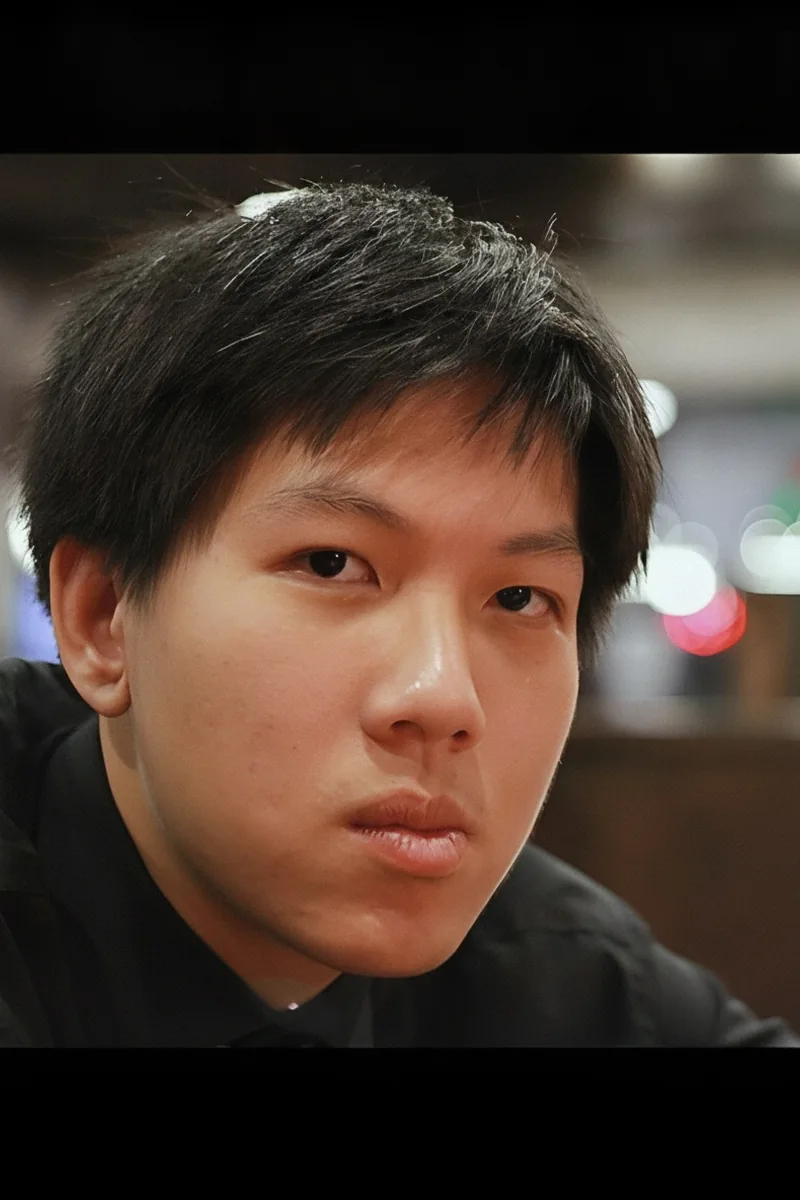
Trig identities stop feeling like arbitrary formulas once you see them as geometric relationships on the unit circle. Alexander teaches trigonometry by grounding every identity and equation in that visual logic, so students can derive what they need instead of relying on a memorized sheet. His math background at Rice means he can connect trig concepts forward to calculus and physics applications when students are ready.
Trig identities can feel like an endless list of formulas to memorize, but most of them unravel from just a handful of relationships on the unit circle. Vinson teaches students to derive identities like double-angle and sum-to-product formulas from scratch, which makes verifying equations and solving trig proofs far more intuitive. His computational math training means he's especially sharp on the connections between trig functions and their graphs.
The unit circle tends to be the make-or-break moment in trigonometry, and Kendall approaches it by teaching students to derive values rather than just memorize a chart. She walks through identities, inverse functions, and graphing transformations with an emphasis on seeing the geometry behind the algebra. Her 4.9 rating speaks to how well that visual, intuition-first approach clicks with students.
Trig identities tend to feel like arbitrary formulas until someone connects them back to the unit circle and shows why they work geometrically. Emily approaches trigonometry that way, tying sine and cosine transformations to visual intuition so that verifying identities and solving equations becomes a logical process instead of guesswork.
Trig identities and unit circle fluency trip up a lot of students because the material feels disconnected from anything concrete. Jonathan ties sine, cosine, and tangent back to the engineering applications where he actually used them — wave analysis, vector decomposition, signal modeling — which makes the relationships between identities click faster.
Trig identities and the unit circle tend to feel like arbitrary rules until someone shows you the geometry underneath them. Chelsea's engineering background at Brown keeps her immersed in sinusoidal functions, phase shifts, and vector components, so she can connect each identity back to a visual or physical meaning that actually sticks.
Trig identities can feel like an endless list of formulas to memorize until someone shows you the handful of relationships everything else derives from. Casey approaches trigonometry through the unit circle as a unifying concept, tying together sine, cosine, tangent, and their inverses so students can reconstruct what they need instead of relying on a cheat sheet. Her three science degrees gave her plenty of practice applying trig in real-world contexts like wave functions and vector analysis.
Most trig frustration comes from treating identities as a list to memorize instead of relationships that follow from the unit circle. Jacob unpacks where each identity originates — why sin²θ + cos²θ = 1 is really just the Pythagorean theorem in disguise — so that solving equations and simplifying expressions becomes logical rather than mechanical.
The unit circle alone stops a lot of students cold, and then identities and inverse trig functions pile on top. Cyrus tackles trigonometry by connecting each identity back to geometric intuition so students can derive relationships on the fly instead of relying on a memorized sheet that falls apart under pressure.
The unit circle, identities, and inverse trig functions become a lot less intimidating when a student understands why sinusoidal functions behave the way they do. Yuanxin unpacks trigonometry through its engineering roots — wave behavior, signal analysis, and geometric reasoning — so the identities feel like logical relationships instead of formulas to memorize.
Trig identities and the unit circle can feel like a wall of formulas to memorize, but Omar approaches trigonometry as a set of relationships that become intuitive once you see where they come from geometrically. His electrical engineering work at Rice relies heavily on sinusoidal functions, phase angles, and waveform analysis — so he teaches trig with the kind of applied fluency that makes the subject stick.
Trig identities tend to feel like an endless list of formulas until someone shows you the handful of core relationships everything else derives from. Rahul's engineering background means he used sine, cosine, and tangent functions daily — for wave analysis, directional drilling calculations, and fluid flow modeling — so he teaches the unit circle and identity proofs with a practical intuition that sticks.
The unit circle, identities, and inverse trig functions trip students up because they're often taught as disconnected formulas to memorize. Aleksey approaches trig by building geometric intuition first — showing why sin²θ + cos²θ = 1 is obvious once you see it on a circle, and how that single insight unlocks dozens of identity proofs. His engineering background at Rice keeps the material grounded in real applications like wave analysis and vector decomposition.
Environmental statistics at Rice meant Alex was constantly fitting periodic models to seasonal data — temperature cycles, tidal patterns, rainfall oscillations — all built on sine and cosine functions. That hands-on repetition with amplitude, period, and phase shifts gives him an intuitive feel for trig that he channels into teaching graphing transformations and identity work. His dual background in geography and humanities also means he can explain the same concept multiple ways until one clicks.
Trig identities and unit circle fluency are the backbone of every STEM course that follows, and Effie treats them that way. As a medical student with a biochemistry degree, she's used sinusoidal models and angular relationships in contexts ranging from physics to biomedical imaging. She walks through each identity derivation so students actually internalize the logic instead of relying on a formula sheet.
The unit circle tends to feel like a wall of memorization until someone shows you the geometry behind it. Ali breaks down identities, inverse trig functions, and the Law of Cosines by connecting each one back to the triangle relationships students already understand — an approach rooted in the rigorous problem-solving his Applied Mathematics degree required.
Trig can feel like a wall of disconnected formulas — unit circle values, identities, inverse functions — until someone shows you the geometry underneath all of it. Elliot's biology coursework at Texas A&M keeps him fluent in applied trig through physics and data modeling, so he teaches the subject as a toolkit rather than a memorization exercise.
Trig identities can feel like an endless list of formulas to memorize, but Jeremy teaches them as a connected system where each identity derives from a handful of core relationships. Studying computer science at Columbia, he regularly applies sine, cosine, and angular transformations in graphics and signal processing contexts. That real-world fluency makes unit circle reasoning and identity manipulation click faster.
Trig identities and unit circle values stop feeling arbitrary once someone explains the geometry behind them. Doug approaches trigonometry through the lens of his engineering training, tying sine and cosine functions to wave behavior, vector components, and practical applications that make the relationships intuitive rather than just formulas to memorize.
Trig identities start making sense once a student can actually see what's happening on the unit circle instead of treating sin, cos, and tan as abstract buttons on a calculator. Yucheng connects each identity back to geometric and engineering intuitions, which is especially useful when problems shift to verifying identities or solving trig equations.
The unit circle trips up most students because they try to memorize it cold rather than understanding the geometry behind it. Patrick teaches trigonometry by connecting each identity and ratio back to the triangle relationships that make them intuitive, so concepts like the law of sines, radian measure, and graphing sinusoidal functions actually click.
Trig identities and unit circle values tend to feel like an endless list to memorize — until someone shows you the underlying patterns. Birinder breaks down sine, cosine, and tangent relationships by connecting them to the geometry students already know, building intuition that makes verifying identities and solving equations far more manageable.
Trig identities and unit circle values are notoriously easy to mix up when students try to memorize them in isolation. Megan teaches the underlying geometry so that identities like double-angle and sum-to-product formulas become derivable on the spot, not just flashcard fodder. As someone who also loves art and music, she often uses wave patterns and visual reasoning to make sinusoidal functions intuitive.
Trig identities and unit circle values tend to feel like arbitrary things to memorize until someone shows you the geometry underneath them. Steven breaks down concepts like the law of sines, inverse trig functions, and radian measure by connecting them to the real engineering problems he solved throughout his biomedical engineering coursework.
Trig clicks once you stop treating identities as formulas to memorize and start seeing them as relationships between the sides and angles of a triangle. Solmarie breaks down concepts like the unit circle, law of sines, and inverse trig functions by connecting each one back to that geometric intuition. Her biochemistry coursework at the University of Houston keeps her using trig regularly in physics and chemistry applications.
Trig can feel like a maze of identities and unit circle values until someone shows you the geometric intuition underneath. Stan's engineering coursework leaned heavily on trigonometric applications — wave analysis, vector decomposition, force resolution — so he teaches sin, cos, and tan as tools with purpose rather than formulas to memorize. Rated 4.9 by students.
Trig identities and the unit circle tend to feel like arbitrary rules until someone shows you the geometry underneath them. Frances breaks down concepts like radian measure, sinusoidal graphs, and inverse trig functions by connecting each one back to visual and logical reasoning rather than rote formula sheets.
The unit circle tends to be the make-or-break concept in trigonometry, and Julian treats it as a map students learn to navigate rather than a chart to memorize. His power engineering degree required constant work with sinusoidal functions, phase angles, and identities, so he can connect each trig concept to a concrete, intuitive picture of what's actually happening.
The unit circle doesn't have to be a memorization nightmare. Joshua teaches trig identities and angle relationships by connecting them back to the geometry and algebra students already know, building intuition for why sine and cosine behave the way they do rather than relying on formula sheets.
The unit circle tends to be the make-or-break moment in trigonometry, and everything after it — identities, inverse functions, the law of cosines — depends on actually understanding why it works. Mackenzie unpacks the geometry behind each trig ratio so that memorizing special angles becomes unnecessary. Rated 4.8 by her students, she covers the subject from foundational definitions through applications in physics and calculus prep.
The jump from memorizing trig identities to actually applying them in proofs and equations trips up a lot of students. Jake approaches trigonometry by grounding everything in the unit circle first, then showing how identities like double-angle and sum-to-product formulas emerge logically from that single diagram. His 5.0 rating speaks to how well that visual, connected approach lands.
Game theory for advanced middle schoolers in Hong Kong, an economics degree from Brown with applied math coursework — Carter's background is heavy on quantitative reasoning, which shows up in how he teaches trig as a system of relationships rather than a stack of formulas. He zeroes in on graphing transformations and identity proofs by connecting them to the algebraic thinking students already have from earlier math courses. Rated 5.0 by students.
As a TA for Calculus I and II at Rice, Sakibul regularly saw students struggle with trig not because the calculus was hard, but because their understanding of identities and inverse functions had gaps from the start. That experience sharpened his ability to pinpoint exactly where a concept like double-angle formulas or radian conversion broke down and rebuild it from the ground up. His graduate work in computational and applied mathematics keeps these foundational tools in constant use.
Most trigonometry frustration comes from the unit circle feeling arbitrary — students memorize reference angles and identities without understanding where they originate. Kinjal unpacks the geometry behind sine, cosine, and tangent so that deriving identities and solving equations becomes logical rather than rote. Her 1550 SAT score speaks to the kind of mathematical fluency she brings to each session.
Trig identities and the unit circle often feel like arbitrary memorization until someone shows you the geometry underneath. Steven connects sine, cosine, and tangent to real engineering problems — wave behavior, force components, rotational motion — so the relationships stick rather than just getting crammed before a test.
The unit circle is where most trig students either lock in or zone out, and Kenan's approach is to build it from scratch using right-triangle ratios so the memorization actually has a backbone. From there he connects sine and cosine graphs to their identities, making verification and equation-solving feel like one continuous skill rather than a pile of disconnected formulas.
The unit circle, identities, and inverse trig functions stop being mysterious once a student sees how they connect to each other instead of treating them as separate things to memorize. Michael's path through accelerated math at the Texas Academy of Mathematics and Science and into a Rice statistics program means he uses trigonometric concepts regularly in applied settings. He walks through derivations and visual intuitions that make identities like double-angle and sum-to-product feel logical rather than arbitrary.
The unit circle either becomes a student's best friend or worst enemy — Samantha makes sure it's the former by connecting sine, cosine, and tangent to visual intuition before diving into identities and inverse functions. She's taught trig concepts as part of Princeton's calculus tutoring program, where strong trigonometric fluency is non-negotiable for integration techniques.
Trigonometric identities, the unit circle, and the law of cosines aren't just academic exercises for Mohamed — they're tools he applies constantly in his robotics and mechanics coursework at Penn. He teaches trig by anchoring each identity to a geometric or physical intuition, so students understand why sin²θ + cos²θ = 1 instead of just memorizing it. His 5.0 rating speaks to how well that approach lands.
Testimonials
Because the right Trigonometry tutor makes all the difference.
Average Session Rating – Based on 3.4M Learner Ratings
Practice Trigonometry
Free practice tests, flashcards, and AI tutoring for Trigonometry
Nearby Trigonometry Tutors
Other Houston Tutors
Related Math Tutors in Houston
Frequently Asked Questions
Many students find the transition from algebra to trigonometry challenging because it requires understanding both procedural skills (memorizing ratios and formulas) and conceptual reasoning (why these relationships work). Common pain points include visualizing angles and unit circles, applying trigonometry to word problems, and understanding how sine, cosine, and tangent relate to each other. Working with a tutor helps students move beyond memorization to see the underlying patterns and connections that make trigonometry click.
During your first session, a tutor will assess your current understanding of foundational concepts like angles, right triangles, and basic ratios. They'll identify specific areas where you're struggling—whether that's graphing trigonometric functions, solving equations, or applying trig to real-world problems—and ask about your learning style and goals. This personalized approach ensures that subsequent sessions are tailored to your needs and curriculum, whether you're using standard textbooks or your Houston-area school's specific approach.
Word problems require translating real-world scenarios into mathematical equations, which is where many students get stuck. A tutor teaches you a systematic approach: identifying what information you have, what you're solving for, and which trigonometric relationships apply. They'll show you how to draw diagrams, set up equations step-by-step, and check your work—building both your problem-solving strategy and your confidence in applying trig concepts beyond textbook examples.
Showing work in trigonometry isn't just about getting the right answer—it demonstrates that you understand each step and can apply concepts correctly. Teachers and standardized tests expect clear reasoning, especially on exams like the SAT and ACT where trigonometry appears. A tutor helps you develop the habit of organizing your work logically, explaining your reasoning at each stage, and catching errors before they compound. This approach also makes it easier for your teacher to give you feedback and helps you learn from mistakes.
Math anxiety often stems from feeling lost or falling behind, which is especially common when transitioning to trigonometry. Personalized 1-on-1 instruction creates a judgment-free space where you can ask questions, work through problems at your own pace, and build confidence gradually. A tutor celebrates small wins, helps you see that struggling is part of learning, and shows you that trigonometry becomes manageable once you understand the core concepts. Many students find that consistent support transforms their relationship with math.
Graphing sine, cosine, and tangent functions requires understanding both the unit circle and how to translate that into visual patterns. Many students memorize amplitude, period, and phase shift without truly grasping why these properties matter. A tutor uses visual tools, interactive approaches, and connections to real-world applications (like waves and periodic motion) to help you see the relationships between the unit circle, equations, and graphs. This conceptual foundation makes transformations and more complex functions much easier to tackle.
Look for tutors with strong mathematics backgrounds and experience teaching trigonometry specifically—not just general math tutoring. They should understand different learning styles, be able to explain concepts multiple ways, and know how to break down complex ideas into manageable steps. Varsity Tutors connects you with expert tutors who have proven experience helping students master trigonometry and build genuine understanding, whether you're preparing for a class, standardized test, or just need to catch up.
Houston's 45 school districts may use different textbooks and approaches to teaching trigonometry, so curriculum alignment matters. When you connect with a tutor, you can share your textbook, notes, and specific topics your teacher emphasizes. A tutor then tailors sessions to match your school's pacing and expectations, whether you're working on right triangle trigonometry, the unit circle, or trigonometric identities. This personalized alignment ensures tutoring directly supports your classwork and exams.
Let’s find your perfect tutor
Answer a few quick questions. We’ll recommend the right plan and match you with a top 5% tutor.