Award-Winning Algebra 2 Tutors
serving Houston, TX
Algebra 2
Tutors in Houston
Private 1-on-1 tutoring, weekly live classes for academic support, test prep & enrichment, practice tests and diagnostics, and more to elevate grades and test scores.
Based on 3.4M Learner Ratings
UniversitiesSchools & Universities
DeliveredHours Delivered
ProficiencyGrowth in Proficiency
Who needs tutoring?
No obligation. Takes ~1 minute.
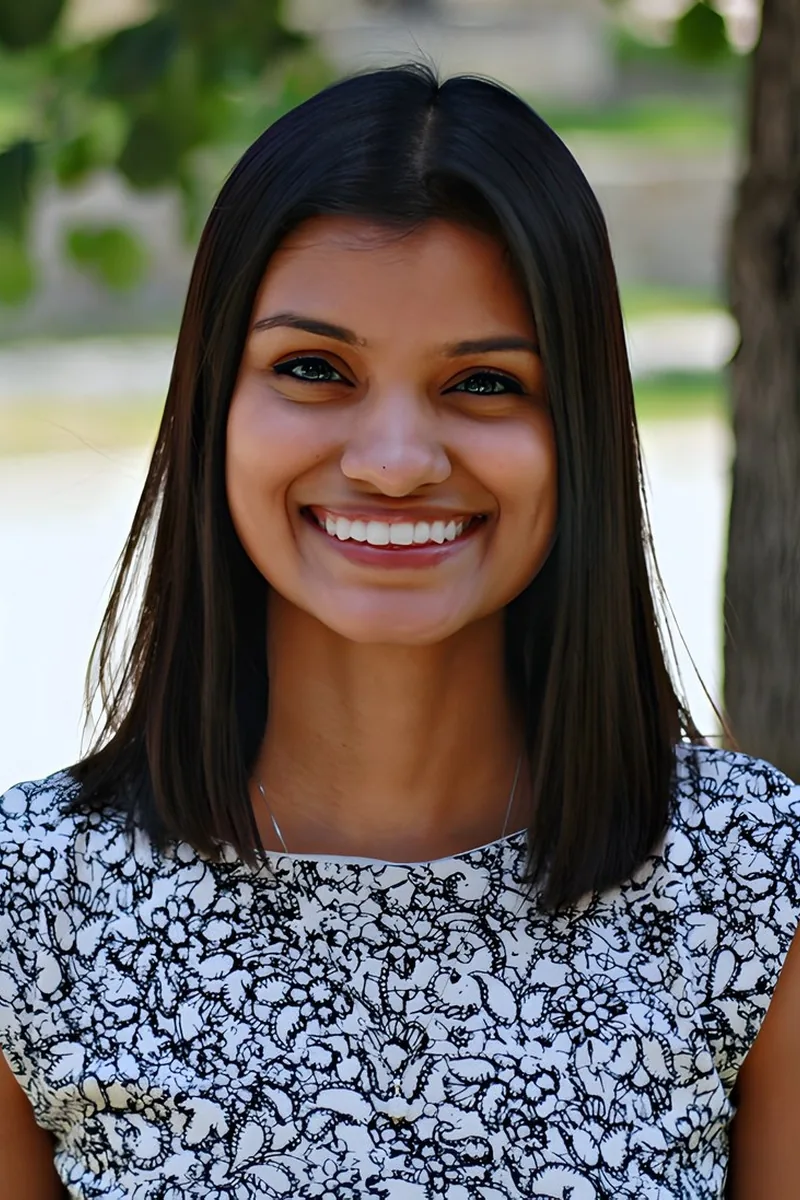
Logarithmic functions, complex numbers, and polynomial division tend to be the exact spots where Algebra 2 students lose the thread. Sugi's approach leans on her cognitive science training — she diagnoses whether the breakdown is conceptual, procedural, or notational, then targets that specific gap instead of re-teaching an entire chapter. That precision keeps sessions efficient and builds genuine confidence with abstract reasoning.

Cognitive science training at Rice taught Adam to think about pattern recognition and problem-solving at a structural level — skills that translate directly when an Algebra 2 student is trying to see the logic connecting exponential functions to their logarithmic inverses. He scored a 34 ACT and tutors math from elementary through calculus, so he can quickly identify whether a stumbling block in Algebra 2 traces back to a shaky concept from earlier courses and rebuild from there.
Logarithms, complex numbers, and rational functions tend to be the exact spots where Algebra 2 students lose their footing. Jessy's science-heavy coursework at Rice means she uses these tools constantly and can show students what they actually do in context — why exponential growth matters, how a logarithmic scale works in real data. That concrete connection makes abstract algebra far more intuitive.
At Rice, William's computer science coursework turns Algebra 2 concepts like recursive sequences and polynomial manipulation into daily tools — writing algorithms that depend on getting the symbolic logic exactly right. That practical fluency, backed by a 1540 SAT, means he can pinpoint the exact step where a problem goes sideways and rebuild a student's reasoning from there.
At Rice, Alexander's applied mathematics coursework treats every formula as something to derive, not just deploy — an approach he carries directly into Algebra 2 topics like completing the square or manipulating logarithmic expressions. He teaches the problem-solving logic underneath each procedure so students can rebuild a method when memory fails them mid-exam. His 1580 SAT speaks to that depth of mathematical reasoning.
Computational mathematics at Rice means Vinson doesn't just solve Algebra 2 problems — he studies the structures underneath them, like why polynomial behavior changes at certain degrees or how logarithmic and exponential functions are really two sides of the same coin. That perspective lets him teach topics like sequences and function transformations as connected ideas rather than isolated chapters. His 36 ACT and 4.8 rating speak to how well that approach lands with students.
Working in a research lab at UTHealth, Emily regularly encounters the exponential and logarithmic relationships that trip up most Algebra 2 students — except in her world, they describe enzyme kinetics and cell growth rather than textbook exercises. Her triple-major background in biochemistry and cell biology means she can unpack why a function transformation or polynomial behaves the way it does, grounding abstract rules in scientific reasoning that makes them easier to retain.
Logarithmic functions, complex numbers, and polynomial division are where most Algebra 2 students start to feel lost — the material shifts from computation to abstraction fast. Raj earned a perfect 36 ACT and studies biochemistry at Rice, so he's comfortable translating abstract math into step-by-step reasoning that actually sticks. He's a big believer in structured practice, building fluency through repetition until each problem type feels automatic.
When Algebra 2 shifts from straightforward equations to logarithmic functions and polynomial division, the abstraction trips up even strong math students. Kendall breaks these concepts into visual, step-by-step reasoning — connecting new material back to the algebraic foundations students already trust. Her 1580 SAT score speaks to the kind of mathematical fluency she brings to every session.
Coming from a magnet high school focused on math and science, then landing a full-ride to Rice, Natalie built her algebraic toolkit early and under pressure — so she knows exactly where Algebra 2 concepts like polynomial division and complex number operations start to feel overwhelming. Her cognitive science studies give her an unusual edge: she understands how people actually learn abstract notation, which means she can rework an explanation on the fly when the standard textbook approach isn't clicking.
Mechanical engineering at Brown means Chelsea is constantly solving problems where the algebraic tools from Algebra 2 — systems of equations, complex expressions, function behavior — aren't optional; they're load-bearing. She's especially good at the transition point where students go from memorizing steps to actually reasoning through why a logarithmic or rational expression works the way it does, drawing on her own experience wrestling those concepts into place for engineering applications.
Logarithms, polynomial division, and rational functions tend to be the exact topics where Algebra 2 shifts from familiar to frustrating. Jacob, a math PhD student at Boston College, treats each of these as a natural extension of patterns students already know from Algebra 1 — connecting new material back to simpler structures so the logic clicks rather than just the procedures.
Three science degrees — including bioengineering — meant Casey couldn't just pass through Algebra 2 concepts like systems of equations or exponential models; she had to wield them daily in coursework ranging from physiology to organic chemistry. That constant application gives her a practical read on which algebraic skills actually need to be airtight and which shortcuts fall apart under pressure, so she zeroes in on the gaps that matter most.
As a chemical engineer, Jonathan doesn't just remember Algebra 2 — he never stopped using it, from modeling reaction rates with exponential equations to solving systems that describe real process flows. That engineering lens gives him a practical way to explain why something like a logarithm exists, not just how to manipulate it. His 1550 SAT confirms the mathematical precision he brings to each concept.
Rocket design at Brown means Roni doesn't just remember Algebra 2 — he's actively using polynomial models, exponential relationships, and systems of equations to solve propulsion and structural problems in his mechanical engineering coursework. That daily application gives him a sharp sense for which algebraic habits from earlier courses need to evolve when students hit topics like logarithms or complex rational expressions, and he can pinpoint exactly where the disconnect is happening. His 1520 SAT and 33 ACT back up the mathematical fluency he brings to each session.
Electrical and computer engineering coursework throws Alfonso into polynomial modeling, complex number arithmetic, and systems of equations on a daily basis — all topics rooted in Algebra 2. His 32 ACT confirms the mathematical fluency, and because he's actively using these algebraic tools to analyze circuits and signals, he can show students exactly how an abstract rule like the properties of exponents turns into something you actually depend on.
Logarithms, polynomial division, and rational expressions are where Algebra 2 starts to feel genuinely abstract — and Alexander tackles that transition by showing students the logic underneath each new operation. His Rice mathematics background means he can explain not just how to solve a system of equations or simplify a complex expression, but why the method works in the first place.
Logarithms, polynomial division, and rational functions tend to be the exact spots where Algebra 2 stops feeling intuitive. Enstin tackles each of these by connecting new concepts back to the algebra fundamentals a student already knows — showing, for instance, how logarithms are just exponents asked in reverse. His math tutoring background stretches back to high school, and he scored a 1550 on the SAT.
Logarithmic functions, polynomial division, and conic sections tend to be the topics where Algebra 2 students lose their footing. Lila tackles these by connecting each new concept back to the algebraic reasoning students already know, building the logic step by step rather than rushing to formulas. Her 36 ACT composite — earned partly through the math section's algebra-heavy content — speaks to how well she knows this material.
Biomedical engineering at Rice means Aurnab regularly models physiological systems using the exact polynomial, exponential, and logarithmic tools that Algebra 2 introduces — so he can show a student what a rational function actually describes, not just how to simplify one. He also competes in competition math, which sharpened his instinct for spotting elegant shortcuts through problems that initially look like walls of algebra. Rated 4.9 by his students.
The jump from Algebra 1 to Algebra 2 is where many students lose their footing, especially around logarithmic functions, complex numbers, and polynomial division. Cyrus breaks these topics into step-by-step reasoning chains so the logic clicks rather than feels like a wall of new rules. Rated 5.0 by students, he's particularly strong at connecting abstract Algebra 2 concepts back to the foundational skills students already have.
Programming in Python and Java every day at Rice means Alex is constantly translating algebraic logic into working code — loops that depend on sequences, conditionals built around inequalities, functions that mirror exactly what Algebra 2 asks students to master on paper. That computational mindset gives him a unique way of unpacking topics like piecewise functions and recursive definitions: he can show students the structure behind the notation instead of just drilling the steps.
Data science coursework at Rice means Sage is constantly building models that depend on the exact polynomial, exponential, and logarithmic tools Algebra 2 introduces — so she can show a student what these concepts actually do beyond the textbook. Her economics training adds another layer: optimization problems and trend analysis give her concrete scenarios to ground abstract topics like sequences and function transformations. Rated 4.8 by her students.
Engineering coursework at the University of Houston keeps Austin grounded in the practical side of Algebra 2 — he's solving systems, manipulating rational expressions, and working with exponential models in his petroleum engineering classes, so he can show students exactly where these tools lead. A 34 ACT and 1570 SAT confirm he's sharp across the board, but what stands out is his knack for simplifying material that previous teachers overcomplicated. Rated 5.0 by his students.
Socratic questioning is Sarah's go-to move in Algebra 2 — instead of demonstrating how to solve a logarithmic equation or simplify a rational expression, she asks the sequence of questions that leads a student to figure out the next step themselves. Her biochemistry major at Trinity means she's working with these algebraic tools in applied settings daily, and her 1580 SAT confirms the mathematical precision behind that approach.
The jump from Algebra 1 to Algebra 2 is where many students first encounter logarithms, complex numbers, and polynomial division — concepts that feel disconnected without someone tying them back to underlying patterns. Yuanxin's electrical engineering training means she uses these tools daily and can show students exactly how exponential and logarithmic functions relate to real systems. Her 4.9 rating speaks to how effectively she makes that abstract material click.
Logarithmic functions, polynomial division, and conic sections all demand a level of abstract thinking that trips students up after the more concrete work of Algebra 1. Mathilde tackles these jumps by linking new concepts back to familiar ones — showing, for instance, how exponential and logarithmic functions are just inverses of each other, not entirely new territory.
Economics coursework at NYU has Lawrence constantly working with the kinds of functions Algebra 2 introduces — modeling growth with exponentials, manipulating logarithmic relationships, analyzing how variables shift when you transform an equation. He earned a 34 ACT and a 4.9 student rating, and he's particularly effective at untangling the moments where Algebra 1 intuition breaks down and new reasoning needs to take over.
Logarithmic functions, complex numbers, and polynomial division tend to be the exact spots where Algebra 2 students lose their footing. Badru's undergraduate math training means he doesn't just re-explain the textbook — he can reframe a tough concept three different ways until one clicks. Rated 5.0 by students.
Most students struggle in Algebra 2 not because the material is harder, but because it's the first time they need to think in layers — exponential and logarithmic relationships, systems with three variables, sequences that build on recursive definitions. Ryan teaches these topics by stripping each one back to the simpler algebra concept it grew out of, so students can reason through unfamiliar problems instead of freezing up. He's rated 5.0 by students.
Logarithms, complex numbers, and rational functions are the spots in Algebra 2 where many students lose their footing. Omar connects these topics to his engineering work at Rice — showing, for example, how logarithmic scales appear in signal processing — which turns abstract exercises into problems with a visible purpose. He's rated 5.0 by students.
Logarithmic functions tend to be the concept where Algebra 2 stops feeling intuitive for most students. Amy approaches them by connecting exponential and logarithmic forms side by side, making the relationship concrete before moving into properties and equations. Her math and science background means she can also tie abstract algebraic concepts to real applications in biology and physical science, which often makes the "why" click faster.
Mechanical engineering at Rice means Aleksey doesn't just remember Algebra 2 — he still depends on it, using polynomial models and exponential relationships every time he analyzes a physical system or designs a simulation. That daily fluency lets him pinpoint exactly where a student's reasoning breaks down, whether it's the leap from linear to nonlinear functions or the first encounter with complex numbers. Rated 5.0 by his students.
Logarithmic functions, complex numbers, and polynomial division all show up constantly in college-level physics, so Daniel has used every major Algebra 2 concept under real pressure. He teaches students to see the logic behind operations like completing the square or simplifying rational expressions, turning procedures that feel arbitrary into tools they actually understand.
Five years as a corrosion engineer taught Avi that exponential decay isn't a textbook abstraction — it's the equation that predicts when a pipeline fails. He brings that applied mindset to Algebra 2 topics like logarithmic and exponential functions, grounding each new rule in the kind of problem-solving his mechanical engineering degree trained him to do. Rated 5.0 by his students.
Logarithms, complex numbers, and polynomial division tend to be the exact topics where Algebra 2 students start feeling lost. Wendy's math background at UC Berkeley and her 1560 SAT give her deep fluency with these concepts, and she's skilled at connecting abstract functions back to the intuitive reasoning students already have from Algebra 1. She builds each session around the specific operations or problem types causing the most trouble.
Environmental statistics — Alex's concentration at Rice — runs on exactly the kind of exponential modeling, logarithmic transformations, and data-driven function analysis that Algebra 2 introduces. That graduate-level fluency means he can unpack why a logarithm undoes an exponential or how a piecewise function captures real environmental data, giving students the conceptual grounding to handle problems they haven't seen before.
Engineering coursework at the graduate level runs on the exact concepts that trip students up in Algebra 2 — logarithmic and exponential functions, polynomial behavior, and systems of equations with multiple variables. Rahul's petroleum and reservoir engineering degrees mean he's applied these tools to real modeling problems, so he can show students what these abstract ideas actually do beyond the textbook. Rated 5.0 by students.
Engineering grad school is where Algebra 2 concepts stop being homework problems and start being daily tools — Christi uses polynomial models, exponential relationships, and systems of equations constantly in her chemical engineering research. That dual perspective from mechanical engineering undergrad and current graduate work means she can pinpoint exactly which algebraic skills a student needs to lock down now and show them where those skills are actually heading.
Logarithmic functions, polynomial division, and complex numbers tend to be the exact spots where Algebra 2 shifts from manageable to overwhelming. Naushaba's chemistry and epidemiology training means she's used these tools constantly — modeling exponential decay, linearizing data, solving systems — so she teaches them as practical skills with real context, not abstract procedures. She holds a 4.5 rating from past students.
Testimonials
Because the right Algebra 2 tutor makes all the difference.
Average Session Rating – Based on 3.4M Learner Ratings
Practice Algebra 2
Free practice tests, flashcards, and AI tutoring for Algebra 2
Nearby Algebra 2 Tutors
Other Houston Tutors
Related Math Tutors in Houston
Frequently Asked Questions
Algebra 2 shifts from solving straightforward equations to understanding deeper mathematical relationships and patterns. Students often struggle because the focus moves from "how do I solve this?" to "why does this work?"—requiring them to think more conceptually about functions, exponentials, and complex numbers. Personalized 1-on-1 instruction helps bridge this gap by breaking down abstract concepts into concrete examples and showing how different topics connect.
Word problems, multi-step equations, graphing functions, and working with rational and radical expressions are frequent sticking points. Many students also struggle with exponential and logarithmic functions because they require thinking about relationships differently than linear equations. Tutors can identify exactly where understanding breaks down and use targeted strategies—like visual representations and real-world applications—to make these concepts click.
Showing work reveals your thinking process and helps identify where errors occur—crucial for mastering complex problem-solving. Many students rush through steps or skip logical connections, which leads to careless mistakes and gaps in understanding. Expert tutors teach systematic problem-solving strategies and help students develop the habit of writing out each step clearly, which builds both accuracy and confidence.
Yes. Houston's 45 school districts use various textbooks and approaches—from traditional curricula to more standards-aligned programs—and experienced tutors are familiar with these different methods. Varsity Tutors connects you with tutors who can work within your student's specific curriculum and teaching style, ensuring consistency between classroom instruction and tutoring sessions.
Math anxiety often stems from feeling lost or falling behind, which creates a cycle of avoidance. Personalized 1-on-1 instruction breaks this cycle by allowing students to ask questions without judgment, work at their own pace, and experience small wins that rebuild confidence. Tutors help students see patterns and understand the "why" behind concepts, transforming Algebra 2 from intimidating to manageable.
The first session is typically a diagnostic conversation where the tutor learns about your student's current level, specific challenges, and learning style. They'll assess which topics need the most attention—whether that's foundational gaps from Algebra 1, specific problem areas like graphing, or test preparation—and create a personalized plan. This foundation ensures every future session is targeted and efficient.
Expert tutors teach students to break multi-step problems into smaller, manageable pieces and recognize patterns that connect to familiar concepts. They model strategies like working backward from the answer, testing with specific numbers, and translating word problems into equations step-by-step. Regular practice with guided feedback helps students internalize these strategies so they can tackle unfamiliar problems independently.
Many students notice improved understanding and confidence within a few sessions, especially when tutoring targets specific weak areas. More significant improvements in grades and test scores typically emerge over 4-6 weeks of consistent work, depending on how far behind the student is and how frequently they meet with their tutor. Consistent practice between sessions accelerates progress.
Let’s find your perfect tutor
Answer a few quick questions. We’ll recommend the right plan and match you with a top 5% tutor.