Award-Winning Finite Mathematics Tutors
serving Pittsburgh, PA
Award-Winning
Finite Mathematics
Tutors in Pittsburgh
Private 1-on-1 tutoring, weekly live classes for academic support, test prep & enrichment, practice tests and diagnostics, and more to elevate grades and test scores.
Based on 3.4M Learner Ratings
UniversitiesSchools & Universities
DeliveredHours Delivered
ProficiencyGrowth in Proficiency
Who needs tutoring?
No obligation. Takes ~1 minute.
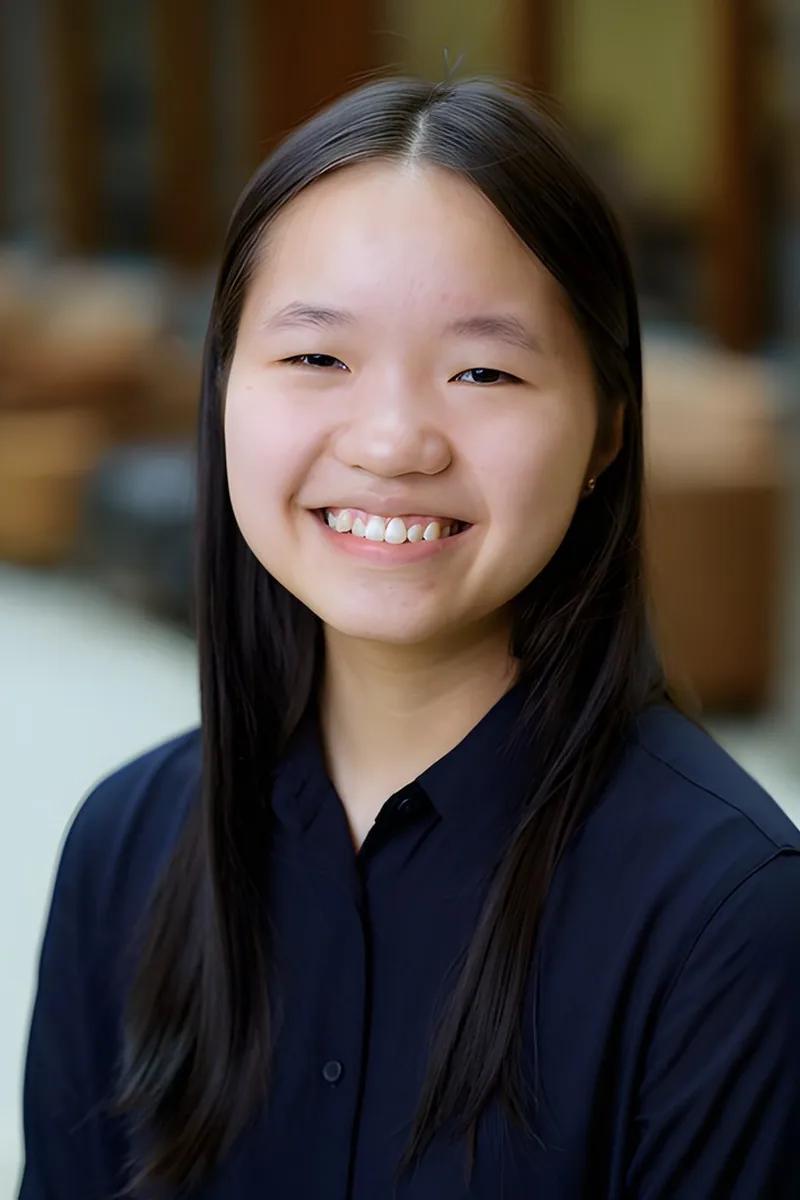
Biomedical engineering at Northwestern means Ingrid has worked through matrix algebra, probability, and optimization in contexts where the math had to produce real answers — modeling biological systems, analyzing experimental data, and solving constrained design problems. She's particularly strong at helping students translate messy word problems into clean mathematical setups, especially in linear programming and counting units where knowing what to formalize matters more than the computation itself.
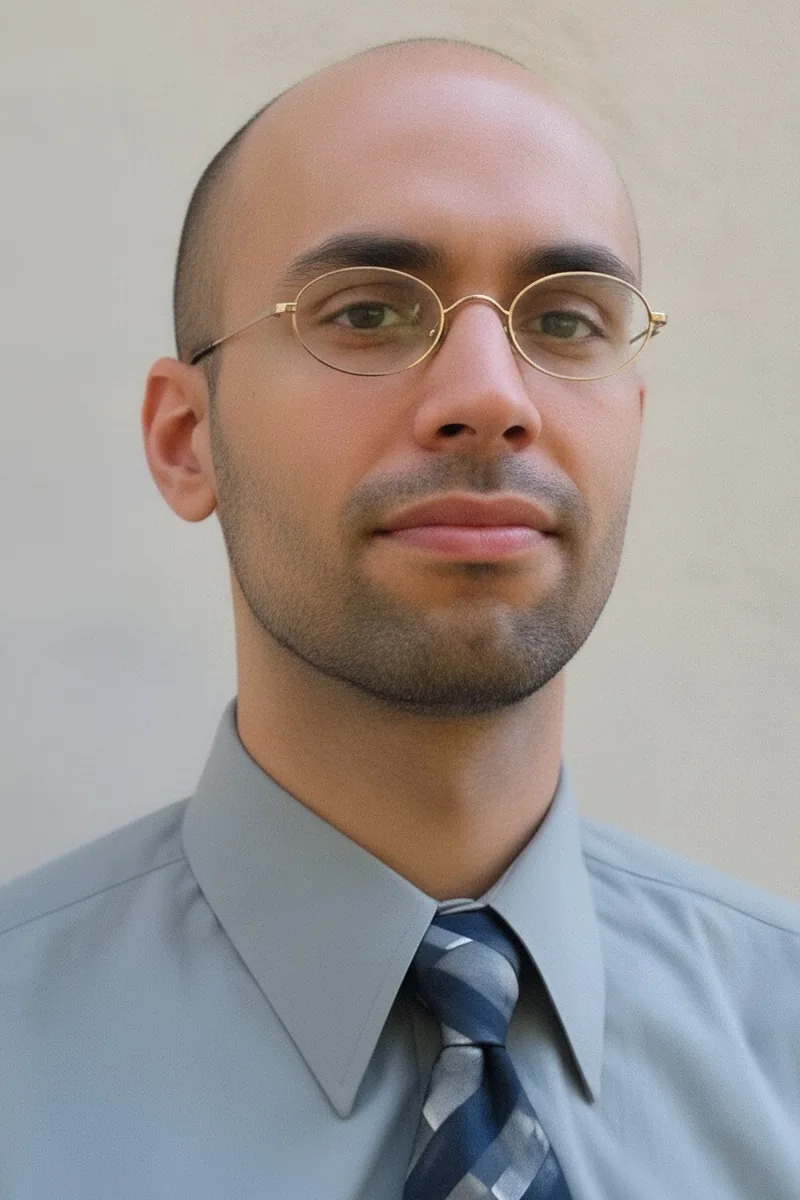
Sam's PhD in statistics means the probability and matrix algebra chapters in finite mathematics are second nature — he taught and applied those tools at a graduate level long before they showed up in an undergrad syllabus. His biomedical engineering background adds a practical edge when explaining how to set up linear programming problems or interpret a Markov chain, since he's used those models to solve real optimization and modeling questions. Rated 4.9 by students.
Pursuing a statistics and machine learning certificate at Princeton alongside her philosophy degree means Julie regularly works with the probability, combinatorics, and matrix operations that finite mathematics courses are built around — but her philosophy training also sharpens the logical reasoning that makes set theory and counting arguments click. She's especially strong at unpacking problems where the challenge isn't computation but figuring out how to structure the setup in the first place. Rated 4.9 by students.
Caltech's economics curriculum put Brian through heavy doses of matrix algebra, optimization under constraints, and probability — the exact toolkit finite mathematics courses test. He approaches linear programming and counting problems by connecting them to the economic modeling contexts where he first learned them, which gives students a concrete anchor for topics that can otherwise feel like disconnected chapters.
Economics training at the undergraduate level means Simon spent real time inside the linear programming and matrix models that finite mathematics courses test — building objective functions, interpreting shadow prices, and optimizing under constraints weren't abstract exercises but core tools for economic analysis. He's especially useful when students need to connect the algebra of systems of inequalities to what the solution actually means in context.
Until age 16, Viktor thought math was just blind memorization — then a series of teachers at the right moment revealed the logic underneath, and he ended up majoring in mathematics at UChicago. That conversion story matters for finite mathematics, where topics like counting techniques and set operations look arbitrary until someone shows you why the rules work the way they do. His 1600 SAT and current master's work in computer science at NYU keep him sharp on the discrete reasoning these courses demand.
Emma's combination of a neurobiology major and economics minor at Harvard meant heavy exposure to the exact topics that define finite mathematics — probability, matrices, linear programming, and combinatorics. She teaches students to recognize which model fits a given problem, then walks through the setup step by step so the logic is clear. Her 5.0 rating speaks to how well that structured approach translates for students.
Studying finance at Notre Dame means Charles is actively using the probability, matrix algebra, and linear programming that finite mathematics courses cover — present value calculations, portfolio optimization, and risk modeling all draw on the same toolkit. He breaks down the business-flavored word problems that trip students up, especially when translating a scenario into the right system of equations or figuring out which counting technique applies.
Economics PhD work at Yale means Anthony uses matrix algebra, linear programming, and probability models as everyday research tools — not just textbook exercises to get through. He unpacks the logic behind setting up objective functions and constraint systems so students see the structure of a problem before they start computing. Rated 5.0 by students.
Three engineering degrees — including one in applied mathematics — mean Rahi has used matrix operations, optimization setups, and probability computations as everyday working tools, not just textbook exercises. He unpacks the logic behind each problem type, whether it's building a system of inequalities for linear programming or organizing information in a counting argument, so the structure is clear before any calculation begins.
Graduating from an IB high school with top marks gave Zofia early exposure to the discrete reasoning and probability logic that finite mathematics courses revisit at the college level — and her Brown math degree deepened that foundation considerably. She's especially sharp at unpacking matrix operations and translating messy real-world scenarios into clean systems of equations, making the algebraic setup feel less arbitrary and more deliberate.
Qualifying for the AIME and MIT's Math Prize for Girls required exactly the kind of combinatorial and logical reasoning that finite mathematics courses test — counting arguments, set operations, and probability setups where one wrong assumption derails the whole problem. Lainie, now a biological engineering student at MIT, brings that competition-trained precision to breaking down whether a problem calls for a permutation or a conditional probability framework. Rated 5.0 by students.
Testimonials
Because the right Finite Mathematics tutor makes all the difference.
Average Session Rating – Based on 3.4M Learner Ratings
Other Pittsburgh Tutors
Related Math Tutors in Pittsburgh
Frequently Asked Questions
Finite Mathematics is a course focused on practical, real-world applications of math—including logic, set theory, probability, statistics, linear programming, and matrices—rather than calculus. Many students in Pittsburgh take it as a college-prep alternative to precalculus or as a requirement for business, economics, or social science majors. It emphasizes problem-solving and decision-making skills that apply directly to everyday situations.
Students often struggle with translating word problems into mathematical models, understanding when to apply different techniques (like probability vs. linear programming), and seeing how abstract concepts connect to real applications. Many also find the shift from procedural calculation to conceptual reasoning challenging—it's not just about getting an answer, but understanding why a particular approach works and what the result means in context.
Personalized 1-on-1 instruction helps students develop a systematic approach to breaking down word problems: identifying what's given, what's being asked, and which mathematical tools apply. Tutors work with students to recognize patterns across different problem types and build confidence in translating real-world scenarios into equations or models, rather than memorizing isolated solutions.
Rather than just showing students how to plug numbers into formulas, tutors guide them to understand the 'why' behind each step—what a probability represents, how a matrix operation solves a system, or why linear programming finds optimal solutions. This deeper understanding helps students apply concepts flexibly to new problems and build lasting confidence in their math skills.
Yes. Pittsburgh's 32 school districts use various textbooks and approaches to Finite Mathematics, and tutors are experienced working with different curricula. Whether your student is using a traditional textbook, an online platform, or a specific district's materials, Varsity Tutors connects you with tutors who can align their instruction with your student's exact course and teaching style.
The first session focuses on understanding your student's specific challenges, current curriculum, and learning style. The tutor will assess where conceptual gaps might exist, review recent assignments or tests, and develop a personalized plan to build confidence and tackle problem areas—whether that's word problems, graphing, or understanding foundational concepts like sets and logic.
Absolutely. Math anxiety often stems from feeling lost or unsupported, and personalized 1-on-1 instruction creates a judgment-free space to ask questions and work through problems at your own pace. As students experience success with difficult concepts and see patterns emerge, confidence naturally builds—and anxiety decreases. Tutors focus on celebrating progress and helping students see themselves as capable math learners.
Many students see improvement within 3-4 weeks of consistent tutoring, especially when working on specific problem areas like word problems or test preparation. However, building conceptual understanding and lasting confidence takes time—typically 8-12 weeks of regular sessions shows meaningful growth in both grades and problem-solving ability. The key is consistent practice and targeted support aligned with your student's course.
Let’s find your perfect tutor
Answer a few quick questions. We’ll recommend the right plan and match you with a top 5% tutor.