Award-Winning Organic Chemistry Tutors
serving Allentown, PA
Organic Chemistry
Tutors in Allentown
Private 1-on-1 tutoring, weekly live classes for academic support, test prep & enrichment, practice tests and diagnostics, and more to elevate grades and test scores.
Based on 3.4M Learner Ratings
UniversitiesSchools & Universities
DeliveredHours Delivered
ProficiencyGrowth in Proficiency
Who needs tutoring?
No obligation. Takes ~1 minute.
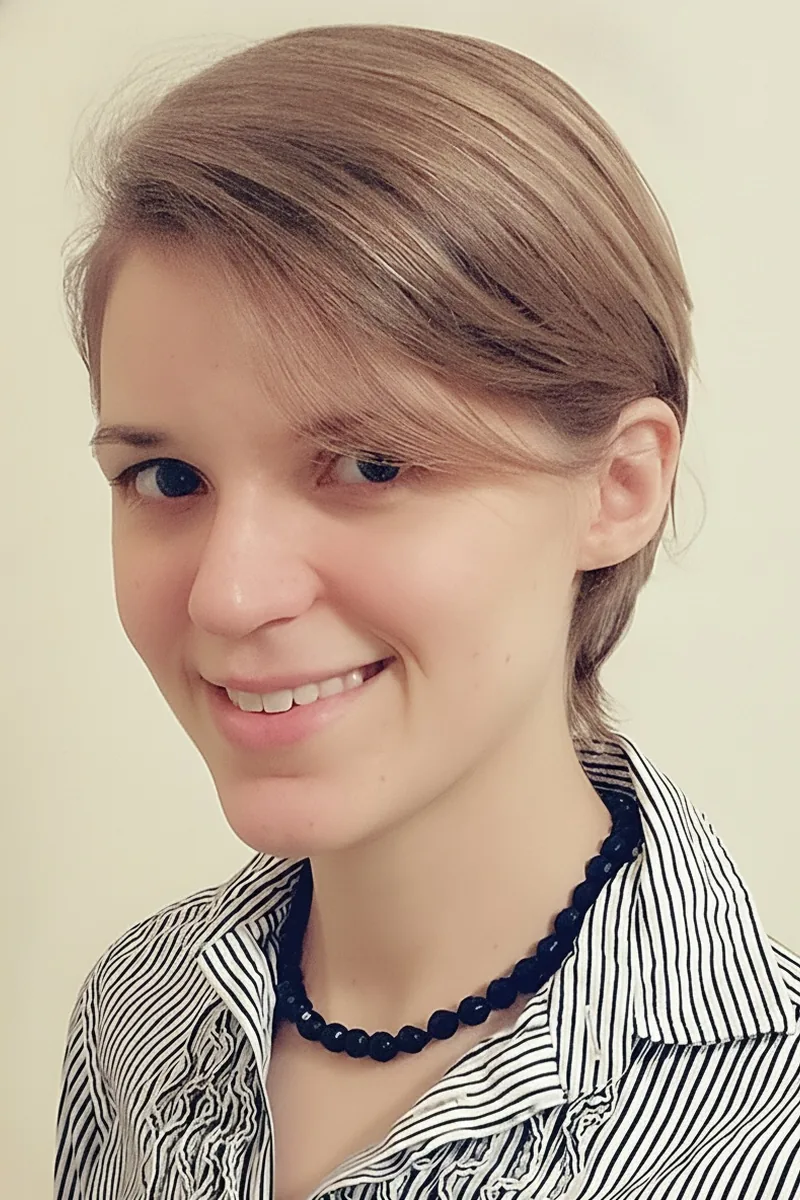
Reaction mechanisms are the backbone of organic chemistry, and most students struggle not because the material is impossibly hard but because they try to memorize hundreds of reactions instead of learning the handful of electron-pushing patterns that explain almost all of them. Rebecca's science training means she teaches students to read a mechanism the way you'd read a sentence — subject, verb, object — so new reactions become predictable rather than surprising.
Most students dread organic chemistry because it feels like a new language, but the logic underneath reaction mechanisms is surprisingly consistent once someone lays it out clearly. Ade approaches each reaction type — substitution, elimination, addition — by teaching students to read electron movement and predict products rather than memorize hundreds of individual reactions.
Reaction mechanisms are the backbone of organic chemistry, and most exam mistakes trace back to shaky arrow-pushing fundamentals. Abhinav teaches students to classify reactions by nucleophile-electrophile interactions first, then layer on stereochemistry and regiochemistry — an approach that turns a seemingly infinite number of reactions into a manageable set of patterns.
Reaction mechanisms are the backbone of Organic Chemistry, and learning to push electrons through an SN1, SN2, or E2 pathway requires a kind of visual logic that's very different from Gen Chem. Tom's neurobiology concentration at Penn meant he encountered organic reactions in both the classroom and the lab, giving him a practical feel for how functional groups behave. He teaches students to recognize patterns across reaction types so new mechanisms feel like variations on a theme rather than entirely new material.
Reaction mechanisms are the language of organic chemistry, and Sophie approaches them as logic puzzles rather than sequences to memorize. Her dual science background and MCAT prep experience mean she can walk through arrow-pushing, stereochemistry, and substitution-versus-elimination decisions with the kind of systematic reasoning that turns a confusing course into a manageable one.
Steven studied organismal physiology at Drexel, which meant working through organic chemistry not as a standalone course but as a tool for understanding how molecules behave in living systems — enzyme active sites, metabolic intermediates, drug interactions at the molecular level. That biological context gives him a practical angle on topics like carbonyl chemistry and stereoselectivity that pure mechanism drilling often misses. Rated 5.0 by students.
Reaction mechanisms are really just stories told with curved arrows, and Zain teaches students to read them that way — tracking electron flow through substitution, elimination, and addition reactions until predicting products feels intuitive. His chemistry major at Swarthmore included extensive organic coursework, and it's one of his most-tutored subjects.
Reaction mechanisms are the backbone of organic chemistry, and most students struggle because they try to memorize arrow-pushing patterns instead of understanding nucleophilicity, sterics, and leaving-group ability. Mary taught organic chemistry as an undergraduate TA at Pitt, spending hours each week walking students through substitution, elimination, and addition reactions until the logic behind each mechanism became second nature.
I am currently a graduate student in Chemical Engineering at the University of Delaware. I am working on using magnetic and flow fields to create advanced materials by directing the self-assembly process of nanoparticles . I have tutored students in Chemistry, Physics and Math all throughout undergraduate and graduate work. I truly enjoy breaking material down into its core components that allows the students to understand complicated information.
Reaction mechanisms click when you stop memorizing arrow-pushing patterns and start understanding electron density, nucleophilicity, and sterics as a connected system. Michael's doctoral research in materials chemistry required him to design and troubleshoot multi-step syntheses, so he teaches organic chemistry the way a working chemist actually thinks through it.
Michael's bioengineering coursework at Pitt means he learned organic chemistry as the foundation for understanding drug interactions, biomaterial design, and the molecular logic behind physiological systems — not as a standalone course to survive and forget. He tackles reaction mechanisms by encouraging students to visualize electron flow and functional group behavior in three dimensions, connecting arrow-pushing to the physical reality of how molecules actually collide and rearrange. Rated 5.0 by students.
Reaction mechanisms are the language of organic chemistry, and Kristina speaks it fluently enough to teach both Orgo I and Orgo II. She approaches each mechanism — whether it's nucleophilic substitution, carbonyl addition, or aromatic electrophilic substitution — by training students to track electron movement and recognize patterns, so new reactions start to feel predictable instead of overwhelming.
Currently studying chemistry at the undergraduate level, Amina is building her organic chemistry knowledge in real time — which means she remembers exactly where arrow-pushing stops making sense and where functional group reactivity starts to click. She tackles mechanisms by working through practice problems alongside students, using the same strategies she's developing in her own coursework to make electron flow and reaction predictions feel systematic rather than random.
Reaction mechanisms only click when you stop memorizing arrows and start seeing electron density. Kevin spent years as a chemistry TA walking students through nucleophilic substitutions, eliminations, and carbonyl additions, and his biochemistry background means he can show exactly where organic chemistry concepts resurface in biological systems.
Anthropology might seem far from organic chemistry, but Dana's coursework in biological anthropology required understanding molecular structures and biochemical processes at the cellular level — functional groups, bonding behavior, and the chemical logic that underpins human biology. She uses that cross-disciplinary perspective to walk through reaction types and electron movement in a way that prioritizes understanding the 'why' behind each mechanism.
I'm available to tutor biology, chemistry, physics, math from Algebra up through AP Calculus, SAT test prep, and French. I've been tutoring students in science and math for 7 years. I also spent 8 months working and studying in France, and have tutored high school and adult students in French. When I'm not working or studying, I love playing volleyball (indoors or on the beach!) and spending time outside, canoeing or hiking with my dog. I look forward to meeting and working with you!
Chemical engineering at Cornell meant Rahul didn't just pass organic chemistry — he applied it daily in reactor design, synthesis planning, and thermodynamic analysis of reaction pathways. That engineering lens gives him a distinctive angle on topics like carbonyl chemistry and stereoselectivity, where he ties mechanism logic back to energy landscapes and kinetic versus thermodynamic control. Rated 4.9 by students.
Biomedical engineering at Johns Hopkins means Nicholas encounters organic chemistry where it intersects with real applications — polymer biomaterials, drug delivery systems, and the functional group chemistry that governs how molecules interact with biological tissue. He teaches reaction types by grounding them in that engineering context, turning abstract arrow-pushing into something students can visualize and reason through. Rated 4.8 by students.
Reaction mechanisms are the language of organic chemistry, and Casey reads them fluently after years of bioengineering coursework that demanded constant fluency in electron-pushing, stereochemistry, and functional group transformations. She teaches students to recognize patterns across reaction types — why nucleophilic additions behave the way they do, how leaving groups dictate substitution vs. elimination — so each new chapter feels like a variation on something familiar rather than a fresh nightmare.
Reaction mechanisms are the language of organic chemistry, and Amin earned an entire master's degree becoming fluent in them. He teaches students to read electron flow the way you'd read a sentence — identifying nucleophiles, leaving groups, and stereoelectronic effects so that predicting products becomes a reasoning exercise, not a memorization marathon. Rated 4.5 by students.
Reaction mechanisms are the language of organic chemistry, and Jon spent his Master's work at Princeton immersed in that language daily. He unpacks arrow-pushing, stereochemistry, and functional group reactivity by tying each mechanism back to the electron behavior driving it, so students build intuition instead of relying on rote memorization. His TA students at Princeton gave him reviews strong enough to earn a teaching award — a good sign for anyone staring down a semester of orgo.
Between his biochemistry degree and his current pharmacy doctoral work at VCU, Joel has run through organic chemistry from both the academic and applied sides — understanding how functional group reactivity and stereochemistry translate into real drug design and pharmacological mechanisms. He's also taught university chemistry courses as adjunct faculty, so he knows how to break down multi-step synthesis problems and spectroscopy interpretation at the pace a student actually needs. Rated 5.0 by students.
Working in a cancer biology research lab means Yasheen encounters the organic chemistry behind drug design and molecular signaling every day — not as textbook problems, but as real questions about how functional groups determine a molecule's behavior in living systems. She connects that bench-level intuition to the arrow-pushing, stereochemistry, and carbonyl reactivity students need to master in their orgo courses. Rated 5.0 by students.
Having completed both semesters of organic chemistry at the University of Michigan — on top of AP Chemistry before that — Ajay knows exactly where students get stuck, whether it's arrow-pushing in reaction mechanisms or keeping substitution and elimination pathways straight. He teaches students to recognize electron behavior patterns so new reactions feel predictable instead of random.
Four years of tutoring organic chemistry at Yale — while simultaneously doing pre-med coursework — gave Marcus a sharp sense of where students get stuck, particularly with carbonyl reactivity and multi-step synthesis planning. His current research at the Hospital for Special Surgery keeps him actively applying these concepts, so he teaches functional group transformations as interconnected tools rather than an isolated reaction catalog.
Reaction mechanisms are the backbone of organic chemistry, and spotting nucleophilic attacks or predicting stereochemical outcomes requires genuine pattern recognition, not rote memorization. Lauren's chemistry minor at Duke and her hands-on lab research give her a practical fluency with functional group reactivity that she translates into clear, step-by-step reasoning for each mechanism type.
Reaction mechanisms are the core of organic chemistry, and most students struggle because they try to memorize arrow-pushing patterns instead of understanding why electrons move where they do. Jamie has tutored organic chemistry extensively alongside his pre-med and medical coursework, and he teaches students to read a mechanism the way you'd read a sentence — identifying the nucleophile, the electrophile, and the driving force before ever drawing an arrow.
Siddharth's biology degree means he first encountered organic chemistry through the lens of biomolecules — amino acid reactivity, lipid structures, and the functional group behavior that drives metabolic pathways. That biological framing gives him a practical way to teach arrow-pushing and reaction classifications, connecting each mechanism to molecules students can visualize rather than treating them as abstract exercises.
Testimonials
Because the right Organic Chemistry tutor makes all the difference.
Average Session Rating – Based on 3.4M Learner Ratings
Practice Organic Chemistry
Free practice tests, flashcards, and AI tutoring for Organic Chemistry
Other Allentown Tutors
Related Science Tutors in Allentown
Frequently Asked Questions
Organic Chemistry requires both memorization of reactions and deep conceptual understanding of molecular mechanisms—a combination that challenges many students. The abstract nature of visualizing molecular structures, understanding 3D bonding, and predicting reaction outcomes makes it one of the most difficult chemistry courses. Personalized 1-on-1 instruction helps students move beyond memorization to truly grasp why reactions occur, which is essential for success in the course and beyond.
During an initial session, a tutor will assess your current understanding of foundational concepts like bonding, molecular structure, and reaction mechanisms. They'll identify specific areas where you're struggling—whether it's visualizing stereochemistry, predicting reaction outcomes, or balancing complex equations—and create a personalized plan to address those gaps. This diagnostic approach ensures that tutoring focuses on your unique challenges rather than generic review.
One of the biggest hurdles in Organic Chemistry is translating 2D structures on paper into 3D molecular reality. Expert tutors use multiple strategies—drawing mechanisms step-by-step, using molecular models, and working through practice problems—to help you develop spatial reasoning skills. Regular practice with visualization techniques, combined with personalized feedback, builds the mental models you need to predict reactions and understand why certain outcomes occur.
Memorizing individual reactions is a losing strategy in Organic Chemistry—there are simply too many to memorize. Understanding mechanisms teaches you the underlying logic of how electrons move and bonds form, so you can predict new reactions you've never seen before. Tutors focus on teaching mechanism-based thinking, which not only improves exam performance but also prepares you for advanced chemistry and research work where creative problem-solving matters.
Absolutely. Lab experiments bring theoretical concepts to life—you'll see actual color changes, observe reaction rates, and work with real compounds. Tutors can help you understand what's happening at the molecular level during your experiments and connect lab observations back to reaction mechanisms and theory. This bridge between hands-on work and conceptual understanding deepens retention and makes the course feel more cohesive.
Students typically struggle with predicting reaction outcomes, drawing and interpreting mechanisms, understanding stereochemistry and chirality, and recognizing reaction patterns across different functional groups. Many also find it difficult to balance complex equations and apply the scientific method to problem-solving. Personalized tutoring targets these specific pain points with targeted practice and conceptual review, helping you build confidence in each area.
Ideally, starting 4-6 weeks before an exam gives you time to build understanding systematically rather than cramming. However, even a few weeks of focused tutoring can significantly improve performance if you're already familiar with the material. The key is consistent practice with feedback—tutors can help you identify weak areas quickly and develop efficient study strategies so you maximize your preparation time.
Look for tutors with strong chemistry backgrounds—ideally with experience in higher-level chemistry courses or research. Beyond credentials, the best tutors can explain complex concepts clearly, adapt their teaching style to your learning needs, and help you develop problem-solving skills rather than just providing answers. Varsity Tutors connects you with expert tutors who have demonstrated success helping students master Organic Chemistry concepts and improve their performance.
Let’s find your perfect tutor
Answer a few quick questions. We’ll recommend the right plan and match you with a top 5% tutor.