Award-Winning AP European History Tutors
serving Allentown, PA
AP European History
Tutors in Allentown
Private 1-on-1 tutoring, weekly live classes for academic support, test prep & enrichment, practice tests and diagnostics, and more to elevate grades and test scores.
Based on 3.4M Learner Ratings
UniversitiesSchools & Universities
DeliveredHours Delivered
ProficiencyGrowth in Proficiency
Who needs tutoring?
No obligation. Takes ~1 minute.
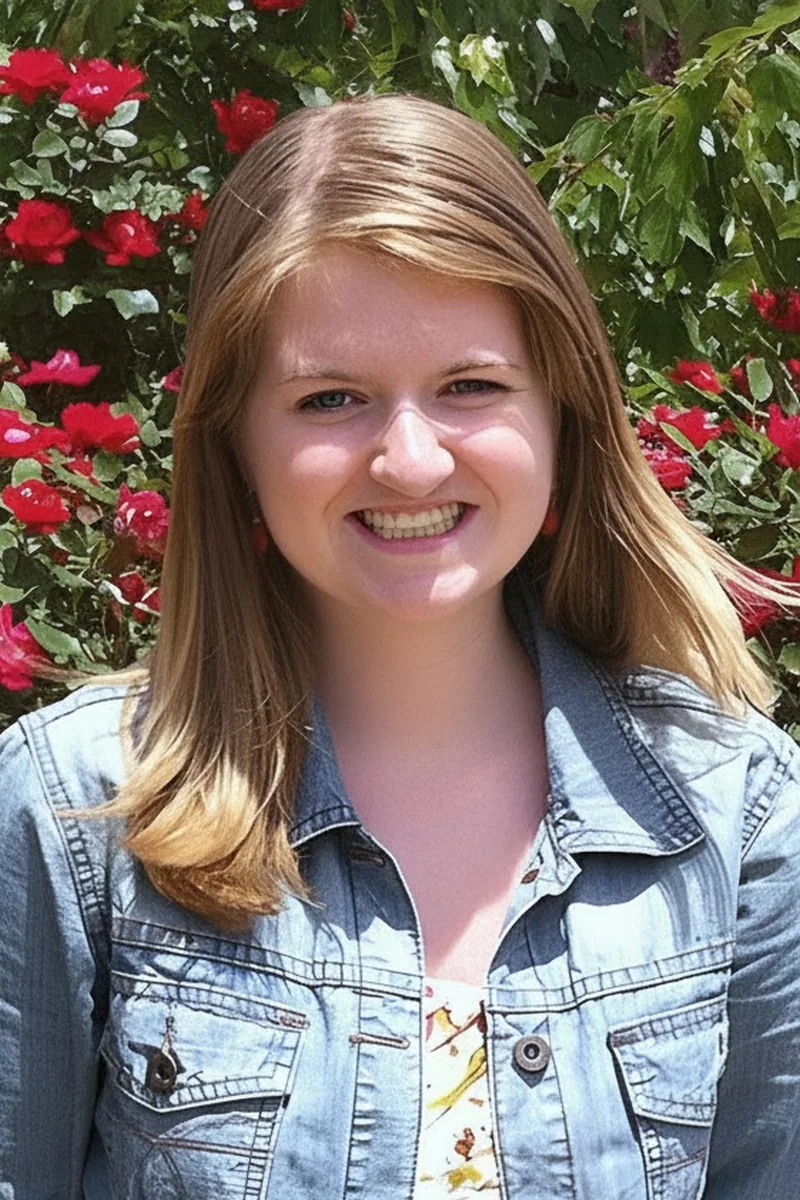
From the fragmentation of Christendom during the Reformation to the Congress of Vienna's attempt to reassemble it, AP European History rewards students who can trace causation across centuries. Hannah studied History as an undergraduate and brings a writer's discipline to the LEQ and DBQ formats — she teaches students to build arguments that are historically precise and structurally tight.

From the Protestant Reformation to the Congress of Vienna to postwar European integration, AP European History covers an enormous arc — and the exam expects students to argue about it, not just recall it. Stephanie earned her history degree at Cornell and is currently a graduate student at Penn, so she approaches each period through the kind of historiographical lens that makes essay responses more sophisticated. She unpacks primary sources with students so they learn to read for perspective and bias, not just content.
Four years of teaching social studies in Philadelphia middle schools means Walter has spent thousands of hours figuring out how to make European political and cultural shifts click for students who find them distant and abstract — a skill that scales directly to AP Euro's demand for contextualizing events like the Congress of Vienna or the rise of fascism. His history degree from Temple gave him the content depth, while his classroom experience sharpened his ability to break dense periods into the cause-and-effect chains the exam's essays actually reward. Rated 4.8 by students.
I'm a sophomore at the University of Pennsylvania majoring in Political Science and Urban Studies with a minor in French. Education is what I believe to be the key to success and the door that opens up a better tomorrow. Reliability, credibility, and efficiency are skills I will always continue to improve on because there is no such thing as perfect. Be friendly, be positive, and be motivated. But don't forget to be happy! Favorite quote and my go-to motto, "Be the change you wish to see in the world."
From the Protestant Reformation to the Congress of Vienna to post-WWII integration, AP European History covers centuries of political, cultural, and intellectual shifts. Madeleine's coursework in Art History and European History at Temple gives her a cross-disciplinary lens — she can explain how Enlightenment philosophy shaped both revolutionary movements and the art that documented them, making document-based questions feel less like guesswork.
I'm also a recent graduate of The New School, with a Bachelor of Arts in Literary Studies.
Ethan's environmental science and public policy degree trained him to analyze how economic forces, ideological movements, and institutional decisions interact — the same kind of multi-causal thinking AP Euro rewards on every essay. He applies that analytical framework to periods like the Industrial Revolution's social upheaval or the political calculus behind European imperialism, showing students how to build arguments that weave together evidence rather than just list events. Rated 5.0 by students.
I'm a current PhD student in the history department at Georgetown University who is also an experienced instructor with Varsity Tutors. As a recipient of several degrees, the most recent being a BA in history from Hillsdale College and a MA in Russian, East European, and Eurasian Studies from Stanford University, I have long sought to make teaching my profession. Meanwhile, as a volunteer grade school teacher and a tutor with this company, I have many years' experience helping students reach their full potential. I am capable of teaching students in many subjects, including reading, mathematics, test prep, Latin, and especially writing, history, and literature. In practice, I am comfortable adapting to different learning styles and specific student preferences. Outside of my academic and career endeavors, I enjoy cooking, reading, and listening to and making music.
Taylor's drama training at NYU's Tisch School of the Arts might seem like an odd fit for AP Euro, but theater history is deeply entangled with European cultural and political shifts — the rise of national theaters under absolutism, censorship battles during the Enlightenment, and avant-garde movements responding to industrialization and war. That cultural lens gives her a way into the material that's different from a straight political narrative, which can be especially useful for students who struggle to connect social and intellectual developments in their essays.
Scoring well on AP European History means mastering the document-based question, and that's fundamentally an exercise in reading critically and writing persuasively under time pressure. Vivian's dual background in history and English composition is a natural fit — she unpacks primary sources with students, then teaches them to weave that evidence into a coherent, thesis-driven essay. Her 36 ACT reflects the same analytical rigor she brings to European history content from the Renaissance through the Cold War.
Tessa is double-majoring in both Mathematics and History, which means she's unusually comfortable toggling between quantitative reasoning and the kind of interpretive argumentation AP Euro demands — analyzing how demographic data, trade patterns, or inflation rates shaped events like the Thirty Years' War or the fall of the ancien régime. That analytical rigor shows up in how she teaches essay construction, pushing students to build claims grounded in specific evidence rather than broad narrative summaries. Rated 4.9 by students.
Elena's graduate research in medieval art took her deep into the political and religious upheavals that shaped Europe — from Justinian's Ravenna to the fragmentation of Christendom. That immersion in primary visual and textual sources is exactly what AP European History demands, and she teaches students to analyze everything from Reformation-era woodcuts to Enlightenment treatises with the same critical eye.
From the Renaissance through the Cold War, AP European History demands that students trace political, intellectual, and economic threads across centuries. Nathan digs into the causation and continuity-and-change skills the exam prioritizes, teaching students to build arguments that link events like the Reformation to Enlightenment thought rather than treating each unit as isolated content. His Rice history training means he reads primary sources alongside students, not just summaries.
The AP European History exam rewards students who can trace causation across centuries — linking, for instance, the Protestant Reformation to the Peace of Westphalia to the rise of the nation-state. Sanoja's political science training at Yale centered on exactly this kind of structural analysis, and her Fulbright year in Colombia deepened her understanding of how European colonialism reshaped global power dynamics. She teaches students to write DBQs that argue rather than narrate.
From the Protestant Reformation to the Congress of Vienna to post-WWII integration, AP European History demands that students trace ideological shifts across centuries. Solange's IB program at Coral Reef immersed her in exactly this kind of analytical history, and she brings a knack for turning dense political and intellectual movements into clear cause-and-effect chains that stick on exam day.
AP European History's essay prompts demand that students weave together political, intellectual, and social developments across centuries — the kind of synthesis that requires genuine understanding, not just a timeline. Varun's CLEP preparation in both Western Civilization I and II gave him a structured framework spanning the Renaissance through the Cold War. He teaches students to identify turning points like the Treaty of Westphalia or the Congress of Vienna and explain why they reshaped the European order.
The best part of tutoring is promoting students' long-term success through mastery of reading, writing, math, study skills, organization, and critical thinking. In particular, I enjoy helping students build test-taking strategies and core skills for the ACT, SAT, and other admissions tests. I also support pre-K and K-12 students learning math and ELA. Before joining Varsity, I tutored in a Reading and Writing Lab for university students with learning disabilities where I earned a College Reading and Learning Association (CRLA) certification. Since joining Varsity, I have completed continuing education through the Lastinger Center for Learning. I graduated from the University of Arizona in 2021 with a BA in Cultural Anthropology. In addition to tutoring, I have worked as an instructional aide for an art program, an applied anthropology researcher, and a nonprofit program coordinator. Out of all these experiences, I enjoy tutoring the most. I look forward to working with you!
European history is Alexander's favorite subject to teach, and it shows — his Johns Hopkins BA is specifically in the field, and he's built his own independent history teaching project around it. He unpacks the connections between the Renaissance, the Reformation, and the rise of nation-states in ways that make the AP Euro exam's periodization and causation questions feel intuitive rather than overwhelming. Rated 4.7 by students.
Testimonials
Because the right AP European History tutor makes all the difference.
Average Session Rating – Based on 3.4M Learner Ratings
Practice AP European History
Free practice tests, flashcards, and AI tutoring for AP European History
Other Allentown Tutors
Related Social Studies Tutors in Allentown
Frequently Asked Questions
AP European History spans from 1450 to the present, organized around major themes like intellectual and cultural developments, social and economic changes, political structures, and international relations. The course emphasizes understanding historical causation, analyzing primary sources, and recognizing patterns across centuries—from the Renaissance through the Cold War to contemporary Europe. A tutor can help you master the specific time periods and thematic connections that appear most frequently on the exam.
Score improvement depends on your starting point and how consistently you engage with tutoring. Students who work with tutors typically see gains by developing stronger document analysis skills, improving essay writing, and filling content gaps—all critical for the exam's multiple-choice, short-answer, and free-response sections. Most students benefit from 4-6 weeks of focused preparation before the May exam, though starting earlier allows for deeper mastery of difficult periods like the French Revolution or Industrial Revolution.
Students often struggle with the sheer volume of content, difficulty synthesizing information across centuries, and mastering the specific essay formats the AP exam requires. Many find the document-based question (DBQ) and long essay particularly challenging because they demand both historical knowledge and strong analytical writing. A tutor can help you develop strategies for managing content overload, recognizing historical patterns, and structuring essays that earn high scores.
Practice tests are essential—they help you understand the exam's pacing, question formats, and scoring rubrics while identifying your weakest content areas. Taking full-length practice exams under timed conditions builds the stamina and confidence you'll need in May. A tutor can review your practice test results with you, pinpoint patterns in your mistakes, and adjust your study plan to address specific gaps before test day.
Your first session typically involves an assessment of your current knowledge, understanding of your goals (score target, timeline), and identifying which topics or skills need the most work. Whether you're just starting the course or preparing for the May exam, a tutor will create a personalized study plan that matches your pace and learning style. This might include content review, essay writing practice, or document analysis strategies—whatever will have the biggest impact on your score.
The AP exam grades essays on thesis clarity, use of evidence, and historical reasoning—skills that improve dramatically with targeted feedback. A tutor can teach you the specific rubric requirements for DBQs and long essays, help you practice structuring arguments under time pressure, and review your drafts to strengthen your analysis. With practice and guidance, many students move from struggling with essay organization to confidently synthesizing complex historical arguments.
Look for tutors with strong knowledge of European history, experience teaching or tutoring AP-level content, and familiarity with the AP exam format and grading rubrics. Ideally, they've helped other students prepare for the exam and understand common misconceptions and high-yield topics. Varsity Tutors connects you with expert tutors who have the subject expertise and teaching experience to help you succeed on test day.
Ideally, tutoring support should align with your course—whether you're taking AP European History as a year-long course or preparing for the exam in the spring. If you're taking the course, starting tutoring early helps you build a strong foundation and avoid content gaps. If you're cramming before May, even 4-6 weeks of focused tutoring can significantly improve your score by targeting weak areas and refining test-taking strategies.
Let’s find your perfect tutor
Answer a few quick questions. We’ll recommend the right plan and match you with a top 5% tutor.