Award-Winning Trigonometry Tutors
serving Columbus, OH
Trigonometry
Tutors in Columbus
Private 1-on-1 tutoring, weekly live classes for academic support, test prep & enrichment, practice tests and diagnostics, and more to elevate grades and test scores.
Based on 3.4M Learner Ratings
UniversitiesSchools & Universities
DeliveredHours Delivered
ProficiencyGrowth in Proficiency
Who needs tutoring?
No obligation. Takes ~1 minute.
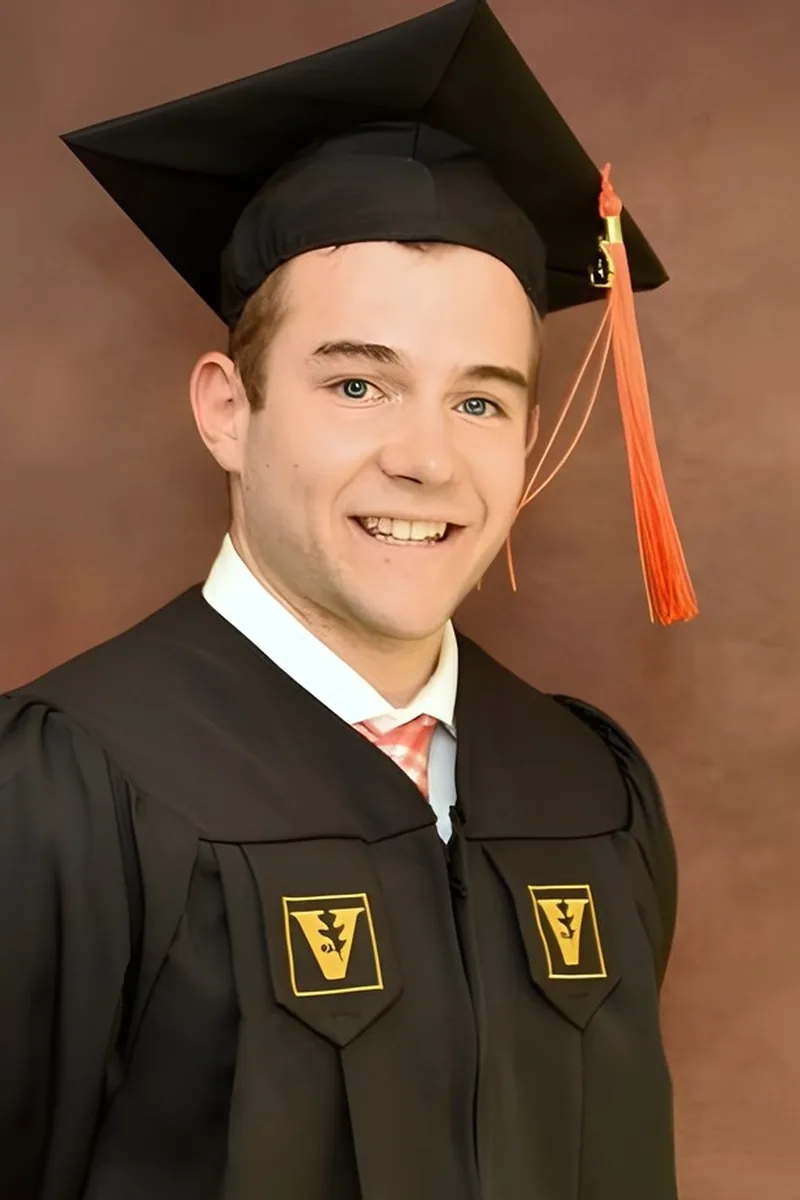
Trig identities and the unit circle tend to feel like arbitrary rules until someone shows you the geometry underneath them. Dillon's civil engineering training required constant use of trigonometric relationships — calculating forces, angles of elevation, structural loads — so he teaches sin, cos, and tan as tools with visible, physical meaning rather than formulas to memorize for a test.

Karen's English literature background might seem like an odd fit for trig, but parsing complex sentence structures and literary arguments builds the same pattern-recognition muscles needed to simplify and verify trigonometric identities. She treats each identity proof like a close reading — breaking it apart, finding the logical thread, and reconstructing it step by step. Her 32 ACT and 4.9 rating confirm the math chops are there to back it up.
The unit circle tends to be where trigonometry either clicks or falls apart. Ishaan approaches trig identities and sinusoidal graphs by tying them back to the geometry and physics problems they were invented to solve, which makes memorizing relationships like the Pythagorean identities feel less arbitrary and more intuitive.
The unit circle is where most trigonometry students either click or check out, and everything afterward — identities, inverse functions, the Law of Cosines — depends on that foundation. Nora teaches trig with an emphasis on visualization, connecting sine and cosine graphs to their geometric origins so the identities feel logical instead of arbitrary.
I am always willing to help and I will try my best to help students who desire further understanding of the subject at hand.
I am an upbeat and patient tutor. I like to make learning as fun as possible, and I'm constantly learning new things.
The jump from memorizing trig identities to actually using them — proving equivalences, solving equations, modeling periodic behavior — is where most students stall out. Kevin approaches trigonometry through the unit circle as a unifying framework, tying sine, cosine, and tangent back to geometric intuition rather than isolated formulas. His engineering training gave him years of practice applying these relationships in real contexts.
Trig identities can feel like an endless list of formulas to memorize, but Kevin teaches students to derive most of them from just a few core relationships on the unit circle. His engineering background at Case Western Reserve means he regularly applies sine, cosine, and tangent in real contexts like force decomposition and wave analysis, which gives his explanations a practical edge.
I'm entering my senior year at Case Western Reserve University. I'm happy to provide tutoring services for those interested in improving their academic performance or exam preparation. The subjects which I am most proficient include SAT Math, Algebra 1 , Algebra 2, Middle School Math, Pre-Algebra, Pre-Calculus, and Trigonometry.
Trig is where math shifts from shapes you can see to relationships you have to reason about — unit circle values, identities, and graphing transformations all demand a different kind of thinking. Jordan breaks these concepts into repeatable patterns, connecting sine and cosine behavior back to the geometry students already know so the abstraction actually clicks.
Trig identities can feel like an endless list of formulas to memorize, but they all trace back to a handful of geometric relationships on the unit circle. Maxwell breaks down how identities like double-angle and sum-to-product formulas are derived, which makes applying them to equations and proofs far more intuitive than brute-force memorization.
Most trig frustration comes from treating identities as formulas to memorize instead of relationships to understand. Dr teaches the unit circle as a single visual engine that drives everything from sine and cosine graphs to inverse functions and the law of cosines. With a math education spanning three degrees, he knows exactly which connections make trig intuitive before students hit pre-calculus.
A PhD in chemical engineering means Alexander spent years working with oscillatory systems, reaction kinetics, and heat transfer models where trigonometric functions aren't textbook exercises — they're the language describing real physical behavior. He unpacks topics like the law of sines, polar coordinate conversions, and identity simplification by tying each one back to the engineering contexts that make the math feel purposeful. Rated 4.9 by students.
The unit circle, identities, and inverse trig functions trip students up partly because trig is the first subject where memorization without understanding completely backfires. Samuel approaches it differently: he teaches students to derive identities from a few core relationships so they're never stuck blanking on a formula during an exam. His patience with these foundational concepts is a big reason he holds a 5.0 rating.
Trig identities have a reputation for being an endless list to memorize, but Brian teaches students to derive most of them from a handful of core relationships — cutting the memorization load dramatically. His physics and computer science background means he can also connect sine, cosine, and tangent to real applications like wave modeling and vector calculations. That practical angle makes the unit circle feel less arbitrary.
The unit circle is where most trig students either lock in or start falling behind — Sunay tackles it by connecting sine, cosine, and tangent to visual patterns instead of asking students to memorize coordinates cold. He also digs into identity proofs and the Law of Sines/Cosines, which tend to click faster once the underlying geometry makes sense.
Medical school entrance requires serious quantitative chops, and Hyerin built hers through an economics degree heavy on mathematical modeling — the kind of coursework where trig functions show up in optimization problems and cyclical data analysis. She teaches the unit circle and identity manipulation by emphasizing the logical structure underneath, so students learn to derive relationships they'd otherwise try to memorize. Her 35 ACT and 4.9 rating from students speak to how well that approach translates.
Trig identities and the unit circle tend to feel like arbitrary memorization until someone shows you the geometry driving them. Steven's mechanical engineering coursework leaned heavily on trigonometric functions — resolving force vectors, modeling oscillations, analyzing rotational systems — so he teaches trig as a toolkit with clear purpose. That context makes identities like sin²θ + cos²θ = 1 intuitive rather than abstract.
Patrick's math degree means he didn't just pass through trig — he built on it repeatedly in calculus and beyond, which gives him a clear sense of which skills (like fluency with the unit circle and comfort manipulating identities) actually matter long-term versus which ones students can look up. He teaches the law of sines and cosines by tying them back to the right-triangle reasoning students already trust from geometry, then extends that logic into oblique triangles so the leap feels small. His 1540 SAT confirms the fundamentals are locked in.
Trig identities and the unit circle can feel like a wall of formulas to memorize, but Sunnia approaches them as tools she actually uses in her biomedical engineering program at Ohio State. She unpacks how sine, cosine, and tangent relate to real waveforms and physical systems, which makes the relationships between identities click faster than rote drilling ever could.
The jump from memorizing SOH-CAH-TOA to actually reasoning with unit circles, identities, and inverse trig functions trips up a lot of students. Jacob approaches trigonometry through its connections to geometry and calculus, showing why identities like sin²θ + cos²θ = 1 aren't arbitrary but follow from how circles actually behave. His master's-level math training means he can unpack even the trickiest identity proofs and graphing problems clearly.
Trig identities and unit circle values tend to feel like arbitrary lists until someone shows you the geometry underneath them. Tyler approaches trigonometry through the lens of his actuarial science coursework, where sine, cosine, and tangent aren't abstract — they're tools for modeling real periodic behavior. He walks through proofs and identity manipulations in a way that makes the logic visible.
Trig clicks once you stop memorizing identities and start seeing them as relationships on the unit circle — that's the shift Anish pushes for early. Studying physics and economics at Case Western Reserve, he uses trig constantly in wave analysis and vector problems, so he can show students exactly where sine, cosine, and tangent show up beyond the textbook.
I am a recent graduate of Ohio Dominican University. I earned my Bachelor of Science degree in Finance & Economics. While attending ODU, I worked part-time as a math tutor with the academic resource center. I tutored all four years in the subjects of algebra, statistics, pre-calculus, and calculus 1. I really enjoyed working with students and adult learners and it was a worthwhile experience. In the process, I was able to meet the requirements for CRLA Advanced Certified Tutor, Level 2. My tutoring style revolves around the use of socratic questioning, in which I push the student toward the right answer without giving the answer away. I believe this is the proper way to ensure a better understanding of the subject material.
The jump from memorizing SOH-CAH-TOA to actually understanding the unit circle and sinusoidal graphs trips up a lot of students. Katharine approaches trig by connecting each identity and function back to geometric intuition, drawing on the rigorous proof-based training she got through her math degree at Loyola Chicago.
The unit circle doesn't have to be a memorization nightmare. Tim teaches trig identities and sinusoidal functions by connecting them back to the geometry students already know, building intuition for why these relationships exist — an approach sharpened by his computational science coursework at MIT, where trigonometric functions show up constantly in modeling and signal analysis.
Trig identities and unit circle values can feel like an endless list to memorize, but Natalie approaches them as patterns that connect back to geometry and real-world applications. Her civil engineering coursework at Duke puts trigonometry to use constantly — from structural analysis to surveying — so she teaches it with a sense of why each concept matters.
Trig is where math stops being purely numerical and starts being deeply visual — unit circles, wave behavior, identities that transform one expression into another. Charlie, a University of Chicago grad with a math teaching background that spans several years, breaks down concepts like the law of sines and radian measure so they feel intuitive rather than formulaic.
Trig identities and the unit circle can feel like a wall of disconnected formulas until someone shows you the geometry underneath them. Jake teaches students to visualize sine, cosine, and tangent as relationships on the coordinate plane, turning memorization into understanding that carries through to calculus.
The unit circle tends to feel like an arbitrary thing to memorize until someone shows you the geometry behind it. Matt unpacks trig identities and sinusoidal functions by tying them back to the triangles and circles students already understand, building intuition that carries into calculus and physics.
Trig can feel like a completely different language — unit circles, identities, inverse functions — and most students struggle because they never built strong intuition for what sine and cosine actually represent geometrically. Brian's math background through calculus at UChicago means he teaches trig concepts with an eye toward why they matter, connecting each identity back to the triangle or circle it describes.
Trig identities and the unit circle can feel like arbitrary rules until someone shows you the geometry underneath them. Charles uses trigonometry constantly in his Yale mechanical engineering coursework — from force decomposition to wave analysis — and breaks down concepts like the law of cosines and radian measure by connecting them to problems you can actually picture.
Trig identities and the unit circle tend to feel like arbitrary rules until someone shows you the geometry underneath them. Andrea breaks down concepts like sinusoidal modeling, inverse trig functions, and the Law of Cosines by connecting them to the physics and engineering problems where they naturally appear.
A year as a course assistant in Harvard's math department meant Richard taught calculus daily — and calculus lives and dies on trig fluency, from evaluating limits of sinusoidal functions to integrating with trig substitutions. That constant reinforcement gives him a sharp sense of exactly where students get tripped up on identities, graphing transformations, and radian-degree conversions. His perfect 1600 SAT and 36 ACT confirm the foundational math chops behind that teaching experience.
Game theory for advanced middle schoolers in Hong Kong, an economics degree from Brown with applied math coursework — Carter's background is heavy on quantitative reasoning, which shows up in how he teaches trig as a system of relationships rather than a stack of formulas. He zeroes in on graphing transformations and identity proofs by connecting them to the algebraic thinking students already have from earlier math courses. Rated 5.0 by students.
The unit circle doesn't have to be a memorization nightmare. Mosab teaches trigonometry by building intuition for how sine, cosine, and tangent relate to actual rotation and periodic behavior — so identities and inverse functions start to feel logical rather than arbitrary.
The unit circle tends to feel like arbitrary memorization until someone shows you the geometry driving it. Sanjana unpacks trig identities, inverse functions, and sinusoidal modeling by building each concept visually, so students understand why sin²θ + cos²θ = 1 instead of just accepting it. Her 5.0 rating speaks to how well that approach lands.
Testimonials
Because the right Trigonometry tutor makes all the difference.
Average Session Rating – Based on 3.4M Learner Ratings
Practice Trigonometry
Free practice tests, flashcards, and AI tutoring for Trigonometry
Other Columbus Tutors
Related Math Tutors in Columbus
Frequently Asked Questions
Trigonometry requires students to shift from memorizing formulas to understanding the relationships between angles and sides—a conceptual leap that builds on algebra and geometry foundations. Many students find the abstract nature of sine, cosine, and tangent challenging at first, especially when applying these concepts to real-world problems. Personalized 1-on-1 instruction helps students see how trig functions connect to the unit circle and develops the intuition needed to solve problems confidently.
Word problems require students to translate real-world scenarios into trig equations—a skill that combines reading comprehension, problem setup, and calculation. Expert tutors work with students to break down multi-step problems into manageable pieces, identify which trig ratios apply, and develop a systematic approach to solving. This strategy-based instruction builds confidence and helps students recognize patterns across different problem types.
Understanding sine, cosine, and tangent graphs requires seeing how changes in amplitude, period, and phase shift affect the visual representation. Many students benefit from working through transformations step-by-step rather than memorizing rules. Tutors can help students develop a visual intuition by connecting the unit circle to the graph, making it easier to predict and sketch transformations accurately.
Yes—Columbus schools use various textbooks and approaches to teach trigonometry, and tutors are experienced working across different curricula. Whether your student is using a traditional textbook, honors-level material, or a different instructional approach, Varsity Tutors connects you with tutors who can align their instruction to your student's specific course and learning style.
Math anxiety often stems from feeling lost or rushed—both common experiences in trigonometry. Personalized instruction provides a judgment-free space where students can ask questions, work at their own pace, and build confidence through small wins. As students develop deeper understanding and see themselves solving problems successfully, anxiety naturally decreases and engagement increases.
The first session focuses on understanding your student's current level, identifying specific challenges (whether it's unit circle concepts, identities, or applications), and learning their preferred learning style. Tutors use this time to establish a personalized plan and build rapport, so your student feels comfortable asking questions and exploring new concepts together.
Absolutely—proofs and identities are a major part of trigonometry and require both conceptual understanding and strategic thinking. Tutors teach students how to recognize which identities apply, develop a logical approach to proofs, and understand the 'why' behind each step rather than just memorizing formulas. This deeper understanding makes working with identities much less intimidating.
Varsity Tutors connects you with expert tutors who specialize in trigonometry and understand the Columbus school curriculum. Simply let us know your student's current level, specific challenges, and scheduling preferences, and we'll match them with a tutor who's the right fit. Your student can start personalized instruction quickly and begin building confidence right away.
Let’s find your perfect tutor
Answer a few quick questions. We’ll recommend the right plan and match you with a top 5% tutor.