Award-Winning Physical Chemistry Tutors
serving Raleigh, NC
Physical Chemistry
Tutors in Raleigh
Private 1-on-1 tutoring, weekly live classes for academic support, test prep & enrichment, practice tests and diagnostics, and more to elevate grades and test scores.
Based on 3.4M Learner Ratings
UniversitiesSchools & Universities
DeliveredHours Delivered
ProficiencyGrowth in Proficiency
Who needs tutoring?
No obligation. Takes ~1 minute.
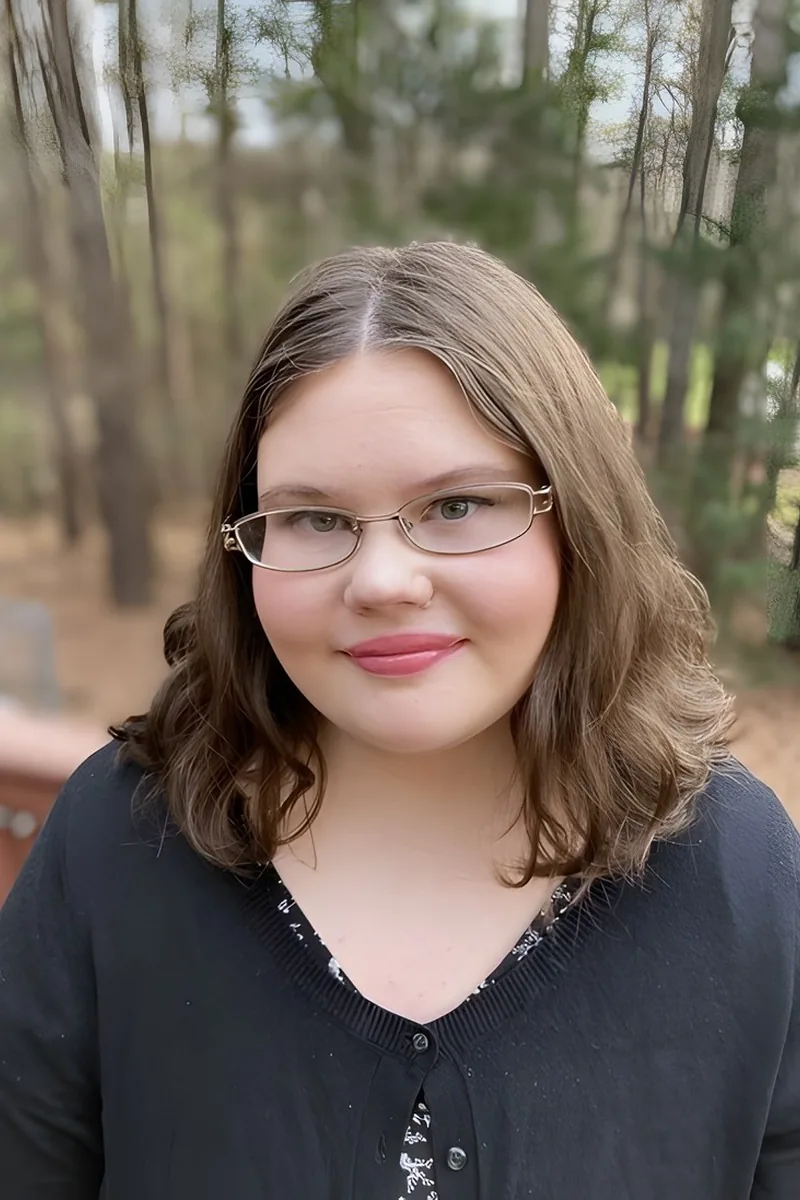
Studying chemistry as an undergrad means Amanda is taking p-chem right now — or just finished it — which gives her an unusually clear memory of exactly where the conceptual gaps hit hardest, whether it's the jump from ideal gas derivations to real thermodynamic cycles or the first encounter with quantum mechanical operators. She pairs that fresh perspective with strong calculus chops honed through coursework up to Calc BC and engineering, so she can isolate whether a student's stuck on the chemistry or the math underneath it.

Having studied quantum mechanics and electromagnetism as part of his physics degree, Michael already speaks the mathematical language that makes p-chem so demanding — the wave equations, the statistical distributions, the calculus buried inside every thermodynamic derivation. He teaches from the physics side in, explaining why a Boltzmann distribution or a partition function behaves the way it does before layering on the chemical context that gives it practical meaning.
Nicholas studied biology with enough chemistry and physics depth to encounter the thermodynamic and kinetic frameworks that p-chem builds on — enzyme energetics, gas laws, equilibrium — before they get buried under pages of calculus. His 33 ACT reflects strong quantitative reasoning, and he leans on that cross-disciplinary perspective to clarify why a concept like enthalpy or a phase transition behaves the way it does at the molecular level, not just how to push through the derivation.
A bio-organic chemistry degree means Alex spent serious time with thermodynamic cycles, kinetics derivations, and the quantum mechanical underpinnings of molecular behavior — the core of any p-chem course. He approaches the subject by tying each derivation back to the organic and biochemical systems students already recognize, so an intimidating equation like the Arrhenius expression becomes a story about why reactions speed up at the molecular level.
Teaching high school chemistry daily means Kathleen regularly translates thermodynamic concepts like enthalpy, entropy, and equilibrium into language that clicks — a skill that carries directly into the more calculus-heavy treatment those same ideas get in a p-chem course. Her M.S.Ed from Penn and chemistry degree give her both the content depth and the instinct for spotting exactly where a derivation stops making sense to a student. Rated 5.0 by students.
Rice's chemistry curriculum put Asad through the full p-chem gauntlet — thermodynamics, quantum mechanics, kinetics — and his path to medical school at UT Houston means he's had to internalize concepts like enthalpy, entropy, and equilibrium well enough to apply them in biological and clinical contexts. That dual pressure of rigorous chemistry coursework and MCAT preparation sharpened his ability to explain why a derivation works, not just how to grind through the math.
A PhD in biophysical chemistry means Tom didn't just survive p-chem — he built a research career on it, working at the intersection of thermodynamics, quantum mechanics, and molecular behavior where the math has to be airtight. He treats the subject like a language students need to actively speak: drilling derivations and problem sets until manipulating a Maxwell relation or setting up a partition function becomes fluent rather than formulaic.
As an MD/PhD student at Northwestern with a chemistry PhD focus and a B.S. in Chemical Science from Michigan, Austin has gone deep on the thermodynamics and quantum mechanics that form p-chem's backbone — and he's still actively working through advanced coursework in these areas. He tackles derivations by building chemical intuition first, so when a student hits a wall at, say, a Legendre transform connecting internal energy to Gibbs free energy, the math follows naturally from understanding what each variable physically represents.
Thermodynamics, kinetics, and quantum mechanics all converge in physical chemistry — and that's exactly where Monika's biochemistry and molecular biology training intersects. She breaks down intimidating topics like Gibbs free energy calculations and reaction rate laws by tying them to real chemical systems she studied during her PhD research. Rated 4.8 by students.
Differential equations, calculus, and organic chemistry all sit in Nate's regular teaching rotation, which means he's constantly moving between the math and the chemistry that p-chem smashes together — and he knows exactly where students lose the thread between the two. He zeroes in on building intuition around concepts like chemical potential and equilibrium thermodynamics by tying each derivation back to the reaction behavior students already recognize from general and organic chemistry. Rated 5.0 by students.
Biology coursework builds a surprising amount of p-chem intuition — enzyme kinetics, membrane energetics, and metabolic thermodynamics all run on the same free energy and rate equations that dominate a physical chemistry sequence. Ade uses that biological grounding to make abstract derivations tangible, turning something like a Boltzmann distribution into a concrete picture of how molecules actually partition energy across states.
An applied mathematics degree plus active graduate math coursework gives Drisana the calculus fluency that p-chem demands — she's comfortable with the differential equations, multivariable integrals, and linear algebra that show up in everything from quantum mechanical wave functions to statistical thermodynamics. Where many chemistry students struggle because the math outpaces them, she tackles derivations from the opposite direction, building physical meaning onto mathematical structures she already knows cold. Rated 5.0 by students.
A PhD in chemical engineering means Alexander spent years deriving and applying the exact thermodynamic frameworks — equations of state, phase equilibria, transport phenomena — that p-chem students encounter stripped of their engineering context. His biosystems engineering background adds a second layer, connecting statistical mechanics and kinetics to real molecular systems rather than leaving them as abstract formalisms. Rated 4.9 by students.
Testimonials
Because the right Physical Chemistry tutor makes all the difference.
Average Session Rating – Based on 3.4M Learner Ratings
Nearby Physical Chemistry Tutors
Other Raleigh Tutors
Related Science Tutors in Raleigh
Frequently Asked Questions
During your first session, a tutor will assess your current understanding of key physical chemistry concepts—like thermodynamics, kinetics, and equilibrium—and identify specific areas where you need support. They'll discuss your learning goals, whether that's improving exam performance or building a stronger foundation for advanced coursework, and create a personalized plan tailored to your pace and learning style.
Physical chemistry involves visualizing molecular behavior, energy diagrams, and quantum mechanical principles that aren't always intuitive. Expert tutors use diagrams, molecular models, worked examples, and real-world applications to make abstract ideas concrete—helping you understand why reactions occur and how energy changes, rather than just memorizing formulas.
Physical chemistry requires strong math skills—unit conversions, calculus, logarithms, and problem-solving—and many students find this challenging. Tutors can break down complex calculations step-by-step, help you master unit analysis, and teach you how to set up equations correctly so you understand the math behind the chemistry, not just how to plug numbers in.
Absolutely. Many students struggle to see how lab experiments relate to theoretical concepts like enthalpy, entropy, or reaction rates. Tutors can help you understand what you're observing in the lab, interpret data, and connect experimental results back to the underlying physical chemistry principles—strengthening both your conceptual understanding and your ability to think like a scientist.
That depends on your current understanding and the exam scope, but starting tutoring 4-6 weeks before an exam gives you solid time to build foundational understanding, practice problem-solving, and refine your approach. Consistent, focused sessions are more effective than cramming—tutors help you identify weak spots early and address them systematically.
Yes. Varsity Tutors connects you with tutors who understand the physical chemistry courses taught across Raleigh's 17 school districts and local universities, whether you're in AP Chemistry, honors physical chemistry, or college-level coursework. They're familiar with the topics, pacing, and expectations you'll encounter.
Physical chemistry is fundamentally about understanding how and why matter behaves the way it does. When you memorize formulas without understanding, you can't adapt to new problems or apply concepts to unfamiliar situations. Tutors focus on building true comprehension—helping you understand the principles behind equations so you can solve any problem that comes your way, not just ones you've seen before.
Look for tutors with strong backgrounds in chemistry and mathematics—ideally with experience teaching or tutoring physical chemistry specifically. They should be able to explain concepts clearly, work through problems methodically, and connect theory to real-world applications. When you connect with Varsity Tutors, you'll be matched with someone qualified to teach at your level.
Let’s find your perfect tutor
Answer a few quick questions. We’ll recommend the right plan and match you with a top 5% tutor.