Award-Winning Linear Algebra Tutors
serving Staten Island, NY
Linear Algebra
Tutors in Staten Island
Private 1-on-1 tutoring, weekly live classes for academic support, test prep & enrichment, practice tests and diagnostics, and more to elevate grades and test scores.
Based on 3.4M Learner Ratings
UniversitiesSchools & Universities
DeliveredHours Delivered
ProficiencyGrowth in Proficiency
Who needs tutoring?
No obligation. Takes ~1 minute.
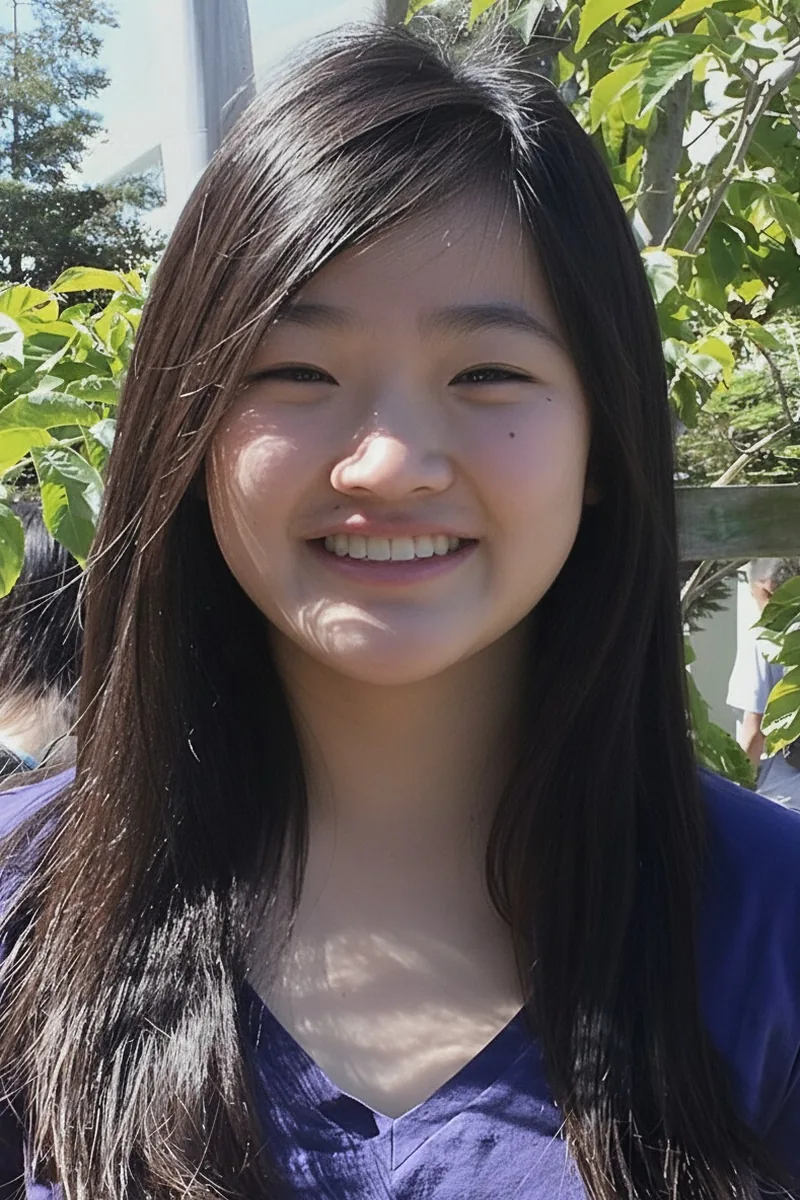
Studying statistics and machine learning at Princeton means Julie uses linear algebra daily — from matrix transformations to eigenvalues to vector spaces. She teaches the subject with an eye toward both theoretical understanding and practical application, connecting abstract proofs to the computational intuition students need to actually work problems.

A year as a course assistant in Harvard's math department — teaching introductory calculus — gave Richard a front-row seat to where students first stumble with abstraction, a skill that translates directly to linear algebra's shift from matrix arithmetic to reasoning about vector spaces and linear maps. His government major might seem unrelated, but formal logical argumentation is central to both fields, and he leans on that structured thinking when breaking down proofs involving span, basis, and dimension.
Studying physics at Stony Brook means Kiran has diagonalized Hamiltonians, decomposed tensors, and solved coupled systems where linear algebra isn't a separate course but the backbone of every calculation. That physics-native fluency is especially useful for teaching determinants, eigenvectors, and change-of-basis — he can explain what these operations actually do to a system rather than just how to execute them. Rated 4.7 by students.
Rebecca's background is in international development and sociology rather than pure mathematics, so she approaches linear algebra as someone who had to build real understanding of matrix operations, systems of equations, and transformations from the ground up. That perspective makes her especially effective at breaking down the logic behind each step — she remembers what it's like when row reduction or determinant properties don't yet feel intuitive. Rated 5.0 by students.
I am highly praised by my students and supervisors. Even today I still kept the communication with many students.
Eigenvalues, vector spaces, and matrix decompositions show up everywhere in engineering — and Sabry used them extensively in his doctoral research on computational modeling. He unpacks linear algebra by tying each concept to a geometric or physical interpretation: what a determinant actually measures, why eigenvectors matter for system stability, how a change of basis simplifies a problem. That dual perspective makes the subject far more intuitive than rote row-reduction ever could.
I graduated from Dartmouth College with a double major, receiving a Bachelor of Arts in both Biochemistry/Molecular Biology and Music. I continued my education at Columbia University and received Master of Arts in Biology. Starting in middle school and continuing through my graduate career, I have tutored students in a wide variety of subjects, but I was most effective at tutoring math and science because of my lifelong love and aptitude for these subjects. Since I am also working towards a career in molecular biology, I use math and science every day, and I can explain real-world applications and uses for these subjects that may not seem obvious. By demonstrating the use of math and science in everyday life, I am able to help interact with the student and increase their interest in a subject in which they may experience difficulty. I also believe that as a tutor, it is my responsibility to engage with the student to help them achieve and even surpass their goals. In my spare time, I am heavily involved with music in New York City, being part of multiple choirs and continuing to play piano. I also enjoy exercising and exploring the city whenever I have the chance.
Training at ETH Zurich's applied math program means Shahnawaz worked through linear algebra at a level where concepts like spectral decompositions, Jordan normal forms, and singular value factorizations were prerequisites for more advanced coursework — not endpoints. He digs into the geometric intuition behind abstract definitions, showing students what a null space or eigenvector actually looks like before formalizing the algebra around it. Rated 4.9 by students.
Vector spaces, eigenvalues, and matrix transformations can feel completely disconnected from any math a student has seen before. Nikhil's NYU math program puts linear algebra at the center of his training, and he teaches it by grounding abstract definitions in geometric intuition — showing what a linear transformation actually does before diving into the computation.
Decision sciences at the graduate level means Benedetto spent serious time with matrix operations, optimization models, and systems of equations — the applied side of linear algebra that many pure-math tutors gloss over. He's particularly strong at walking through how concepts like rank, null space, and linear transformations show up in real decision-making and quantitative modeling contexts. Rated 4.7 by students.
Double-majoring in applied mathematics and physics at RPI meant Daniel spent four years using linear algebra as connective tissue between disciplines — diagonalizing operators in quantum mechanics one day, then proving properties of vector spaces in a pure math course the next. That constant back-and-forth between computation and theory gives him a sharp sense for where students lose the thread, particularly when eigenvalue problems or abstract definitions of span and independence stop feeling like calculator work and start requiring real reasoning.
Eigenvalues, vector spaces, and matrix transformations aren't just abstract theory for Kirollos — his dual CS and Electrical Engineering program at NYU puts linear algebra at the center of everything from machine learning algorithms to circuit analysis. He unpacks the geometric meaning behind row reduction and change-of-basis so the computations actually make sense.
Most linear algebra students can mechanically row-reduce a matrix but freeze when asked what the result actually means about the underlying system — Nick zeros in on that interpretive gap, connecting procedures like finding determinants and solving Ax=b to the geometric and structural ideas they represent. His math degree and experience teaching across the full calculus sequence through multivariable and beyond means the prerequisite connections are always at his fingertips. Rated 4.9 by students.
Tackling vector spaces, matrix operations, and eigenvalues requires a tutor who can connect abstract theory to concrete applications. Cole's finance coursework at Fordham's Gabelli School of Business means he regularly uses linear algebra in portfolio modeling and data analysis, so he teaches these concepts with real-world context that makes the abstraction click.
When a linear algebra course suddenly expects students to prove that a set of vectors forms a basis or that a map preserves dimension, the jump from computation to abstraction can be disorienting. Jonathan's math degree and his experience teaching across the full K-through-college spectrum means he's seen exactly where that conceptual gap opens up and knows how to close it — building from familiar matrix operations toward the reasoning behind them. Rated 5.0 by students.
Pharmacy and pharmaceutical chemistry might not scream linear algebra, but Zachary's doctoral training required heavy quantitative modeling — pharmacokinetic systems, multivariate data analysis, and the matrix math underneath statistical methods he uses across his science and math tutoring. He breaks down concepts like matrix operations, determinants, and systems of equations by tying them to concrete problem-solving rather than leaving them as abstract definitions. Rated 4.9 by students.
I've been working with students for over seven years, from middle school all the way through college, across subjects like math, calculus, statistics, linear algebra, chemistry, and physics, with a lot of SAT and ACT prep mixed in. My background is perhaps a little unconventional. I have two bachelor's degrees, one in Engineering and one in Communication Studies, plus a Master's in Design. That combination means I can guide you through challenging technical material and communicate it in a way that is easy to grasp. What I care most about is helping students get to a place where they don't need me anymore. I know that sounds like a strange thing for a tutor to say, but I think it's the right goal. I'm not here to walk you through steps to copy down. I want you to understand why something works, because that's what holds up under pressure, on a test you haven't seen before. If you're ready to ace that test or prove that theorem that's been bugging you, reach out and let's work together
Vector spaces, eigenvalues, and matrix transformations can feel disconnected from any math a student has seen before, which is exactly what makes Linear Algebra so disorienting at first. Jake's computer science background gives him a practical lens on these concepts — he ties abstract proofs back to applications like systems of equations and data transformations that make the theory click.
Eigenvalues, vector spaces, and matrix transformations can feel impossibly abstract without someone who connects them to real applications. Michael studied biomedical engineering at the University of Rochester, where linear algebra was foundational to signal processing, imaging, and systems modeling — so he teaches these concepts with concrete examples that make the abstraction meaningful. He's especially effective at walking through proof-based problems step by step.
I love to teach. I love young minds and fresh brains. Those are just like clean sheets of papers I can draw anything I like. I really like to help young people to achieve their full capacities with my long experience of teaching. I am very patient and good at explaining complex concepts in simple terms. I am looking forward to meeting students who need my help.
Every physics problem Cory solved during his B.S. — from coupled oscillators to electromagnetic field equations — depended on manipulating matrices, decomposing systems, and thinking in terms of vector spaces, so linear algebra is baked into how he reasons about math. He zeroes in on the spots where students lose the thread, like understanding what an eigenvector actually represents geometrically or why a change of basis simplifies a problem instead of complicating it. Rated 4.9 by students.
I am currently a graduate student in Chemical Engineering at the University of Delaware. I am working on using magnetic and flow fields to create advanced materials by directing the self-assembly process of nanoparticles . I have tutored students in Chemistry, Physics and Math all throughout undergraduate and graduate work. I truly enjoy breaking material down into its core components that allows the students to understand complicated information.
A PhD in Statistics built on a biomedical engineering foundation means Sam has leaned heavily on matrix algebra — from multivariate regression to principal component analysis — where understanding rank, column space, and decompositions isn't optional. He breaks down the theoretical side by showing students how each abstraction maps onto a statistical or engineering problem they can visualize. Rated 4.9 by students.
Philosophy trains you to build rigorous arguments from axioms — which turns out to be exactly the skill linear algebra demands once a course moves past computation into proofs about vector spaces, linear independence, and spanning sets. Joshua's background in formal logic means he treats proof-writing as structured reasoning rather than guesswork, breaking down what each definition actually requires before students attempt to use it. He's especially useful for the mid-semester shift when homework stops being row reduction and starts asking "prove that this map is injective."
Studying applied mathematics as an undergrad means Daniel is working through linear algebra right now — not remembering it from a decade ago, but actively sitting with determinants, subspaces, and eigenvalue decompositions in his current coursework. He's the kind of tutor who had to grind through the confusing parts himself and build understanding step by step, so he knows exactly which explanations actually clarify things versus which ones only make sense if you already get it. Rated 4.7 by students.
With both a bachelor's and a master's in math — the latter focused on statistics — Duncan has worked through linear algebra at multiple levels, from the foundational course to its heavy use in multivariate statistical theory where matrix decompositions and quadratic forms are essential tools. He breaks down concepts like eigenvalues, determinants, and vector space proofs with the clarity of someone who's had to rely on them repeatedly in advanced coursework. Rated 5.0 by students.
Vector spaces, eigenvalues, and matrix transformations can feel disconnected from any math students have seen before. Jett's electrical and computer engineering program at UT Austin relies heavily on linear algebra for signal processing and systems analysis, so he teaches these abstractions through the lens of what they actually *do* — rotating coordinate systems, solving coupled equations, compressing data.
Teaching linear algebra as adjunct faculty at Washington State University means Moayad isn't just tutoring this material — he's designing syllabi, writing exams, and watching in real time where students lose the thread between matrix computation and abstract vector space theory. His two math degrees (BS and MS, the latter from Oregon State) gave him deep fluency with everything from determinants and eigenvalue problems to the proof techniques that trip students up mid-semester.
Testimonials
Because the right Linear Algebra tutor makes all the difference.
Average Session Rating – Based on 3.4M Learner Ratings
Practice Linear Algebra
Free practice tests, flashcards, and AI tutoring for Linear Algebra
Nearby Linear Algebra Tutors
Other Staten Island Tutors
Related Math Tutors in Staten Island
Frequently Asked Questions
Linear Algebra tutoring covers foundational topics like vectors, matrices, systems of linear equations, eigenvalues, and vector spaces. A tutor helps you move beyond memorizing procedures to truly understanding how these concepts connect—why matrix multiplication works the way it does, what determinants actually represent, and how to apply linear transformations to real problems. This conceptual foundation is essential for success in advanced mathematics, physics, computer science, and engineering.
Many students struggle with the shift from computational thinking to abstract reasoning—Linear Algebra requires visualizing transformations in multiple dimensions and understanding why certain operations matter. Other common pain points include working with proofs, connecting matrix operations to geometric interpretations, and solving complex systems efficiently. A tutor can break down these abstract concepts into concrete examples and help you see the patterns that make the material click.
During your first session, a tutor will assess your current understanding of Linear Algebra—where you're strong and where you need support. They'll ask about your learning style, review your course materials or textbook, and understand your specific goals, whether that's improving exam grades, preparing for a university course, or building confidence with proofs. From there, they'll create a personalized plan to address your needs and get you on track.
Personalized 1-on-1 instruction lets a tutor slow down and ask you guiding questions that help you discover why a method works rather than just how to apply it. For example, instead of memorizing row reduction steps, you'll understand what they're actually doing to a system of equations. This approach builds genuine comprehension and makes it easier to tackle unfamiliar problems—you're not just following a formula, you're understanding the underlying mathematics.
Yes—this is a critical skill in Linear Algebra, and many students find it intimidating at first. A tutor will work with you on structuring arguments logically, identifying which theorems and definitions apply, and communicating your reasoning clearly. Through guided practice and feedback on your work, you'll develop the confidence and skills to tackle proof-based problems independently.
Absolutely. Linear Algebra is taught with different emphases across textbooks and instructors—some focus more on computation, others on theory or applications. Varsity Tutors connects you with tutors who can work directly with your course materials, your instructor's style, and your specific curriculum. This alignment ensures the tutoring directly supports what you're learning in class.
Personalized tutoring creates a judgment-free space where you can ask questions, make mistakes, and learn at your own pace—something that's hard to do in a classroom. As you work through problems with a tutor and start seeing concepts make sense, your confidence naturally builds. Many students find that understanding the 'why' behind Linear Algebra transforms their relationship with math and reduces anxiety significantly.
Getting matched with a tutor is straightforward—you'll share your goals, current level, and what you're working on in your course. Varsity Tutors will connect you with an expert tutor who fits your needs and learning style. From there, you'll schedule your first session and begin personalized instruction tailored to your specific challenges and goals in Linear Algebra.
Let’s find your perfect tutor
Answer a few quick questions. We’ll recommend the right plan and match you with a top 5% tutor.