Award-Winning Physics Tutors
serving Minneapolis, MN
Award-Winning
Physics
Tutors in Minneapolis
Private 1-on-1 tutoring, weekly live classes for academic support, test prep & enrichment, practice tests and diagnostics, and more to elevate grades and test scores.
Based on 3.4M Learner Ratings
UniversitiesSchools & Universities
DeliveredHours Delivered
ProficiencyGrowth in Proficiency
Who needs tutoring?
No obligation. Takes ~1 minute.
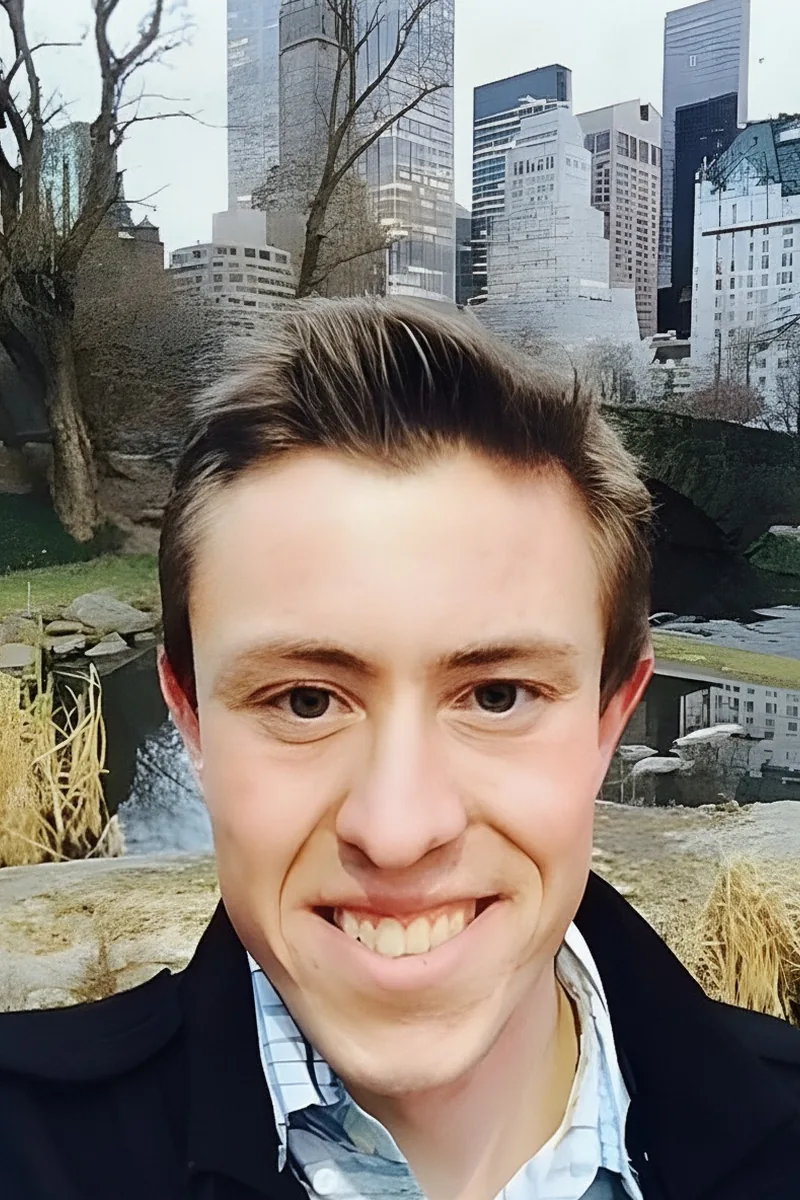
Brian approaches physics problems the way he approaches lab research: identify what's actually happening, sketch it out, and then pick the right tool — whether that's Newton's second law, energy conservation, or circuit analysis. He enjoys the subject alongside his biology focus and uses his 34 ACT analytical instincts to teach students a systematic problem-solving method that works across kinematics, electromagnetism, and waves.
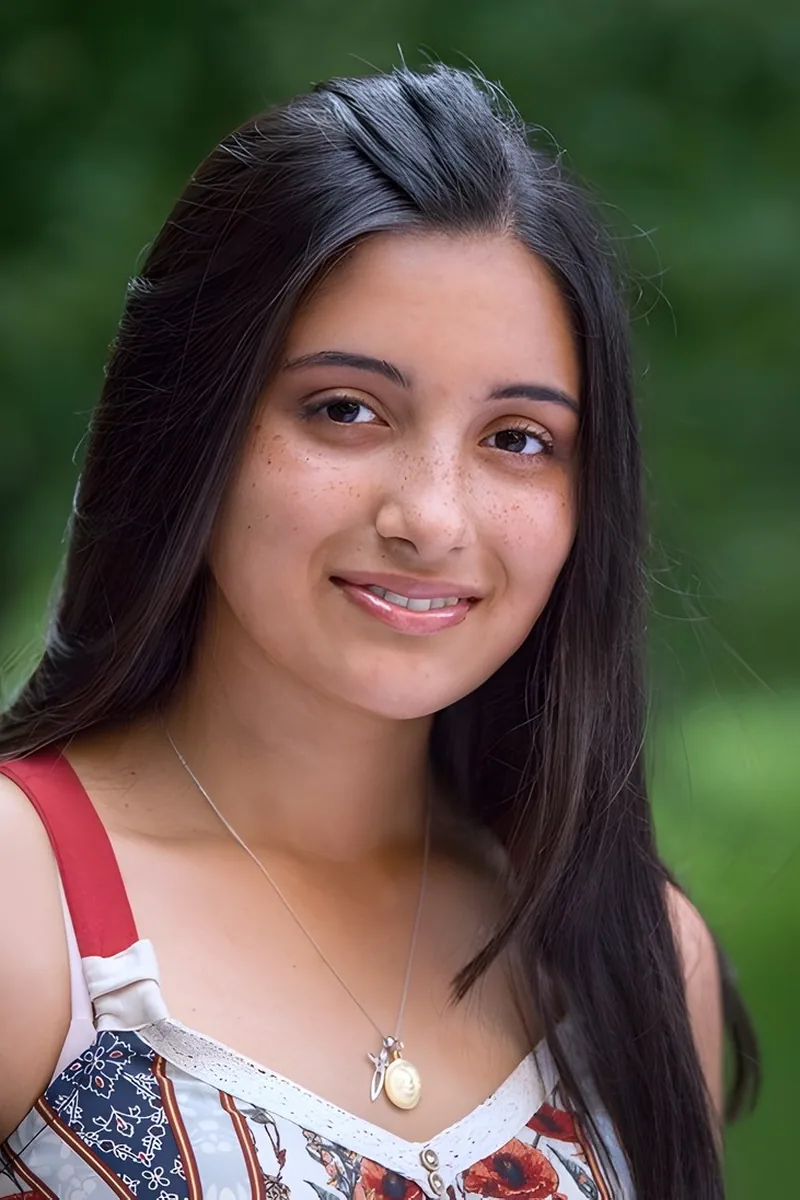
Computer science coursework at St. Thomas keeps Abirami immersed in the mathematical modeling and vector logic that underpin introductory physics — from decomposing forces into components to tracking energy through multi-step systems. She leans on that computational mindset to teach students how to translate a messy word problem into a clean set of equations, treating each physics scenario like a program to debug: identify the inputs, find the governing rule, then solve systematically.
Jane's physics degree gives her the kind of fluency with mechanics, electromagnetism, and thermodynamics that comes from working through derivations rather than just applying formulas — and her parallel work in biomedical engineering means she regularly connects those principles to real systems like fluid flow and biomechanical stress. She's especially sharp at teaching students how to move from a free-body diagram to a clean set of equations in multi-force problems. Rated 4.9 by students.
Kinematics equations and free-body diagrams look straightforward on paper, but Physics gets hard when students have to decide which principles apply to a new problem they've never seen before. Broden teaches a systematic approach: identify the forces, choose the right framework (Newton's laws, energy conservation, momentum), then translate the physics into math. His CS and math background keeps the quantitative side sharp.
Audrey's Classical and Ancient Mediterranean studies might seem far from physics, but her 35 ACT and deep comfort with calculus and astronomy reveal someone who genuinely thinks across disciplines — she understands the math that underpins wave behavior and orbital mechanics because she's fascinated by the physical universe, not just required to study it. That cross-disciplinary instinct means she's especially good at connecting the conceptual story of a physics problem to the mathematical steps, so students see *why* an equation applies rather than guessing from a formula sheet.
Studying aerospace engineering means Nicholas doesn't just know physics formulas — he applies Newtonian mechanics, energy conservation, and wave behavior to design problems every semester. He breaks down intimidating multi-step problems by teaching students to diagram forces and identify which principles actually apply before touching a calculator. That engineering instinct for structured problem-solving translates directly into clearer physics thinking.
I'm experienced in and passionate about (especially computer skills, Python, and math) with others. I try to convey the principles and thought process that are the basis of my own understanding of the subject, not just rules to follow or things to memorize. Being able to explain your answer is even more important than simply getting it right! My tutoring style is personalized, with plenty of examples and frequent knowledge checks to ensure I and my student(s) are in sync. In my spare time I enjoy cycling, skiing, woodworking, reading, and vacationing to Lake Superior.
I'm not tutoring or buried in my textbooks, you will either find me rock climbing at the Triangle Rock Club, playing Ultimate Frisbee, working on my car, or enjoying the great outdoors (beaches, mountains, forests--you name it, I love it). On rainy weekends I enjoy tinkering with computers and old electronics, playing Pokemon, or picking at my guitar.
I am an interdisciplinary educator with an Ed.M. from the Harvard Graduate School of Education and a B.A. from Dartmouth College. My background is primarily in integrated arts learning and museum education and I specialize in visual arts, history and art history, and object-based learning. In all subjects, I take a creative, inquiry-based and learner-centered approach, designing opportunities for each unique individual to meet their learning goals.
I am a recent graduate from a masters program in biostatistics at Columbia University. I received my Bachelor of Arts in biological sciences, with a focus in neurobiology at Northwestern University. In August, I will be starting a doctoral program in biostatistics at NYU. I was a teaching assistant at Columbia University in my department and also have tutored graduate students and undergraduates privately as well. My primary areas of tutoring are math and statistics coursework in addition to math sections on standardized tests such as the GRE and GMAT. I am very passionate about helping students feel more confident and excited about math. In my spare time, I enjoy running, playing piano, and spending time with friends and family.
I am a graduate of Wesleyan University, where I received my Bachelor of Arts in Sociology with High Honors. With eight years of experience working in education, I've tutored students in math, science, history, and English, as well as helped students prepare for standardized tests. I've guided adults towards passing the US Citizenship Exam and taught English in India, where I lived for six months. Whenever I work with a student I personalize the lessons to fit their particular learning style, since I know every student is unique and having the right fit can make all the difference in making learning fun and effective. My strengths are tutoring the social sciences and humanities, as well as making math and standardized tests approachable to students that normally don't like those subjects. In my spare time I like traveling, spending time in the outdoors (climbing & backpacking), meditation, and playing soccer. Next fall I will be beginning my PhD in Education at Harvard University.
I am a junior Mechanical Engineering major at Yale, and I hope to become a Naval Aviator after college. I am also a varsity sailor, and enjoy playing music with friends when I can get some free time. I have been tutoring my fellow students throughout my entire academic career, and I would best describe my tutoring style as one that adapts to each students' needs. For example, I have always tried to frame questions in a different way so that the student can better understand the question. Some students need visual representations of numbers and systems to understand them, and others benefit more by understanding the concepts behind each formula. I prefer to tutor in math and physics, and especially with real world application problems. I hope to help students improve their standardized test scores and their understanding of the math and sciences so that they can achieve their academic goals!
Testimonials
Because the right Physics tutor makes all the difference.
Average Session Rating – Based on 3.4M Learner Ratings
Practice Physics
Free practice tests, flashcards, and AI tutoring for Physics
Nearby Physics Tutors
Other Minneapolis Tutors
Related Science Tutors in Minneapolis
Frequently Asked Questions
Your first session is about understanding where you are right now. A tutor will assess your current understanding of physics concepts, identify specific challenges you're facing (whether it's force and motion, energy, circuits, or something else), and learn about your learning style. From there, they'll create a personalized plan tailored to your goals—whether that's improving your grade, preparing for the AP Physics exam, or building confidence with problem-solving.
Physics involves visualizing things we can't see—forces, fields, waves, and energy transformations. Expert tutors use multiple strategies to make these concrete: drawing force diagrams, working through real-world examples, using analogies, and breaking complex problems into smaller steps. When you can visualize and connect abstract ideas to tangible situations, the concepts stick much better than memorization alone.
Physics problems require more than knowing formulas—they demand understanding which concepts apply to a situation, setting up equations correctly, and tracking units throughout. Many students memorize formulas without grasping the underlying principles, which makes novel problems feel impossible. Personalized tutoring focuses on building your scientific reasoning skills so you can approach unfamiliar problems with confidence, not just solve the ones you've seen before.
Yes. Tutors can help you understand the purpose behind experiments, work through data analysis, interpret results, and connect lab observations to the theory you're learning in class. Whether you're struggling with experimental design, graphing data, or understanding why your results didn't match predictions, a tutor can guide you through the scientific method and help you think like a scientist, not just follow steps.
AP Physics exams test both conceptual understanding and problem-solving skills across mechanics, electricity and magnetism, waves, and thermodynamics. Tutors help you master each unit deeply, practice with released exam questions, develop test-taking strategies, and identify your weak spots before test day. With personalized instruction, you can focus study time on what actually needs work rather than reviewing concepts you already know.
Unit conversions aren't just busywork—they're a powerful tool for checking your work and understanding what equations mean. If you set up a problem correctly, your units should cancel properly and give you the right answer. Many students skip this step and end up with nonsensical results. Learning to use dimensional analysis builds confidence that you're solving problems the right way, not just getting lucky with numbers.
Different schools may emphasize different physics topics or use different curricula, but the core concepts—motion, forces, energy, waves, electricity—are universal. Tutors working with students in Minneapolis are familiar with the physics standards taught across the 34 school districts in the area and can adapt their teaching to match your specific course and teacher's expectations while building deep conceptual understanding.
In a typical classroom with a 17.6:1 student-teacher ratio, it's hard for teachers to slow down for abstract concepts or speed up for quick learners. With personalized instruction, a tutor adjusts pacing to your needs, repeats explanations in different ways until they click, and focuses entirely on your learning gaps. Research on personalized learning shows that this focused, adaptive approach leads to stronger understanding and better performance on exams and assignments.
Let’s find your perfect tutor
Answer a few quick questions. We’ll recommend the right plan and match you with a top 5% tutor.