Award-Winning AP Pre-Calculus Tutors
serving Detroit, MI
AP Pre-Calculus
Tutors in Detroit
Private 1-on-1 tutoring, weekly live classes for academic support, test prep & enrichment, practice tests and diagnostics, and more to elevate grades and test scores.
Based on 3.4M Learner Ratings
UniversitiesSchools & Universities
DeliveredHours Delivered
ProficiencyGrowth in Proficiency
Who needs tutoring?
No obligation. Takes ~1 minute.

I have a Master's degree in Chemical Engineering, with additional graduate studies in Chemical Engineering and Computer Science, and over 10 years of experience teaching and tutoring STEM subjects. I work with students of different ages, backgrounds, and learning styles in mathematics, physics, chemistry, and related subjects. I believe the best tutoring starts with understanding how each student thinks. My goal is to identify where a concept becomes unclear, explain it from the student's perspective, and help them build both understanding and confidence. I want my students to learn not just how to find the right answer, but why it is the right answer and how to approach similar problems independently. I believe there is always learning in teaching, and that is one of the reasons I continue to enjoy working with students after all these years.
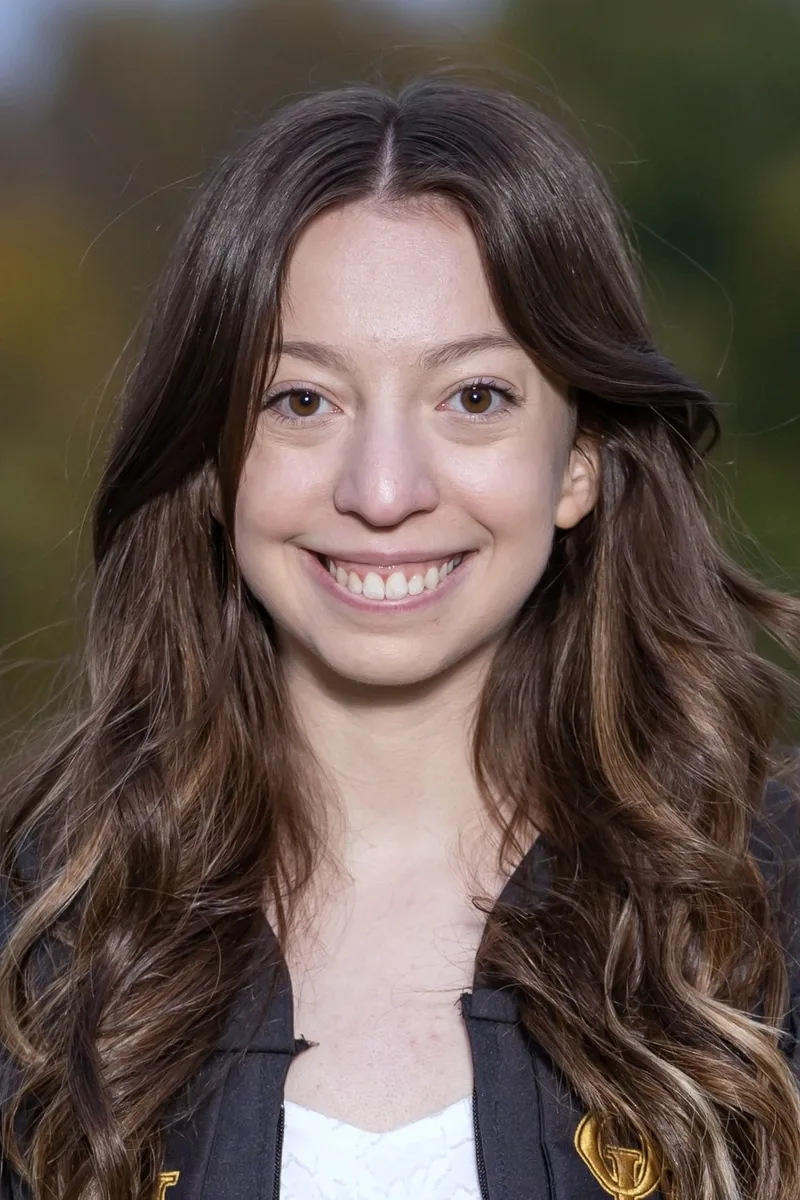
Industrial engineering coursework at Oakland University had Carly building and optimizing mathematical models daily — the same polynomial, exponential, and trigonometric functions that form the backbone of AP Pre-Calculus, applied to real systems like production scheduling and quality control. She zeros in on helping students move past rote computation to actually interpreting what a function's rate of change or end behavior is telling them, which is where the AP exam separates strong scores from average ones. Her teaching assistant experience in college means she's practiced at catching the specific algebraic missteps that derail students mid-problem.
One of the most important things in tutoring math is to make sure students understand why a mathematical procedure works, not just how to do it. When student know how to do the procedure, but don't understand why it works, they will forget the procedure or misapply it, or worse, they may begin to hate math, not because they can't do it, but because they don't understand its relevance.
Hi! I'm Palmer Blackstock, a passionate tutor with a Bachelor's degree in Physics from the University of Chicago and over two years of experience in tutoring high school and college students. My primary focus is on Physics at both introductory and advanced levels, with an additional focus in math subjects like Algebra, Pre-Calculus, and AP Calculus. In my past tutoring I've helped students grasp complex concepts in mechanics, waves, and electromagnetism, as well as math concepts in trigonometry and calculus. I believe in a collaborative, student-centered approach, where I'll ask the student what they know, what they don't know, and what they want to get out of our tutoring sessions. I always tailor my lessons to meet a student's individual needs. I'm dedicated not only to enhancing a student's understanding of math and science concepts but also fostering a love of science by providing engaging content and real-world examples. In addition to my passion for education, I also love writing and journalism, especially finding engaging methods for science communication. I enjoy reading books and listening to science podcasts. But I'm also an avid video game and board game player.
I love math, and have a passion for sharing that love and knowledge. Progressing through courses of mathematics teaches much beyond what is on the page. It teaches problem-solving, critical and creative thinking. I try not only to teach the mechanics of math, but instill an appreciation for the skills the process can develop. And while math is my favorite subject to tutor, I have had training in and am qualified for all sections of SAT and ACT test prep, and enjoy working with students to help them learn and meet their college goals.
Hi! I'm Kavya, and I'm passionate about helping students build confidence and succeed in school. I tailor each lesson to a student's learning style, making concepts clear, engaging, and easy to understand. I specialize in math, from elementary concepts to algebra, geometry, trigonometry, statistics, calculus, and college-level courses, focusing on true understanding rather than memorization. I also tutor English, reading, writing, grammar, homework support, study skills, organization, and test preparation. My sessions are patient, supportive, and interactive, creating a comfortable environment where students feel confident asking questions. Whether a student needs extra help, wants to improve grades, or wants to get ahead, I provide personalized lessons that build strong academic skills, confidence, and a lifelong love of learning.
Hi! My name is Oscar, and I grew up in Washington, DC. I attended St. Olaf College and graduated Magna Cum Laude with a degree in mathematics in 2023. That year I started tutoring students online and I now have two years of post-college tutoring experience. Math is a subject many students find stressful or intimidating. It might make them anxious, or math might be their least favorite class, or both! No matter where a student is coming from, my goal is to create a low-stress environment where he or she feels comfortable making mistakes and asking questions. I've worked with students from elementary school through college, often on Algebra or Algebra 2. I've helped students improve grades, understand tough homework and class concepts, prepare for the SAT and Regents exams, and get ahead by teaching future material.
Where most students stumble in AP Pre-Calculus is the shift from computing answers to reasoning about how functions behave across different representations — tables, graphs, and equations all telling the same story. Channing's deep math background, spanning competition math through multivariable calculus, means he can trace every AP Pre-Calculus concept back to the core logic driving it, especially when piecewise and trigonometric models start demanding real analytical thinking instead of rote steps. He's also taught enough younger students to know exactly which algebraic habits need fixing before the course's pace leaves anyone behind.
Hi I'm Lou! I'm passionate about helping students succeed in math and physics. I aim to create a supportive learning environment and take care to learn and adapt to each student's learning needs. I have been formally tutoring for a few months and currently tutor students in Algebra 1 through Multivariable Calculus and College Physics. I have over eights years of peer tutoring experience from helping classmates in sixth grade through college on a wide range of math and engineering topics.
Hello, my name is Marcus! I am a senior aerospace engineering student at New Mexico State University. I have nearly four years of math tutoring experience, including college-level courses. Through my educational journey, I have developed a strong foundation in practical problem-solving and an understanding of the depth and test-taking strategies needed to succeed in any course. As a tutor, I break down challenging concepts to fit the learner's needs. I understand people learn differently, so I adapt my teaching style in every session. My goal is to help you become a more confident and independent problem solver through patient, kind, and thorough guidance!
The moment AP Pre-Calculus shifts from 'solve this equation' to 'describe what this function is doing and why,' a lot of students lose their footing — and that's exactly the transition Sharif is built to coach. His deep calculus background (he teaches through AP Calculus BC) means he can trace every pre-calculus concept forward, showing students how mastering function behavior now pays off in the next course. He approaches each session by working backward from the reasoning the AP exam actually tests, not just the computations.
Bioengineering at Penn means Elias doesn't just solve pre-calc problems — he builds mathematical models with polynomial, exponential, and trigonometric functions as part of his actual coursework. That applied fluency shows up in how he teaches the AP framework's modeling questions, walking students through how to interpret function behavior from a graph before writing a single equation. He zeroes in on the reasoning the exam rewards, especially around rates of change and function composition.
Mechanical engineering at UT means Yucheng works with polynomial, exponential, and trigonometric models in applied settings — designing systems where function behavior isn't abstract but determines whether something actually works. He brings that practical lens to AP Pre-Calculus, breaking down the course's modeling and rate-of-change questions so students see the reasoning the exam rewards. Rated 4.9 by students.
Gordon's biology degree from Arizona State required constant work with the mathematical models AP Pre-Calculus is built around — logistic growth curves, exponential decay in pharmacokinetics, and sinusoidal cycles in ecological data all demanded real fluency with function behavior, not just formula memorization. His experience tutoring the full math ladder from pre-algebra through Calculus BC means he can pinpoint exactly which algebraic or trigonometric gaps are tripping a student up and address them before they compound. He's especially sharp at teaching students to move between algebraic and graphical representations, which is where the AP framework puts its heaviest emphasis.
Testimonials
Because the right AP Pre-Calculus tutor makes all the difference.
Average Session Rating – Based on 3.4M Learner Ratings
Other Detroit Tutors
Related Math Tutors in Detroit
Frequently Asked Questions
AP Pre-Calculus covers a wide range of topics including functions, polynomials, rational functions, exponential and logarithmic functions, trigonometry, sequences and series, and parametric equations. The course emphasizes both conceptual understanding and procedural fluency.
Tutors help students build mastery by breaking down complex topics into manageable pieces, identifying gaps in foundational knowledge (like algebra skills), and using targeted practice to strengthen weak areas. This personalized approach is especially valuable since the 20.7:1 student-teacher ratio in Detroit schools means classroom instruction may not address every student's individual needs.
Score improvement depends on your starting point, consistency with tutoring, and how much you practice between sessions. Students who engage actively in tutoring and complete practice problems typically see meaningful gains—many improve by 1-2 score points or more on the 1-5 AP scale.
The most significant improvements often come from students who address fundamental misunderstandings early in the course, build strong problem-solving strategies, and develop confidence with different question formats. Varsity Tutors connects you with expert tutors who can create a customized study plan aligned with your specific goals and timeline.
Many students struggle with the transition from Algebra II to Pre-Calculus, particularly with function notation, transformations, and trigonometric identities. Other frequent pain points include understanding the connections between different representations (graphs, equations, tables), pacing through multi-step problems, and applying concepts to unfamiliar contexts.
Trigonometry is especially challenging for students who haven't developed strong geometric reasoning, and logarithmic/exponential functions trip up students who haven't mastered exponent rules. Personalized instruction can target these specific weak areas before they compound into larger gaps.
Effective strategies include starting with problems you're confident about to build momentum, using the graphing calculator strategically (knowing when to use it and when pencil-and-paper work is faster), and showing clear work for partial credit on free-response questions. Time management is crucial—students should allocate roughly 1.5-2 minutes per multiple-choice question and budget time proportionally for free-response sections.
Tutors help students practice these strategies using real AP exam questions and practice tests, build pacing skills under timed conditions, and develop a toolkit for when they encounter unfamiliar problem types. This kind of targeted exam preparation builds both competence and confidence on test day.
Practice tests are essential—they reveal which topics need more work, build familiarity with the exam format, and help students develop realistic time-management skills. Regular problem sets between tutoring sessions reinforce concepts and build automaticity with procedures, which frees up mental energy for harder problems.
Research on effective learning shows that spaced practice and retrieval practice (testing yourself repeatedly over time) are among the most powerful study methods. Tutors typically recommend taking full-length practice tests every 2-3 weeks during exam prep, with focused problem sets on specific topics between tutoring sessions to maximize skill development.
Varsity Tutors connects you with expert tutors who understand the AP Pre-Calculus curriculum and can deliver personalized instruction tailored to your learning style and goals. You can share your specific needs—whether you're aiming for a particular score, struggling with specific topics, or preparing for exam day—and get matched with a tutor who fits your situation.
The matching process considers factors like tutor expertise, availability, and teaching approach, ensuring you work with someone who can help you succeed. Get started by describing what you're looking to accomplish, and Varsity Tutors will handle the rest.
Ideally, start tutoring early in the school year if possible—this allows time to build a strong foundation, identify weak areas, and address them before exam season. Most students benefit from 2-3 months of focused preparation leading up to the May exam, with sessions 1-2 times per week depending on your starting point and goals.
Starting early is especially valuable because it gives tutors time to diagnose gaps in prerequisite skills and address them systematically. Students who engage with tutoring starting in the fall or winter typically perform better than those who wait until just before the exam, since depth of understanding takes time to develop.
Let’s find your perfect tutor
Answer a few quick questions. We’ll recommend the right plan and match you with a top 5% tutor.