Award-Winning Latin Tutors
serving Springfield, MA
Latin
Tutors in Springfield
Private 1-on-1 tutoring, weekly live classes for academic support, test prep & enrichment, practice tests and diagnostics, and more to elevate grades and test scores.
Based on 3.4M Learner Ratings
UniversitiesSchools & Universities
DeliveredHours Delivered
ProficiencyGrowth in Proficiency
Who needs tutoring?
No obligation. Takes ~1 minute.
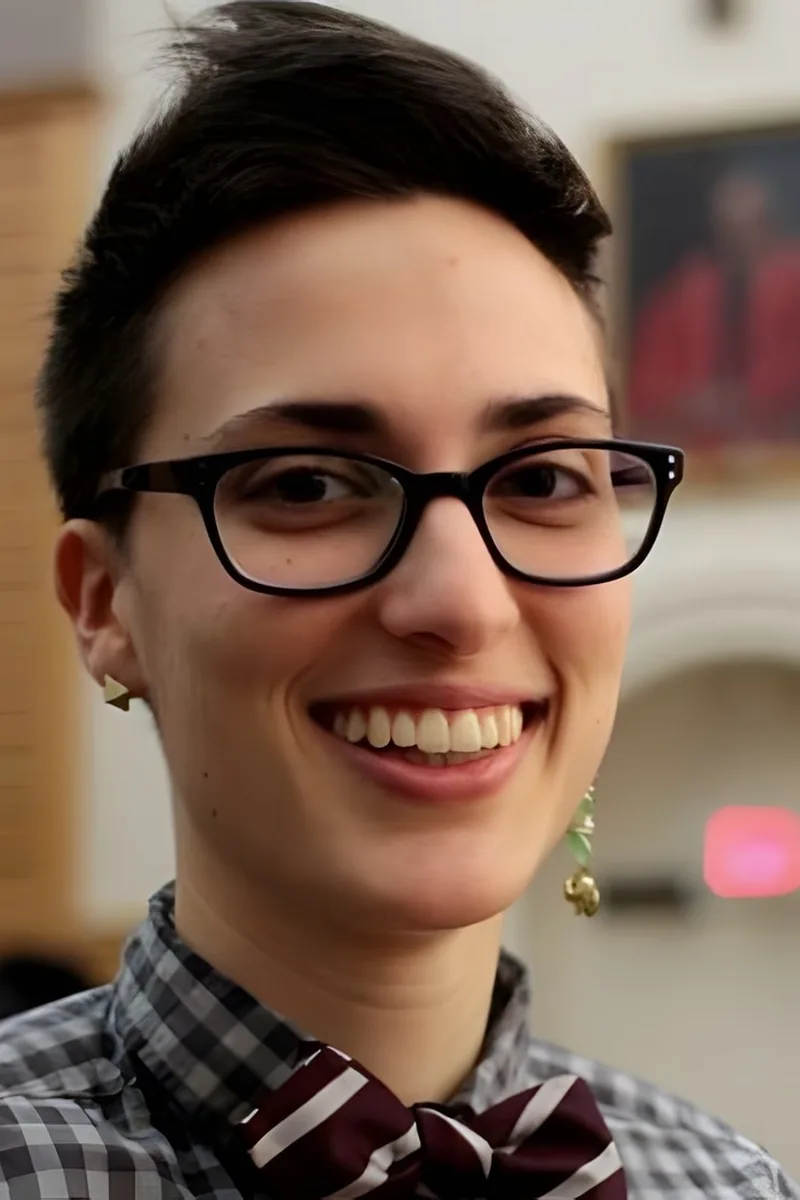
Having taught Latin 1 through Latin 4, Cassandra covers everything from first-declension nouns to translating Virgil and Cicero at an advanced level. Her literary training means she doesn't just parse grammar mechanically — she unpacks how word order, meter, and rhetorical figures create meaning in the original text.

Zachary's PhD work at Harvard sits squarely at the intersection of German philosophy and classics, meaning he reads Latin not as a classroom exercise but as a daily tool for engaging with primary texts in their original language. He teaches all four levels and is especially sharp on the grammatical precision needed for dense philosophical and literary passages — ablative constructions, purpose clauses, and the kinds of nested relative clauses that make students' eyes glaze over until someone unpacks the logic holding them together.
Grace's AP Latin coursework and political science studies at Vanderbilt mean she's read Roman oratory and governance texts in their original language — the kind of dense, clause-heavy prose where getting ablative absolutes and indirect statements right actually matters. She brings that firsthand experience with politically charged Latin passages to her teaching, walking students through how to decode complex syntax by anchoring each grammatical choice in what the author was trying to argue.
As a junior high Latin teacher, Amelia lives in this language daily and has developed a method she calls "reading with expectations" — training students to read Latin left-to-right, anticipating grammatical structures instead of hunting for verbs and scrambling words into English order. This linear approach builds genuine reading fluency, whether a student is tackling Wheelock's exercises or parsing a passage of Vergil. Her 5.0 rating speaks to how well this clicks for students.
I'm majoring in Computer Science and Biology at Northeastern University, I like to dance, and my main goal is to help you achieve your goals.
I am currently working on my PhD in English Literature at Southern Methodist University. I specialize in the intersection between ancient texts and Christianity as it is evident in Renaissance literature. During my MA I worked as a teacher's assistant, learning teaching strategies from many distinguished professors. Students met with me one on one to discuss assignments, work on papers, and review for tests. During these years I had the opportunity to work with several ESL students and students with disabilities. Being deaf in my right ear gives me a unique perspective when working with students struggling with disabilities because I have fought those battles myself, albeit to a smaller degree than some. I firmly believe that disabilities should never stand in the way of learning.
I'm a graduate of Northeastern University and have a BA in Theatre with a minor in Business Administration. I consider myself an actor, director, and educator. I'm currently a theatre advisor at a high school in Boston. I have been tutoring since I was in high school myself, in San Juan, Puerto Rico, where I'm from. I believe that all students deserve a chance to succeed, and strive to personalize my teaching style to best suit my students' needs. I tutor in: Theatre, Acting, Audition prep (Theatre), English Literature, Spanish Literature, Conversational Spanish, and Spanish 1.
I am prepared to help students of all levels improve their French and/or English language skills, from the fundamentals of reading, writing, speaking, and listening, to advanced grammar, composition, and cultural fluency.
Sarah's liberal arts training across music, theology, and world religions means she's spent years reading texts where Latin isn't just a classroom subject — it's the language sacred music, liturgical history, and philosophical ethics were written in. That lived context makes teaching declensions and conjugations stick, because every grammar concept connects to real hymns, prayers, and historical documents students can actually engage with. Rated 4.8 by students.
An English degree and a Master's in Acting mean Joseph has spent years dissecting language from the inside — scanning meter, breaking down rhetoric, and performing texts where every word's Latin origin carries weight. He brings that same close-reading instinct to Latin grammar, treating each sentence as a script to be decoded through its cases, tenses, and clause structure. Rated 5.0 by students.
Philosophy and Latin are deeply entangled — Adam's degree means he's spent years encountering Latin terminology, logical structures, and the classical texts where Western philosophical traditions actually originated. He teaches Latin 1 through 3 with a focus on how grammatical concepts like subjunctive mood and indirect discourse carry philosophical nuance, so students learn to read with precision rather than just decode words. His background in Greek reinforces that classical-languages fluency.
Four levels of Latin coursework gave Noah deep familiarity with declensions, conjugations, and the sentence structures that trip students up most — ablative absolutes, indirect statements, and purpose clauses. He approaches Latin translation almost like parsing code: breaking a sentence into its grammatical components before assembling meaning. That systematic method makes even dense passages from Caesar or Virgil feel manageable.
Four years of Latin at Notre Dame — enough to earn a minor — gave Lauren deep fluency with declensions, conjugations, and the grammatical logic that makes translating Virgil or Caesar feel less like guesswork. She teaches students to parse sentence structure methodically, starting with verb identification and working outward, so even complex passages become manageable. Rated 5.0 by students.
Studying Classics alongside Physics at Vanderbilt means Dylan reads Latin daily as part of his actual degree work — not as a side interest but as a core discipline. That dual training sharpens his ability to teach grammar as a logical system, walking students through subjunctive constructions, indirect statements, and the kinds of prose passages where precision with every case ending matters.
Having taught Latin across four levels, Joana knows exactly where students stumble — the ablative absolute feels impossible until you see it as a compressed clause, and subjunctive mood clicks once you connect it to specific trigger words. She digs into authors like Vergil and Caesar not just for grammar drills but to show how word order and case endings carry meaning that English translations flatten out.
As a Classics major at Carleton who aspires to teach high school Latin full-time, Emma has spent years immersed in the language — not just grammar drills, but reading original texts alongside Ancient Greek and the historical contexts that bring both languages to life. She covers all four levels plus AP Latin, and her weekly tutoring at a nearby high school means she's constantly refining how she explains everything from first-year noun declensions to the subjunctive constructions that trip up advanced students.
Working in Sewanee's writing center gave Wallis a sharp eye for how Latin grammatical structures — particularly case usage and participial constructions — surface in English academic prose, making her explanations feel grounded rather than abstract. She also studied at the European University at St. Petersburg, where reading across languages reinforced the kind of close, syntax-level attention that Latin translation demands. Her Latin 1 and Latin 2 teaching covers foundational declensions through more complex sentence parsing.
Forgetting about right and wrong answers is where Latin actually starts — William treats translation as an act of interpretation, encouraging students to play with how a sentence's meaning shifts depending on how they read a subjunctive or resolve an ambiguous ablative. His BA in Classical Languages and Literature means he's spent years inside the original texts, not just parsing grammar exercises, and he also reads Ancient Greek, which sharpens his eye for the cross-linguistic patterns that make Latin's structures click. He covers all four levels plus the SAT Subject Test in Latin.
Leonard's math degree from Columbia might seem like an odd fit for Latin, but the same structural reasoning that powers algebraic proofs — isolating variables, applying rules in sequence, testing whether an answer holds up — maps directly onto parsing case endings and conjugating verbs. He leans into that logic-first approach, asking students to defend their translations and articulate *why* a noun is dative or a clause is purpose rather than result. Rated 4.8 by students.
Paula's psychology and communication studies background means she's constantly bumping into Latin roots — in clinical terminology, rhetorical frameworks, and the academic vocabulary that underpins both fields. She leans on that familiarity to make vocabulary acquisition and grammatical patterns feel connected to words students already use, turning declension drills into something closer to code-breaking. Rated 4.8 by students.
Testimonials
Because the right Latin tutor makes all the difference.
Average Session Rating – Based on 3.4M Learner Ratings
Nearby Latin Tutors
Other Springfield Tutors
Related Languages Tutors in Springfield
Frequently Asked Questions
Latin builds a strong foundation for English vocabulary—over 60% of English words have Latin roots—which improves reading comprehension and standardized test performance. Beyond vocabulary, Latin teaches grammar concepts that transfer to modern languages, develops critical thinking through translation, and opens doors to advanced studies in medicine, law, and classics. Many students find Latin intellectually rewarding because it requires careful analysis rather than memorization alone.
Verb conjugation is one of the most challenging aspects of Latin, with multiple tenses, moods, and forms to master. Personalized 1-on-1 instruction allows tutors to break down conjugation patterns into manageable chunks, use repetition and practice testing to build retention, and address your specific stumbling blocks—whether that's perfect tense formation, subjunctive mood, or deponent verbs. Tutors can also connect conjugation patterns to meaning, helping you understand *why* forms work rather than just memorizing them.
Research on spaced repetition shows that reviewing vocabulary at increasing intervals—rather than cramming—dramatically improves long-term retention. Tutors can design personalized vocabulary practice using evidence-based techniques like retrieval practice (testing yourself rather than re-reading) and connecting new words to familiar English cognates. Building vocabulary in thematic groups (military terms, religious language, household items) also helps you remember words in context, which is how you'll actually encounter them in texts.
Translation is where all your grammar and vocabulary knowledge comes together, but it requires systematic practice. Tutors work through passages with you step-by-step, teaching strategies like identifying the main verb first, recognizing case endings to determine relationships between words, and understanding how word order differs from English. With personalized guidance, you'll develop the analytical skills to tackle unfamiliar passages confidently rather than relying on memorized translations.
Yes. The AP Latin exam tests reading comprehension, translation, and analysis of authentic Latin texts—skills that are built through consistent, focused practice. Tutors can help you master the specific texts on the AP syllabus, teach test-taking strategies for multiple-choice sections, and provide feedback on your prose translations and essay responses. With Springfield's 12.6:1 student-teacher ratio in schools, personalized tutoring offers the individualized preparation that classroom instruction alone may not provide.
Your first session is about understanding where you are and what you need. Tutors will assess your current Latin skills—grammar knowledge, vocabulary level, and comfort with translation—and learn about your goals, whether that's improving grades, preparing for AP exams, or building a stronger foundation. From there, tutors create a personalized plan focused on your priorities, whether that means drilling verb conjugations, building vocabulary, or working through challenging texts together.
Both matter, but they work together. Understanding grammar rules gives you the framework to decode unfamiliar sentences, while exposure to authentic Latin texts (Cicero, Virgil, Ovid) shows you how those rules actually work in context. Tutors balance explicit grammar instruction with reading real passages, helping you internalize patterns naturally rather than just memorizing rules. This approach makes translation feel less mechanical and helps you develop genuine reading comprehension rather than word-by-word decoding.
Varsity Tutors connects you with expert tutors who specialize in Latin and understand the curriculum taught across Springfield's schools. You can specify your goals—whether AP exam prep, grade improvement, or foundational skills—and get matched with a tutor whose expertise fits your needs. Tutors work with students at all levels, from introductory Latin through advanced texts, and can adjust their teaching style to your learning preferences.
Let’s find your perfect tutor
Answer a few quick questions. We’ll recommend the right plan and match you with a top 5% tutor.