Award-Winning AP Psychology Tutors
serving Chicago, IL
AP Psychology
Tutors in Chicago
Private 1-on-1 tutoring, weekly live classes for academic support, test prep & enrichment, practice tests and diagnostics, and more to elevate grades and test scores.
Based on 3.4M Learner Ratings
UniversitiesSchools & Universities
DeliveredHours Delivered
ProficiencyGrowth in Proficiency
Who needs tutoring?
No obligation. Takes ~1 minute.
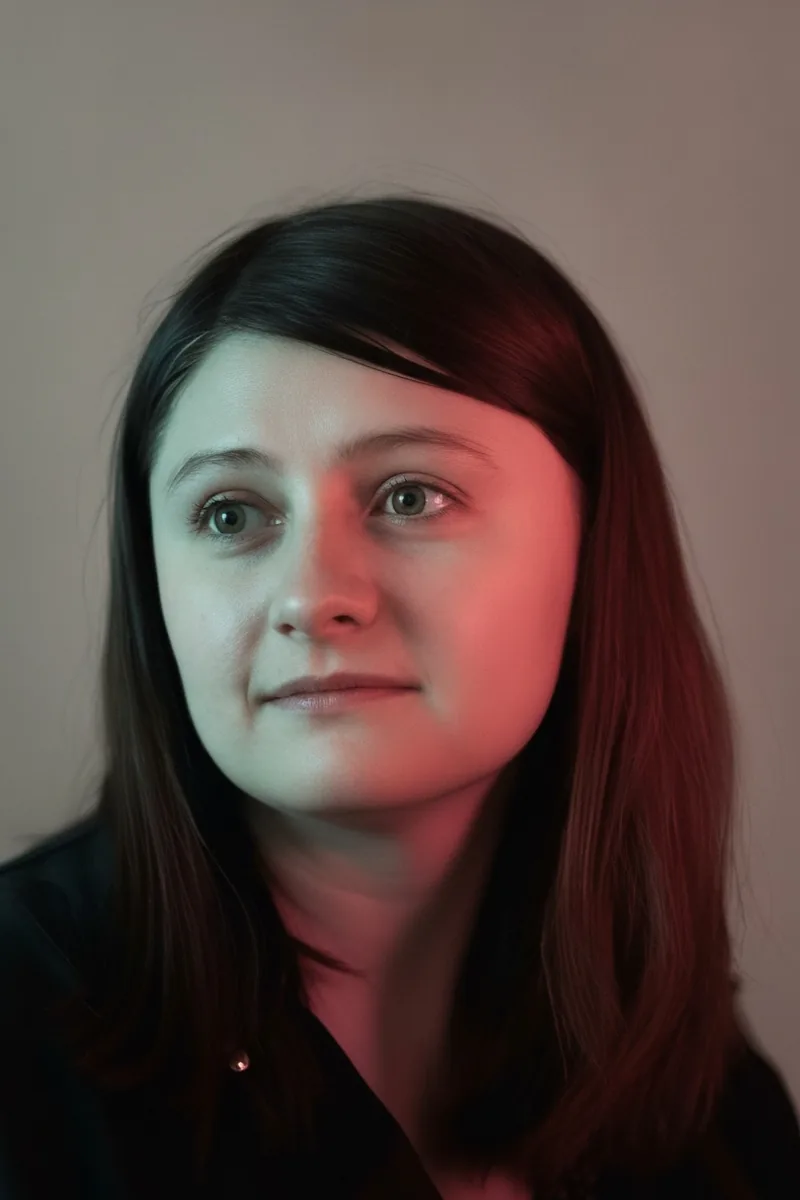
Having studied psychology alongside microbiology and the biological sciences, Felix brings a dual lens to AP Psych — particularly in units like biological bases of behavior and sensation-perception, where his science training makes neurotransmitter pathways and neural signaling click rather than feel like rote vocabulary. He also teaches the research methods unit with the rigor of someone trained in scientific methodology, breaking down experimental design and variable identification in concrete terms. Rated 5.0 by students.
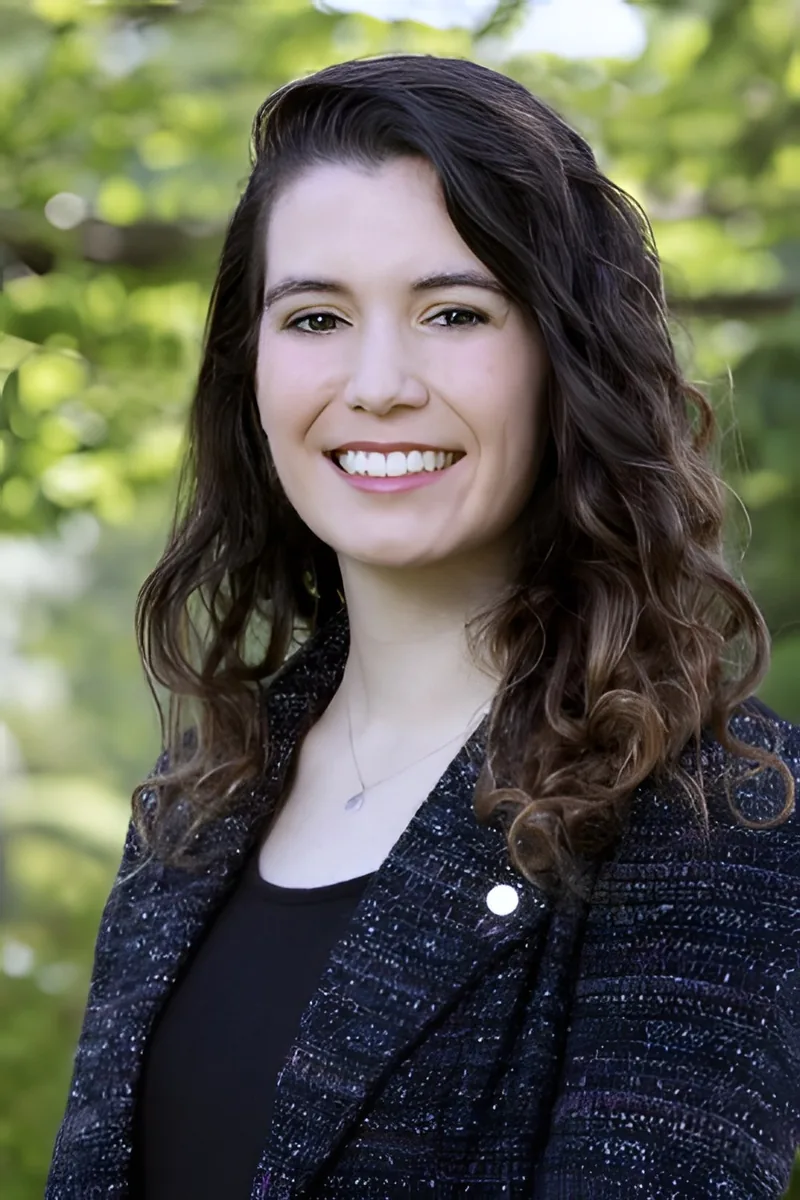
Hi there! I'm Emily, and I love helping students feel more confident and capable when tackling challenging material. Whether you're trying to strengthen your understanding of a course, improve your writing, or prepare for an exam, I'm here to make learning feel approachable, supportive, and a lot less overwhelming. As a Teaching Fellow at the University of Chicago with a PhD in experimental psychology, I bring both subject expertise and years of teaching and mentoring experience to every session. My students often tell me that concepts finally "click" after we work together, and I believe every student can succeed with the right support, encouragement, and strategies. If you are looking for support in psychology or social science courses, or want to feel more confident working through challenging material, I would love to work with you!
Todd's Master of Social Work gives him direct clinical exposure to concepts that dominate AP Psychology's abnormal psychology and social psychology units — diagnostic frameworks, group dynamics, cognitive-behavioral models — all material he's applied in practice, not just studied in a textbook. His biology undergraduate degree also means the biological bases of behavior unit, from neurotransmitter pathways to brain structure, clicks naturally rather than feeling like a detour from the social science content. Rated 5.0 by students.
Alyssa's psychology coursework — she tutors multiple psychology subjects alongside her math degree at Vanderbilt — means she approaches AP Psych's statistics-heavy research methods unit with genuine fluency, breaking down concepts like standard deviation, correlation vs. causation, and statistical significance that trip up students who haven't taken a dedicated math course. Her 34 ACT and 5.0 rating speak to the precision she brings to the free-response section, where she coaches students to structure tight, term-specific answers rather than vague summaries.
Kristen is a psychology major on the pre-med track at UIC, which means she's not just reviewing AP Psych material — she's actively studying it at the college level. She breaks down tricky units like biological bases of behavior and research methods by tying them to real experiments and clinical examples that make the content click on exam day.
Engineering students at Carnegie Mellon don't typically study psychology — but Ryan's coursework in human factors and systems design required him to learn how people perceive, process, and respond to information, which maps directly onto AP Psychology units like cognition, sensation-perception, and memory. He brings an analytical, pattern-based approach to the exam's terminology-heavy content that works especially well for students who think more like scientists than social scientists. Rated 4.8 by students.
Three semesters on UIUC's Teachers Ranked as Excellent list suggest Angelina knows how to make dense material click — and AP Psychology is nothing if not dense, with fourteen units of terminology that students need to define, distinguish, and apply under exam pressure. Her cellular and molecular biology degree gives her a genuine edge in the biological bases of behavior unit, where she breaks down action potentials, neurotransmitter reuptake, and brain lateralization with the precision of someone who studied those systems at the molecular level. Rated 5.0 by students.
Victoria's Master's in Reproductive Science from Northwestern means she studied human development and physiology at a graduate level — giving her a unusually detailed grip on the biological bases of behavior unit, where hormonal pathways, neural development, and genetics of behavior trip up students who lack a real science background. Her psychology minor at Case Western adds formal coursework in the theories and research methods the exam tests, and she uses that dual training to bridge the gap between the biology-heavy and terminology-heavy halves of the AP Psych curriculum.
I am a current student at Washington University in St. Louis, and have been tutoring for the last four years. While I most commonly worked with younger students in the beginning, I gradually took on an influx of older students as my teaching style developed. Because of this, I have experience teaching students from all ages and backgrounds. With my youngest learner ever being 4 years old and my oldest in her 50's, I wholeheartedly believe anyone can learn. I have the experience and desire adapt to each student's unique style of learning in any subject they need; from learning ABCs to multi-variable calculus, I have experience in it all.
Hannahlore's analytical chemistry training gives her an unusual edge in AP Psychology's research methods unit — she thinks natively in variables, controls, and data interpretation, which is exactly what the exam's experimental design questions test. Her science background also makes the biological bases of behavior unit feel like home territory, where she breaks down neurotransmitter systems and neural signaling with a chemist's precision rather than treating them as vocabulary to memorize. Rated 5.0 by students.
Kevin's cellular and molecular biology degree gives him a hands-on understanding of the neural and genetic mechanisms that underpin AP Psychology's biological bases of behavior unit — neurotransmitter systems, action potentials, and brain anatomy are concepts he studied in depth, not just memorized from flashcards. He's also in the process of applying to law school, which means he brings sharp argumentative writing skills to the free-response section, where precisely defining terms like "schema" or "proactive interference" and applying them to a novel scenario is what separates 4s from 5s. Rated 4.9 by students.
Hi! I'm Jennifer, and I think learning should be effective and enjoyable. Everyone learns differently, so I strive to adapt my teaching to each student's needs while maintaining a supportive environment where they feel comfortable asking questions. I have tutored SAT Reading, which taught me the importance of patience and creativity. I hope to see students gain confidence in their abilities and realize that they are capable of more than they think. Happy learning!
Pursuing a double major in Political Science and Psychology at Emory means Sahar is actively studying the same material AP Psych students encounter — from social cognition and group behavior to developmental theory and the DSM's diagnostic categories. Her psychology coursework gives her current, firsthand familiarity with how these concepts are taught at the college level, which sharpens her ability to break down the terminology-dense units that trip students up on both multiple-choice and free-response sections. Rated 4.9 by students.
A psychology degree gives Maggie direct familiarity with the AP Psych curriculum — she studied the theories of Erikson, Piaget, and Kohlberg in depth, which is especially useful for the developmental psychology unit where students need to distinguish overlapping stage models under exam pressure. Her strong writing and reading background also translates to the free-response section, where she coaches precise term definitions woven into scenario-based answers that earn full credit.
Nicole's chemistry background gives her a tangible way to teach the biological bases of behavior unit — she explains neurotransmitter pathways and synaptic signaling with the precision of someone who studied those molecules, not just their psychological effects. Her English literature training then kicks in for the free-response section, where she coaches students to construct tight, definition-rich answers that don't waste words. Rated 5.0 by students.
Economics at Duke teaches you to model how people make decisions under uncertainty — which is essentially what AP Psychology's cognition, motivation, and social psychology units are about, just with different vocabulary. Devanshi leans on that behavioral economics overlap to make concepts like heuristics, cognitive biases, and group decision-making feel intuitive rather than like a wall of flashcards. Her 35 ACT also signals the kind of precise, fast reading that pays off on the exam's dense multiple-choice passages.
Natalie's neurobiology major at Penn means she's studied the brain systems behind AP Psych's biological bases of behavior unit — neural signaling, neurotransmitter pathways, brain anatomy — in far more depth than the course requires, which lets her explain those concepts with real precision rather than surface-level definitions. That science backbone also sharpens how she approaches units like sensation-perception and memory, where understanding the underlying biology turns abstract terminology into something students can actually reason through on free-response questions.
A psychology major at the University of Chicago with a neuroscience specialization, Emerson lives and breathes the material that shows up on the AP Psychology exam — from Piaget's developmental stages to action potentials and neurotransmitter pathways. He connects textbook concepts to the actual research studies that College Board loves to test, making free-response questions far less intimidating. Rated 5.0 by students.
Orlando's economics training built real fluency with statistical reasoning and data interpretation — skills that translate directly to AP Psychology's research methods unit, where students need to parse experimental designs, identify variables, and evaluate significance without getting lost in jargon. He also brings strong essay-writing chops from his arts background, which he applies to coaching free-response answers where precise term definitions and clean scenario application separate 4s and 5s from 3s.
Tashina earned her PhD in Psychological and Brain Sciences, so the AP Psych curriculum — from operant conditioning to the intricacies of the DSM — is territory she's navigated at the research level, not just the introductory one. Her statistics expertise is particularly useful for the research methods unit, where she breaks down experimental design, p-values, and confounding variables with the fluency of someone who runs studies rather than just reads about them. She also brings sharp writing instincts to the free-response section, coaching students to define terms with precision and apply them cleanly to scenario prompts.
Years of teaching English overseas in Thailand and Laos gave Gabriel firsthand experience with how culture shapes cognition, communication, and social behavior — exactly the kind of cross-cultural thinking that AP Psychology's social psychology and developmental units test on free-response questions. His TEFL background also means he's practiced at breaking down dense terminology for learners who need concepts explained clearly and concretely, a skill that transfers directly to vocabulary-heavy units like memory, learning theory, and abnormal psychology. Rated 4.9 by students.
A biology major at Cornell, Drishti brings genuine science fluency to the biological bases of behavior unit — but her edge in AP Psych is actually how she bridges that biology knowledge into the more conceptual units like memory, learning theory, and sensation-perception, where students often lose points by treating terms as disconnected vocabulary. She tackles free-response prep by drilling students on precise term application within scenario prompts, a skill her own 1500 SAT writing practice sharpened. Rated 5.0 by students.
Medical school at the Medical College of Georgia means Vraj has studied the brain and behavior far beyond the AP Psych syllabus — he brings real depth to the biological bases of behavior unit, but his pre-med biology training also sharpens how he teaches sensation-perception, states of consciousness, and the pharmacology behind psychoactive drugs. Where he especially adds value is bridging the science-heavy units with the clinical concepts in abnormal psychology, since diagnostic thinking is something he practices daily, not just something he reads about in a review book. Rated 4.9 by students.
Payal's biology and neuroscience training at Indiana University means the AP Psych biological bases unit — neurotransmitters, brain anatomy, neural signaling — is material she's studied in depth outside the psychology classroom, not just memorized from a review book. Her pre-med path and healthcare fieldwork in Guatemala also ground the abnormal psychology and motivation units in real human context, making it easier for students to connect clinical terminology to actual behavior rather than treating each vocab term as an isolated flashcard.
Jacob's biology degree from Wesleyan included deep study of behavioral science — he even conducted behavioral research on chimpanzees — which maps directly onto AP Psychology topics like learning theory, biological bases of behavior, and research methodology. He teaches students to think like scientists when designing experiments and interpreting data, skills that show up heavily on the AP exam's free-response questions.
Testimonials
Because the right AP Psychology tutor makes all the difference.
Average Session Rating – Based on 3.4M Learner Ratings
Practice AP Psychology
Free practice tests, flashcards, and AI tutoring for AP Psychology
Nearby AP Psychology Tutors
Other Chicago Tutors
Related Social Sciences Tutors in Chicago
Frequently Asked Questions
AP Psychology covers eight major units: Scientific Foundations of Psychology, Research Methods and Statistics, Sensation and Perception, Learning, Cognition, Motivation/Emotion/Personality, Testing and Individual Differences, and Abnormal Psychology and Treatment. The course emphasizes understanding psychological concepts, research methods, and real-world applications. A tutor can help you master each unit's key theories and connect concepts across topics, which is essential for both the multiple-choice and free-response sections of the exam.
The AP Psychology exam is 2 hours and 10 minutes long, consisting of 100 multiple-choice questions (90 minutes) and 2 free-response questions (50 minutes). The multiple-choice section tests your knowledge of concepts, theories, and research findings, while the free-response section requires you to apply psychological principles to scenarios. Many students struggle with pacing on the multiple-choice section or organizing their thoughts under time pressure on the essays—areas where targeted tutoring can make a real difference.
Students often struggle with distinguishing between similar theories and psychologists (like Freud vs. Erikson vs. Piaget), understanding statistics and research methodology, and applying concepts to unfamiliar scenarios on the free-response questions. Additionally, the sheer volume of vocabulary and the need to connect ideas across units can feel overwhelming. A tutor can help you build a strong conceptual framework, create effective study strategies, and practice applying knowledge to new situations.
A score of 3 or higher is considered passing and earns college credit at most institutions, though many competitive colleges prefer a 4 or 5. The national average score is typically around 2.8, so scoring a 4 or 5 puts you well above average. With consistent preparation, practice tests, and personalized tutoring to address your specific weak areas, many students improve significantly from their initial diagnostic scores.
Most students benefit from 3-4 months of consistent preparation, starting around January for a May exam. This allows time to work through all eight units, review key concepts, and complete multiple full-length practice tests. For Chicago students balancing other coursework and activities, a tutor can help you create a realistic study schedule, prioritize high-impact topics, and make the most of your study time rather than cramming.
Practice tests are crucial—they help you identify knowledge gaps, build test-taking stamina, and get comfortable with the exam format and question styles. Taking full-length, timed practice tests every 2-3 weeks allows you to track your progress and adjust your study strategy. A tutor can review your practice test results with you, pinpoint patterns in the types of questions you miss, and teach you strategies to avoid common mistakes.
The free-response questions require you to apply psychological concepts to real-world scenarios, so practice writing timed responses using the FRQ prompts from past exams. Focus on clearly identifying relevant concepts, explaining how they apply to the scenario, and using accurate psychological terminology. A tutor can provide feedback on your essay structure, help you learn how to organize your thoughts quickly, and teach you what AP graders are looking for in high-scoring responses.
Varsity Tutors connects you with expert tutors in Chicago who specialize in AP Psychology and understand the specific demands of the exam. When you get matched with a tutor, you can discuss your current score, target score, and areas where you need the most help. Your tutor will create a personalized study plan, provide targeted instruction on challenging topics, and give you feedback on practice materials to help you reach your goal.
Let’s find your perfect tutor
Answer a few quick questions. We’ll recommend the right plan and match you with a top 5% tutor.