Award-Winning AP Physics C: Mechanics Tutors
serving Atlanta, GA
AP Physics C: Mechanics
Tutors in Atlanta
Private 1-on-1 tutoring, weekly live classes for academic support, test prep & enrichment, practice tests and diagnostics, and more to elevate grades and test scores.
Based on 3.4M Learner Ratings
UniversitiesSchools & Universities
DeliveredHours Delivered
ProficiencyGrowth in Proficiency
Who needs tutoring?
No obligation. Takes ~1 minute.

Bettina didn't just study mechanics in a textbook — she earned a PhD in mechanical engineering, meaning she's derived equations of motion for real systems where assumptions about friction, constraints, and rigid-body approximations actually matter. That depth shows up when she teaches AP Physics C: Mechanics topics like rotational dynamics and gravitational potential energy, because she can explain not just how to set up the integral but why that particular model fits the physical situation.
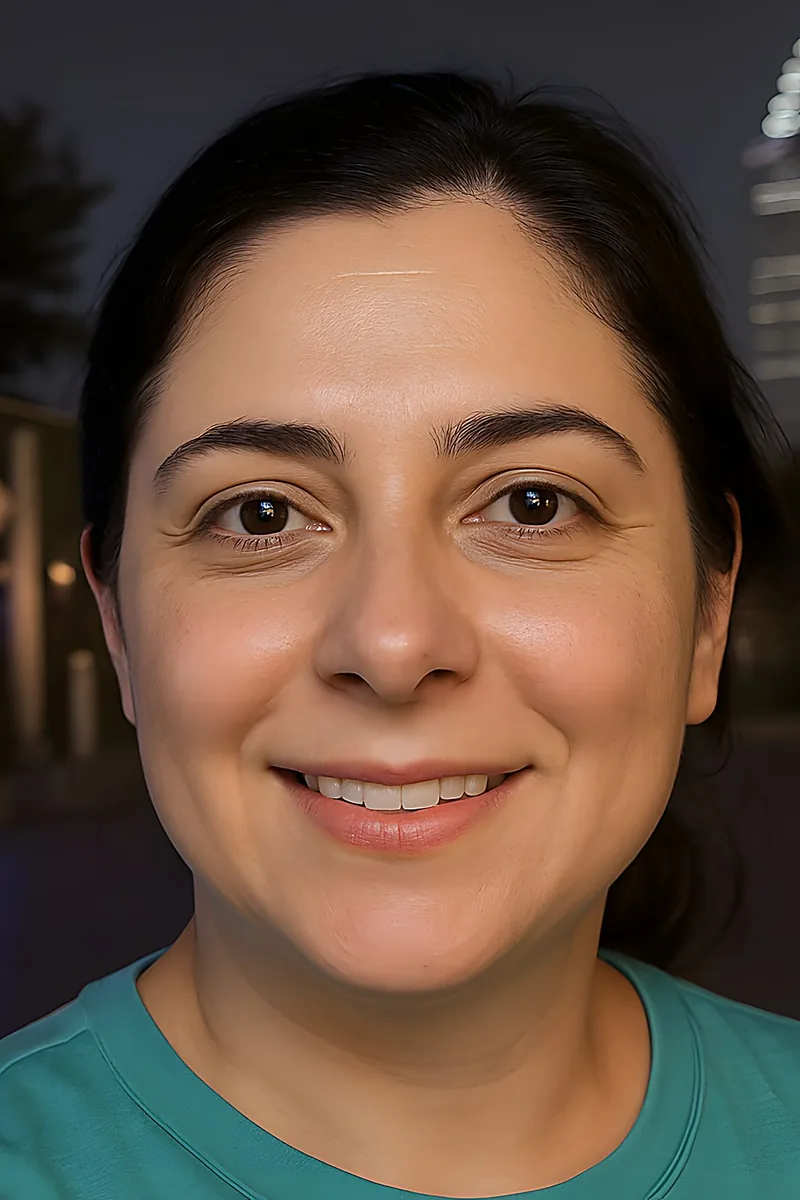
Fifteen years of teaching math and physics from middle school through college means Taha has seen exactly where students stumble when AP Physics C: Mechanics ramps up — the moment a straightforward F=ma problem suddenly requires setting up an integral for a variable force, or when rotational inertia stops being a formula to memorize and becomes something to derive. He anchors each new concept to what students already understand, building the calculus-physics connection piece by piece rather than assuming it's already there.
Pairing a computer science major with a philosophy minor gives Tahmeed an unusual edge on AP Physics C: Mechanics — he thinks algorithmically about problem structure while questioning assumptions the way the free-response section rewards. He's especially sharp on problems where students need to reason through variable-force scenarios or rotational inertia derivations, breaking the physics logic apart before touching the calculus. Rated 4.9 by students.
Most pre-med students avoid the calculus-heavy physics — Manideep leans into it, tackling AP Physics C: Mechanics alongside his biological sciences coursework at Northwestern, where he also TAs in the sciences. He breaks down conservation of energy and momentum problems by starting with the physical scenario and building the integral from there, so students learn a repeatable process instead of hunting for the right formula. Rated 5.0 by students.
Physics was actually Matthew's first tutoring subject — he started teaching it in high school and kept going through his biochemistry degree, where calculus-based mechanics was woven into everything from thermodynamics to molecular modeling. That crossover means he's especially good at unpacking the places where the physics and the calculus tangle together, like setting up force integrals for variable-mass systems or applying Newton's second law in its differential form. Rated 5.0 by students.
Decades of chemical engineering work gave Steven a particular fluency with the calculus-based mechanics that AP Physics C demands — he's applied Newton's laws, energy methods, and differential equations to real industrial systems, not just textbook scenarios. He explains each concept multiple ways, layering physical intuition with worked examples until the connection between the physics and the integral clicks. Rated 4.9 by students.
Richard holds both a B.S. in Math and a B.S. in Physics, which means the calculus and the mechanics aren't two separate languages for him — they developed together, and he teaches AP Physics C that way, treating the math as inseparable from the physical reasoning rather than an add-on. His graduate work in atmospheric sciences demanded constant modeling of force systems and fluid dynamics, so problems involving variable forces or energy conservation across complex scenarios are second nature. He can also tutor entirely in Spanish for bilingual students who think more clearly in their first language.
Designing control systems for Northwestern's solar car means Michael applies Newtonian mechanics, rotational dynamics, and energy conservation principles daily — the exact topics AP Physics C: Mechanics tests. He teaches students to translate word problems into free-body diagrams and then into the calculus-based equations that earn full marks on free-response questions.
Computer engineering at Michigan means Jie solves mechanics problems where the physics and the math have to work together — modeling forces on robotic actuators, computing torques in electromechanical systems — so the calculus-based dynamics on the AP Physics C exam map directly to what he already builds and debugs. His 34 ACT confirms the quantitative sharpness, and he's especially effective at teaching students how to read a free-body diagram and translate it into the right differential equation rather than reaching for a memorized formula.
Working as a postdoctoral researcher at Brookhaven National Laboratory while teaching university physics at Hofstra, Lindamulage lives in the world of Newtonian mechanics and calculus-based dynamics daily — not as textbook exercises, but as tools for active research. That depth shows when tackling AP Physics C: Mechanics topics like rotational inertia derivations or variable-force work integrals, where real-life examples from the lab make abstract setups feel grounded. Students get someone who can explain why a conservation law works the way it does, not just how to apply it on exam day.
Biomedical engineering at Rice means Aurnab regularly applies calculus-based mechanics to biological systems — modeling forces on skeletal structures, analyzing motion in prosthetic designs — so the kinematics and Newton's laws on the AP Physics C exam map directly onto problems he's already solving in his coursework. His 36 ACT and 1590 SAT point to the mathematical precision that matters most when students need to cleanly set up a work-energy integral or differentiate a position function under exam time pressure. Rated 4.9 by students.
Simulating cosmic ray acceleration through turbulent plasmas requires exactly the kind of calculus-based mechanics reasoning that AP Physics C tests — Newton's laws applied to complex systems, rotational dynamics, and energy methods. Dennis walks students through the hardest problems on the exam by teaching them to set up the physics first and let the calculus follow naturally. Rated 4.7 by students.
Thirty years of teaching physics and holding a state certification means Michael has watched thousands of students hit the same stumbling blocks in calculus-based mechanics — the shift from memorizing kinematic equations to actually deriving motion from Newton's second law in integral form. His molecular biology graduate work gave him the quantitative rigor to teach across disciplines, and he uses that cross-training to connect force diagrams and energy methods to the kind of systematic reasoning that clicks on free-response problems.
Jonathan earned his PhD in physics, which means the calculus-based mechanics in AP Physics C — from deriving equations of motion for coupled oscillators to setting up torque integrals for non-uniform rigid bodies — is territory he's navigated at a research level. His teaching fellowship during graduate school had him running students through exactly these problems, building intuition for when to apply Newton's second law in differential form versus jumping straight to energy methods. Rated 5.0 by students.
Biophysics at Rice means Aadith solves mechanics problems where the calculus isn't optional — modeling forces on protein structures, analyzing torque in molecular motors, applying Newton's laws to systems most students never picture in a physics classroom. That cross-disciplinary lens gives him a knack for teaching students how to read a physical scenario and decide whether to reach for an energy integral or a force-based differential equation. His 1590 SAT underscores the mathematical precision he brings to every free-response setup.
Vaughn's physics degree and 1590 SAT mean the calculus-based problem-solving AP Physics C: Mechanics demands — setting up Newton's second law as a differential equation, computing work done by variable forces — is squarely in his wheelhouse. He zeroes in on dimensional analysis and unit tracking as a way to catch errors before they cascade through multi-step free-response problems, a habit that pays off especially in rotational dynamics where signs and reference frames get tricky.
Chemical engineering grad work at ASU Barrett means Alex solves calculus-based mechanics problems daily — from force balances on fluid systems to energy integrals across reactors — and that fluency translates directly to the kinematics, work-energy, and rotational dynamics on the AP Physics C: Mechanics exam. He also tutors AP Calculus BC and SAT Math (1560 SAT), so when a student's free-response answer falls apart, he can quickly isolate whether it's the physics reasoning or the integration technique that needs fixing. Rated 5.0 by students.
Testimonials
Because the right AP Physics C: Mechanics tutor makes all the difference.
Average Session Rating – Based on 3.4M Learner Ratings
Practice AP Physics C: Mechanics
Free practice tests, flashcards, and AI tutoring for AP Physics C: Mechanics
Nearby AP Physics C: Mechanics Tutors
Other Atlanta Tutors
Related Science Tutors in Atlanta
Frequently Asked Questions
AP Physics C: Mechanics focuses on classical mechanics and includes kinematics, Newton's laws, work and energy, momentum, circular motion, oscillations, and gravitation. The course emphasizes calculus-based problem solving, requiring students to use derivatives and integrals to analyze motion and forces. Understanding these foundational concepts is essential for success on the AP exam, which tests both conceptual understanding and mathematical application across these units.
Score improvement depends on your starting point and commitment to practice. Students who work with a tutor typically see gains by strengthening weak areas—whether that's calculus application, problem-solving strategy, or conceptual gaps. The most significant improvements come from consistent practice with released AP exams, targeted review of challenging topics, and developing efficient problem-solving approaches. Many students move from a 2 or 3 to a 4 or 5 by focusing on their specific weaknesses rather than reviewing material broadly.
The most common struggles are integrating calculus with physics concepts, managing time during the exam, and distinguishing between similar problem types. Many students understand individual topics but struggle to apply them in multi-step problems or unfamiliar contexts. Additionally, the free-response section requires clear mathematical communication and justification of answers, which takes practice to master. Personalized 1-on-1 instruction helps identify whether your challenge is conceptual understanding, calculation speed, or test strategy.
Most students benefit from 3-4 months of consistent preparation if starting from a solid foundation, or 5-6 months if reviewing earlier material. Effective study involves cycling through topics multiple times: first for understanding, then for problem-solving speed, and finally for exam-style practice under timed conditions. Working with a tutor helps you use this time efficiently by focusing on your specific gaps rather than reviewing concepts you've already mastered. Regular practice tests—ideally every 2-3 weeks—help you track progress and adjust your strategy.
Successful test takers use a consistent problem-solving approach: read carefully, identify what's given and what's asked, choose the right physics principle, solve mathematically, and check if the answer makes sense. On the multiple-choice section, eliminate obviously wrong answers and manage your pace—aim to spend about 1.5 minutes per question. For free-response, show all work and explain your reasoning, even if your final answer is incorrect; partial credit is available. Practicing with released exams under timed conditions builds the automaticity and confidence needed to execute these strategies on test day.
Varsity Tutors connects you with expert tutors who specialize in AP Physics C: Mechanics and understand the specific demands of the exam. When you get matched with a tutor, you'll work together to assess your current level, identify weak areas, and create a targeted study plan. Tutors can work with your schedule and adjust their approach based on whether you need conceptual review, problem-solving practice, or exam strategy coaching. Your first session is a great opportunity to discuss your goals and see if the tutoring style is a good fit.
Your first session typically involves a conversation about your current understanding, what topics feel challenging, and your goals for the AP exam. Your tutor may ask you to work through a practice problem to assess your problem-solving approach and identify specific gaps. From there, they'll outline a personalized plan that might include conceptual review, targeted practice, or exam strategy work. Most students find it helpful to bring any recent tests or problem sets so your tutor can see exactly where you're struggling.
Practice tests serve two critical purposes: they reveal which topics and problem types you haven't mastered, and they build the stamina and timing skills needed for the actual exam. Taking full-length practice exams under timed conditions shows you how you perform under pressure and helps you refine your pacing strategy. Reviewing your mistakes afterward—understanding not just the right answer but why you chose wrong—is where real learning happens. Most tutors recommend taking at least 3-4 full practice tests during your preparation, with detailed review of each one.
Let’s find your perfect tutor
Answer a few quick questions. We’ll recommend the right plan and match you with a top 5% tutor.