Award-Winning Math Tutors
serving Port St. Lucie, FL
Math
Tutors in Port St. Lucie
Private 1-on-1 tutoring, weekly live classes for academic support, test prep & enrichment, practice tests and diagnostics, and more to elevate grades and test scores.
Based on 3.4M Learner Ratings
UniversitiesSchools & Universities
DeliveredHours Delivered
ProficiencyGrowth in Proficiency
Who needs tutoring?
No obligation. Takes ~1 minute.
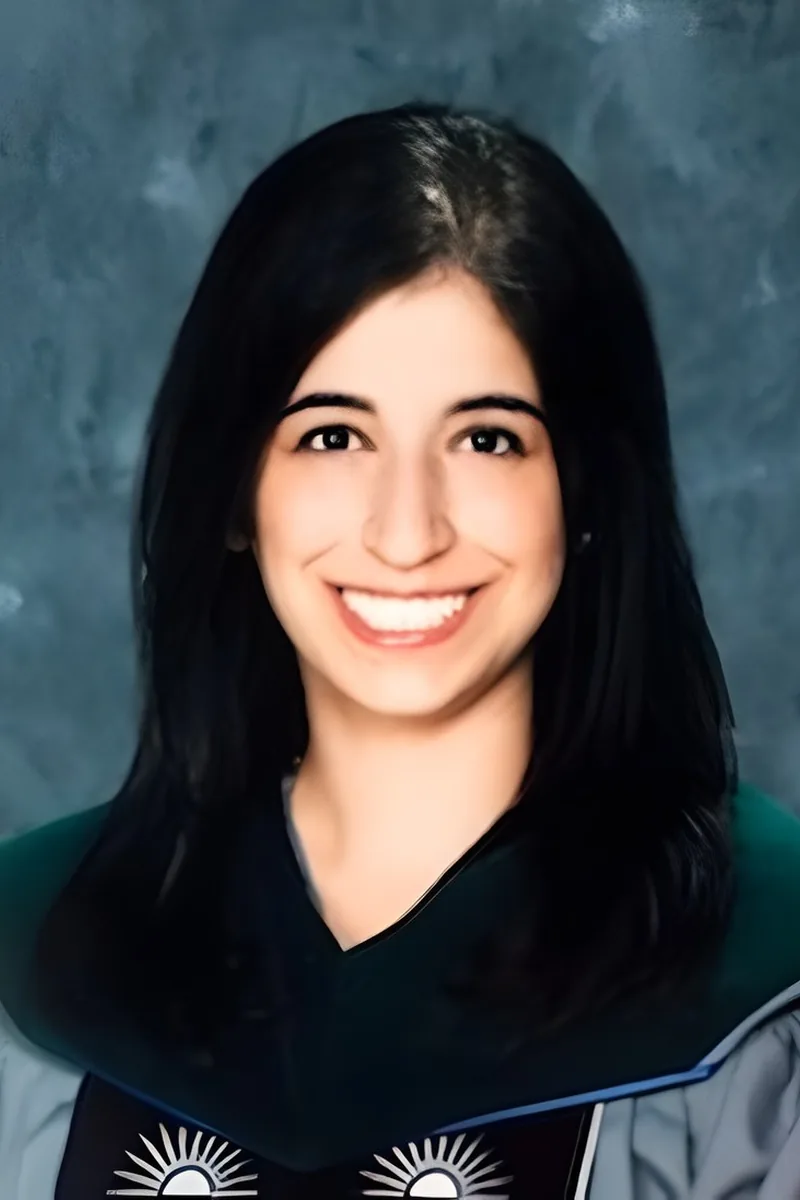
Jessica's path through a Penn history degree and medical school required constant fluency in math — from college algebra and calculus to the quantitative reasoning embedded in scientific coursework. She breaks down arithmetic, fractions, ratios, and word problems by connecting them to practical scenarios students can visualize. Rated 4.8 by her students.
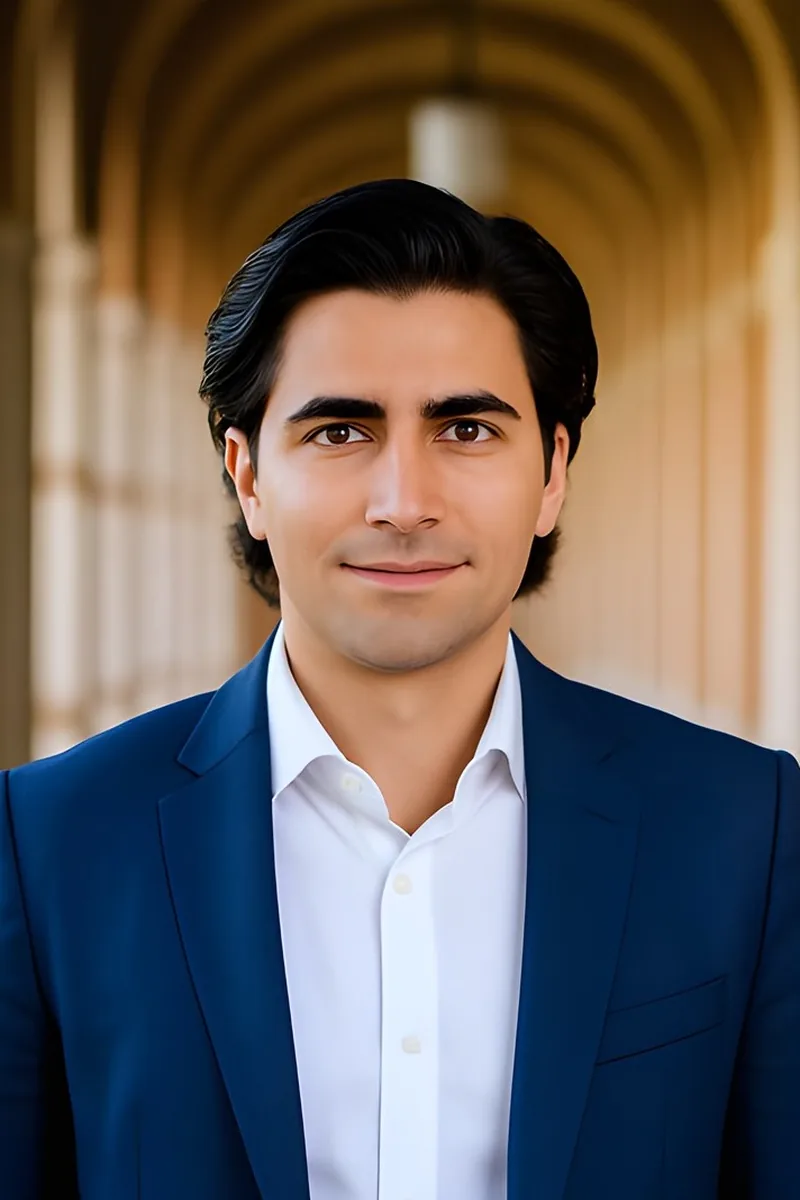
Having ground through the quantitative demands of two science degrees at Rice — biostatistics, pharmacokinetics, lab data analysis — Perry treats math as something you use to answer real questions, not just a problem set to survive. He breaks down everything from algebraic manipulation to calculus by tying it back to concrete scenarios, which tends to unstick students who can follow procedures but don't understand what they're actually computing. Rated 5.0 by students.
Tiffany's accounting degree means she spent years applying math to real financial problems — balancing equations, working with ratios, and building models from raw numbers. She brings that same practical mindset to tutoring, connecting abstract concepts like fractions, percentages, and algebraic reasoning to situations students can actually picture.
Michelle covers math from foundational algebra through calculus, with a problem-solving style shaped by her science training at Duke. She's especially good at identifying the specific step where a student's understanding breaks down — whether that's setting up equations from word problems or applying derivative rules — and rebuilding from there.
A Harvard computer science major with an applied math minor, Derek treats math as a toolkit — every concept from fractions to functions has a job to do, and he teaches students to recognize which tool fits which problem. His 1550 SAT score and perfect 800 on the SAT Math Level 2 Subject Test back up a deep comfort with mathematical reasoning across all levels.
A neuroscience degree plus a statistics minor plus a computational science master's adds up to someone who genuinely thinks in math. Kaylah tackles everything from fraction operations to early calculus concepts, and her research background lets her show students where these skills actually get used — in data analysis, modeling, and real problem-solving.
Three STEM degrees mean Andrea has tackled math from every angle — arithmetic foundations through multivariable calculus and the applied math embedded in physics and engineering. She zeroes in on where a student's reasoning breaks down, whether that's setting up word problems, manipulating fractions, or making the leap from arithmetic to algebraic thinking, and rebuilds confidence from that exact point.
From pre-algebra fundamentals through calculus, Hari adjusts his approach based on where a student's understanding actually breaks down — whether that's fraction operations, function transformations, or the chain rule. His SAT math background and finance training mean he's equally comfortable with pure computation and applied problem-solving. Rated 5.0 across his tutoring subjects.
Chemical and Biomolecular Engineering at Johns Hopkins means Joshitha uses math daily as a working language — calculus, linear algebra, differential equations, statistical analysis — not as an abstract exercise. That fluency lets her teach problem-solving techniques alongside the content itself, so a student learning to set up an equation also learns how to check whether the answer makes sense. She scored a 1580 on the SAT and is rated 5.0 by students.
From long division to derivatives, Gabriel has been immersed in math since he started taking enrichment courses in middle school and went on to found his high school's Mu Alpha Theta chapter. He breaks problems into smaller reasoning steps so students see the logic connecting arithmetic fundamentals to the algebra and calculus concepts ahead of them. Rated 4.9 by students.
Olivia teaches algebra and calculus alongside her English and humanities subjects, which gives her a unusual vantage point — she's used to translating abstract concepts into plain language. She tackles word problems and function analysis by treating math like a reading comprehension exercise, breaking down what a problem is actually asking before jumping into computation. Her 1560 SAT score speaks to her quantitative chops as much as her verbal ones.
From her time at Mathnasium to years of independent tutoring, Anabel has seen the specific places where math concepts tend to break down — fractions turning into decimals, order of operations getting tangled, or word problems that feel impossible to set up. She unpacks each problem type step by step so students understand the reasoning behind every operation. Her background spans pre-algebra through calculus, so she can connect current topics to where they're headed next.
Santiago's subject range spans algebra through calculus, and he approaches math as a language — one where understanding the logic behind a formula matters more than memorizing steps. His psychology background gives him insight into how students process abstract concepts, so he adapts explanations on the fly when a particular approach to, say, function transformations or geometric proofs isn't clicking.
From pre-algebra foundations through calculus concepts, Caitlin covers a wide range of math and scored a 1400 SAT that required strong quantitative reasoning. She zeroes in on where a student's understanding breaks down — whether that's fraction operations, proportional reasoning, or interpreting word problems — and rebuilds clarity from that exact point.
From pre-algebra fundamentals through calculus, James covers the full math pipeline and knows exactly where students tend to lose the thread. His ACT score of 33 reflects strong quantitative reasoning, and his years in NYC classrooms taught him how to explain concepts like fraction operations, proportional reasoning, and equation-solving in multiple ways until one clicks. He's especially effective at diagnosing the specific gap that's causing a student to struggle with new material.
From pre-algebra fundamentals through calculus, Miriam connects math concepts to the physical problems they were invented to solve — rates of change describe how planets move, systems of equations model real circuits. Her dual engineering degrees and PhD research give her a deep bench of examples that make abstract procedures feel purposeful and concrete. Rated 5.0 by students.
I am graduated from Penn State University in Industrial Engineering in 2017. I've tutored ever since I was in high school, and I love helping people! I like to help my students understand math (and other topics) instead of just doing it blindly. My goal is to help my students improve their math (and other topics) and build skills that will help them find learning easier in the future! Fun fact, I used to work for Disney and I like to salsa dance!
Pre-med coursework demands serious quantitative chops, and Manuela built hers through calculus, trigonometry, and the kind of applied problem-solving that science prerequisites require. She breaks down word problems and multi-step equations by identifying what a problem is actually asking before touching any numbers. Rated 5.0 by students, she's especially effective with learners who think of themselves as 'language people' struggling to click with math.
From fraction operations in middle school to integration techniques in calculus, Nicolas covers the full spectrum of math — but his real strength is diagnosing exactly where a concept breaks down for a student and rebuilding from that point. His 1580 SAT and Princeton engineering background mean the underlying logic is second nature. Rated 5.0 by students.
Having taught both elementary math and calculus, Libby understands the full arc of how mathematical thinking develops — from place value and fractions through algebraic reasoning. She's especially familiar with the common core approach to math, which means she can reinforce the specific methods and visual models students are seeing in their classrooms rather than introducing conflicting shortcuts.
Dalila earned her B.S. in Mathematics, which means she doesn't just know how to solve problems — she understands the underlying logic connecting arithmetic to fractions to ratios to algebraic thinking. Whether a student is struggling with long division or tackling word problems that require multi-step reasoning, she breaks each concept down into concrete, manageable pieces.
Jacob's math degree and classroom teaching experience span everything from pre-algebra through linear algebra and competition math, so he can pinpoint exactly where a concept went sideways — whether that's fraction operations in 6th grade or limit definitions in calculus. He uses scaffolded practice to close gaps systematically rather than just re-explaining the same procedure louder.
From pre-algebra through calculus, Destiny covers the full math pipeline and knows where the common stumbling blocks live — whether it's fraction operations tripping up a younger student or limits confusing a high schooler. Her approach connects each new concept back to something the student already understands, so the jump to harder material feels manageable rather than random. Rated 5.0 by students.
From long division to derivatives, Paulkey has taught the full K–12 math spectrum in public school classrooms. He breaks multi-step problems into smaller, logical pieces so students can see exactly where they got lost and how to self-correct — an approach that builds real problem-solving instincts, not just answer-getting shortcuts.
Comfortable teaching math up through Algebra II, Amanda is a strong fit for students who need to solidify core skills like solving systems of equations, working with polynomials, or interpreting word problems. Her psychology training makes her especially attuned to math anxiety — she breaks problems into smaller, logical steps so students can see their own progress clearly.
Chemical engineering at Princeton meant Shellee spent four years solving problems where getting the math wrong had real consequences — heat transfer equations, fluid dynamics calculations, material balances that had to close to the decimal. That rigor carries into how she teaches everything from pre-algebra through calculus, breaking each problem into a sequence of concrete, checkable steps rather than hand-waving through the logic. Rated 5.0 by students.
Neuroscience at Vanderbilt requires a heavy math foundation — statistics, linear algebra, calculus — so Mariam uses math daily and understands how each concept builds on the last. She's especially sharp at identifying the exact step where a student's understanding breaks down, whether that's fraction operations, proportional reasoning, or interpreting word problems, and rebuilding from there.
From long division in elementary school to derivatives in calculus, Ankit has taught math across every level and knows exactly where conceptual gaps tend to hide. His approach zeroes in on the reasoning behind each step — why you invert and multiply with fractions, or what a negative exponent actually means — so that new topics don't feel like a fresh set of rules to memorize. A 1580 SAT and 36 ACT back up his comfort with math at every level.
From middle school arithmetic through differential equations, Wanqi has tutored nearly every level of math on the K-12 and early college spectrum. Her civil engineering training means she can show students where concepts like ratios, proportions, and basic algebra actually appear in real-world calculations. She's especially effective at diagnosing exactly where a student's understanding breaks down and rebuilding from that point.
Two math degrees — a B.S. from Iowa State and an M.S. from the University of Essex — mean Benjamin has spent years inside nearly every branch of the subject, from basic arithmetic through abstract algebra and graph theory. He treats math as a connected web of ideas rather than isolated procedures, so students start recognizing how the skills from one topic carry directly into the next.
Biomedical engineering at UIC meant Apoorva lived in math daily — differential equations modeling biological systems, linear algebra for signal processing, statistics for lab data — so the subject isn't abstract to her; it's the engine behind everything she studied. She teaches the full K-through-calculus range and is especially sharp at showing students how a concept like integration or trigonometric identities actually functions as a tool, not just a textbook exercise. Her 34 ACT and 4.6 rating back up what her engineering background suggests: she knows this material cold and communicates it clearly.
Andrew covers math from arithmetic fundamentals through pre-calculus and calculus, adjusting his explanations based on where a student's understanding actually breaks down. His approach leans on translating abstract procedures into plain language — explaining not just how to solve a system of equations but why elimination works in the first place. A 33 ACT composite reflects his comfort across quantitative and verbal reasoning alike.
Machine learning algorithms are built on calculus, linear algebra, and discrete math — Brandon's AI specialization in his CS master's at RIT means he uses these concepts daily, not as textbook exercises but as tools that make software think. That applied perspective lets him show students exactly where a topic like derivatives or matrix operations plugs into something real, which tends to make the mechanics easier to remember. He holds a 4.9 rating and scored a 33 on the ACT.
Adriana's biochemistry training at Rice meant years of applied mathematics — from calculus to statistical modeling — which grounds her math tutoring in practical understanding rather than rote procedure. She's particularly strong at bridging the gap between arithmetic confidence and algebraic thinking, walking students through how variables and equations connect to problems they already know how to solve intuitively.
From elementary arithmetic through calculus, Emerson covers the full math pipeline and knows exactly where conceptual gaps tend to hide — especially at the transitions between fractions and ratios, or arithmetic and algebraic thinking. His 1560 SAT and University of Chicago science background mean he can show students not just how to solve a problem but why a method works, which makes the next topic easier to learn.
From basic operations through statistics and early calculus, Matthew covers a wide range of math topics and connects each one to the reasoning behind it. His years as a T.A. and instructor for undergraduate statistics sharpened his ability to explain abstract concepts — like variables, proportions, and data patterns — in concrete terms. Rated 4.8 by students, he adjusts his explanations based on where a student's understanding actually breaks down.
Muriel's primary expertise is in languages and literature, but she has spent years tutoring elementary and middle school math alongside those subjects. She tackles the foundational concepts — fractions, decimals, word problems, and early algebraic thinking — by emphasizing the reasoning behind each step so students can self-correct rather than just follow memorized procedures. Her multilingual background also makes her a strong fit for students whose first language isn't English and who need math concepts explained with extra clarity.
From fraction operations in sixth grade to integration by parts in college calculus, Benjamin covers the full math pipeline. His mechanical engineering degree means he doesn't just teach procedures — he can show a student exactly where a concept like slope or rate of change reappears in real-world problem solving, which makes the abstraction click.
Danielle has taught math in classroom settings ranging from elementary arithmetic to calculus, so she's comfortable meeting a wide span of skill levels. Her approach to tricky topics like fractions, word problems, or algebraic reasoning leans on visual models and real-world scenarios — connecting abstract operations to things students can actually picture. She holds a 4.9 rating across her subjects.
An applied mathematics degree gives Daniel the unusual ability to show students where the math they're learning actually lands — how algebra feeds into data analysis, how trig connects to physics simulations, how discrete math underpins computer science. He adapts quickly across levels, from elementary arithmetic through college-level coursework. Rated 5.0 by students.
Testimonials
Because the right Math tutor makes all the difference.
Average Session Rating – Based on 3.4M Learner Ratings
Practice Math
Free practice tests, flashcards, and AI tutoring for Math
Nearby Math Tutors
Other Port St. Lucie Tutors
Related Math Tutors in Port St. Lucie
Frequently Asked Questions
Many students struggle with the transition from memorizing procedures to understanding the concepts behind them—especially in algebra and geometry. Word problems, multi-step equations, and graphing are frequent pain points, as they require students to connect multiple skills at once. Math anxiety is also common, but personalized 1-on-1 instruction helps students build confidence by working through problems at their own pace and seeing how concepts connect.
Your first session is about understanding where your student is and what they need most. A tutor will review recent classwork, identify specific gaps in understanding, and discuss learning goals—whether that's catching up on foundational skills, preparing for a test, or building deeper conceptual understanding. This foundation helps the tutor create a personalized plan that aligns with your student's school curriculum and learning style.
Showing work isn't just about getting credit—it reveals thinking and helps identify where mistakes happen. Tutors teach students to organize their steps clearly, explain their reasoning, and use problem-solving strategies that make their thinking visible. This approach also helps students catch their own errors and builds the habits needed for success in higher-level math courses.
Math anxiety often comes from feeling rushed or confused, which personalized instruction directly addresses. Working one-on-one allows students to ask questions without pressure, practice at their own pace, and experience small wins that rebuild confidence. When students understand the 'why' behind concepts rather than just memorizing steps, math becomes less intimidating and more manageable.
Yes. Tutors work with students' current textbooks, assignments, and curriculum to ensure tutoring supports what they're learning in class. Whether your student's school uses a traditional or conceptual approach, tutors adapt their instruction to reinforce the methods their teachers use while also building deeper understanding of underlying concepts.
Word problems require students to translate language into math, which is a skill that can be taught. Tutors break down the process: identifying what's being asked, deciding which operations apply, and checking if the answer makes sense. With practice and guided problem-solving strategies, students learn to see patterns in different types of problems and approach them with confidence.
Varsity Tutors connects students with tutors who have strong backgrounds in mathematics and experience teaching at various levels. Tutors are vetted for their subject expertise and ability to explain concepts clearly, ensuring they can help students move beyond procedures to genuine understanding. You can discuss a tutor's specific experience with your student's grade level and curriculum.
Absolutely. Proofs and graphing require students to see connections between abstract concepts and visual representations—areas where personalized instruction really shines. Tutors help students understand the logic behind proofs and develop strategies for setting up and interpreting graphs, turning these challenging topics into opportunities to build deeper mathematical thinking.
Let’s find your perfect tutor
Answer a few quick questions. We’ll recommend the right plan and match you with a top 5% tutor.