Award-Winning AP Calculus BC Tutors
serving Palm Bay, FL
AP Calculus BC
Tutors in Palm Bay
Private 1-on-1 tutoring, weekly live classes for academic support, test prep & enrichment, practice tests and diagnostics, and more to elevate grades and test scores.
Based on 3.4M Learner Ratings
UniversitiesSchools & Universities
DeliveredHours Delivered
ProficiencyGrowth in Proficiency
Who needs tutoring?
No obligation. Takes ~1 minute.
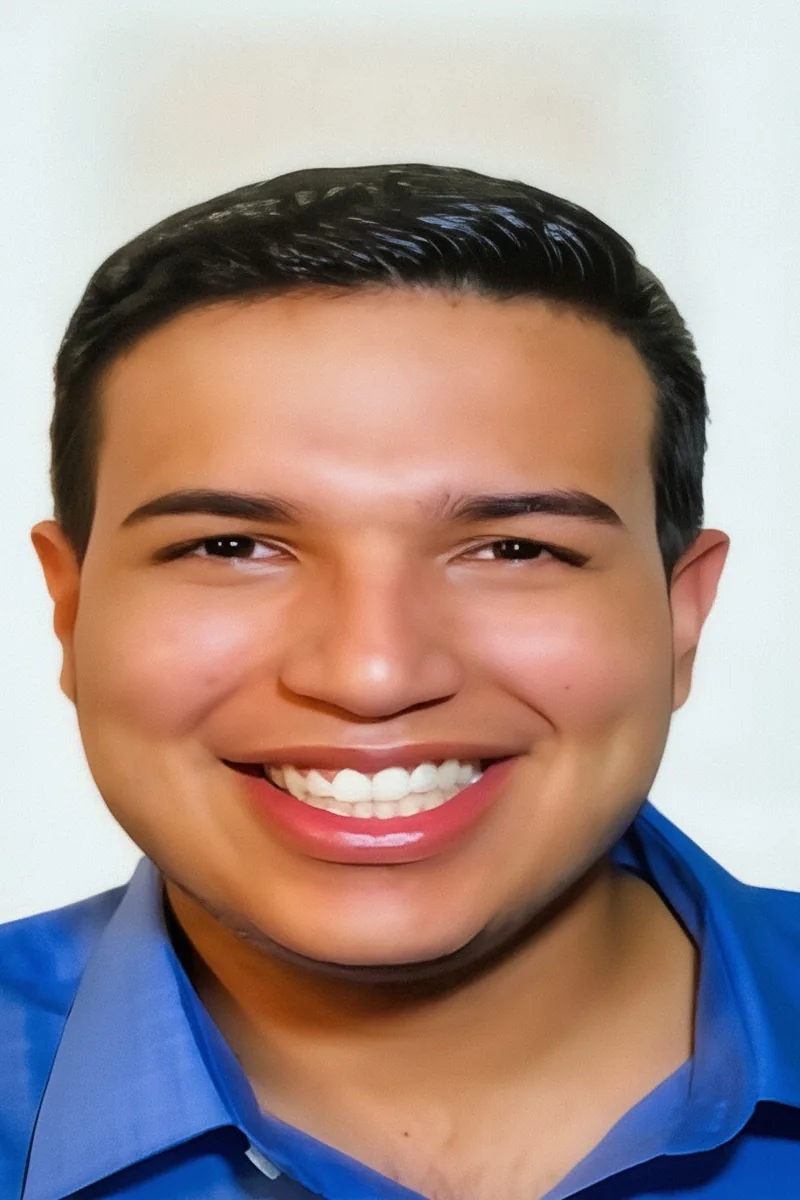
Derek scored a 5 on the AP Calculus BC exam and now studies applied mathematics at Harvard, which means series convergence tests, parametric equations, and polar area problems are still part of his daily toolkit. He breaks down intimidating topics like Taylor series error bounds and integration by parts into repeatable strategies that click on exam day. Rated 4.9 by students.
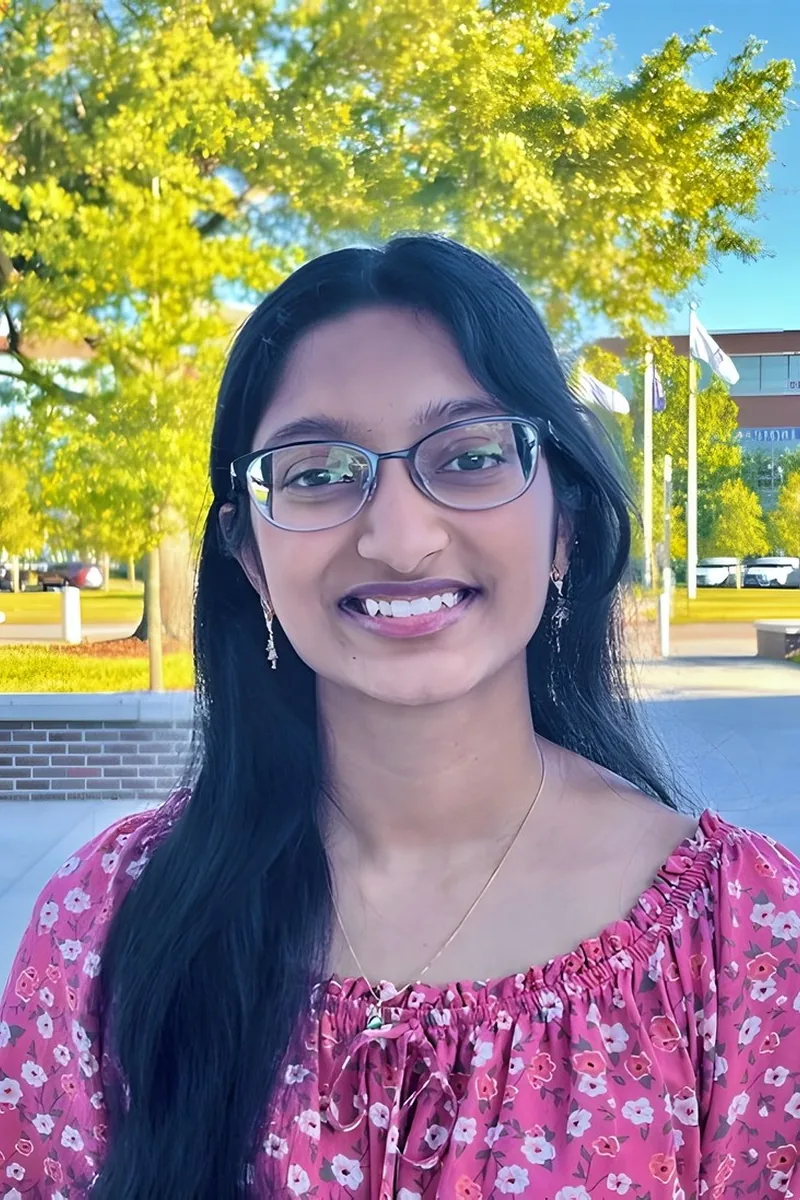
Chemical and biomolecular engineering at Johns Hopkins means Joshitha is actively using series approximations and integration techniques in thermodynamics and transport courses — so when she teaches Taylor polynomial construction or walks through convergence test logic, it comes from current, hands-on application rather than distant memory. Her 1580 SAT and 5.0 tutoring rating back up an approach that prioritizes building problem-solving intuition over drilling formulas.
BC Calculus piles on convergence tests, parametric equations, and polar curves at a pace that buries students who don't have rock-solid AB foundations. Jacob teaches the full calculus sequence and approaches BC-specific topics by connecting them back to core ideas — showing, for instance, how Taylor series are really just the logical extension of linear approximation taken further and further.
Benjamin's master's dissertation at the University of Essex centered on group theory and graph theory — areas where rigorous proof techniques and abstract reasoning are everything — and that training shapes how he teaches BC topics like series convergence and Taylor polynomial construction, treating each as a logical argument rather than a memorized recipe. His particular strength is the transition from AB to BC, where he breaks down why convergence tests work by connecting them to the limit reasoning students already understand.
Civil engineering coursework is where BC Calculus stops being theoretical — Wanqi uses differential equations to model structural loads and series approximations to simplify complex systems, so topics like Taylor polynomials and convergence tests land as practical tools rather than abstract exercises. Her 1520 SAT and engineering training mean she can trace a tricky integration technique or parametric problem back to the core reasoning that makes it click. Rated 4.8 by students.
Convergence tests, Taylor series, and parametric/polar integration make BC Calculus a significant leap beyond AB. Apoorva tackled these topics extensively through her biomedical engineering coursework at UIC and continued applying them in her mechanical engineering graduate work at UC Berkeley. She walks through each problem type with enough rigor that students understand the underlying reasoning, not just the steps.
Industrial engineering at UF means Juan is actively using integration techniques, series approximations, and differential equations to model systems and optimize processes — so BC topics like Taylor polynomials and convergence tests aren't abstract exercises but tools he reaches for in his own coursework. He's especially sharp at walking through the transition from AB to BC, breaking down where parametric derivatives and new integration methods grow directly out of reasoning students already have. Rated 4.9 by students.
Most BC students can memorize the ratio test or crank through a Taylor expansion — the hard part is knowing *why* one convergence test applies over another or what the error bound actually tells you. Ari's philosophy training at Columbia sharpened exactly that kind of reasoning: dissecting arguments, questioning assumptions, and building logic step by step — skills that translate directly to unpacking the conceptual leaps BC demands beyond AB. His 1550 SAT and deep comfort across the full calculus sequence mean the computational side is second nature, freeing him to zero in on where a student's understanding actually breaks.
I am working towards a Bachelor of Arts in Pure and Applied Mathematics as well as a Bachelor of Arts in Astronomy and Physics. I have enjoyed studying math and science since I was in elementary school. I would always help my friends out by answering their questions about the material. For about the last five years, I have had my own tutoring business where I have tutored a wide variety of math courses from elementary school math to pre-calculus and calculus. I like to make sure my students have a complete understanding of the core concepts before going into practice questions. I have also had experience helping my peers with physics and computer science courses.
I am very interested in a career in the medical field, so I am apart of some pre-medical organizations. I really enjoy playing all different sports, from soccer to volleyball to tennis.
Where many tutors on this page bring engineering or science applications to BC, Arielle comes at it from pure mathematics — her BS in Math means she studied the theory behind convergence, series, and integration techniques as ends in themselves, not just tools for another field. That perspective is especially useful when students hit the "why does this work" wall with something like the Lagrange error bound or a tricky comparison test. Rated 4.5 by students.
I am listening to and learning about him or her as an individual. I can also discover what motivates the student during this conversation and plan for how to frame future tutoring sessions in terms of what the student already knows and enjoys.
Working toward summa cum laude honors while running experiments in a nanotechnology lab, Harrison lives in the kind of applied math where series approximations and differential equations aren't abstract — they're how you model real physical systems at the nanoscale. That daily exposure sharpens how he teaches BC-specific territory like convergence criteria and error bounds, grounding each technique in reasoning rather than rote steps. His 1570 SAT and 35 ACT speak to the same precision he brings to breaking down the AB-to-BC jump.
Fifteen passed AP exams in high school — including the full calculus sequence — gave Nathan an unusually broad view of how BC topics like series convergence and parametric equations connect to physics, computer science, and economics, all subjects he actively tutors. His computer science coursework at UCF reinforces that analytical muscle daily, so he breaks down problems like constructing a Taylor series or choosing the right convergence test with the structured, step-by-step logic of someone who writes algorithms for a living. Rated 4.9 by students.
BC Calculus piles convergence tests, parametric equations, and polar curves on top of an already demanding AB curriculum, and most students struggle when these topics hit all at once in the spring. Payal's physics training means she's used series expansions and integration techniques as everyday tools, not just textbook exercises. She unpacks each BC-specific topic by showing how it connects to ideas students already understand from earlier in the course.
Having earned his IB diploma — which covers calculus through a level that overlaps significantly with BC — Gabriel brings firsthand memory of tackling series, parametric equations, and advanced integration techniques while juggling a full course load, so he knows exactly where the cognitive overload hits. His computer science work at UCF keeps that calculus sharp, since algorithm analysis leans heavily on convergence reasoning and recursive definitions that mirror Taylor polynomial construction. Rated 4.8 by students.
Most BC students can follow a convergence test step by step but freeze when they have to choose which test to apply — that decision-making skill is where Sharif spends the most time, building the intuition behind series behavior so the ratio, root, and comparison tests stop feeling interchangeable. His math background across the full calculus sequence means he traces every BC topic back to the specific AB mechanics underneath it, making polar area integrals or parametric derivatives feel like natural next steps rather than brand-new territory.
Biomedical engineering at Miami means Brandon is actively using integration techniques and series in courses like signals analysis and biomechanics — so when he teaches BC topics like convergence tests or parametric derivatives, he's drawing on problems he solved last week, not last decade. His 1460 SAT and 5.0 tutoring rating back up what his coursework suggests: he can break down the leap from AB to BC in a way that makes new material feel like a natural next step rather than a wall.
Studying applied mathematics at Stanford means Alex isn't just recalling BC topics from a past exam — he's actively using series, parametric equations, and advanced integration in his current coursework, which keeps his explanations sharp and grounded in how the math actually behaves. He's especially good at tracing a tricky convergence test or Lagrange error bound back to the core AB reasoning that makes it click. Rated 4.8 by students.
BC Calculus piles on series convergence, parametric equations, and polar coordinates on top of an already demanding AB curriculum. Julie's Princeton training in statistics and machine learning means she regularly uses advanced calculus as a tool, giving her an intuitive sense for which techniques apply where. She tackles integration strategies and Taylor series by connecting each method back to the core idea it extends.
BC Calculus layers convergence tests, parametric equations, and polar curves on top of an already demanding AB foundation, and the pacing leaves little room to fall behind. Vinson earned a 36 ACT and National AP Scholar distinction while building the kind of deep mathematical fluency that makes series analysis and integration techniques click. He breaks each new BC topic into the AB concept it extends, so the jump never feels arbitrary.
Studying both biomedical engineering and applied mathematics at Johns Hopkins, Nicholas lives in the world where BC Calculus concepts — series approximations, parametric modeling, advanced integration — are daily requirements rather than abstract exercises. He's especially good at breaking down the transition from AB to BC, showing how something like a convergence test or polar area calculation grows directly out of derivative and integral logic students already trust. His 35 ACT and 4.8 rating speak to the clarity he brings to those explanations.
Most BC students can follow a convergence test step by step but freeze when asked to choose which test to apply — that decision-making is where Nima, a physics major heading to Duke on a full merit scholarship, spends most of his teaching energy. His physics training means he treats series and parametric equations as descriptions of real motion and real forces, which gives students an intuitive anchor when the abstraction piles up. A 1580 SAT and 4.7 rating back up his ability to make that AB-to-BC jump feel manageable.
Princeton's electrical engineering program leans hard on series expansions and differential equations from day one — Sabrina uses them to analyze circuits and model signal behavior in her applied physics coursework, which means BC topics like Taylor polynomials and convergence tests aren't abstract exercises for her but tools she reaches for weekly. She's especially clear at breaking down the logic behind each convergence test so students can choose the right one on their own instead of guessing. Rated 5.0 by students.
Studying applied physics at Cornell, Ritesh encounters BC-level calculus constantly — parametric motion in mechanics, series approximations in wave theory, integration techniques in electromagnetism — so he teaches these topics as interconnected tools rather than isolated chapters. He's especially sharp at walking through the logic of convergence tests, where students often memorize steps without understanding which test to reach for and why. His 1440 SAT and 4.6 rating speak to that clarity.
BC Calculus throws students into series convergence tests, parametric equations, and polar coordinates — topics that feel disconnected unless someone ties them back to the core ideas of AB. Dylan's physics major at Vanderbilt means he uses calculus daily and can show exactly how Taylor series or integration by parts behave visually, not just symbolically. He turns abstract series into something students can sketch, interpret, and reason through on exam day.
Until age 16, Viktor saw math as blind formula memorization — then a series of teachers at the right moment revealed the deeper logic underneath, and he ended up majoring in math at UChicago, where rigorous proof-based coursework made concepts like convergence and infinite series feel inevitable rather than arbitrary. That shift from "memorize the ratio test" to "understand why it works" is exactly what he brings to BC Calculus, especially when students hit the wall where AB intuition stops and formal reasoning about Taylor polynomials and error bounds needs to take over. His 1600 SAT and current CS master's work at NYU keep that analytical edge sharp.
Biomedical engineering eats BC Calculus for breakfast — Spencer's coursework has him building models with differential equations, approximating functions with series, and integrating across complex domains before he even opens his calc textbook. That real-time immersion means he can walk through something like the Lagrange error bound or a tricky polar area setup with the fluency of someone who just used it in a lab report, not someone dusting off old notes. His 1550 SAT and 35 ACT speak to the test-taking precision he pairs with that technical depth.
Series convergence tests, parametric equations, polar curves — BC Calculus piles on concepts fast, and falling behind on one unit can cascade through the rest of the course. Ethan breaks each new topic back to its AB foundation before building upward, so students see Taylor series and integration techniques as extensions of ideas they already own rather than entirely new material.
Mackenzie scored a 35 on the ACT and tutors math at every level from elementary through AP, which means she knows exactly which algebra and AB gaps trip students up once BC introduces new integration techniques and series. She walks through problems like setting up improper integrals or applying ratio tests by tracing each step back to the reasoning behind it, so students build intuition they can rely on during the exam.
Testimonials
Because the right AP Calculus BC tutor makes all the difference.
Average Session Rating – Based on 3.4M Learner Ratings
Practice AP Calculus BC
Free practice tests, flashcards, and AI tutoring for AP Calculus BC
Nearby AP Calculus BC Tutors
Other Palm Bay Tutors
Related Math Tutors in Palm Bay
Frequently Asked Questions
AP Calculus BC builds on Calculus AB concepts and includes limits, derivatives, integrals, differential equations, and sequences/series. The course emphasizes applications of calculus to real-world problems and requires strong algebraic and trigonometric skills. For students in Palm Bay preparing for the exam, mastering both computational techniques and conceptual understanding is essential for success on the multiple-choice and free-response sections.
Many students struggle with the pace of the course, as BC material moves quickly and builds heavily on foundational concepts. Series and sequences, parametric equations, and polar coordinates often trip up students who haven't solidified their understanding of earlier topics. Time management during the exam is another major challenge—the 3-hour test requires both speed and accuracy, so personalized tutoring can help you identify weak areas and develop efficient problem-solving strategies.
Score improvement depends on your starting point and commitment level, but targeted tutoring typically helps students gain 2-4 points on the 1-5 AP scale by filling knowledge gaps and building test-taking confidence. Many students see the biggest gains by focusing on their weakest topic areas—whether that's integration techniques, series convergence, or free-response problem setup. Working with an expert tutor for students in Palm Bay allows you to create a personalized study plan that addresses your specific challenges rather than generic test prep.
Practice tests are critical for AP Calculus BC success because they help you understand the exam format, identify pacing issues, and pinpoint weak topics before test day. Taking full-length practice tests under timed conditions reveals whether you're rushing through problems or spending too long on difficult questions. A tutor can review your practice test results with you, explain where you lost points, and help you develop strategies to avoid repeating the same mistakes on the actual exam.
Test anxiety often stems from feeling unprepared or uncertain about problem-solving strategies. Building confidence through repeated practice with similar problem types and learning multiple solution approaches can significantly reduce anxiety. Personalized tutoring helps you develop a strong foundation and test-taking strategies so you feel more in control during the exam, plus a tutor can teach you specific techniques like breaking complex problems into smaller steps and managing your time effectively.
The ideal timeline depends on your current understanding and the exam date, but most students benefit from starting tutoring 3-4 months before the AP exam in May. If you're struggling with foundational concepts, starting earlier gives you time to build a solid base before tackling more advanced topics. Even 2-3 months of focused, personalized instruction can help you master weak areas and boost your confidence—Varsity Tutors can connect you with an expert tutor in Palm Bay who can assess your needs and create a customized study schedule.
Your first session is typically an assessment and planning meeting where a tutor will evaluate your current understanding of calculus concepts, identify your strongest and weakest areas, and discuss your goals for the AP exam. The tutor will ask about your class performance, any specific topics that confuse you, and your target score. From there, you'll develop a personalized study plan that focuses on high-impact areas and builds toward exam readiness with a realistic timeline.
Varsity Tutors connects you with expert tutors who specialize in AP Calculus BC and understand the exam's demands. When you reach out, you'll tell us about your needs, timeline, and learning preferences, and we'll match you with a tutor whose expertise and teaching style fit your goals. The process is straightforward—you can start working with your tutor quickly and begin tackling the specific challenges holding you back from a stronger AP score.
Let’s find your perfect tutor
Answer a few quick questions. We’ll recommend the right plan and match you with a top 5% tutor.