Award-Winning Biochemistry Tutors
serving Washington, DC
Biochemistry
Tutors in Washington
Private 1-on-1 tutoring, weekly live classes for academic support, test prep & enrichment, practice tests and diagnostics, and more to elevate grades and test scores.
Based on 3.4M Learner Ratings
UniversitiesSchools & Universities
DeliveredHours Delivered
ProficiencyGrowth in Proficiency
Who needs tutoring?
No obligation. Takes ~1 minute.

Two years as an Organic Chemistry Laboratory TA at the college level gave Maha the kind of mechanistic fluency that makes biochemistry's toughest material — reaction cascades in metabolic pathways, enzyme active-site chemistry, the logic behind cofactor requirements — click into place rather than blur together. Now a graduate student at Johns Hopkins Bloomberg School of Public Health with a dual background in chemistry and biology, she connects the organic chemistry driving each biochemical transformation to its broader physiological relevance. Rated 5.0 by students.
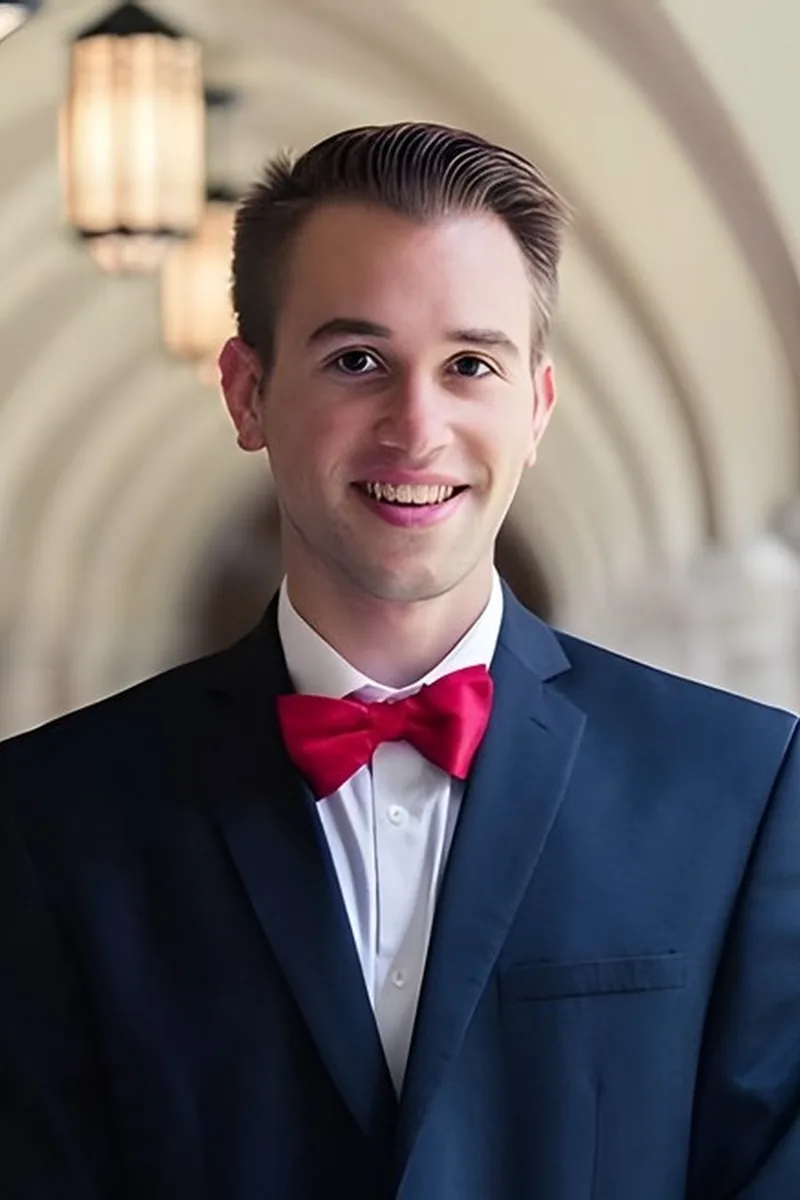
Having worked in biochemical laboratories alongside his dual bachelor's degrees — including one in biochemistry — and his architecture studies at Columbia, Andrew brings a rare structural intuition to topics like protein folding and macromolecular assembly. He teaches metabolic pathways by building them up from their organic chemistry foundations, so students see each reaction as a logical next step rather than an isolated arrow on a diagram. Rated 4.9 by students.
Enzyme kinetics, metabolic pathways, protein folding — biochemistry sits at the intersection of biology and chemistry, and Zachary holds a degree in exactly that. He digs into the molecular logic behind processes like glycolysis and the citric acid cycle, connecting reaction mechanisms to the bigger physiological picture so the details actually stick.
Studying biochemistry at Penn as part of a pre-health track, Shayan lives in the world of enzyme kinetics, metabolic pathways, and protein structure daily. He breaks down dense topics like the citric acid cycle or amino acid chemistry using visual analogies and step-by-step logic that make the connections between reactions stick long after the session ends.
Managing an immunology lab means Matthew doesn't just teach enzyme kinetics, protein structure, or metabolic pathways from a textbook — he uses them daily in his breast cancer research at Columbia. He walks through topics like signal transduction, amino acid chemistry, and lipid metabolism with the kind of specificity that turns confusing diagrams into logical sequences students can actually reason through.
Thomas holds both a biochemistry and molecular biology degree and a master's in biology, which means he's worked through the full gauntlet — from amino acid properties and enzyme mechanisms to the regulatory networks controlling gene expression. That dual-layer training lets him teach something like oxidative phosphorylation by building it up from the organic chemistry of electron carriers before zooming out to the cellular energy budget. Rated 4.8 by students.
Enzyme kinetics, metabolic pathways, protein structure — biochemistry demands that students think simultaneously about chemistry and biology, which is exactly how Nathaniel trained. His degree in biochemistry and his MCAT preparation mean he can walk through everything from Michaelis-Menten plots to amino acid properties with the depth a college-level course requires.
David's neuroscience training at Yale meant wrestling with biochemistry from the nervous system's perspective — neurotransmitter synthesis, ion channel biophysics, and the metabolic demands that make the brain consume a disproportionate share of the body's glucose. Now pursuing a graduate degree in bioethics, he brings that mechanistic grounding to topics like amino acid chemistry and membrane transport, connecting each reaction to the biological system it supports. Holds a 5.0 rating.
Lab research and patient care gave Sophie a dual perspective on biochemistry — she's traced metabolic pathways at the bench and seen what happens clinically when those pathways break down. Her biological and physical sciences degree means she teaches topics like enzyme mechanisms and pathway regulation by pulling in the organic chemistry and thermodynamics that explain *why* each step occurs, not just what comes next. Rated 4.9 by students.
Enzyme kinetics, metabolic pathways, and protein structure all demand a kind of thinking that sits right at the intersection of biology and chemistry — exactly where Jhonatan's neuroscience training lives. He unpacks topics like Michaelis-Menten kinetics and amino acid chemistry by connecting molecular details to the larger biological question of why a cell needs this reaction in the first place. Rated 5.0 by students.
As a biochemistry major at Stony Brook who also serves as a chemistry peer tutor and head teaching assistant for college biology, Natalie lives in the overlap between organic chemistry and cellular function that defines this subject. She breaks down topics like enzyme mechanisms and metabolic pathway logic by building from the reaction chemistry first, then layering in the biological context — so students can reason through an unfamiliar pathway instead of memorizing every intermediate. Rated 4.9 by students.
Enzyme kinetics, metabolic pathways, amino acid chemistry — biochemistry sits right at the intersection of Alex's Bio-Organic Chemistry training. He teaches students to trace the logic of each pathway, connecting molecular structure to biological function so that something like the citric acid cycle becomes a series of predictable chemical transformations rather than an overwhelming diagram to memorize.
Pre-med coursework at Northwestern means Manideep is actively working through the toughest parts of biochemistry right now — amino acid structures, membrane transport mechanisms, and the regulatory logic behind major metabolic pathways. That proximity to the material gives him a sharp sense of where students get stuck, especially when translating organic chemistry principles into biological contexts. Rated 5.0 by students.
Testimonials
Because the right Biochemistry tutor makes all the difference.
Average Session Rating – Based on 3.4M Learner Ratings
Practice Biochemistry
Free practice tests, flashcards, and AI tutoring for Biochemistry
Other Washington Tutors
Related Science Tutors in Washington
Frequently Asked Questions
Biochemistry builds on chemistry and biology concepts, so students often find themselves challenged by connecting the two disciplines. Common trouble spots include understanding enzyme kinetics and metabolic pathways, visualizing three-dimensional protein structures, balancing complex biochemical equations, and grasping how molecular-level processes translate to cellular and organismal functions. Many students also struggle with the quantitative aspects—unit conversions, thermodynamics calculations, and interpreting kinetic data—without strong foundational math skills. Personalized tutoring helps students bridge these conceptual gaps by working through problems step-by-step and building the mental models needed to see how everything connects.
Biochemistry labs require both theoretical understanding and practical reasoning skills. Tutors can help you prepare for experiments by explaining the underlying chemistry, walking through standard protocols, and discussing how to troubleshoot when results don't match expectations. They can also help you interpret lab data, understand why certain techniques are used, and connect your observations back to the concepts you're learning in lecture. This preparation and reflection makes lab sessions more meaningful and helps you develop the scientific thinking skills that go beyond just following instructions—you'll understand the 'why' behind each step.
Abstract concepts like protein folding, enzyme-substrate interactions, and metabolic cycles can be hard to grasp from textbook diagrams alone. Expert tutors use multiple approaches to make these ideas concrete: drawing structures on a whiteboard from different angles, using molecular models or online visualization tools, breaking complex processes into smaller steps, and connecting abstract concepts to tangible examples. For instance, understanding how an enzyme works becomes much clearer when you can visualize the substrate fitting into the active site and see how the protein structure actually enables the catalytic mechanism. This multi-sensory approach helps concepts stick in ways that passive reading doesn't.
This is more common than you might think—conceptual understanding and quantitative skills are different abilities. Tutors can help you build confidence with unit conversions, dimensional analysis, thermodynamic calculations, and kinetic modeling by working through problems at your pace and identifying exactly where you get stuck. They'll help you understand not just how to plug numbers into equations, but why those equations describe what's happening in a biochemical system. Building these skills alongside the chemistry concepts means you won't feel like math is holding back your understanding of the science itself.
Biochemistry is fundamentally about understanding—you can't memorize your way through the upper levels of the course because the number of pathways, structures, and mechanisms is too vast. The key is learning to think like a biochemist: recognizing patterns across different systems, predicting how molecules will behave based on their structure, and understanding the principles that govern biochemical reactions. Good tutoring focuses on building these thinking skills by using the "why" questions: Why does this enzyme require this cofactor? How would changing pH affect this reaction? This approach means you'll be prepared for exams, research, and whatever biochemistry challenges come next.
Varsity Tutors connects you with tutors who have expertise in biochemistry and experience helping students work through the specific challenges you're facing—whether that's mastering metabolic pathways, acing your biochemistry exam, or preparing for upper-level science courses. When you share what you're working on, you'll be matched with someone who can tailor their approach to your learning style and goals. Personalized 1-on-1 instruction means the tutor can focus on your particular weak spots and work at a pace that helps concepts actually stick.
Strategic exam prep with a tutor goes beyond reviewing notes. Start by identifying which topics or question types give you the most trouble, then work through practice problems together so the tutor can see exactly where your reasoning breaks down. Practice testing is one of the most effective study strategies—it helps you retrieve information under pressure and reveals gaps in your understanding that pure studying might hide. A tutor can also help you develop a study timeline, recommend the best resources, and build test-taking strategies that play to your strengths. The weeks leading up to an exam are a perfect time for focused, personalized instruction that targets your specific needs.
Let’s find your perfect tutor
Answer a few quick questions. We’ll recommend the right plan and match you with a top 5% tutor.