Award-Winning Finite Mathematics Tutors
serving Denver, CO
Finite Mathematics
Tutors in Denver
Private 1-on-1 tutoring, weekly live classes for academic support, test prep & enrichment, practice tests and diagnostics, and more to elevate grades and test scores.
Based on 3.4M Learner Ratings
UniversitiesSchools & Universities
DeliveredHours Delivered
ProficiencyGrowth in Proficiency
Who needs tutoring?
No obligation. Takes ~1 minute.
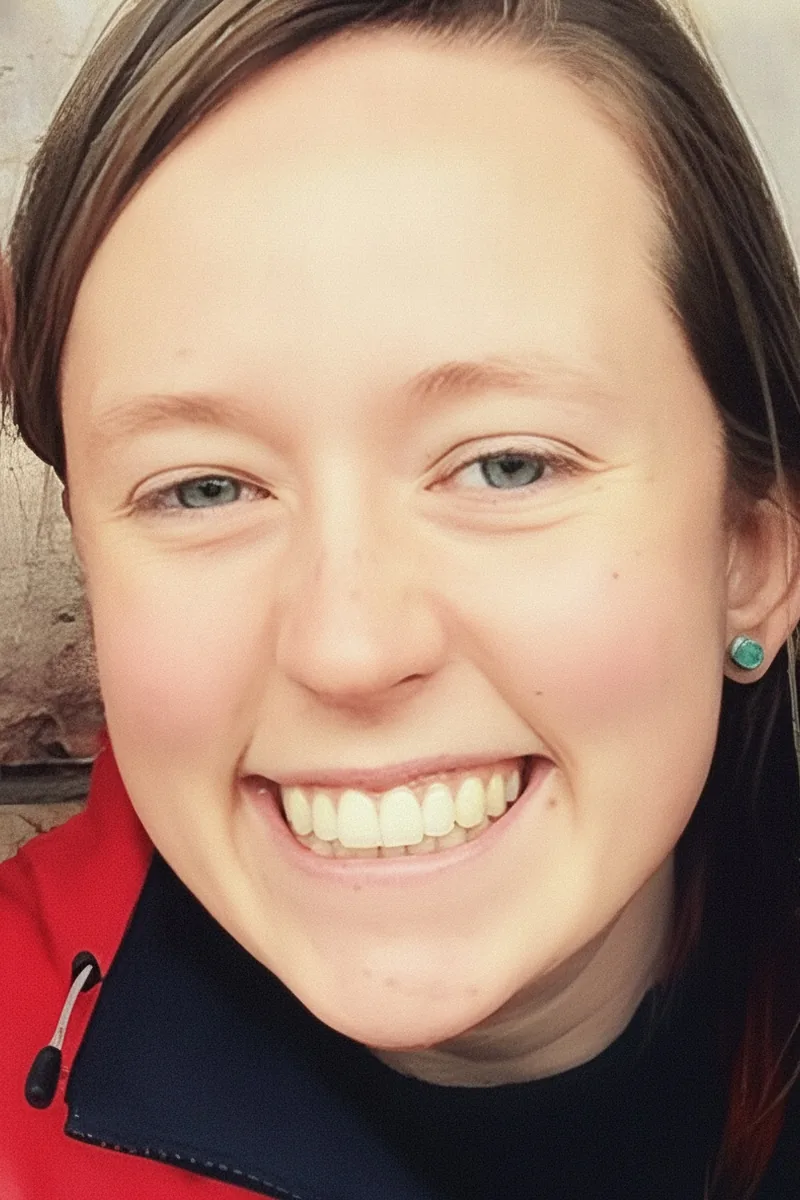
Graduating from an IB high school with top marks gave Zofia early exposure to the discrete reasoning and probability logic that finite mathematics courses revisit at the college level — and her Brown math degree deepened that foundation considerably. She's especially sharp at unpacking matrix operations and translating messy real-world scenarios into clean systems of equations, making the algebraic setup feel less arbitrary and more deliberate.
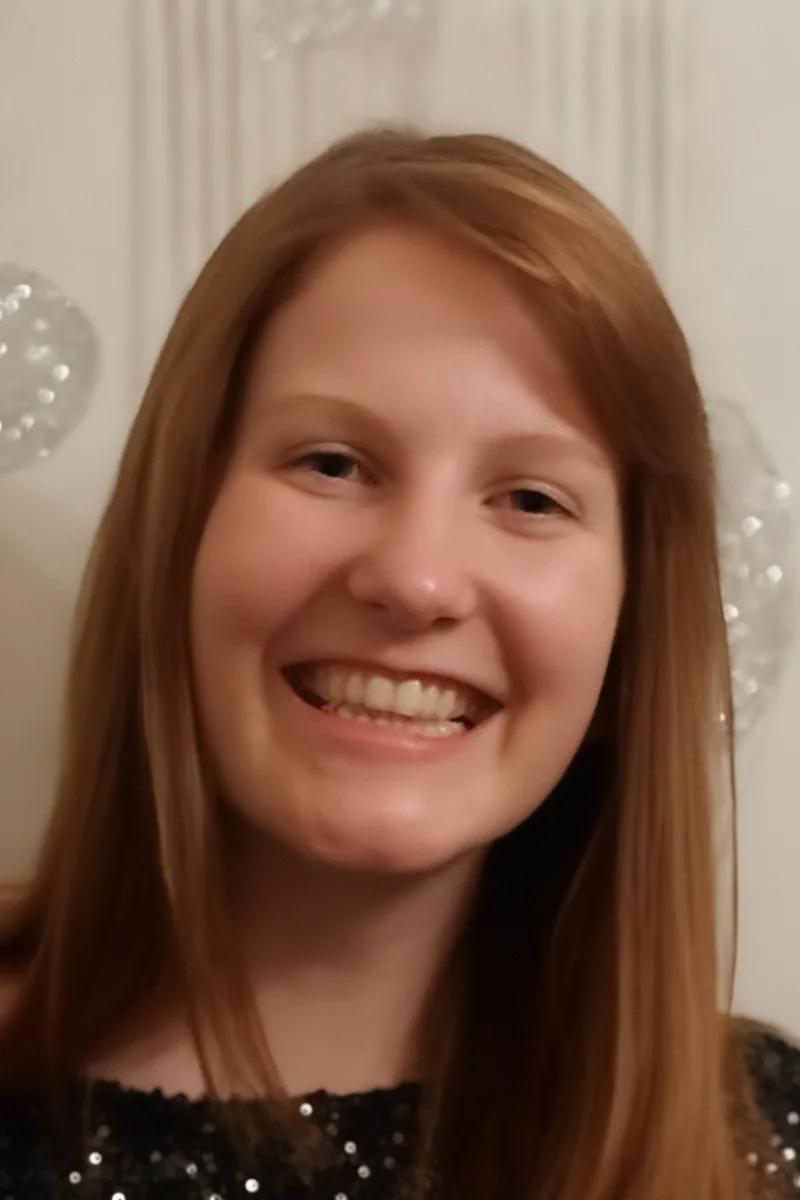
Environmental biology might seem distant from finite mathematics, but Rosemary's degree required exactly the kind of probability and data modeling — population sampling, species distribution analysis, combinatorial genetics — that overlaps with counting techniques and probability units in a finite math course. She zeroes in on translating messy, word-heavy scenarios into clean mathematical setups, especially when students can't tell whether they're dealing with independent events or conditional probabilities.
Linear programming, Markov chains, and matrix operations can feel disconnected from anything practical — until someone ties them to real decision-making problems. Rithi's quantitative training across neuroscience and biotechnology gives her a natural way to ground Finite Mathematics in applied contexts that make the material stick.
Most finite mathematics students hit a wall not on the computation but on knowing which tool to reach for — is this a matrix problem, a counting argument, or a linear programming setup? Tessa's mathematics major at Yale means she can trace the connections between these topics instead of treating each chapter as isolated, which makes the decision-making step click. Rated 4.9 by students.
Licensed middle and high school math teacher with a mathematics degree, Jacob has drilled the algebraic scaffolding — systems of equations, inequalities, basic matrix operations — that finite mathematics builds on, across hundreds of students in classroom and tutoring settings. He's especially sharp at slowing down on the translation step where a word problem becomes a mathematical setup, whether that's defining variables for a linear programming model or organizing information for a counting argument. Rated 5.0 by students.
Finite math pulls together matrix operations, linear programming, probability, and combinatorics into a single course that can feel scattered without a unifying thread. Valerie's applied math training gives her a bird's-eye view of how these topics connect, especially in modeling and decision-making contexts. She walks through each problem type with concrete examples so students see the structure underneath the formulas.
Pursuing an MS in Statistics at Portland State while having tutored the full calculus series, differential equations, and algebra at PCC since 2013, Danny brings unusual range to finite mathematics — a course that pulls from probability, matrix algebra, and counting techniques all at once. He unpacks each topic by connecting it to the statistical reasoning he uses daily in his graduate work, which is especially useful when students hit the probability and expected value chapters and can't see how the pieces fit together.
Qualifying for the AIME and MIT's Math Prize for Girls required exactly the kind of combinatorial and logical reasoning that finite mathematics courses test — counting arguments, set operations, and probability setups where one wrong assumption derails the whole problem. Lainie, now a biological engineering student at MIT, brings that competition-trained precision to breaking down whether a problem calls for a permutation or a conditional probability framework. Rated 5.0 by students.
Studying finance at Notre Dame means Charles is actively using the probability, matrix algebra, and linear programming that finite mathematics courses cover — present value calculations, portfolio optimization, and risk modeling all draw on the same toolkit. He breaks down the business-flavored word problems that trip students up, especially when translating a scenario into the right system of equations or figuring out which counting technique applies.
Until age 16, Viktor thought math was just blind memorization — then a series of teachers at the right moment revealed the logic underneath, and he ended up majoring in mathematics at UChicago. That conversion story matters for finite mathematics, where topics like counting techniques and set operations look arbitrary until someone shows you why the rules work the way they do. His 1600 SAT and current master's work in computer science at NYU keep him sharp on the discrete reasoning these courses demand.
Computer science at UCLA means David works with discrete math daily — the set operations, counting arguments, and logic that finite mathematics courses are built from show up constantly in algorithm analysis and data structure design. He's especially good at making the connection between abstract notation and concrete problem-solving click, particularly when students hit matrix algebra or probability setups that feel disconnected from anything they've seen before. Rated 4.8 by students.
The jump from astrophysics to playwriting sounds dramatic, but Jacob's undergraduate work in astrophysics required exactly the kind of matrix algebra, probability, and systematic logic that finite mathematics courses test — he just happened to also write plays about it. He's sharp at unpacking problems where students need to set up a system of equations or figure out whether a counting problem calls for ordered or unordered selections, breaking the language of the question apart before touching any formulas.
I am currently an adjunct professor of chemistry at a small liberal arts college in the Chicago area. Previously, I worked in the chemical industry for several years as a researcher, but I've found that the most satisfying moments have come when I am able to share my expertise with someone else. Similarly, I very much enjoyed the four semesters in the graduate school when I was a teaching assistant. It gave me the opportunity to work with students and help them develop an understanding for the subject. These are the primary reasons that I have decided to go into teaching.
Most finite mathematics students hit a wall not on the computation but on knowing which tool to reach for — is this a matrix problem, a linear programming setup, or a counting argument? Carson, a math major at the University of Chicago heading toward a doctorate, has the algebraic range to connect those topics rather than treat them as disconnected chapters. He unpacks each problem type by showing how set theory, probability, and optimization share underlying structure.
Testimonials
Because the right Finite Mathematics tutor makes all the difference.
Average Session Rating – Based on 3.4M Learner Ratings
Nearby Finite Mathematics Tutors
Other Denver Tutors
Related Math Tutors in Denver
Frequently Asked Questions
Finite Mathematics focuses on practical, real-world applications of math rather than abstract theory. It typically covers topics like linear programming, matrices, probability, statistics, and financial mathematics—skills used in business, economics, and social sciences. Unlike Calculus or Algebra, Finite Math emphasizes problem-solving and decision-making over theoretical proofs, making it highly applicable to everyday situations.
Finite Mathematics courses can vary significantly depending on your school district and textbook—Denver's 9 school districts may use different approaches and pacing. Varsity Tutors connects you with tutors who work with you to understand your specific curriculum, textbook, and course structure from day one. This personalized approach ensures instruction aligns with what your teacher expects and what will appear on your exams.
Word problems require translating real-world scenarios into mathematical models—a skill that takes practice and clear strategy. Tutors help you break down complex problems into manageable steps, identify what information matters, and recognize patterns in problem types. With personalized 1-on-1 instruction, you'll develop confidence in approaching unfamiliar problems and learn to show your reasoning clearly, which is essential for Finite Math applications.
Students often find linear programming, matrix operations, and probability/statistics concepts challenging because they require both procedural skill and conceptual understanding. Many struggle with setting up optimization problems correctly or interpreting what their solutions mean in context. Tutors help you move beyond just following steps to truly understanding why methods work and how to apply them to new situations—building the deeper comprehension that leads to success.
Your first session focuses on understanding where you are right now—your strengths, specific challenges, and learning goals. You'll discuss your course materials, current topics, and any areas causing frustration. The tutor will assess your understanding of foundational concepts and create a personalized plan to address gaps and build confidence. This foundation ensures every future session is targeted and productive.
Math anxiety often stems from feeling rushed or not fully understanding concepts before moving on. Personalized 1-on-1 instruction lets you work at your own pace, ask questions without judgment, and tackle problems step-by-step until they click. As you see patterns emerge and solve problems successfully, confidence naturally builds. Tutors also help you recognize that mistakes are part of learning, not failures—a mindset shift that transforms how you approach Finite Math.
In Finite Math, showing your work demonstrates your reasoning and helps you catch errors—teachers and exams expect clear, logical explanations of your solution process. Tutors work with you to develop organized problem-solving habits, explain your steps clearly, and justify your answers. This skill is especially important for word problems and optimization questions where the process matters as much as the final answer.
The ideal frequency depends on your specific challenges and goals—some students benefit from weekly sessions, others from twice-weekly support during difficult units. Many students see noticeable improvement in understanding and confidence within 3-4 sessions as concepts become clearer and problem-solving strategies take hold. Varsity Tutors works with you to create a schedule that fits your needs and accelerates your progress in Finite Mathematics.
Let’s find your perfect tutor
Answer a few quick questions. We’ll recommend the right plan and match you with a top 5% tutor.