Award-Winning AP World History Tutors
serving Denver, CO
AP World History
Tutors in Denver
Private 1-on-1 tutoring, weekly live classes for academic support, test prep & enrichment, practice tests and diagnostics, and more to elevate grades and test scores.
Based on 3.4M Learner Ratings
UniversitiesSchools & Universities
DeliveredHours Delivered
ProficiencyGrowth in Proficiency
Who needs tutoring?
No obligation. Takes ~1 minute.
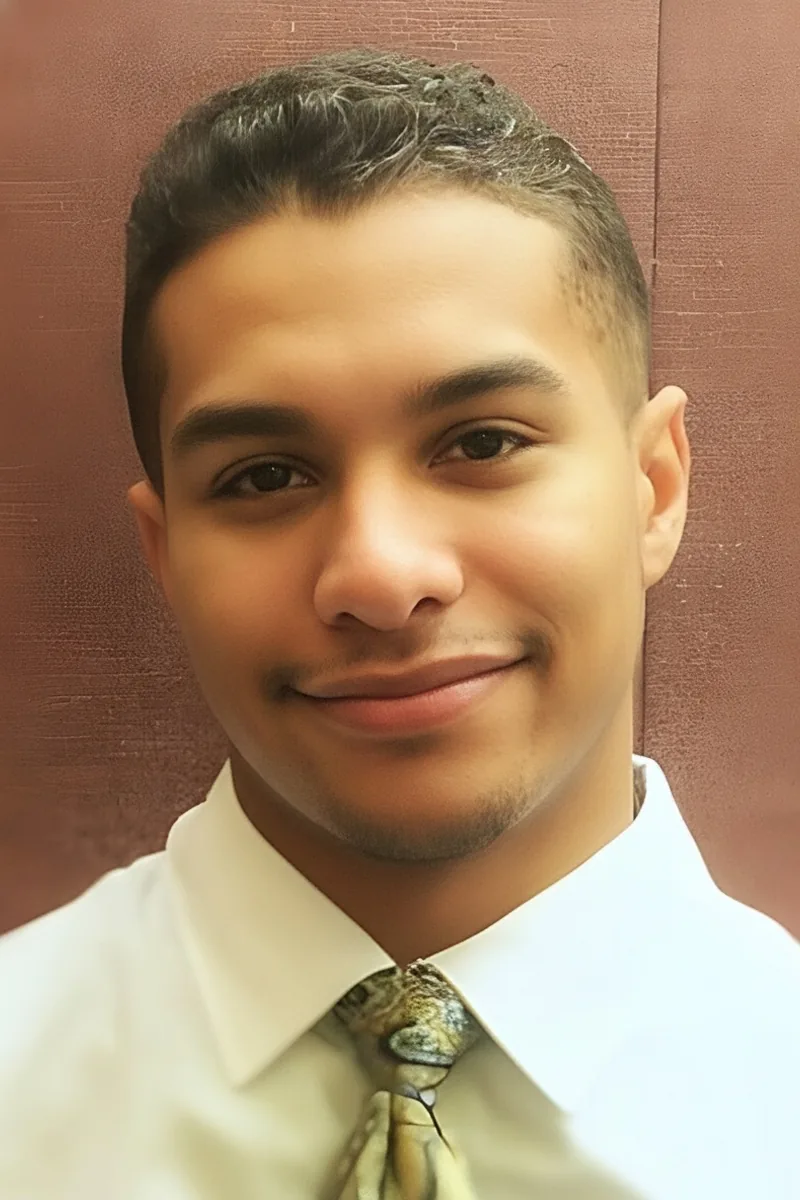
Covering thousands of years across every continent, AP World History can feel overwhelming until a student learns to spot the recurring themes — trade networks, empire building, cultural diffusion, shifts in labor systems. Marcus's Political Sciences background gives him a framework for analyzing how power structures rise and fall, which is exactly the kind of comparative thinking the AP exam demands. He breaks the curriculum into thematic threads that make the sheer volume of content manageable.

Carson's English degree built the close-reading and argument-construction skills that AP World History's document-based questions actually test — pulling a defensible thesis out of unfamiliar primary sources under time pressure. He approaches the exam's nine periods through the lens of narrative and rhetoric, teaching students to read historical documents the way a literary analyst would: asking who wrote it, for whom, and what it's trying to do. That skill set is especially useful on the continuity-and-change essays where students need to build a story arc across centuries, not just list events.
Covering ten thousand years of global history means students need a mental framework, not a memorized timeline. Jake approaches AP World History through recurring themes like empire-building, trade networks, and cultural diffusion, then shows students how to deploy that thematic knowledge in the continuity-and-change and comparison essays the exam actually tests.
Years working as an educator at the Rubin Museum of Art — a collection centered on Himalayan and South Asian civilizations — gave Harry a tactile, artifact-driven way of teaching the cross-cultural encounters that AP World History's DBQ and LEQ prompts demand. His ongoing independent research trips to India studying Tibetan language and culture mean he can unpack topics like the spread of Buddhism along trade networks or Mughal-era cultural syncretism with firsthand context most tutors simply can't offer. That combination of museum pedagogy and regional immersion is especially useful for students who need to move beyond memorizing timelines and start building source-driven arguments.
Elena's dual undergraduate majors in Art History & Archaeology and History — with a focus on medieval civilizations — gave her deep practice in the kind of cross-regional, cross-temporal analysis that AP World History demands. She teaches students to read primary sources the way an art historian reads an artifact: pulling context, audience, and purpose out of a single document, which is exactly what the DBQ requires. Rated 4.7 by students.
Covering thousands of years across every continent, AP World History overwhelms students who try to memorize everything. Nathan's approach is to teach through comparative frameworks — connecting the collapse of the Han Dynasty to the fall of Rome, or linking the Atlantic slave trade to Indian Ocean commerce — so that patterns replace isolated facts. As a Rice History major, he brings genuine depth to the cross-cultural analysis the exam demands.
Sociology trains you to ask how societies organize, stratify, and transform — which is essentially what every AP World History essay prompt is getting at when it asks why empires rise, trade networks reshape cultures, or revolutions spread across borders. Caio brings that sociological lens from his studies at Rice to the exam's comparative and causation questions, teaching students to analyze documents through the structures of power, class, and cultural exchange rather than just chronology. Rated 5.0 by students.
Marketing is fundamentally about understanding how ideas, goods, and influence spread through populations — which turns out to be the same analytical muscle AP World History flexes when asking about the Silk Roads, the spread of Islam, or the Columbian Exchange. Lilian's business degree with a marketing focus gives her a practical framework for teaching students how exchange networks and cultural diffusion actually work, not just what happened but why it spread. Rated 4.7 by students, she's particularly effective at helping with the continuity-and-change essays where tracing cause and effect across regions is everything.
Bethany's Master's in Religious Studies from Duke pairs unusually well with AP World History — she spent years tracing how belief systems like Christianity, Islam, and Buddhism didn't just spread but reshaped governance, trade, and social hierarchies across entire regions. That background makes her especially sharp on the cultural diffusion and cross-cultural interaction themes that dominate the exam's essay prompts, where students need to explain *why* ideas spread rather than just *that* they did. Rated 5.0 by students.
Anthropology is essentially world history with the volume turned up on culture — and Jorge's Harvard degree in Social Anthropology means he reads AP World History's units on cultural diffusion, belief systems, and social hierarchies the way they were meant to be read, as interconnected human patterns rather than isolated facts to memorize. His Columbia MA in Human Rights adds a sharp lens for the exam's questions about empire, resistance, and power, especially in the post-1750 periods where human rights movements reshape the political landscape. He also tutors AP Human Geography and AP Comparative Government, so he naturally connects the geographic and political threads that earn top scores on cross-regional comparison essays.
Connecting civilizations across centuries requires a framework, not just flashcards. Jessica's history degree from Penn gave her deep practice in comparative analysis — exactly the skill AP World History rewards on its continuity-and-change and comparison essays. She also brings years of experience coaching students through the specific writing demands of AP free-response questions.
Fluency in multiple languages — Latin, Spanish, Italian, German — gives Jamie a concrete feel for how cultures borrow, collide, and reshape each other, which is the engine behind AP World History's toughest essay prompts on cultural diffusion and cross-regional exchange. A master's in education sharpens that into practical exam prep, particularly on DBQ sourcing where students need to read an unfamiliar document and quickly identify its cultural context and point of view.
Having worked on political campaigns and immigration research after graduating from Northwestern, Lauren brings real-world experience with how policy, migration, and power intersect — themes that run through nearly every AP World History period, from early empire-building to twentieth-century decolonization. She's especially sharp on the essay sections, where her background in persuasive and analytical writing (and a 34 ACT) means she can teach students to build document-based arguments that do more than just restate what happened. Rated 4.9 by students.
Cross-cultural comparison is where most AP World History students lose points, and it's where Ben's teaching shines — he breaks down how to connect developments like the Columbian Exchange, Mongol trade networks, and industrialization across regions without turning essays into vague generalizations. As a classroom history teacher who reads history for fun, he brings genuine enthusiasm to even the trickiest continuity-and-change-over-time prompts.
Testimonials
Because the right AP World History tutor makes all the difference.
Average Session Rating – Based on 3.4M Learner Ratings
Practice AP World History
Free practice tests, flashcards, and AI tutoring for AP World History
Nearby AP World History Tutors
Other Denver Tutors
Related Social Studies Tutors in Denver
Frequently Asked Questions
Score improvement depends on your starting point and how consistently you engage with tutoring. Students who work with tutors typically see gains of 1-3 points on the AP scale, with the biggest improvements coming from targeted practice on essay writing and document analysis. The key is identifying your weak areas early—whether that's periodization, comparative analysis, or specific regions—and building focused study habits around those gaps.
The three most common struggles are: managing the massive scope of content (spanning 8,000 years across all continents), mastering the essay formats (especially the Document-Based Question), and developing strong comparative analysis skills. Many students also struggle with pacing during the exam—there's a lot of reading and writing to complete in limited time. Personalized tutoring helps you prioritize high-impact content and practice timed essays until the format becomes second nature.
AP World History essays reward clear thesis statements, specific historical evidence, and explicit analysis that connects evidence to your argument. Tutors help you learn the exact rubric expectations for the DBQ, LEQ, and SAQ—then practice writing under timed conditions so you develop speed and accuracy. Most students improve significantly once they understand that graders want to see your thinking process, not just facts.
Most students benefit from consistent, focused study starting 2-3 months before the exam. This typically means 5-7 hours per week of active learning—reading primary sources, writing practice essays, taking full-length practice tests, and reviewing weak areas. A tutor helps you use that time efficiently by identifying exactly which topics and skills need the most attention, rather than studying everything equally.
Practice tests serve two critical purposes: they help you understand the exam format and pacing, and they reveal exactly which topics and question types trip you up. Taking full-length, timed practice tests every 2-3 weeks lets you build stamina and identify patterns in your mistakes. Tutors use your practice test results to guide your study plan, so you're always working on what will have the biggest impact on your score.
Test anxiety often stems from feeling unprepared or uncertain about what to expect. Regular practice with timed essays and full-length exams builds confidence because you've already done the work under exam conditions. Tutors also help you develop a pre-exam routine and strategies for staying calm during the test—like reading questions carefully, managing your time across all three essay sections, and remembering that strong analysis matters more than perfect recall.
Varsity Tutors connects you with expert tutors in Denver who specialize in AP World History and understand the specific demands of the exam. When you get matched with a tutor, you'll work together to assess your current level, identify weak areas, and create a focused study plan leading up to test day. You can start with a single session to see if the fit is right, then scale up your tutoring frequency based on your needs and timeline.
Look for tutors who have strong knowledge of the AP World History curriculum and thematic learning objectives, ideally with experience teaching or tutoring the exam. It's also valuable to find someone who has scored well on the AP exam themselves and understands the rubrics for each essay type. Beyond expertise, a good fit means someone who can explain complex topics clearly and help you develop your own analytical skills rather than just memorizing facts.
Let’s find your perfect tutor
Answer a few quick questions. We’ll recommend the right plan and match you with a top 5% tutor.