Award-Winning Developmental Biology Tutors
serving San Francisco, CA
Who needs tutoring?
FEATURED BY


TUTORS FROM
- YaleUniversity
- PrincetonUniversity
- StanfordUniversity
- CornellUniversity
Award-Winning Developmental Biology Tutors serving San Francisco, CA
Certified Tutor
5+ years
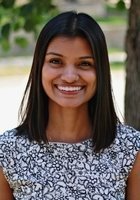
Sugi
A biochemistry and cell biology degree from Rice plus medical school at Baylor means Sugi has traced embryonic development from both the bench and the clinic — she knows how morphogen gradients and differential gene expression look in a textbook and how developmental errors present in a patient. She...
Rice University
Bachelor's degree in Cognitive Science and Biochemistry & Cell Biology
Baylor College of Medicine
Doctor of Medicine, Ophthalmic Technology

Certified Tutor
5+ years
Saloni
Gastrulation, organogenesis, and cell fate determination require students to think in four dimensions — three spatial plus time. Saloni's dental training gave her detailed exposure to craniofacial development and embryology, so she unpacks these processes using specific tissue examples rather than g...
Drexel University
Bachelor of Science, Biology, General
University of Pennsylvania
Doctor of Medical Dentistry, Predentistry

Certified Tutor
5+ years
Pallavi
From gastrulation to organogenesis, developmental biology asks students to think in four dimensions — tracking how gene expression changes across both space and time. Pallavi's graduate training in biology and her neurobiology specialization at Penn make her especially effective at explaining signal...
University of Pennsylvania
Master's in Biology
University of Pennsylvania
Bachelor of Arts in Biology (Neurobiology concentration)
Certified Tutor
4+ years
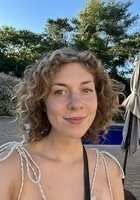
Gastrulation, cell fate determination, and morphogen gradients require thinking simultaneously about molecular signaling and large-scale tissue organization. Zosia's molecular and cell biology training at Yale gives her a strong handle on the gene expression cascades — like Hox genes and Wnt pathway...
Yale University
Bachelor of Science
Certified Tutor
4+ years
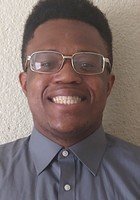
Emmanuel
Genome editing research at Rice gave Emmanuel a hands-on understanding of how precise genetic changes ripple through developmental processes — the kind of intuition that makes topics like differential gene expression and cell fate commitment feel tangible rather than theoretical. His behavioral biol...
Johns Hopkins University
Bachelor of Science in Behavioral Biology

Certified Tutor
9+ years
Katie
Gastrulation, cell fate determination, morphogen gradients — developmental biology asks students to think in four dimensions, tracking how gene expression changes across both space and time. Katie's neuroscience and human physiology studies at Boston University give her hands-on familiarity with emb...
Boston University
Bachelor in Arts, Neuroscience

Certified Tutor
4+ years
Maxwell
Maxwell's current research at Yale tracks changes in stem cells and gene expression during planarian physiological processes — organisms famous for their regenerative capacity, which makes them a living case study in cell fate decisions, tissue patterning, and differentiation. That hands-on lab work...
Yale University
Bachelor of Science, Molecular Biology
Certified Tutor
4+ years
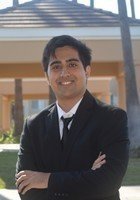
Abrahim
From gastrulation and axis formation to cell fate determination and organogenesis, developmental biology demands that students think in four dimensions — space plus time. Abrahim's medical training at the Medical College of Wisconsin means he encounters embryological concepts clinically, which lets ...
University of California Los Angeles
Bachelor of Science, Biology, General
Medical College of Wisconsin
Doctor of Medicine, Premedicine

Certified Tutor
5+ years
Mitchell
Studying neuroscience means tracking how a single fertilized cell becomes a functioning nervous system — gastrulation, neural tube formation, axon guidance, and the signaling cascades that pattern an embryo. Mitchell unpacks these developmental mechanisms by tying each stage back to the molecular si...
University of Notre Dame
Bachelor of Science, Neuroscience

Certified Tutor
Michael
A cell and molecular biology degree from Michigan means Michael spent semesters immersed in the signaling pathways and gene expression mechanisms that drive embryonic development — from how morphogens establish concentration gradients to how cells interpret those signals to commit to specific lineag...
University of Michigan-Ann Arbor
Bachelor of Science, Cell & Molecular Biology
Nearby Developmental Biology Tutors
Other San Francisco Tutors
Related Science Tutors in San Francisco
Frequently Asked Questions
Developmental Biology explores how organisms grow and change from a single cell into complex, multi-system beings. A typical course covers embryonic development stages, cell differentiation and gene expression, morphogenesis (how body structures form), and the molecular signals that guide development. You'll also study specific model organisms like fruit flies and zebrafish, learn about developmental disorders, and examine how evolutionary principles shape development. Many courses include hands-on lab work where you observe embryos at different stages and conduct experiments to understand developmental processes.
Developmental Biology demands both strong conceptual understanding and the ability to visualize complex, dynamic processes—embryos don't stay still, and understanding how cells "know" what to become requires grasping multiple layers of molecular signaling. Many students struggle with remembering dozens of genes and their roles, or struggle to see the bigger picture of how individual molecular events create organized structures. Varsity Tutors connects you with tutors who help you build mental models of developmental pathways, practice scientific reasoning, and move beyond memorization to genuine understanding. Tutors can break down abstract concepts, work through lab results with you, and prepare you for exams that test both knowledge and analytical thinking.
Lab work is central to Developmental Biology—observing actual embryos, conducting experiments, and analyzing results is where theory comes alive. You'll likely work with model organisms, examine prepared slides, and potentially perform techniques like staining or gene expression analysis. Strong lab performance requires careful observation skills, detailed note-taking, and the ability to connect what you see under the microscope to the concepts you're learning in lecture. A tutor can help you understand what to look for when observing developmental stages, how to interpret experimental data, how to troubleshoot when procedures don't work as expected, and how to write clear lab reports that demonstrate your understanding.
Memorizing that the "blastula forms at this stage" is useful for tests, but understanding *why* cells arrange themselves into a blastula—what signals drive those movements and what happens next—is what makes Developmental Biology click. True understanding means you can predict what might happen if a key gene is disrupted, explain why certain birth defects occur, or apply developmental principles to new scenarios. Tutoring focuses on building these deeper connections: explaining the "why" behind each stage, connecting molecular events to visible structures, and practicing problems that require reasoning rather than recall. This approach not only improves exam performance but makes the subject genuinely interesting.
Many students find cell signaling pathways and morphogenetic gradients hard to picture—they're invisible, dynamic, and involve multiple simultaneous processes. Effective visualization strategies include drawing your own diagrams, using color-coding for different molecules or cell types, creating timelines of developmental events, and watching animations to see processes unfold. Tutors can guide you through drawing signaling cascades step-by-step, help you create your own study visuals, and use analogies (like a cascade of falling dominoes or radio signals spreading from a tower) to make abstract ideas concrete. Practice redrawing concepts from memory, then comparing to your textbook—this strengthens both understanding and retention.
Look for a tutor with strong biology foundations and preferably direct experience with Developmental Biology at the level you're studying (high school AP, introductory college, or advanced). A good tutor can explain concepts clearly without relying solely on memorization, understands lab techniques and analysis, and can adapt explanations to your learning style—whether you learn best visually, through discussion, or by working through problems. Varsity Tutors connects you with tutors who have demonstrated expertise in your specific course and curriculum. During your first session, a strong tutor will assess what you already understand and where confusion lies, then tailor their approach to build on your strengths.
The right amount of tutoring depends on your starting point, your course pace, and what you're working toward—whether that's keeping up with your class, raising a grade, or preparing for an exam. Some students benefit from weekly sessions throughout the semester to build strong foundational understanding; others need intensive help right before exams or before challenging units like gastrulation or organogenesis. Most students see meaningful improvement (better understanding, more confidence, improved exam scores) within 3-5 sessions if they engage actively with the material between sessions. Your tutor can help you create a sustainable study plan and adjust the frequency based on what's working.
Connect with Developmental Biology Tutors in San Francisco
Get matched with local expert tutors