Award-Winning AP Calculus BC Tutors
serving Fresno, CA
AP Calculus BC
Tutors in Fresno
Private 1-on-1 tutoring, weekly live classes for academic support, test prep & enrichment, practice tests and diagnostics, and more to elevate grades and test scores.
Based on 3.4M Learner Ratings
UniversitiesSchools & Universities
DeliveredHours Delivered
ProficiencyGrowth in Proficiency
Who needs tutoring?
No obligation. Takes ~1 minute.

Double-majoring in computer science and English is an unusual combination, but Milan's CS coursework means he's actively working through the series, integration techniques, and convergence reasoning that BC piles on top of AB — and his English training makes him unusually precise at explaining the logic behind each step. He breaks down topics like Taylor polynomial construction by building up from the derivative concepts students already trust, so the BC-specific material feels earned rather than arbitrary. His 1540 SAT speaks to the cross-disciplinary rigor he brings to problem-solving.
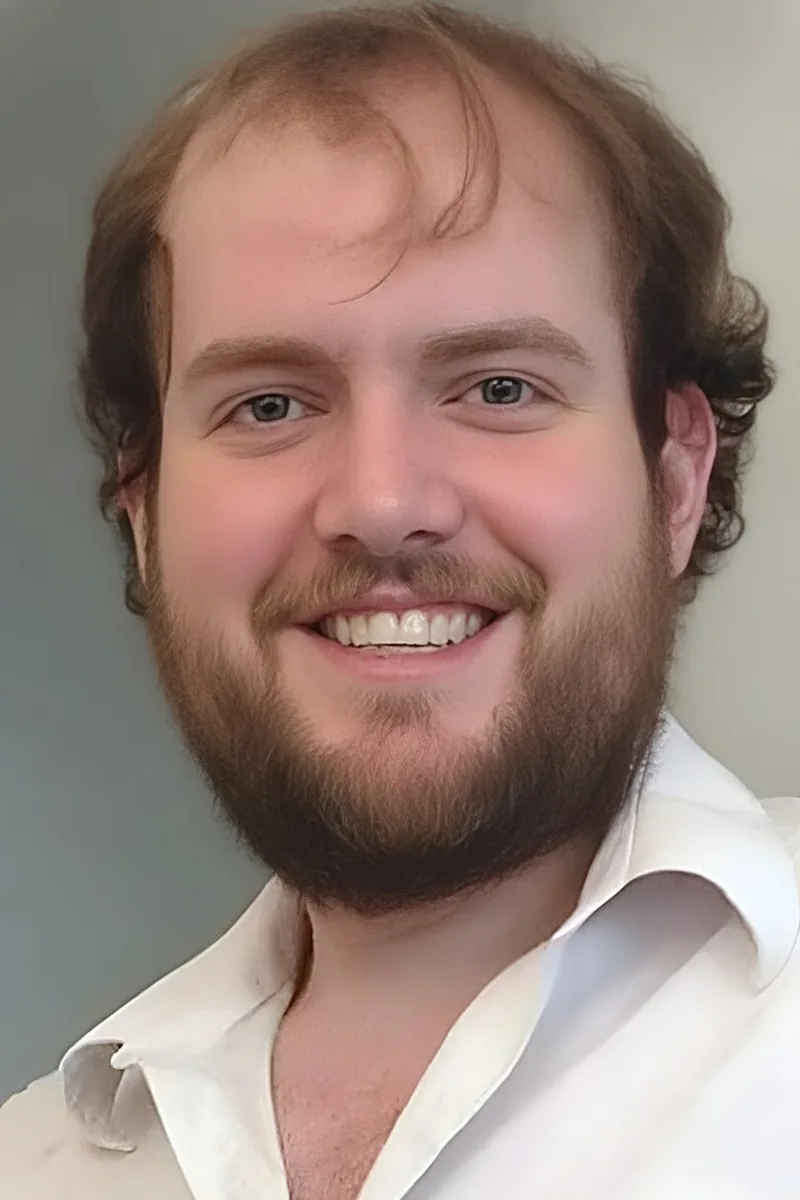
Most BC tutors come from engineering or STEM research — Michael's path through NYU's drama program is unusual, but his 1500 SAT and 35 ACT reflect genuine mathematical chops, and his performance background means he's unusually good at reading when a student's nod actually means confusion. He breaks down the BC-specific jump into series convergence and Taylor polynomial construction by treating each new tool as a logical argument that has to hold together, not just a formula to memorize.
An English and Environmental Studies major might not scream calculus, but Ari's 1590 SAT — nearly a perfect score on the math section — signals serious quantitative chops beneath the humanities surface. He teaches BC topics like series convergence and parametric equations by emphasizing the underlying logic and structure, an approach that clicks especially well for students who need to understand the 'why' before the 'how.' Rated 4.9 by students.
I'm an affable chemistry-loving person whose joy come from delivering knowledge :D
Harvey Mudd's engineering curriculum throws you into BC-level calculus from day one — Daniel was computing improper integrals and building series approximations in his physics and engineering courses while simultaneously learning the theory behind them in math classes. That dual exposure means he teaches topics like convergence tests and Taylor polynomial error bounds with a concrete sense of what they're actually for, not just how to get through the exam.
BC Calculus layers convergence tests, parametric equations, and polar curves on top of an already demanding AB foundation, and most students struggle because they never fully locked in the earlier material. Alain approaches series and sequences by building intuition for why a ratio test works before drilling the mechanics. His math minor at UCLA took him well beyond BC-level content, so he can contextualize even the trickiest topics like Taylor series error bounds.
Molecular biophysics at Brown means Srini is constantly using series approximations and integration techniques to model protein folding dynamics and molecular interactions — BC Calculus isn't a prerequisite he passed, it's a toolkit he reaches for weekly. That active use sharpens how he teaches convergence tests and parametric problems, grounding each in the kind of quantitative reasoning his 1600 SAT and 35 ACT reflect. Rated 4.8 by students.
Rachel's 35 ACT and economics coursework at WashU mean she's comfortable with the quantitative reasoning BC demands, though her real edge is in how she breaks down the transition from AB material into BC-specific territory — particularly series convergence and polynomial approximations, where students often memorize tests without understanding what they're actually checking. She approaches each new BC tool by rebuilding the calculus logic underneath it, so topics like the ratio test or integration by parts hold up under exam pressure instead of falling apart.
Series convergence is where most BC students start to feel lost — ratio tests, Taylor expansions, error bounds all hit at once. Matthew's Harvard math coursework goes well beyond the AP curriculum, which means he can explain not just how to apply these tools but why they work. He connects BC-specific topics like parametric equations and polar curves back to the core calculus intuitions students already have.
Coming out of Thomas Jefferson High School for Science and Technology — one of the most rigorous STEM pipelines in the country — Rhamy had BC Calculus concepts like series convergence and parametric integration locked down before most students even encounter them. His computer engineering program at Vanderbilt keeps those tools sharp daily, since signal analysis and circuit design lean heavily on the same Taylor expansions and differential equations that define the BC curriculum. Rated 5.0 by students.
Having worked as a teaching assistant for multiple engineering courses at Washington University in St. Louis, Ava spent hours breaking down the calculus that trips students up most — and BC's jump into series convergence, parametric derivatives, and advanced integration techniques is exactly the material she kept revisiting with struggling engineers. Her dual degree in mechanical and energy engineering means she's applied Taylor expansions and improper integrals to real thermodynamic and fluid systems, giving her a concrete vocabulary for explaining why these tools matter beyond the AP exam.
Studying both biomedical engineering and applied mathematics at Johns Hopkins, Nicholas lives in the world where BC Calculus concepts — series approximations, parametric modeling, advanced integration — are daily requirements rather than abstract exercises. He's especially good at breaking down the transition from AB to BC, showing how something like a convergence test or polar area calculation grows directly out of derivative and integral logic students already trust. His 35 ACT and 4.8 rating speak to the clarity he brings to those explanations.
Series convergence, parametric equations, and polar curves make BC the course where strong calculus students finally have to slow down and think carefully. Anthony earned his BS in physics and math from Yale, where these concepts weren't just exercises — they were the language of electromagnetism and classical mechanics. He teaches BC topics by connecting each technique to why it exists and when it matters.
Teaching discrete math at Penn while finishing a CS master's means Keenan lives in the world of rigorous mathematical argument — the same mindset that separates students who survive BC from those who actually understand it, especially when series convergence proofs and error bound reasoning demand more than mechanical computation. His philosophy undergraduate training adds an unusual edge: he treats each BC concept like a logical claim that needs justification, which makes topics like the Lagrange remainder or comparison tests feel structured rather than arbitrary. Rated 5.0 by students.
BC Calculus piles on topics like Taylor series, parametric equations, and convergence tests at a pace that leaves little room for falling behind. As a Penn math major who also tutors multivariable calculus and linear algebra, Ben understands these concepts at a depth that lets him explain not just the how but the why behind each technique. That deeper perspective makes integration methods and series analysis click faster.
Winning Duke's DT Stallings Award for sustained tutoring of local school students means Taariq has logged serious hours watching where calculus understanding actually breaks down — and BC's leap into series, parametric curves, and advanced integration is where breakdowns happen fastest. His math degree from Duke gives him the theoretical grounding to trace a student's confusion with, say, a ratio test or a polar area integral back to the specific AB concept that isn't solid yet. Rated 4.9 by students.
Most BC students can follow a convergence test step by step but freeze when asked to choose which test to apply — that decision-making is where Nima, a physics major heading to Duke on a full merit scholarship, spends most of his teaching energy. His physics training means he treats series and parametric equations as descriptions of real motion and real forces, which gives students an intuitive anchor when the abstraction piles up. A 1580 SAT and 4.7 rating back up his ability to make that AB-to-BC jump feel manageable.
Running a peer-tutoring program in high school meant Ryan spent years diagnosing exactly where classmates got stuck on calculus problems — a skill he's sharpened further through his civil engineering coursework at Cornell, where series expansions and integration techniques show up constantly in structural analysis and fluid mechanics. He breaks down the BC-specific leap into convergence tests and Taylor polynomials by grounding each new idea in the derivative and integral logic students built in AB. His 35 ACT and 4.7 rating speak to the precision he brings to every session.
Testimonials
Because the right AP Calculus BC tutor makes all the difference.
Average Session Rating – Based on 3.4M Learner Ratings
Practice AP Calculus BC
Free practice tests, flashcards, and AI tutoring for AP Calculus BC
Nearby AP Calculus BC Tutors
Other Fresno Tutors
Related Math Tutors in Fresno
Frequently Asked Questions
AP Calculus BC covers all topics from AP Calculus AB plus additional advanced material. The full curriculum includes limits, derivatives, applications of derivatives, integration, differential equations, sequences, series, and parametric equations. The BC exam tests your ability to work with these concepts both analytically and graphically, so you'll need to master problem-solving across multiple representations.
Many students struggle with the transition from algebra to calculus thinking—understanding why derivatives and integrals work, not just how to compute them. Series and sequences, which are unique to BC, trip up students who haven't built strong foundational skills. The exam also requires fast, accurate work under time pressure, so pacing and recognizing when to use different techniques are critical skills to develop.
Score improvement depends on your starting point and how consistently you work. Students who get personalized 1-on-1 instruction focused on their specific weak areas—whether that's integration techniques, series convergence, or test-taking strategy—typically see meaningful gains. Many students improve by 1-2 score points, though the exact improvement varies based on your baseline, study habits, and time invested before the exam.
Practice tests are essential for AP Calculus BC success. They help you identify which topics need more work, build stamina for the 3-hour exam, and get comfortable with the question formats and pacing. Taking full-length practice tests under timed conditions, then reviewing every mistake carefully, is one of the most effective ways to prepare. Tutors can help you analyze your practice test results to target your studying efficiently.
Your first session is about understanding where you stand. Expect to discuss your current grade, which topics feel strongest and weakest, and your AP exam timeline. Many tutors will work through a problem or two with you to see your thinking process and identify gaps. This helps create a personalized study plan focused on your specific needs rather than generic test prep.
The AP Calculus BC exam has two sections: 45 minutes for 30 multiple-choice questions and 90 minutes for 6 free-response questions. A common strategy is spending about 1.5 minutes per multiple-choice question, which leaves time to revisit difficult ones. For free-response, allocate roughly 15 minutes per question and tackle easier ones first to build confidence. Tutors can help you practice pacing strategies so timing becomes automatic on test day.
Varsity Tutors connects you with expert tutors experienced in AP Calculus BC who understand the curriculum and exam format. When you get matched with a tutor, you can discuss your schedule, learning style, and specific goals. Tutors work flexibly with your needs, whether you need help with a single tough concept or comprehensive exam prep over several months.
Series and sequences are unique to BC and require thinking about infinity and convergence in ways that feel abstract to many students. The variety of convergence tests (ratio test, integral test, alternating series test) can feel overwhelming without a clear strategy for when to use each one. Working through targeted practice with a tutor helps you build intuition for recognizing which test applies and why, rather than just memorizing formulas.
Let’s find your perfect tutor
Answer a few quick questions. We’ll recommend the right plan and match you with a top 5% tutor.