Award-Winning Accounting Tutors
serving Fresno, CA
Accounting
Tutors in Fresno
Private 1-on-1 tutoring, weekly live classes for academic support, test prep & enrichment, practice tests and diagnostics, and more to elevate grades and test scores.
Based on 3.4M Learner Ratings
UniversitiesSchools & Universities
DeliveredHours Delivered
ProficiencyGrowth in Proficiency
Who needs tutoring?
No obligation. Takes ~1 minute.

I'm a recent graduate of the California Institute of Technology in Economics and Computer Science. I was also accepted at Harvard, Princeton, MIT, and Stanford. I have a broad range of interests spanning science, math, engineering, social science, the humanities, the arts, and athletics (I also played on the Caltech basketball team). My background allows me to tutor general college prep, especially the SAT, ACT and the GRE. I love to teach analytical thinking, ranging from advanced Math and Physics to strategies for understanding literature and developing arguments.
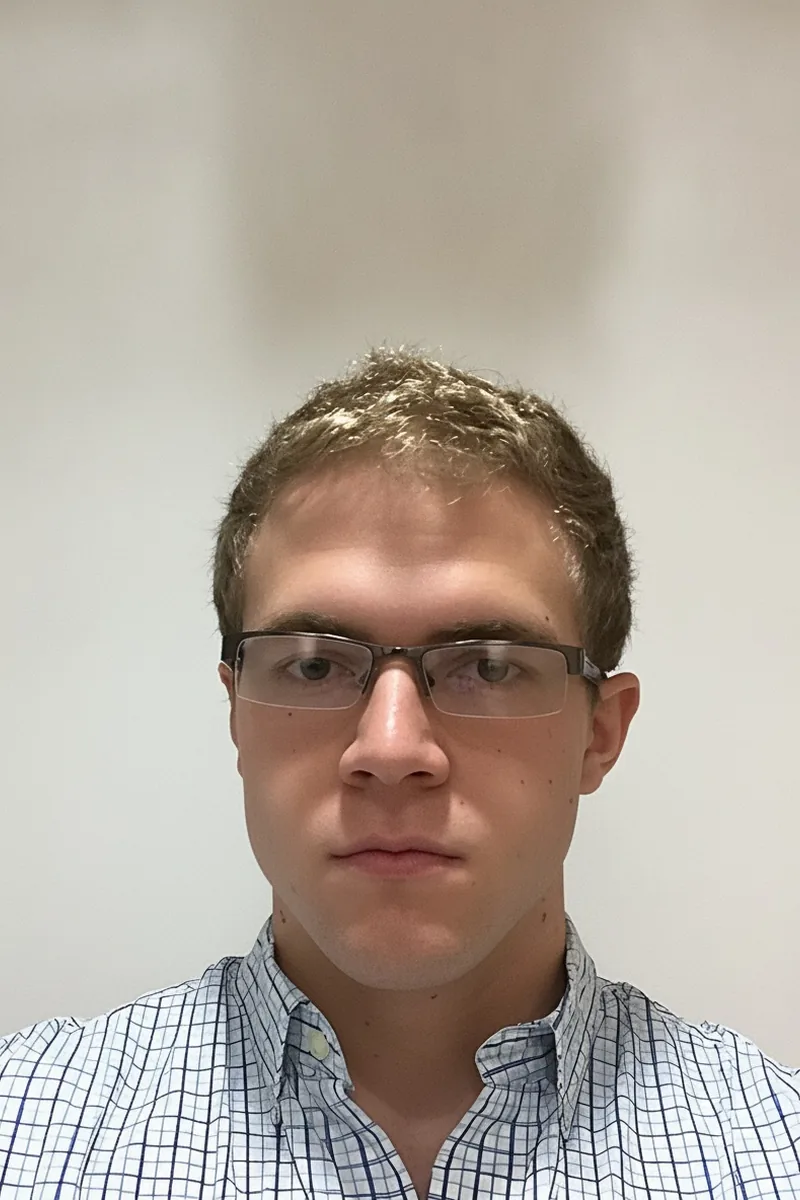
I am originally from Augusta, Georgia and did my undergraduate studies at the College of Charleston in South Carolina. I waited tables through college there and majored in accounting. I am currently a graduate student at the Leventhal school of accounting at USC. I enjoy guitar, reading, and fitness.
Jake teaches accounting across multiple levels — from introductory debits and credits through corporate accounting, tax accounting, and intermediate topics like bond amortization and lease classifications. His engineering background means he approaches journal entries and financial statements with the same precision he'd apply to circuit analysis. Rated 5.0 by students, he's especially effective at breaking down the logic behind accrual-basis adjustments.
Studying finance and statistics at NYU means Eric encounters accounting principles from the other side — as the language businesses use to communicate financial health. That perspective lets him teach concepts like the accounting equation, income statements, and balance sheets by showing what the numbers mean in practice, not just how to record them. Rated 5.0 by students.
Two master's degrees in accountancy — one with a taxation concentration from Notre Dame — give Steven a depth in this subject that few tutors can match. He digs into journal entries, financial statement preparation, and the logic behind GAAP principles so that students understand the "why" driving each debit and credit. Rated 4.8 by students.
Logan's physics degree required rigorous quantitative problem-solving — tracking units, balancing equations, and maintaining systematic precision — skills that transfer directly to working through the accounting cycle. He approaches journal entries and financial statement preparation as logical puzzles, breaking each transaction into its component parts so the mechanics of double-entry bookkeeping feel structured rather than arbitrary.
Gerard's MBA coursework covered the financial reporting and analysis side of business, giving him a practical lens on topics like income statements, cost behavior, and managerial accounting decisions. He teaches accounting as a decision-making tool — connecting ledger work back to the business questions it's designed to answer, which keeps the material from feeling like rote number-shuffling.
Debits, credits, and journal entries click faster when the underlying logic is clear — Professor Florence teaches accounting by connecting each transaction to the financial statements it ultimately affects. Her MBA from USC and years teaching at multiple universities mean she can bridge the gap between textbook exercises and how real businesses track their money.
NYU Stern's finance and management curriculum gave Mat a working fluency with financial statements, journal entries, and the accounting cycle that underpins every business decision. He walks students through debits and credits, balance sheet reconciliation, and income statement analysis by tying each concept back to what the numbers actually mean for a company's health.
Balance sheets and income statements are really just structured storytelling about where money went — but the debits-and-credits logic trips up most beginners. Idara's finance industry background means she's worked with these statements professionally, and she walks students through journal entries, T-accounts, and the accounting equation with concrete business scenarios rather than abstract rules.
Pre-med biology coursework demands the same meticulous attention to detail that accounting does — every data point matters, and one misplaced number throws off the whole picture. Anup applies that systematic precision to the accounting equation, journal entries, and financial statement basics, treating each transaction as a logical sequence rather than a rote procedure. Holds a 5.0 rating.
Maria's Applied Mathematics and Business Economics degree at UCLA means she approaches accounting problems the way they're designed to be solved — quantitatively, with the math driving the logic of each ledger entry. She tackles topics like cost behavior, break-even analysis, and managerial accounting by tying the numbers back to the economic decisions businesses actually face.
An MBA in International Business from Thunderbird gave Spencer hands-on exposure to financial reporting, cost analysis, and the accounting frameworks that underpin global business decisions. He translates that cross-disciplinary perspective into clear explanations of the accounting cycle — walking through how each transaction flows from journal entry to financial statement so the process makes sense as a connected system. Rated 4.9 by students.
Jack's economics degree from Northwestern means he understands how financial data drives business decisions — accounting is the system that produces that data. He teaches the mechanics of the accounting cycle by anchoring each journal entry and ledger posting to the economic reality it represents, so the process feels purposeful rather than procedural. Rated 5.0 by students.
Testimonials
Because the right Accounting tutor makes all the difference.
Average Session Rating – Based on 3.4M Learner Ratings
Practice Accounting
Free practice tests, flashcards, and AI tutoring for Accounting
Nearby Accounting Tutors
Other Fresno Tutors
Related Business Tutors in Fresno
Frequently Asked Questions
Many students struggle with understanding the fundamental concept of debits and credits, which forms the foundation for all accounting work. Others find it difficult to connect journal entries to financial statements, or they rush through problems without checking their work, leading to unbalanced accounts. Personalized tutoring helps identify exactly where confusion occurs and builds confidence through targeted practice on problem areas rather than moving through material at a classroom pace.
In a classroom setting, teachers must move through material at a pace that works for 30+ students, which can leave gaps in understanding. With personalized 1-on-1 instruction, a tutor can slow down on difficult concepts like reconciliations or consolidation accounting, provide immediate feedback on your work, and adjust explanations to match how you learn best. This focused approach typically leads to faster skill development and stronger retention of complex accounting principles.
Yes. Varsity Tutors connects you with tutors who understand the accounting curriculum taught across Fresno's 28 school districts, whether you're in a high school accounting class, preparing for the CPA exam, or studying accounting at a local college. Tutors can align their instruction with your specific course requirements and help you master the exact concepts your teacher emphasizes.
Start with the accounting equation (Assets = Liabilities + Equity) and understanding debits and credits—these are the building blocks for everything else. Once those concepts are solid, move to journal entries, T-accounts, and the trial balance. A tutor can assess your current understanding and create a learning plan that strengthens weak areas before moving to more advanced topics like financial statement analysis or cost accounting.
Your first session is an opportunity for a tutor to understand your current skill level, identify specific challenges, and learn about your goals—whether you're catching up in class, preparing for an exam, or building skills for a career in accounting. The tutor will likely review some of your recent work or assignments and ask questions to pinpoint where you need the most support. This foundation helps create a personalized plan for future sessions.
Clear progress in accounting shows up through improved accuracy on homework and test problems, faster problem-solving speed, and deeper understanding of why accounting principles work the way they do. You might track improvements like moving from unbalanced trial balances to consistently balanced ones, or mastering a concept that previously confused you. Regular check-ins with your tutor on specific assignments and practice problems provide concrete evidence of skill development.
Absolutely. Varsity Tutors connects you with tutors who work with students on introductory accounting through advanced topics like consolidations, auditing, tax accounting, and managerial accounting. Whether you're in an advanced high school course, pursuing an accounting degree, or studying for professional certifications, a tutor can break down complex topics into understandable pieces and provide practice with real-world scenarios.
A tutor can help you review all material covered on your test, identify weak areas through practice problems, and teach test-taking strategies specific to accounting questions. For CPA exam preparation, tutors work with you on exam format, time management, and mastering the breadth of topics across all four sections. Personalized sessions let you focus study time on your most challenging areas rather than reviewing concepts you've already mastered.
Let’s find your perfect tutor
Answer a few quick questions. We’ll recommend the right plan and match you with a top 5% tutor.