Award-Winning AP Physics C: Mechanics Tutors
serving Tucson, AZ
AP Physics C: Mechanics
Tutors in Tucson
Private 1-on-1 tutoring, weekly live classes for academic support, test prep & enrichment, practice tests and diagnostics, and more to elevate grades and test scores.
Based on 3.4M Learner Ratings
UniversitiesSchools & Universities
DeliveredHours Delivered
ProficiencyGrowth in Proficiency
Who needs tutoring?
No obligation. Takes ~1 minute.
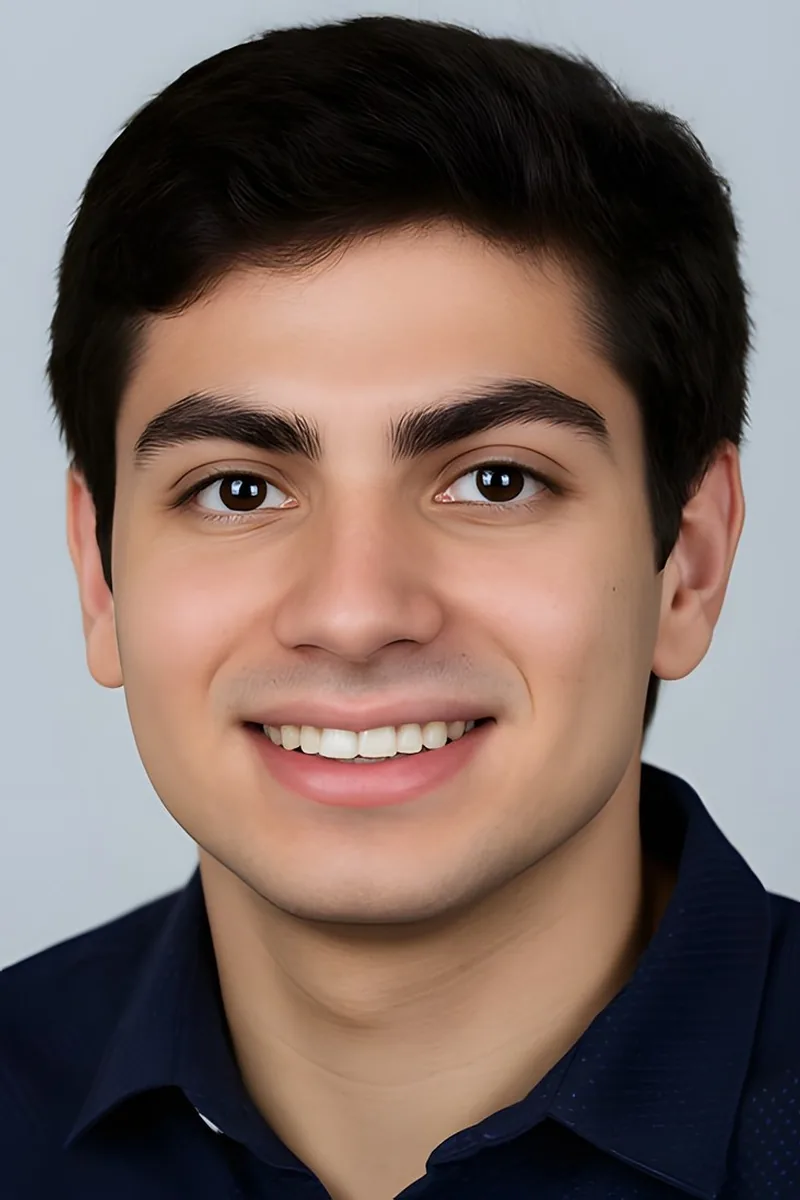
Chemical engineering grad work at ASU Barrett means Alex solves calculus-based mechanics problems daily — from force balances on fluid systems to energy integrals across reactors — and that fluency translates directly to the kinematics, work-energy, and rotational dynamics on the AP Physics C: Mechanics exam. He also tutors AP Calculus BC and SAT Math (1560 SAT), so when a student's free-response answer falls apart, he can quickly isolate whether it's the physics reasoning or the integration technique that needs fixing. Rated 5.0 by students.

Working as a student researcher in a physics lab at Arizona State while completing her applied mathematics degree gave Madeleine hands-on experience with the Newtonian mechanics and calculus-based problem-solving that AP Physics C: Mechanics tests — particularly translating real physical setups into the force diagrams and integrals the free-response section demands. Her math background means she's comfortable with the calculus side students often fumble, like setting up work integrals for position-dependent forces or differentiating kinematic equations for variable acceleration. Rated 5.0 by students.
Pursuing dual degrees in physics and mathematics at Emory, Yurok brings the unusual advantage of thinking about mechanics from both sides simultaneously — the physical intuition and the pure mathematical structure underneath it. That combination pays off most on AP Physics C's nastier free-response problems, where students who can only follow formulas get stuck but those who understand why a dot product extracts the right component of a force can set up work integrals from scratch. His 1570 SAT and 4.9 tutoring rating back up the quantitative chops.
Corrina's mechanical engineering degree means she's solved the calculus-based force, torque, and energy problems in AP Physics C: Mechanics not as exam prep but as daily coursework — and her 1580 SAT reflects the quantitative precision that makes the difference on tricky free-response integrations. She zeroes in on the transition from linear to rotational dynamics, where most students lose points by misapplying familiar formulas instead of building the physics from the differential equation up.
Having earned a BS in both physics and math from Yale, Anthony did the calculus-based mechanics — Lagrangian setups, variable-force integrations, rotational energy derivations — before pivoting to a PhD in economics, which means he teaches the material with the clarity of someone who's already fully digested it rather than still learning alongside students. His 1560 SAT and 5.0 tutoring rating back up what his physics training makes obvious: he can untangle the spots where the calculus and the physical reasoning collide, especially on free-response problems that demand both.
Computational mathematics at Rice is essentially applied calculus with the volume turned up — Vinson's coursework in differential equations and numerical methods maps directly onto the mechanics problems where students need to set up Newton's second law as a differential equation and solve it, not just memorize kinematic formulas. His 36 ACT and National AP Scholar status (including AP Physics and the full calculus sequence) mean he's been through the exact exam pressure these students face. Rated 4.8 by students.
Vaughn's physics degree and 1590 SAT mean the calculus-based problem-solving AP Physics C: Mechanics demands — setting up Newton's second law as a differential equation, computing work done by variable forces — is squarely in his wheelhouse. He zeroes in on dimensional analysis and unit tracking as a way to catch errors before they cascade through multi-step free-response problems, a habit that pays off especially in rotational dynamics where signs and reference frames get tricky.
Between his mechanical engineering studies at Case Western Reserve and a perfect 36 ACT, Kevin has the calculus chops and physical intuition that AP Physics C: Mechanics rewards — especially on free-response problems where a sloppy free-body diagram dooms the entire solution. He zeroes in on the skill most students underestimate: translating a physical setup into the right differential expression before any computation begins, whether it's a variable-mass system or a non-trivial torque problem.
A math degree gives Dalila the calculus fluency that separates AP Physics C from the algebra-based course — she's comfortable setting up the integrals and derivatives that underpin variable-force problems, work-energy applications, and kinematics beyond constant acceleration. She also tutors AP Physics 1, AP Physics 2, and both SAT Math Subject Tests, so she understands how to scale her explanations depending on whether a student needs help with the underlying physics concepts or specifically with translating a free-body diagram into a solvable differential equation.
Rachel's business economics major might not scream physics, but her 35 ACT and deep math background — she tutors through AP Calculus BC — mean she's comfortable with the calculus-based problem-solving that Mechanics demands. She approaches kinematics and force problems the way an economics student would: set up the model carefully, define your variables, then let the math do the work.
Three physics degrees and a 1570 SAT give Bryan the kind of deep mathematical fluency that AP Physics C: Mechanics rewards — particularly on problems where students need to set up differential equations for non-uniform circular motion or derive momentum impulse through integration. He teaches the course across both high school and college levels, so he knows exactly which conceptual leaps trip students up when the exam shifts from straightforward kinematics to multi-step rotational problems. Rated 5.0 by students.
Double-majoring in physics and computer science at Stony Brook, Kiran lives in the calculus-based mechanics world daily — setting up work-energy integrals, deriving equations of motion, solving the same kinds of problems AP Physics C puts on the free-response section. His 34 ACT and physics coursework give him both the mathematical fluency and the physical intuition to explain why a particular integral applies to a given force scenario, not just how to evaluate it.
Three years of tutoring introductory physics students while completing dual bachelor's degrees in physics and mathematics — followed by a PhD in Computational Mathematics — means Justin has taught the calculus-based mechanics in AP Physics C from both sides of the chalkboard. He digs into the spots where students typically stall, like setting up angular momentum problems or knowing when a scenario calls for energy methods versus force analysis, and walks through the underlying math until the physics clicks. Rated 5.0 by students.
John scored a 36 on the ACT and tutors the full calculus-to-physics pipeline — AP Calculus AB, AP Physics 1, and AP Physics C: Mechanics — so he sees exactly where students' math skills break down under the pressure of a mechanics problem. He teaches students to recognize which physical scenarios call for integration versus differentiation before they even write an equation, turning the free-response section into a series of deliberate decisions rather than panicked formula hunts. Rated 4.9 by students.
Studying mathematics and physics at Harvard, Matthew is building the calculus and mechanics toolkit simultaneously — which means he sees the connection between a differential equation and a physical system as one idea, not two separate steps. His 34 ACT and deep comfort with multivariable calculus let him dig into the trickier AP Physics C territory, like work done by position-dependent forces or setting up moment-of-inertia integrals for composite objects, with real mathematical fluency. Rated 4.9 by students.
Testimonials
Because the right AP Physics C: Mechanics tutor makes all the difference.
Average Session Rating – Based on 3.4M Learner Ratings
Practice AP Physics C: Mechanics
Free practice tests, flashcards, and AI tutoring for AP Physics C: Mechanics
Nearby AP Physics C: Mechanics Tutors
Other Tucson Tutors
Related Science Tutors in Tucson
Frequently Asked Questions
AP Physics C: Mechanics focuses on classical mechanics, including kinematics, dynamics, energy, momentum, circular motion, and oscillations. The course emphasizes calculus-based problem-solving and typically covers Newton's laws, work-energy theorem, conservation principles, and rotational motion. For students in Tucson preparing for the AP exam, understanding how these concepts interconnect is essential for success on both the multiple-choice and free-response sections.
AP Physics C: Mechanics requires strong calculus skills combined with conceptual physics understanding—many students struggle with the mathematical rigor and the translation between real-world scenarios and equations. Common pain points include setting up problems correctly, managing time during the exam, and distinguishing between when to use different problem-solving approaches. Personalized 1-on-1 instruction helps identify your specific weak areas and builds confidence in tackling complex multi-step problems.
Score improvement depends on your starting point and consistency with practice, but students typically see meaningful gains by focusing on weak topics and practicing with released AP exams. Most students benefit from identifying conceptual gaps early, mastering problem-solving strategies, and building test-taking stamina over several months. A tutor can help you create a targeted study plan that maximizes your preparation time and addresses the specific areas holding you back.
Your first session typically includes an assessment of your current understanding, review of your course materials, and identification of specific challenges—whether that's calculus application, free-response strategies, or conceptual gaps. The tutor will discuss your AP exam timeline and goals, then create a personalized study plan tailored to your needs. This foundation ensures that all future sessions are focused and productive.
Practice tests are critical—they help you understand the exam format, manage time pressure, and identify weak areas before test day. Taking full-length practice exams under timed conditions reveals whether you're struggling with specific topics or with pacing and test anxiety. Varsity Tutors connects you with tutors who use practice test results to refine your study strategy and build confidence in your problem-solving approach.
The AP Physics C: Mechanics exam includes 35 multiple-choice questions (45 minutes) and 3 free-response questions (45 minutes). Effective strategies include reading questions carefully before solving, identifying which problems you can solve quickly versus those requiring more time, and knowing when to skip and return later. A tutor can help you practice pacing during timed sessions, teach you to recognize problem types quickly, and develop a personalized approach that plays to your strengths.
Free-response questions require showing your work, justifying your approach, and communicating your reasoning clearly—not just getting the right answer. Common mistakes include skipping steps, forgetting units, or not explaining your setup. Working with a tutor on released free-response problems helps you learn how to structure solutions, avoid common errors, and earn partial credit even when your final answer isn't perfect.
Look for tutors with strong physics backgrounds, experience teaching AP Physics C specifically, and a track record helping students improve their scores. Ideal tutors understand both the conceptual foundations and the calculus-based problem-solving required for this course, and they're skilled at identifying where students get stuck. Varsity Tutors connects you with expert tutors in Tucson who have proven experience preparing students for the AP Physics C: Mechanics exam.
Let’s find your perfect tutor
Answer a few quick questions. We’ll recommend the right plan and match you with a top 5% tutor.