Award-Winning AP Calculus BC Tutors
serving Tucson, AZ
AP Calculus BC
Tutors in Tucson
Private 1-on-1 tutoring, weekly live classes for academic support, test prep & enrichment, practice tests and diagnostics, and more to elevate grades and test scores.
Based on 3.4M Learner Ratings
UniversitiesSchools & Universities
DeliveredHours Delivered
ProficiencyGrowth in Proficiency
Who needs tutoring?
No obligation. Takes ~1 minute.
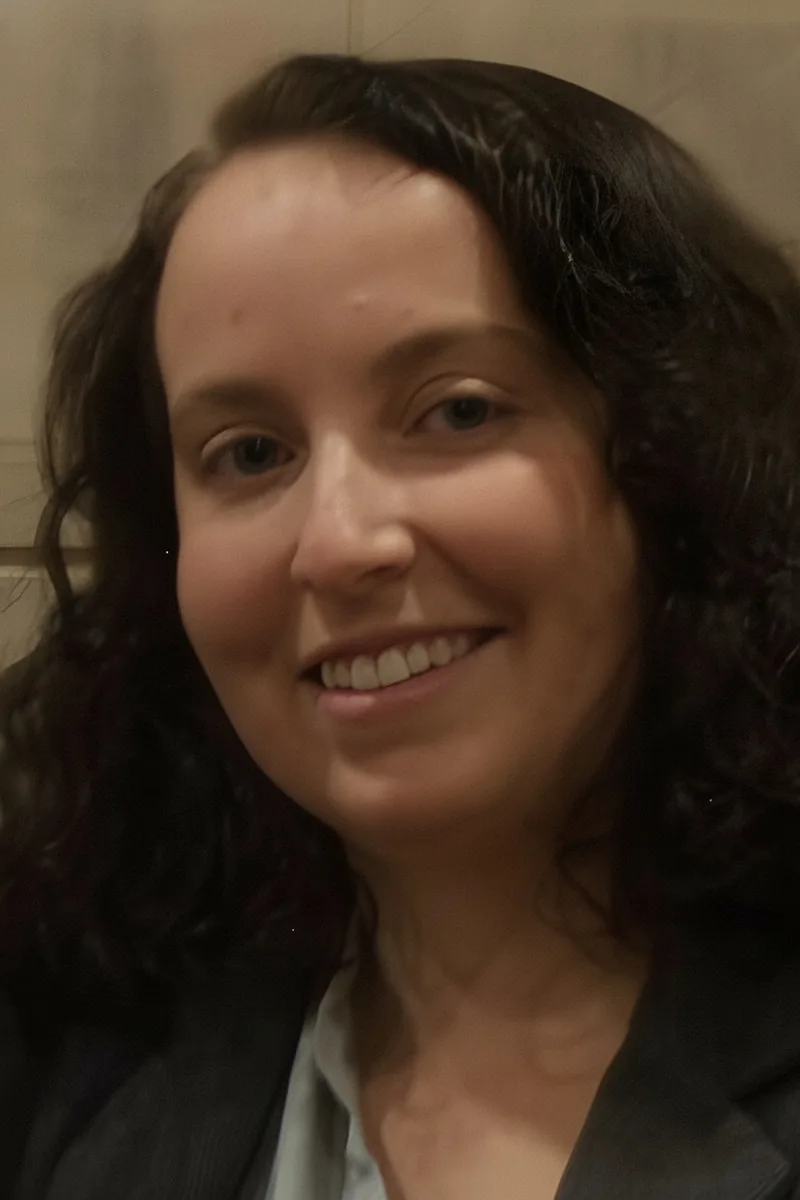
As a multivariable calculus teaching assistant at Harvard's Math Department, Kristi spent semesters watching exactly where students' BC foundations cracked under pressure — shaky series intuition, mechanical convergence testing, parametric reasoning that never quite solidified. Her astrophysics training means she learned these tools by necessity, using Taylor expansions to model orbital mechanics and integration techniques to analyze planetary data, so she teaches the logic driving each method rather than just the steps. Rated 5.0 by students.
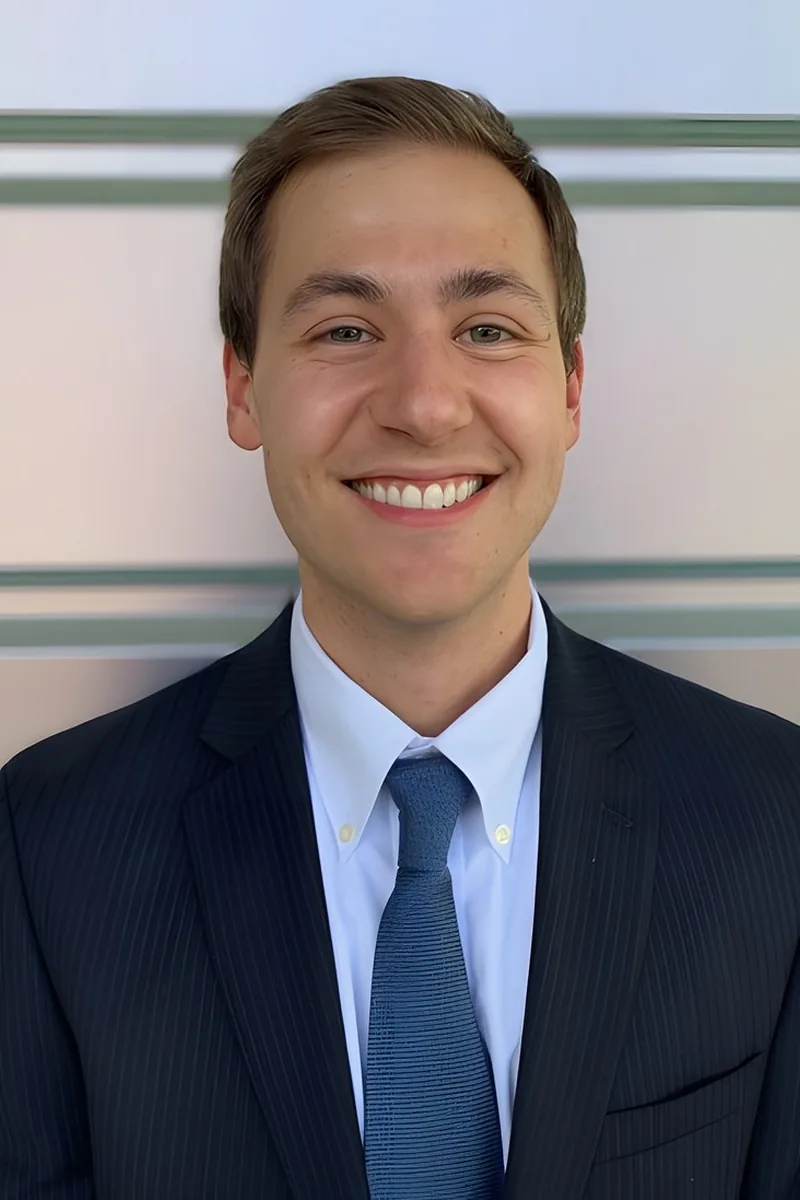
BC Calculus piles on convergence tests, parametric equations, and polar curves right when students think they've mastered AB material. Jake tackles series and sequences by teaching students to build a decision tree for which convergence test applies, turning one of the most overwhelming units into a systematic process.
Grad-level chemical engineering at ASU Barrett means Alex is knee-deep in the calculus that most BC students only glimpse — using series to model reaction kinetics, integration techniques to solve mass and energy balances, and differential equations to predict system behavior. That daily exposure makes him especially sharp at teaching convergence tests as a structured decision process rather than a memorization exercise. Holds a 5.0 rating.
Chemical engineering undergrad coursework is essentially a stress test for everything BC Calculus covers — Adrian uses series approximations in thermodynamics, integration techniques in transport phenomena, and differential equations in reactor design on a regular basis. That active, applied relationship with the material means he can trace a stalled-out convergence problem or a messy integration back to the specific step where reasoning went sideways. His 34 ACT and deep math background keep explanations tight and technically precise.
Lindsay's biology and mathematics training at the University of Arizona means she didn't just pass through calculus — she relied on series approximations and integration techniques in upper-level coursework where getting the math wrong meant getting the science wrong. That dual fluency is especially useful in BC, where she breaks down the logic behind convergence tests and parametric derivatives by connecting them to the AB concepts students already trust. Rated 4.9 by students.
Studying both physics and mathematics at Emory means Yurok encounters BC topics like series expansions and differential equations in two different contexts every week — once as pure math, once as tools for solving physical systems — which gives him a double lens on why techniques like convergence tests or Taylor approximations actually matter. He's especially sharp at the transition from AB to BC, breaking down where parametric derivatives and polar integrals grow directly out of skills students already have. Rated 4.9 by students.
When I was in high school, I remember seeing the joy of my math teachers when they would teach in class. This inspired me to become a high school math teacher. The first step was becoming a peer tutor to my classmates. This lead to tutoring math to college students. Then tutoring students while working as a TA. Then I worked as a data scientist which not only did I understand more how to apply math in the workspace, but also learned how to explain math concepts to coworkers without a strong math background. This helped me to shape my tutoring philosophy to relate to the person being tutored and this opened the door to me teaching high school calculus 1 & calculus 2! I am currently teaching precalculus at a community college.
Studying pure mathematics at Rice gives Aaron a perspective on BC topics that goes deeper than computation — when he teaches convergence tests or constructs Taylor series, he draws on the rigorous proof-based training that makes those ideas precise rather than just procedural. He's especially sharp at identifying the exact AB concept a student needs to solidify before a BC extension like parametric derivatives or Lagrange error bounds will make sense. Rated 4.9 by students.
BC Calculus layers convergence tests, parametric equations, and series onto an already demanding AB foundation, and each topic builds on the last. Yuxuan tackles these by connecting them to the applied math she uses in her chemical biology coursework at UC Berkeley, where Taylor series and differential equations aren't abstract exercises — they model real systems. Rated 4.9 by students.
BC Calculus piles on fast — Taylor series, parametric equations, and convergence tests all land within a few weeks of each other. Jack passed the AP Calculus BC exam himself and now uses his civil engineering coursework at ASU to show students how these concepts connect to real applications like modeling curves and approximating complex functions. Rated 5.0 by students.
Biochemistry lab work at Columbia demands comfort with the calculus that models reaction kinetics and molecular behavior — Andrew has spent years using integration techniques and series approximations in that context, which gives his BC teaching a practical edge when students ask "why does this matter?" He's especially effective at breaking down the transition from AB to BC, tracing topics like Taylor polynomial construction and convergence criteria back to the derivative and integral logic students already trust. Rated 4.9 by students.
Two years teaching math at every level at Mathnasium gave Amy an unusual skill for BC Calculus: she can trace a student's confusion with, say, a convergence test or polar area setup back to the specific algebraic or AB-level gap causing the problem. Her biochemistry coursework at Notre Dame also means she's used series approximations and integration techniques in applied contexts like enzyme kinetics and thermodynamics. A 1570 SAT and 35 ACT speak to the across-the-board precision she brings to the trickiest parts of the BC curriculum.
BC Calculus piles on series convergence, parametric equations, and polar coordinates on top of an already demanding AB curriculum. Julie's Princeton training in statistics and machine learning means she regularly uses advanced calculus as a tool, giving her an intuitive sense for which techniques apply where. She tackles integration strategies and Taylor series by connecting each method back to the core idea it extends.
Coming out of Thomas Jefferson High School for Science and Technology — one of the most rigorous STEM pipelines in the country — Rhamy had BC Calculus concepts like series convergence and parametric integration locked down before most students even encounter them. His computer engineering program at Vanderbilt keeps those tools sharp daily, since signal analysis and circuit design lean heavily on the same Taylor expansions and differential equations that define the BC curriculum. Rated 5.0 by students.
Justin's PhD work in Computational and Applied Mathematics at the University of Chicago means he doesn't just teach Taylor series and convergence — he builds on them daily in research involving image processing and climate modeling, where approximation methods have to actually hold up under real conditions. That perspective sharpens how he explains error bounds and series manipulation, grounding each technique in why it matters rather than just how to execute it on an exam. Rated 5.0 by students.
I am a graduate of Cornell University's College of Arts and Sciences. I received my Bachelor of Arts in Chemistry with Distinction in 2015. Since graduation, I was a physics/chemistry teacher and soccer coach at a private school in Virginia for a year, where I led the soccer team to an undefeated season. Before teaching and coaching professionally, I was a Teaching Assistant for the Cornell Math and Physics Departments, where I taught many subjects including calculus, mechanics, electromagnetism. Throughout my time at Cornell and as a teacher, I tutored subjects ranging from the SAT to AP Physics and Algebra II, which is where my true talents lie: in small group or one-on-one settings where I can give students the full attention they deserve and tailor my approach specifically to their learning styles. This is why I am now pursuing tutoring as a part-time occupation at Varsity Tutors. I embrace teaching all math and science subjects, especially physics and calculus, at both the college and high school level and will go above and beyond to make sure all of my students succeed, according to their definition of success. In my spare time, I enjoy playing league soccer, basketball, tennis and guitar, and also like to travel and see as much of the world as I can.
Penn's economics program leans heavily on calculus-driven modeling, and Mandy is working through that curriculum right now — which means BC topics like series approximations and integration techniques show up in her coursework as tools for analyzing economic behavior, not just abstract exercises. She's especially clear at walking through the logic of convergence tests and connecting new BC material back to the AB foundations underneath it. Holds a 5.0 rating.
Tackling series convergence tests, parametric equations, and polar curves requires more than memorizing formulas — it demands knowing when and why each technique applies. Talia approaches BC-specific topics by building intuition around each concept before drilling the mechanics, so students can handle the free-response questions that reward deep understanding over rote calculation.
BC Calculus throws students into convergence tests, parametric equations, and polar curves on top of an already demanding AB foundation — it's a lot to hold in your head at once. Corrina's mechanical engineering degree meant living in multivariable and differential equations daily, so she teaches series and integration techniques with the fluency of someone who actually uses them. Rated 4.7 by students.
Scoring a 36 on the ACT while studying environmental engineering at Cornell means Akanksha lives in the calculus that BC demands — her coursework in fluid dynamics and pollutant modeling leans heavily on integration techniques, series approximations, and differential equations. She breaks down the transition from AB to BC by treating topics like convergence tests and parametric curves as practical extensions of tools students already trust, not as an overwhelming new syllabus. Rated 4.8 by students.
Scoring a 36 on the ACT while studying Human Biology at Cornell means Sharan lives at the intersection of rigorous quantitative thinking and applied science — exactly where BC Calculus sits when series approximations and integration techniques start modeling real biological systems. She breaks down the AB-to-BC jump by treating topics like Taylor polynomials and convergence tests as logical extensions of limits and derivatives, not a separate universe of formulas to memorize. Rated 5.0 by students.
Scoring a 36 on the ACT while majoring in chemistry at MIT means Nicholas lives in the overlap where rigorous math meets scientific application — and BC Calculus sits right at that intersection. He's especially good at breaking down series convergence and integration techniques by grounding them in the kind of approximation problems he encounters in physical chemistry coursework, so the logic behind a ratio test or a Taylor expansion feels earned rather than arbitrary. Rated 5.0 by students.
Testimonials
Because the right AP Calculus BC tutor makes all the difference.
Average Session Rating – Based on 3.4M Learner Ratings
Practice AP Calculus BC
Free practice tests, flashcards, and AI tutoring for AP Calculus BC
Other Tucson Tutors
Related Math Tutors in Tucson
Frequently Asked Questions
AP Calculus BC covers all of AP Calculus AB content plus additional topics including parametric equations, polar coordinates, and infinite series. The course focuses on limits, derivatives, integrals, differential equations, and applications of calculus. For students in Tucson, understanding this expanded scope early helps with course planning and identifying which areas may need extra support.
AP Calculus BC builds on AB fundamentals and adds more complex topics, making it more challenging overall. The BC exam requires mastery of series, parametric and polar functions, and more sophisticated integration techniques. Many students find the pacing faster and the conceptual depth greater, which is why personalized 1-on-1 instruction can be especially valuable for staying on track.
Score improvement depends on your starting point and consistency with practice, but students typically see meaningful gains—often 1-2 points on the 1-5 scale—when working with tutors who focus on weak areas and test-taking strategy. The key is identifying which specific topics (limits, derivatives, integrals, or series) are holding you back and building targeted practice around those concepts. Regular practice tests and timed problem sets are essential for translating understanding into exam performance.
Students often struggle with the transition from procedural problem-solving to conceptual understanding, especially with limits and derivatives. Series convergence tests, parametric/polar calculus, and applying calculus to unfamiliar contexts are also frequent pain points. Time management during the exam is another challenge—the BC exam requires working through problems efficiently without sacrificing accuracy. Tutors can help you develop strategies for each of these areas.
A strong study plan includes regular practice with full-length exams under timed conditions, targeted review of weak topics, and spaced repetition of key concepts throughout the year. Start by taking a diagnostic practice test to identify your weakest areas, then dedicate focused study sessions to those topics before broader review. In the final weeks before the exam, shift toward full practice tests and timing strategies. Personalized tutoring helps you create a realistic schedule and stay accountable to it.
Test anxiety often stems from uncertainty about problem-solving approaches or time pressure. Building confidence through repeated exposure to exam-style questions, practicing your pacing strategy, and developing a pre-exam routine can significantly reduce anxiety. Tutors can help you work through challenging problems in a low-pressure setting, build problem-solving confidence, and practice staying calm when you encounter unfamiliar question formats.
Look for tutors with strong mathematical backgrounds—ideally with college-level calculus experience or advanced mathematics education. Experience teaching or tutoring AP Calculus specifically, familiarity with the current exam format, and a track record of helping students improve their scores are important indicators. Varsity Tutors connects you with expert tutors who understand both the content and the test-taking strategies that matter for success.
Your first session typically involves assessing your current understanding of key calculus concepts, identifying specific areas where you need the most help, and discussing your goals for the exam. The tutor may ask about your comfort level with derivatives, integrals, and series, and may work through a few practice problems to understand your problem-solving approach. This helps create a personalized study plan focused on your biggest challenges and timeline before test day.
Let’s find your perfect tutor
Answer a few quick questions. We’ll recommend the right plan and match you with a top 5% tutor.