Award-Winning AP US History Tutors
serving Mesa, AZ
AP US History
Tutors in Mesa
Private 1-on-1 tutoring, weekly live classes for academic support, test prep & enrichment, practice tests and diagnostics, and more to elevate grades and test scores.
Based on 3.4M Learner Ratings
UniversitiesSchools & Universities
DeliveredHours Delivered
ProficiencyGrowth in Proficiency
Who needs tutoring?
No obligation. Takes ~1 minute.

The AP US History exam rewards students who can build an argument from documents, not just recall dates — and that's a skill that needs deliberate practice. Jessica walks students through DBQ and LEQ essay structure, showing them how to connect evidence to a thesis about periods like Reconstruction or the New Deal. Her coursework in education means she approaches content review and writing practice as intertwined rather than separate tasks.
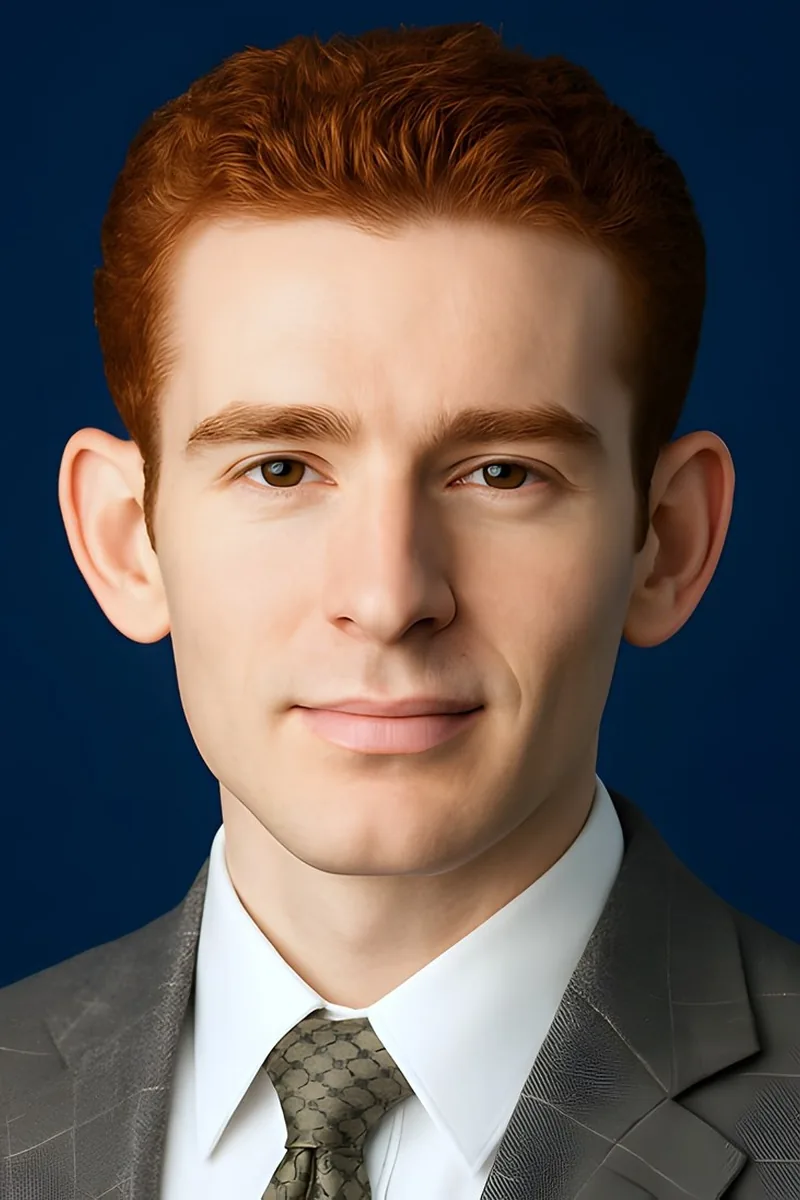
International Relations coursework at BYU meant Spencer spent years studying the diplomatic, economic, and ideological forces that shaped U.S. foreign and domestic policy — exactly the kind of thematic throughlines APUSH tests when it asks students to trace causation across periods. His MBA in International Business adds a practical understanding of trade policy and economic systems that sharpens discussions of everything from mercantilism to Reaganomics. Rated 4.9 by students.
A master's degree in Chinese politics means Elizabeth spent years analyzing how governments consolidate power, manage dissent, and navigate foreign relationships — the same analytical framework that unlocks APUSH's toughest comparative and causation questions, from Cold War containment policy to debates over executive authority. Her 1500 SAT and government coursework ground her in the primary-source reasoning and argumentative writing the DBQ demands. Rated 5.0 by students.
Michelle's history degree means she actually studied the primary source analysis and periodization thinking that APUSH tests — not just the content, but the discipline's methods for constructing arguments from evidence. She zeroes in on the essay skills that trip students up most, like turning a stack of DBQ documents into a coherent thesis instead of a chronological summary. Rated 5.0 by students.
Jake's marketing degree might seem like an odd fit for APUSH, but marketing is fundamentally about understanding how audiences are persuaded — the same skill students need when analyzing primary sources for purpose, context, and intended effect on the DBQ. He pairs that rhetorical instinct with strong SAT-level reading and writing chops (1580 composite) to drill the thesis construction and evidence integration that separate high-scoring essays from ones that just retell history. Rated 4.9 by students.
AP US History's Document-Based Questions are essentially legal briefs in miniature — you evaluate evidence, identify bias, and construct an argument under time pressure. John holds a history degree and a PhD in law, which means he can teach students to dissect primary sources and write thesis-driven essays that score well on the DBQ, LEQ, and SAQ formats.
Chemical engineering and anthropology might seem like an odd combination, but Alex's dual degrees from Washington and Lee mean he can approach APUSH from both the analytical and cultural sides — tracing how industrialization reshaped American society, or why economic policy debates kept recurring from Hamilton through the Gilded Age. As a medical student who scored a 36 ACT, he brings the timed, high-pressure test-taking instincts that matter when students are staring down a DBQ prompt with 60 minutes on the clock.
Kyle's master's in global management and his international studies background mean he naturally frames American history through the lens of trade, diplomacy, and cross-cultural contact — exactly the kind of thematic connective tissue APUSH rewards on periodization and causation questions. He also reads Mandarin, which adds genuine depth when discussing topics like Chinese exclusion, Pacific trade routes, and Cold War Asia that most tutors gloss over. His 32 ACT and 4.5 rating round out a tutor who brings both content knowledge and timed-test instincts to the exam.
APUSH isn't really about memorizing every battle and treaty — it's about recognizing patterns like how economic shifts drive political realignment, or why certain reform movements succeed while others stall. River tackles the DBQ and LEQ formats head-on, teaching students to build arguments from primary sources under timed pressure.
Shannon's background spans both US history and Latin American history at the college level, which gives her a hemispheric awareness that strengthens discussions of topics like imperialism, immigration policy, and Cold War interventionism — areas where APUSH increasingly expects students to think beyond domestic borders. Her Spanish fluency and experience with college essays also means she can drill the writing mechanics behind a strong DBQ thesis while still pushing students to deepen their historical reasoning. Rated 4.9 by students.
Studying Asian Studies and English simultaneously means Ben is constantly drawing connections across cultures, time periods, and political systems — exactly the kind of comparative thinking that APUSH periodization and continuity-and-change questions reward. His Latin training also gives him an unusual comfort with primary source language, which sharpens document analysis when students hit dense 18th- and 19th-century texts in the DBQ. A 34 ACT and 4.7 rating back up his ability to perform under timed, analytical pressure.
Aaron's math-heavy courseload at Rice might seem unrelated to APUSH, but his training in logical proof structure translates surprisingly well to the exam's essay demands — building a thesis, marshaling evidence in sequence, and defending a claim under pressure. He also tutors AP Comparative Government and AP U.S. Government, giving him a political-systems framework that strengthens his teaching of periods like the Founding Era and Progressive Era. Rated 4.9 by students.
As a first-generation college student who graduated cum laude from UCLA with a biology degree and Asian Languages minor, Abrahim brings an outsider's analytical eye to American history — he learned to question assumptions rather than take narratives at face value. That mindset translates well to APUSH's emphasis on sourcing and contextualization, where students need to interrogate *why* a document was created, not just what it says. Rated 5.0 by students, he approaches each historical period as a puzzle to decode rather than a list to memorize.
Studying both biology and philosophy at Boston College means Andrew spends his days toggling between empirical evidence and argumentative reasoning — the exact combination APUSH essays demand when students must marshal specific historical evidence into a persuasive thesis. He's particularly strong on causation and contextualization questions, where his philosophy training kicks in to untangle why events unfolded as they did rather than just when. Rated 5.0 by students.
A statistics and machine learning certificate at Princeton means Julie spends her coursework building arguments from data — the same evidentiary reasoning APUSH demands when students must synthesize unfamiliar documents into a coherent thesis under time pressure. Her philosophy training adds a layer most history tutors skip: she teaches students to identify the logical structure of an argument before writing one, which is exactly what separates strong DBQs from ones that just summarize sources. Rated 4.9 by students.
Kristin's University of Chicago BA required the kind of intensive primary source analysis and argumentative writing that APUSH essays directly test — she spent years constructing evidence-based claims under the school's famously rigorous Core Curriculum. Her philosophy minor adds a layer of logical precision to thesis construction, particularly on LEQs where students need to sustain a causal or comparative argument across multiple periods without losing the thread. Rated 5.0 by students.
Political science majors spend years dissecting the constitutional tensions, legislative battles, and power dynamics that make up the core of the APUSH curriculum — Julian studied exactly the material the exam tests most heavily. His 1430 SAT signals strong timed reading and writing performance, which matters for an exam where the DBQ and LEQ live or die on how quickly a student can build a sourced, thesis-driven argument under pressure.
The AP US History exam rewards students who can connect themes across periods — not just recall what happened, but explain why the Compromise of 1850 matters for understanding Reconstruction or how Jacksonian democracy reshaped federal power. Christopher's history degree from UCLA gives him the depth to teach both the content and the document-based essay skills the exam demands.
Before medical school, Jessica earned her history degree at Penn — meaning she studied American political and constitutional development at a university where those debates literally happened, steps from Independence Hall and the National Constitution Center. That immersion in primary-source-rich coursework carries over to APUSH's document-based questions, where she teaches students to read for authorial intent and historical context before building their thesis. Rated 4.8 by students.
I'm excited to work with you or your child either on standardized test preparation or on generally improving performance in history, English, and social studies!
AP US History's DBQ is really a timed argument-building exercise disguised as a history test — students need to group documents, identify point of view, and connect evidence to a thesis in under an hour. Cassandra tackles this by drilling the skill of contextualization, teaching students to place each document within the broader political or economic forces of its era. Her analytical, evidence-first approach translates well from her science background.
The AP US History exam rewards students who can construct a defensible thesis under time pressure — not just recall facts but deploy them as evidence in a DBQ or LEQ. Aaron unpacks primary documents with students, teaching them to identify point of view, purpose, and historical context before writing a single sentence. His interdisciplinary background in geology and biochemistry also brings an unusual lens to topics like industrialization and environmental policy.
A University of Chicago political science degree means Asta spent four years immersed in the kind of rigorous argument-building and source analysis that APUSH essays demand — Chicago's core curriculum doesn't let you coast on surface-level claims. Her experience preparing international students in Hong Kong for U.S. college admissions also sharpened her ability to make American political and cultural context explicit, which is exactly what strong DBQ contextualization paragraphs require. Rated 5.0 by students.
Anthropology trains you to analyze how cultures construct meaning — the same interpretive muscle APUSH flexes when students must contextualize a Reconstruction-era political cartoon or explain why Progressive reformers framed their arguments the way they did. Samantha's anthropology degree from Northwestern gives her a knack for unpacking the cultural assumptions embedded in primary sources, which is where most students lose points on the DBQ. Her 33 ACT and 1490 SAT back up the timed analytical performance the exam demands.
Testimonials
Because the right AP US History tutor makes all the difference.
Average Session Rating – Based on 3.4M Learner Ratings
Practice AP US History
Free practice tests, flashcards, and AI tutoring for AP US History
Other Mesa Tutors
Related Social Studies Tutors in Mesa
Frequently Asked Questions
AP US History spans from pre-Columbian America through the present day, organized into nine units covering themes like colonization, revolution, westward expansion, civil war, industrialization, and modern America. Most students benefit from starting test prep 3-4 months before the May exam, though personalized tutoring can help you focus on your specific weak areas and accelerate your timeline. A tutor can help you develop a study schedule that covers all major topics while building the analytical skills the exam requires.
The AP US History exam has two sections: a multiple-choice and short-answer section (95 minutes), and a free-response section with document-based and long-essay questions (105 minutes). The exam rewards historical thinking skills—not just memorization—so you'll need to analyze primary sources, construct arguments with evidence, and understand cause-and-effect relationships. Personalized tutoring helps you practice these skills through timed practice questions and essays, building both content knowledge and test-taking confidence.
AP scores range from 1-5, with 3 or higher typically considered "passing" for college credit. Many colleges prefer scores of 4 or 5 for credit or advanced placement. Tutoring significantly helps students improve by identifying knowledge gaps, teaching effective test-taking strategies, and providing targeted practice on challenging topics. Working with a tutor for even a few months can help you move from a 2 or 3 to a 4 or 5 by strengthening both your content mastery and your ability to analyze historical sources under time pressure.
Students often struggle with time management—the free-response section requires writing well-developed essays in just 40 minutes each. Others find it difficult to move beyond memorizing facts to analyzing historical significance and causation, which is what the exam actually tests. Many also underestimate how much primary source analysis skills matter, or they struggle to connect broad themes across different time periods. A tutor can address each of these challenges with targeted practice, teaching you how to outline essays quickly, recognize document-based question patterns, and build arguments with historical evidence.
Practice tests are essential—they help you get comfortable with the exam format, identify weak topics, and build test-taking stamina. Start with untimed practice to focus on accuracy, then gradually add time pressure to simulate real exam conditions. Personalized tutoring helps you analyze your practice test results to spot patterns in what you're missing (specific time periods, types of questions, or analytical skills), then target those areas with focused study. Many students find that taking 4-5 full practice tests over their prep period, with tutor feedback after each one, leads to significant score improvements.
Document analysis is a core AP US History skill—the exam expects you to extract meaning from letters, speeches, maps, political cartoons, and other sources. The key is developing a systematic approach: identify the source's author and date, understand its historical context, recognize the author's perspective or bias, and connect it to larger themes. Tutors teach you frameworks for analyzing documents quickly and writing strong document-based essays that move beyond simple summary to genuine historical analysis. With practice, this skill becomes second nature and significantly boosts your exam performance.
Varsity Tutors connects students in Mesa with expert tutors who specialize in AP US History and understand the specific skills the exam requires. When you get matched with a tutor, you can work together on your schedule—whether that means intensive prep in the months before the exam or ongoing support throughout the school year. Your tutor can tailor sessions to your needs, whether you need help with specific time periods, essay writing, or test-taking strategies.
Your first session is typically a diagnostic—your tutor will assess your current knowledge, understand your goals (target score, timeline), and identify your strongest and weakest areas. You might take a practice section or discuss past exams or assignments to pinpoint where you need the most help. From there, your tutor will develop a personalized study plan focused on getting you to your goal score efficiently, whether that means diving into content review, building analytical skills, or mastering test-taking strategies.
Let’s find your perfect tutor
Answer a few quick questions. We’ll recommend the right plan and match you with a top 5% tutor.