Award-Winning Statistics Tutors
serving San Francisco, CA
Award-Winning
Statistics
Tutors in San Francisco
Private 1-on-1 tutoring, weekly live classes for academic support, test prep & enrichment, practice tests and diagnostics, and more to elevate grades and test scores.
Based on 3.4M Learner Ratings
UniversitiesSchools & Universities
DeliveredHours Delivered
ProficiencyGrowth in Proficiency
Who needs tutoring?
No obligation. Takes ~1 minute.

Probability distributions, hypothesis testing, and regression can feel like a foreign language the first time through. Nina breaks these concepts down by connecting them to real datasets and research questions drawn from her biostatistics training at Columbia and NYU. Rated 5.0 by students, she's especially effective at making the jump from formulas to interpretation feel intuitive.
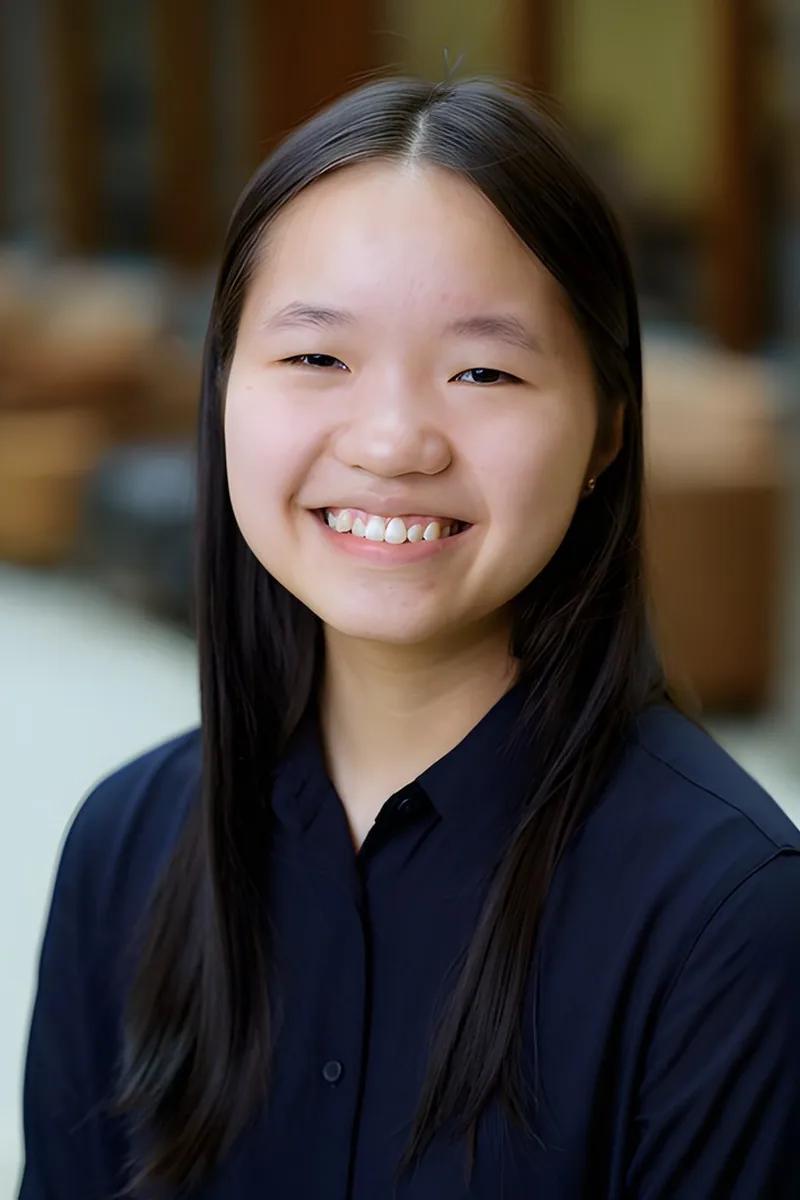
Between her biostatistics background and hands-on research experience in Northwestern's John Rogers Lab, Ingrid knows statistics as both a classroom subject and a practical tool. She walks students through concepts like hypothesis testing, confidence intervals, and probability distributions by connecting each one to what the numbers actually mean in context.
A PhD statistician who also holds a biomedical engineering degree, Sam teaches introductory and intermediate statistics with an unusual amount of real-world context. Whether the topic is hypothesis testing, confidence intervals, or regression, he unpacks the logic behind each method so students can interpret results critically, not just run calculations.
Understanding when to use a t-test versus a z-test, or why a sampling distribution behaves the way it does, requires more than formula sheets — it takes genuine statistical intuition. Brian built that intuition through his economics coursework at Caltech, where statistical analysis was a daily tool, and he walks students through each concept with concrete data examples.
Kathy's economics degree from Duke meant living inside datasets — regression analysis, probability distributions, hypothesis testing, and statistical inference were daily tools, not abstract concepts. She breaks down problems by connecting the math to what the numbers actually represent, which makes interpreting results feel intuitive rather than formulaic.
Studying Philosophy, Politics, and Economics at Penn means Kevin encounters statistics not as an abstract math course but as a tool for answering real questions — polling reliability, economic trends, policy evaluation. He unpacks topics like probability distributions, hypothesis testing, and regression with that applied lens. Students come away understanding not just how to compute a standard deviation but what it actually tells them.
A year as a course assistant in Harvard's math department gave Richard a front-row seat to where students get tripped up — and in statistics, it's almost always the jump from computing a value to interpreting what it means. He teaches concepts like variability, correlation, and probability by connecting the math to the kind of data-driven arguments he encounters in his government coursework, where a misread confidence interval can derail an entire policy claim.
An economics degree means Maggie didn't just study statistics in a textbook — she applied distributions, hypothesis testing, and regression analysis to real datasets. She teaches students to interpret what a p-value actually tells them and how to choose the right test for a given scenario, building the kind of statistical intuition that carries through exams and research projects alike.
Designing and optimizing light filters for optical multiplexers at Norfolk State required Dennis to apply statistical methods to real engineering data — fitting distributions, quantifying uncertainty, and interpreting experimental results. He teaches statistics with that practitioner's perspective, making topics like standard deviation, probability, and regression feel like problem-solving tools rather than abstract formulas.
Most students walk into statistics expecting another math class and get blindsided by the emphasis on interpretation — explaining what a confidence interval actually means, or why correlation isn't causation. Amber tackles that interpretive layer head-on, teaching students to read context before crunching numbers. Her theater background gives her a knack for making abstract concepts like probability distributions feel concrete and memorable.
Engineering at Dartmouth meant Rachel lived in data — running experiments, interpreting distributions, and making decisions based on probability and hypothesis testing. She brings that practical fluency to statistics tutoring, connecting concepts like standard deviation and confidence intervals to real scenarios instead of leaving them as abstract formulas.
Probability distributions, hypothesis testing, and confidence intervals all require a kind of careful reasoning about uncertainty that Allen sharpened through his economics coursework at Yale. He teaches statistics as a way of making arguments with data — interpreting p-values, choosing the right test, and understanding what a result actually means in context. His 5.0 rating speaks to how clearly he communicates these ideas.
Testimonials
Because the right Statistics tutor makes all the difference.
Average Session Rating – Based on 3.4M Learner Ratings
Practice Statistics
Free practice tests, flashcards, and AI tutoring for Statistics
Nearby Statistics Tutors
Other San Francisco Tutors
Related Math Tutors in San Francisco
Frequently Asked Questions
Statistics is taught differently depending on whether students are in AP Statistics, IB Statistics, or a standard Statistics course—and even then, textbooks like The Practice of Statistics, Statistics and Probability with Applications, or AP Statistics curriculum can emphasize different concepts. Tutors work with students using their specific textbook and course framework, ensuring they understand not just formulas, but the logic behind hypothesis testing, probability distributions, and data analysis that their teacher emphasizes. This alignment matters: students across San Francisco's 17 school districts may encounter the same topic explained very differently, so personalized instruction bridges those gaps.
Many students can plug numbers into a t-test or chi-square formula but can't explain when to use it or why it works. Real understanding means seeing the story in the data—recognizing that standard deviation measures spread, that p-values tell you about evidence against a hypothesis, and that correlation doesn't prove causation. Tutors help students move beyond memorization by asking "why does this formula exist?" and "what does this number actually mean?" This deeper conceptual foundation makes Statistics less abstract and far more applicable, whether students are preparing for AP exams or just building critical thinking skills.
Statistics word problems require students to translate real-world scenarios into statistical language—identifying the population vs. sample, determining the correct test to use, and interpreting results in context. These problems combine reading comprehension, mathematical reasoning, and conceptual understanding all at once. Tutors break this process down step-by-step: first, identify what the problem is asking and what type of inference or test is appropriate; second, perform the calculation correctly; third, interpret the results in the original context. Practicing with this structured approach helps students build confidence and see the logic behind why certain problems require certain solutions.
Statistics anxiety often stems from feeling lost in abstract concepts or making mistakes on calculations that shake your confidence. A tutor creates a low-pressure environment where you can ask "dumb questions" without judgment, work through problems at your own pace, and celebrate small wins—like finally understanding what a confidence interval actually represents. With the 20.2:1 average student-teacher ratio in San Francisco schools, many students don't get the individualized attention they need to rebuild math confidence. Personalized tutoring focuses on your specific sticking points, builds a growth mindset, and helps you see yourself as capable of learning Statistics.
In Statistics, showing work serves two purposes: it demonstrates your reasoning process and allows teachers (and tutors) to identify where misunderstandings happened. Unlike algebra where steps are formulaic, Statistics requires you to explain your choices—"I used a t-test because the sample size is large and we're comparing means" or "I rejected the null hypothesis because the p-value is less than 0.05." Tutors teach students to annotate their work with these explanations, making it clear that you understand not just what to calculate, but why. This skill is invaluable for both exams and real-world data analysis.
Varsity Tutors connects you with tutors who have expertise in Statistics and experience working with students in San Francisco's schools. When you describe your course—whether it's AP Statistics, Honors Statistics, or a college prep class—tutors review your specific textbook, syllabus, and learning goals to provide tailored instruction. This personalized match means your tutor can speak your teacher's language, prepare you for your school's particular exam format, and address the concepts your course emphasizes most.
Yes. AP Statistics exam success depends on both technical skill and strategic thinking—knowing which test to use, interpreting output correctly, and explaining results in context. Tutors help you practice released AP questions under timed conditions, identify your weak spots (maybe you struggle with sampling design or interpreting regression output), and develop test-taking strategies. For students preparing for non-AP Statistics assessments, tutors similarly focus on the specific skills and problem types your course emphasizes, ensuring you're ready to demonstrate understanding on the actual exam format you'll face.
Let’s find your perfect tutor
Answer a few quick questions. We’ll recommend the right plan and match you with a top 5% tutor.