Award-Winning Science Tutors
serving Tucson, AZ
Science
Tutors in Tucson
Private 1-on-1 tutoring, weekly live classes for academic support, test prep & enrichment, practice tests and diagnostics, and more to elevate grades and test scores.
Based on 3.4M Learner Ratings
UniversitiesSchools & Universities
DeliveredHours Delivered
ProficiencyGrowth in Proficiency
Who needs tutoring?
No obligation. Takes ~1 minute.
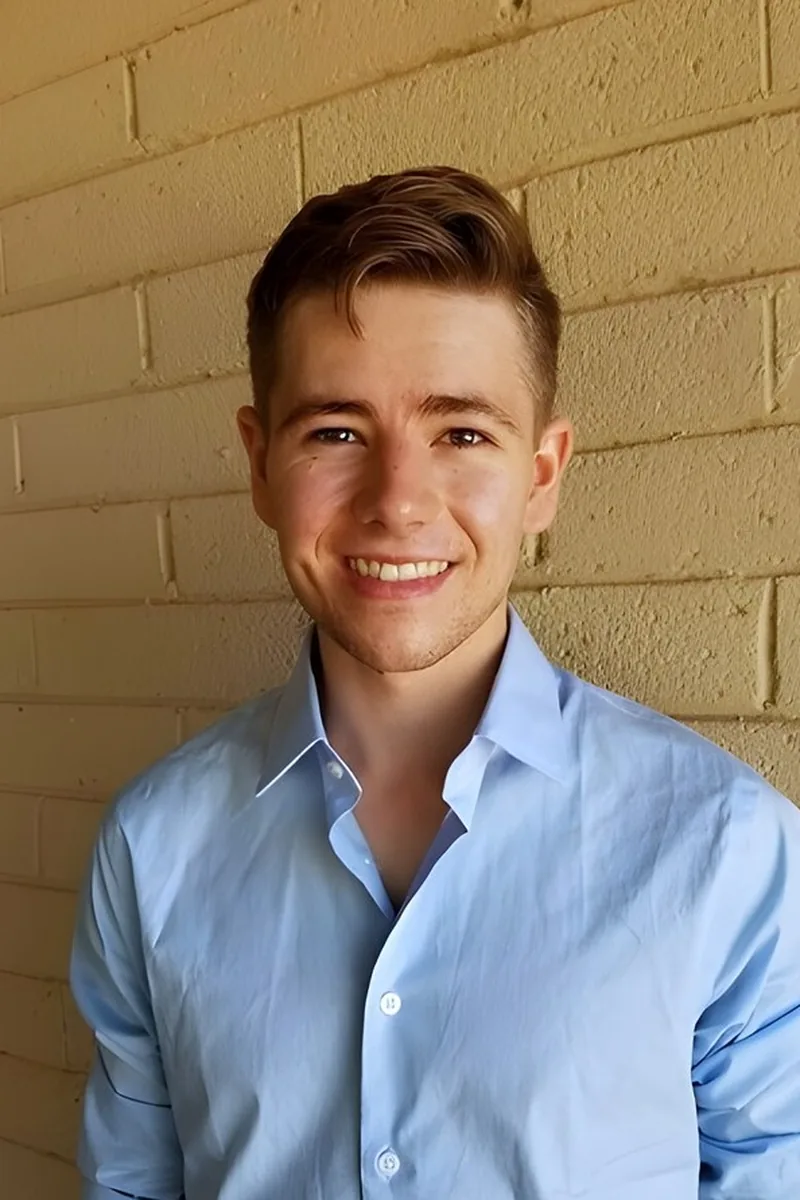
Galen's philosophy degree trained him to do something most science students struggle with: take a messy set of observations, identify what actually counts as evidence, and build a clear argument from it. That process — stripping away assumptions, testing whether conclusions follow from premises — mirrors the scientific method almost exactly, and he uses it to teach students how to evaluate hypotheses and explain experimental outcomes in precise language. His 5.0 rating suggests the approach clicks.
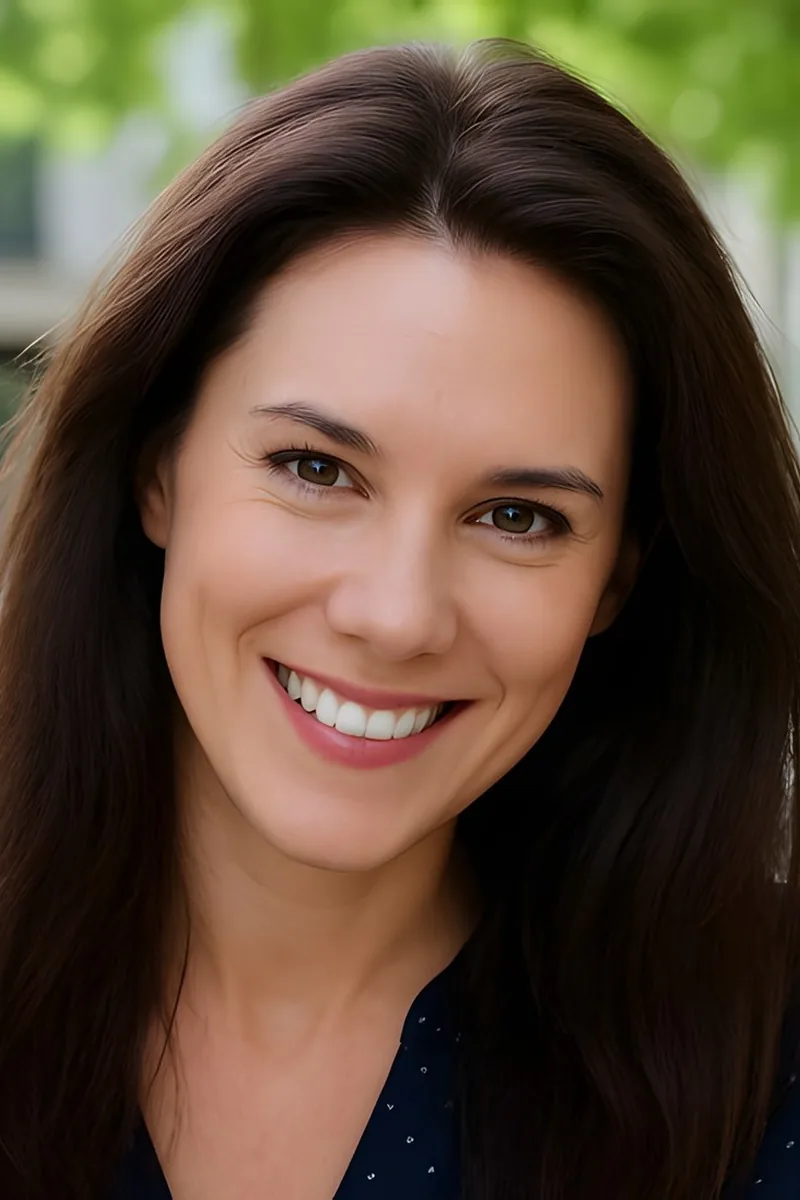
Having studied biology through college-level coursework and scored 1490 on the SAT, Michelle has the content knowledge and analytical skills to walk students through everything from cell structure to experimental design. She's especially good at making the vocabulary-heavy parts of science stick by tying terms back to processes students can visualize — how osmosis actually works in a cell, or why mitosis produces identical copies. Holds a 5.0 rating.
I am here because I thoroughly enjoy working with students and watching them succeed in their academic studies. As a Mathematics major at the University of Arizona (currently a junior), I have extensive experience teaching and tutoring: I have been a teacher's assistant for a Calculus II section at my university and have spent a great deal of time assisting students with non-math related subjects as well such as English and essay-writing, time management and study skills techniques, and standardized test prep (SAT).
Between biology, ecology, and life sciences, Rebia's science background runs deep — she doesn't just know the vocabulary but understands how systems like cellular respiration or nutrient cycling actually function at a mechanistic level. Her Stanford training means she can translate textbook diagrams and dense passages into clear, logical explanations that stick.
Kristi teaches across math, literature, and history — which means when a science topic requires calculating rates, interpreting a passage about climate data, or understanding the historical context of a discovery, she can pull from multiple toolkits instead of just one. Her 5.0 rating suggests that versatility actually works, especially for students who need someone comfortable bouncing between a graph, a vocabulary term, and a conceptual explanation in the same session.
Alina's engineering background at the University of Arizona required deep coursework in chemistry, physics, and biology, giving her a practical grasp of how these disciplines overlap in the real world. She unpacks tricky concepts like stoichiometry, force diagrams, or cell biology by tying them to concrete examples — the kind of connections that make formulas and vocabulary easier to recall on exam day.
As a current medical student, Lauren lives inside the sciences every day — from cellular biology and organ systems to chemistry and lab analysis. She unpacks scientific concepts by tying them to real examples from the human body and everyday life, making topics like the scientific method, ecosystems, or energy transfer feel tangible. Her explanations prioritize understanding processes, not just memorizing vocabulary terms.
As a recent graduate and experienced tutor with a summa cum laude Bachelor's degree in Molecular Biology from Colorado College, I bring over five years of tutoring experience across a variety of subjects, including high school biology and chemistry (regular, honors, and AP), as well as physics, writing, math, and general study skills. My strong foundation in the sciences, built through extensive coursework and research in molecular biology, biochemistry, and genetics, allows me to explain complex topics with clarity and enthusiasm. Further, my long-standing passion for reading and literature has helped me develop strong writing skills, which I enjoy sharing with students. My teaching philosophy centers on patience, empathy, and personalized support. I strive to create a calm, encouraging, and collaborative environment where students feel comfortable asking questions and exploring ideas deeply together. Each lesson is tailored to the student's learning style and goals, with a focus on developing true understanding rather than rote memorization. I believe that when students feel supported and confident, they're able to reach their full potential. Ultimately, my goal as a tutor is to help students build both knowledge and confidence, empowering them to succeed academically and develop a lasting curiosity for learning.
Niabari's background spans molecular genetics and health care delivery, giving her a rare ability to connect biological concepts — like cellular respiration or DNA replication — to real-world medical applications. She breaks down complex scientific processes into logical steps, making dense material easier to retain and apply on exams.
Preparing for law school means Alexis lives in a world of evidence evaluation and structured argumentation — skills she applies when teaching students to work through hypotheses, interpret data tables, and explain experimental outcomes in their own words. Her 32 ACT confirms she can handle the quantitative and reasoning demands science throws at students, and her 5.0 rating shows she makes those concepts accessible.
As a biology researcher studying aquatic ecosystems at ASU, Courtney lives science rather than just teaching from a textbook. She unpacks core concepts in biology, ecology, and environmental science by connecting them to real systems — how nutrient cycles drive algae blooms, or why cellular respiration matters beyond a diagram. Rated 5.0 by students.
While science sits outside Elizabeth's core degrees, her graduate research training built the kind of analytical and evidence-evaluation skills that transfer directly to scientific reasoning. She's a strong fit for students who need to improve how they read data, interpret experiments, and connect observations to broader concepts in introductory-level coursework.
Two philosophy degrees trained Linda to do exactly what science demands at its core — construct logical arguments, weigh evidence carefully, and identify where reasoning breaks down. She applies that same rigor to teaching students how to form testable hypotheses and interpret what experimental results actually show, particularly when the task shifts from recall to explanation. Her 5.0 rating suggests that analytical framework clicks for students who need science to feel less like memorization and more like structured thinking.
Between her dual astrophysics and Earth & Planetary Science degrees from Harvard and her current PhD research at Arizona State, Kristi has worked across physics, chemistry, geology, and biology in both classroom and lab settings. She unpacks scientific reasoning — forming hypotheses, interpreting data, connecting observations to underlying principles — in a way that makes the process feel intuitive rather than intimidating.
Ivanna approaches science the way she approaches global studies — by asking questions, examining evidence, and building explanations from the ground up. She's particularly effective at walking through the scientific method, data interpretation, and foundational concepts in life and earth sciences that require careful reading as much as memorization.
Between a microbiology degree and a doctorate in dental science, Daniel has spent years inside laboratories and clinical settings where biology, chemistry, and physiology overlap constantly. He unpacks concepts like cellular respiration, acid-base equilibria, and organ system function by tying them to real scenarios he's encountered. That cross-disciplinary perspective is especially useful for students who need to see how individual science topics connect to a bigger picture.
Studying cellular and molecular biology at Yale means Alice lives inside scientific thinking every day — designing experiments, interpreting data, and connecting molecular-level processes to larger biological systems. She unpacks topics like cell signaling, genetics, and metabolism in ways that emphasize understanding the "why" behind each mechanism. Students preparing for biology or general science courses get a tutor whose knowledge is current and deeply rooted.
Chemistry is Jake's strongest science lane, covering everything from stoichiometry and equilibrium through the AP-level material on thermodynamics and electrochemistry. He breaks down intimidating reaction problems into smaller, logical steps that make the underlying patterns visible.
While science isn't Annelisa's primary discipline, her Yale studies explicitly bridged art and science, giving her practice translating complex scientific concepts into clear, accessible language. She's a good match for students who need to strengthen reading comprehension of scientific texts, interpret data in graphs and tables, or organize lab reports.
A philosophy degree might not scream science, but Rachelle's Summa Cum Laude training at Arizona State built exactly the kind of rigorous logical reasoning that makes the scientific method click — constructing hypotheses, identifying flawed assumptions, and evaluating whether evidence actually supports a conclusion. Her broad tutoring range across biology, chemistry, and anatomy means she can connect concepts across disciplines, showing students how cellular respiration ties to chemical reactions ties to organ systems rather than treating each topic as an isolated chapter.
Between his physics degree and years of engineering work, Tim tackles science as an interconnected system rather than isolated facts — energy conservation in physics explains heat transfer in chemistry, which explains metabolic processes in biology. That cross-disciplinary thinking is exactly what middle and high school students need when science classes start asking them to apply concepts rather than just recall definitions.
A philosophy education at Stanford and Brown — where Diana spent years constructing logical arguments, dissecting assumptions, and evaluating evidence — turns out to be surprisingly practical for teaching students how to think through the scientific method. She treats a hypothesis the way she'd treat a philosophical claim: what's the evidence, what are the variables, and does the conclusion actually follow from the data? Her 4.9 rating suggests that analytical rigor translates well beyond the philosophy classroom.
Alex's chemical engineering degree from Washington and Lee means he learned science by solving real problems — thermodynamics calculations, reaction yield predictions, biological system modeling. Whether a student is struggling with balancing chemical equations or interpreting data in a biology lab report, he connects abstract scientific concepts to concrete, step-by-step reasoning. Rated 4.8 by students.
John teaches physics across middle school, high school, and college levels, so he knows how to scale scientific concepts to match a student's current understanding. Whether the topic is Newton's laws, energy conservation, or basic kinematics, he connects the math and the physical intuition so that formulas stop feeling arbitrary.
Real science literacy means reading a graph, designing a fair test, and explaining *why* a result makes sense — not just memorizing vocabulary lists. Arshia's UCLA biology degree and her clinical volunteer work, where she performed diagnostic screenings on real patients, gave her practice connecting textbook science to observable outcomes. She teaches concepts like cellular respiration, genetics, and the scientific method by anchoring each one to a concrete example students can visualize.
As an assistant instructor at the Arizona Science Center's Camp Innovation, Megan designed and delivered hands-on science programming that made concepts like states of matter, force, and energy click for young learners. Her Computer Science coursework at Harvey Mudd keeps her sharp on scientific reasoning and data analysis, so she can connect classroom topics to real experiments and observations that stick.
Pursuing a graduate degree in chemical and biomolecular engineering means Alex lives at the intersection of physics, chemistry, and applied math every day. He breaks down scientific reasoning — unit analysis, interpreting experimental data, connecting formulas to physical intuition — in ways that make problem-solving feel less like guesswork and more like a logical sequence.
I am Arizona born and raised, my education includes an NYC law school degree with an undergraduate BS degree from University of Miami. In college I majored in Health Sciences with minors in Psychology and Public Health while in law school I leaned into corporate law and finance. Between law school and college I've pretty much covered every topic under the sun! In my spare time, I enjoy reading (especially mystery novels), pretending I'm a chef, and meditating.
A medical degree from Creighton and a biomedical sciences background at Marquette — where she also TA'd organic chemistry lab and tutored general biology — give Elise deep fluency across the sciences. She unpacks topics like cellular respiration, Newtonian mechanics, or chemical bonding by connecting them to real phenomena rather than treating each chapter as an isolated set of definitions.
I am a graduate student at Arizona State University studying Human and Social Dimensions of Science and Technology, and am passionate about the value of education at all levels. Previously I worked at the US Department of Energy on energy technology in Washington, DC. I have enjoyed setting up roots in Phoenix over the past few years, and am excited about sharing my knowledge and passion for learning with others in the area.I have a knack for explaining complicated ideas to people in simple terms, enjoy deepening people's understandings of issues, and value education highly. All of these characteristics make me an ideal tutor for Varsity Tutors, and I look forward to the opportunity to share my academic experiences and skills with tutees. In addition, I can give an expert's perspective on a wide range of topics including political science, public policy, various topics in science and technology, as well as an academic success-oriented mindset.
Kyle's global management master's degree involved heavy coursework in data-driven decision making and quantitative analysis — skills that translate well when teaching students to interpret graphs, control variables, and draw conclusions from experimental results. His 32 ACT composite confirms he can handle the analytical demands of science material, and his background studying international systems gives him a knack for explaining how interconnected processes work, whether in ecosystems or chemical reactions.
As a psychology researcher, Robert sits at the intersection of science and data — designing controlled experiments, analyzing biological and behavioral variables, and interpreting results. He walks students through the scientific method not as a list to memorize but as a logic system for asking and answering questions. His background is especially useful for students tackling topics in biology, behavioral science, or research design.
Strong science performance often comes down to reading skills most students overlook — interpreting graphs, parsing dense lab instructions, and connecting vocabulary to real processes. Jeff's background in analytical reading and his 31 ACT composite give him the tools to tackle those exact bottlenecks with students who feel lost in their science coursework.
Currently on the pre-med track at Duke, Thara is immersed in biology and chemistry courses every semester, which means the concepts she teaches are ones she's actively using. She's especially strong at connecting life science topics — cell structure, genetics, ecosystems — to concrete examples that make abstract processes easier to visualize and remember.
Having taught math and English to elementary students as a substitute teacher, Jamila knows firsthand how younger learners process new scientific concepts — they need hands-on connections, not abstract definitions. She walks students through skills like reading data tables, making predictions, and explaining observations in their own words, drawing on her special education training to adapt explanations when the standard approach isn't landing. Rated 5.0 by students.
Computer science is applied science at its core — Ken's CS training at Barrett Honors College built the same skills science courses test: systematic problem-solving, controlling variables, and tracing cause-and-effect through complex systems. He's especially strong on the quantitative side, turning graph interpretation and unit-heavy calculations into straightforward steps rather than sources of panic. Rated 4.8 by students.
Understanding science often comes down to reading data correctly — interpreting graphs, identifying variables, and distinguishing correlation from causation. Luke's psychology research background trained him to break down experimental design and statistical reasoning, skills that translate directly to helping students tackle scientific concepts with confidence. Rated 4.9 by students.
Science isn't where Steven's degree lives, but his analytical training and 1530 SAT score show he can break down data interpretation, experimental design, and core concepts in biology and chemistry at the introductory level. He approaches science material the way he approaches a complex text — pulling apart structure, identifying key claims, and figuring out what the evidence actually supports.
While science isn't Andrew's primary credential, he's taught physical science, chemistry, anatomy, and physiology — and his analytical training at Northwestern carries over well to interpreting data, understanding experimental design, and connecting cause-and-effect relationships. He's particularly effective at teaching students how to read scientific graphs and extract meaning from lab results, skills that overlap with his economics background.
Biology is where Amanda's enthusiasm is most obvious — she holds degrees in both biology and anthropology — but she also teaches chemistry, organic chemistry, physiology, and microbiology, giving her the cross-disciplinary fluency that modern science courses demand. Whether a student needs to connect cellular respiration to a chemistry unit on thermodynamics or understand how anatomy ties into a broader biology curriculum, she makes those links explicit.
Testimonials
Because the right Science tutor makes all the difference.
Average Session Rating – Based on 3.4M Learner Ratings
Practice Science
Free practice tests, flashcards, and AI tutoring for Science
Other Tucson Tutors
Related Science Tutors in Tucson
Frequently Asked Questions
Science students in Tucson often struggle with connecting abstract concepts to real-world applications, particularly in chemistry and physics where visualization is critical. Many students also find it challenging to balance memorization of facts with understanding underlying principles—a gap that becomes especially apparent in biology and earth science courses. With an average student-teacher ratio of 15.2:1 in Tucson schools, personalized tutoring can help students get the targeted support they need to move beyond surface-level understanding.
In a classroom setting, teachers must pace instruction for 20-30+ students with varying learning speeds and styles. Personalized tutoring allows tutors to focus entirely on your learning style, identify specific gaps in foundational knowledge, and adjust explanations in real time. This one-on-one approach is especially valuable in science, where hands-on problem-solving and conceptual clarity are essential for success in advanced courses.
Yes, tutors work with students on material aligned with Arizona's science standards and their specific school's curriculum. Whether you're in middle school earth science, high school biology, chemistry, physics, or AP-level courses, tutors understand the grade-level expectations and can provide targeted support on the concepts your class is covering. This ensures tutoring directly supports your classroom success.
During an initial session, a tutor will assess your current understanding, identify specific areas of struggle, and learn your preferred learning style. You might work through a challenging problem set, discuss concepts that feel unclear, or review recent class material. This diagnostic approach helps the tutor create a personalized plan for your next sessions, whether you need help with foundational concepts, lab report writing, or exam preparation.
Progress in science is visible through multiple measures: improved quiz and test scores, deeper understanding of complex concepts, stronger lab report grades, and increased confidence in class participation. Many students also notice they can solve multi-step problems more independently and retain information longer. Your tutor will track progress on specific skills—like balancing chemical equations, interpreting data, or explaining biological processes—so you can see tangible growth over time.
Absolutely. Whether you're preparing for unit exams, standardized science assessments, AP Science exams, or college entrance exams like the SAT science section, tutors create focused study plans that target your weak areas. They use practice problems, concept review, and test-taking strategies to help you feel confident on exam day. Starting tutoring several weeks before an exam allows time to build deep understanding rather than just cramming facts.
Varsity Tutors connects students with tutors across all science levels—from middle school general science and earth science, to high school biology, chemistry, and physics, through AP and honors courses, and even college-level science. Whether you need foundational support in basic concepts or advanced preparation for rigorous coursework, tutors have expertise in the specific science subject and level you're studying.
Getting started is simple: connect with Varsity Tutors, tell us about your science course and goals, and we'll match you with a qualified tutor. You can then schedule your first session at a time that works for you. Many students begin with 1-2 sessions per week and adjust based on their needs—whether that's ongoing support throughout the semester or intensive help before a major exam.
Let’s find your perfect tutor
Answer a few quick questions. We’ll recommend the right plan and match you with a top 5% tutor.