Award-Winning Psychology Tutors
serving Boston, MA
Psychology
Tutors in Boston
Private 1-on-1 tutoring, weekly live classes for academic support, test prep & enrichment, practice tests and diagnostics, and more to elevate grades and test scores.
Based on 3.4M Learner Ratings
UniversitiesSchools & Universities
DeliveredHours Delivered
ProficiencyGrowth in Proficiency
Who needs tutoring?
No obligation. Takes ~1 minute.

Kerry holds both a B.A. in Psychology from Cornell and a master's in Professional Psychology from William James College, so she teaches this subject from genuine depth rather than textbook familiarity. She digs into the concepts students find trickiest — research methodology, statistical reasoning, the differences between classical and operant conditioning — with real-world examples from her own clinical and coaching experience. That practitioner perspective makes abstract theories concrete.
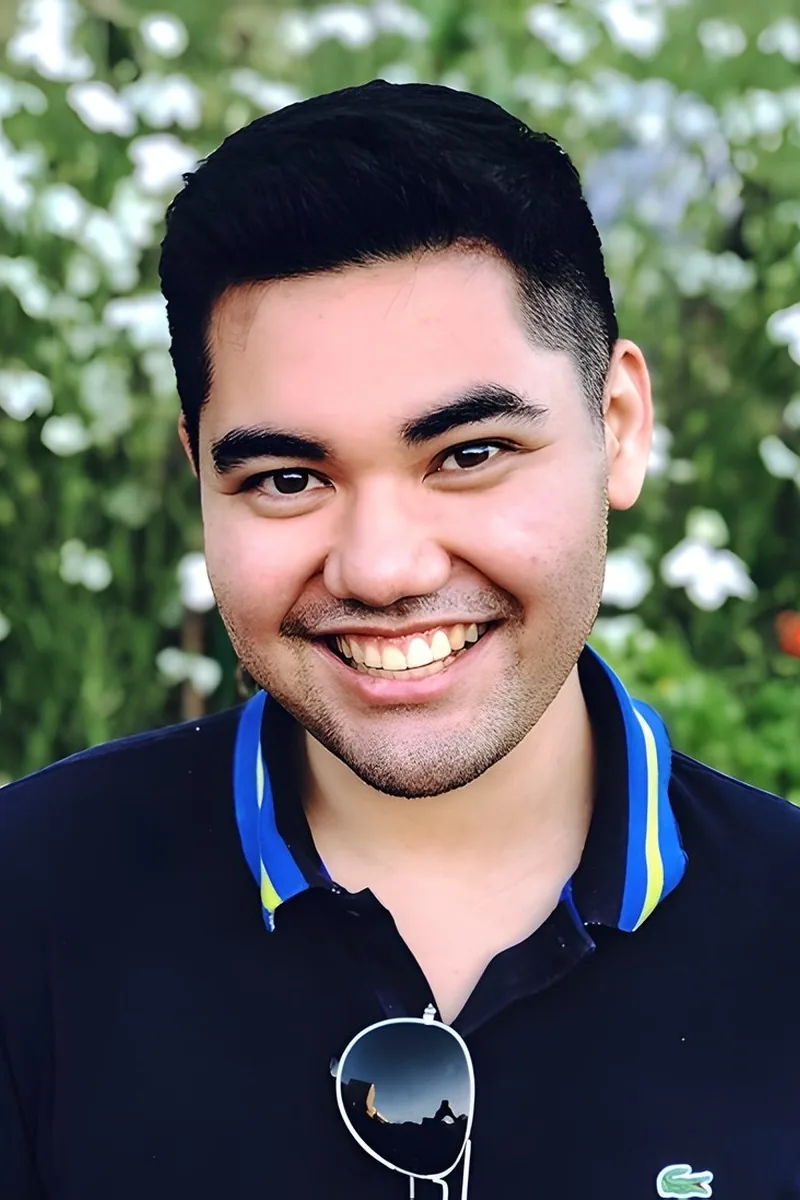
Public policy analysis requires deep familiarity with behavioral research — how cognitive biases shape decision-making, how social identity influences group dynamics, and how experimental design produces credible evidence. Noel applies that training to psychology coursework, breaking down concepts like operant conditioning, statistical significance, and the DSM framework in ways that stick.
A current Harvard Medical School student, Zoe tackles psychology from both the biological and behavioral sides — whether it's explaining neurotransmitter pathways or walking through classical and operant conditioning frameworks. Her science background makes her especially strong on the biopsychology and research methods topics that many students find most challenging.
Concepts like neurotransmitter function, the stress response, and sensation-perception overlap heavily with Emma's physical therapy and exercise biology training, giving her a concrete foundation in the biological side of psychology. She unpacks research methods and experimental design with the same rigor, making sure students understand not just what a study found but why its methodology matters.
Earning her Bachelor of Arts in Psychology at Miami University gave Amanda a thorough grounding in research methods, developmental theory, and the major frameworks from behaviorism to cognitive neuroscience. She unpacks concepts like operant conditioning, attachment theory, and statistical significance in concrete terms that make them stick for exams and papers alike. Students preparing for AP Psych or introductory college courses get someone who genuinely studied this field in depth.
Priyanka earned her bachelor's degree with a focus in psychology before completing her medical degree, so she understands the discipline from both the academic and clinical sides. She digs into the biological underpinnings of behavior — neurotransmitter pathways, brain anatomy, classical and operant conditioning mechanisms — in a way that makes introductory and AP Psychology concepts genuinely click.
Sydney's neuroscience degree and her time as a research coordinator at the Marcus Autism Center gave her direct exposure to developmental psychology, behavioral analysis, and cognitive processing — topics that form the backbone of most psych courses. She breaks down concepts like classical conditioning or neural signaling by tying them to real clinical cases she encountered in research. Rated 5.0 by students.
Computer science trains you to think in systems — inputs, outputs, feedback loops, conditional logic — which maps surprisingly well onto how psychology explains human cognition and behavior. Christine applies that computational thinking to topics like memory models, classical and operant conditioning, and decision-making processes, turning abstract theories into structured, logical sequences that click for analytically minded students. Rated 4.9 by students.
Growing up in Malaysia before studying at Penn and earning a master's in education from Harvard, Yu brings a cross-cultural perspective to psychology that makes topics like social cognition, conformity, and cultural influences on behavior feel immediate rather than theoretical. She draws on education policy training to unpack how psychological research actually gets applied — from motivation theory in classrooms to the design flaws in landmark studies students need to critique on exams.
Margaret holds a bachelor's degree in psychology and is currently pursuing a Master's in Medical Science at Boston University, which means she understands the subject from both the research and clinical sides. She digs into core concepts like classical conditioning, cognitive development theories, and experimental design methodology — the topics that anchor most introductory and AP psychology exams.
Most psychology students underestimate how much the subject rewards the same skills used in computer science — pattern recognition, logical reasoning, and systematic analysis of data. Parita applies that analytical mindset to topics like research methodology and statistical interpretation, making experiment design and hypothesis testing feel structured rather than overwhelming. She holds a 5.0 rating from students.
Having taught K-5 students through AmeriCorps and now advising high schoolers on college admissions, Nicole has watched developmental psychology concepts like Piaget's stages and Erikson's identity formation play out in real time across age groups. Her chemistry degree from McGill also means she's comfortable with the biological bases of behavior — neurotransmitters, brain anatomy, and the physiological underpinnings that trip up students who came to psych expecting a "soft" science. Rated 5.0 by students.
Public health and psychology overlap more than most students realize — concepts like behavioral conditioning, cognitive bias, and stress response show up in both fields. Paul's pre-med biology training at Brown gives him a strong grasp of the biological underpinnings behind psychological concepts, so he can explain topics like neurotransmitter function or the fight-or-flight response with real scientific depth.
The biological underpinnings of psychology — from synaptic transmission to the endocrine system to evolutionary explanations of behavior — click into place faster with a tutor who actually studies them. Alex brings a master's-level understanding of evolutionary biology and bioanthropology to concepts like natural selection's role in cognition, sensation and perception, and the physiological stress response. Rated 4.8 by students.
Liana's biological sciences coursework means she's already deep into the material that trips up most psychology students — neurons, neurotransmitters, brain anatomy, and the biological mechanisms behind learning, stress, and mental disorders. She also teaches AP Psychology and pairs that science fluency with the kind of patient, concept-by-concept explanations that make units on sensation, perception, and abnormal behavior click rather than blur together. Rated 4.9 by students.
As a BU psychology graduate, Will doesn't just know the textbook — he's worked through the research methods, statistical analyses, and theoretical frameworks that underpin the discipline. He digs into everything from classical conditioning paradigms to the nuances of DSM diagnostic criteria, making dense material concrete and exam-ready.
I'm a student at Clark University and I can help you with whatever you need. Whatever your learning style, whatever your difficulties, I will help you through it. Together, we can solve any problem you have. I can teach you how to study, I can edit your papers, I can teach you memory tricks and organizational skills and I guarantee that after a little while with me, your grades WILL improve.
Studying molecular biology at Wesleyan means Tahmid encounters psychology where it intersects with neuroscience — neurotransmitter pathways, the biological basis of memory, and how brain structure shapes behavior. He unpacks these connections for students tackling topics like sensation, perception, learning theory, and psychological disorders, making abstract concepts feel grounded in real mechanisms.
Juanita earned her bachelor's degree in psychology from the University of Florida, so she's deeply familiar with the core concepts — from classical conditioning and cognitive development to research methodology and statistical interpretation. She unpacks dense theories by tying them to real-world examples, making topics like Piaget's stages or the Stanford prison experiment click rather than blur together.
Peace and Justice Studies at Tufts is essentially applied social psychology — Sophie's coursework digs into how people form prejudices, how groups polarize, and how conflict reshapes identity, all topics that map directly onto psych units covering attitudes, stereotyping, and intergroup behavior. That sociological lens gives her a concrete way to teach concepts like cognitive dissonance and attribution theory, grounding them in the real-world justice issues students already care about.
The overlap between biology and psychology is where Vaibhav thrives — his molecular biology coursework gives him a strong grasp of neuroscience fundamentals like neurotransmitter function and brain anatomy that underpin behavioral psychology. He unpacks concepts from classical conditioning to cognitive development by connecting them to the biological mechanisms involved.
Sarah's biology degree from Northeastern pairs naturally with psychology's research-heavy side — she can walk through experimental design, break down statistical findings, and explain how biological processes like neurotransmitter activity connect to concepts like memory formation or stress responses. Her experience tutoring biostatistics means she's comfortable tackling the quantitative reasoning that trips up many psych students. Rated 4.8 by students.
Cassie minored in both Psychology and Neuroscience, which means she doesn't just teach psychological theories in isolation — she explains the biological machinery underneath them. Whether the topic is classical conditioning, cognitive development, or abnormal psych, she connects each concept back to brain structures and neural processes so students understand the why, not just the what.
Tufts' International Relations curriculum put Olivia deep into the study of propaganda, groupthink, and how populations respond to authority — concepts that map directly onto psychology's coverage of obedience, conformity, and persuasion. She draws on those political case studies to make Milgram, Asch, and elaboration likelihood model material feel concrete rather than theoretical. Rated 5.0 by students.
A psychology degree gives Andrew more than textbook familiarity with concepts like classical conditioning, cognitive dissonance, and the biological bases of behavior — he studied them through both experimental and clinical lenses. He breaks down dense topics like neurotransmitter pathways and research methodology by connecting them to real-world examples students actually remember.
I am currently pursuing my master's degree at Harvard.
As a medical student, Caroline encounters psychology daily — from behavioral neuroscience and developmental milestones to the biopsychosocial model that underpins modern patient care. She connects textbook concepts like classical conditioning or cognitive dissonance to real clinical scenarios, making abstract theories easier to retain.
Having majored in psychology at Rice and continued into graduate research at UPenn, Jessi digs into the subject from both sides — the theoretical frameworks like cognitive-behavioral models and the nuts-and-bolts methodology of designing experiments and interpreting statistical results. She's especially effective at connecting abstract concepts like operant conditioning or schema theory to concrete, memorable examples.
Understanding psychology means connecting behavior to biology — why SSRIs affect serotonin reuptake, how the limbic system drives emotional responses, or what split-brain studies actually reveal about consciousness. Rithi studied neuroscience at the undergraduate level and now applies that knowledge as a medical student, giving her a concrete, science-grounded way of teaching psychological concepts that sticks.
Studying molecular biology means Annabel already thinks in terms of experimental design, variables, and evidence — the same framework that drives psychology as a science. She explains concepts like classical conditioning, cognitive development stages, and research methodology by connecting them to the biological systems that underlie behavior.
Understanding psychology means learning to think like a researcher — distinguishing correlation from causation, evaluating study design, and applying theories to real behavior. Dylan's policy analysis training at Cornell built exactly these skills, particularly around interpreting data and questioning assumptions. He connects psychological concepts like operant conditioning or cognitive biases to everyday decision-making, which makes them stick.
Studying neuroscience at Vanderbilt and pursuing a Master's in Physiology at UIC means Gloria knows psychology from the biological side up — neurotransmitter pathways, brain region functions, the mechanics behind conditioning and memory formation. She unpacks concepts like Piaget's developmental stages and the DSM framework by tying them to the underlying science, which makes them easier to retain. Her child development research adds real-world context that textbooks often skip.
Editing for multiple newspapers taught Molly how to read people's arguments critically and spot where reasoning breaks down — skills that transfer directly to evaluating psychological studies, interpreting research methods, and writing the kind of structured responses psych courses require. Her communication studies background also gives her a practical handle on topics like persuasion, attitude formation, and media influence, which are staples of social psychology units.
Sarah's economics training at Northwestern means she's steeped in behavioral decision-making — how people assess risk, respond to incentives, and fall prey to cognitive shortcuts — which maps directly onto psychology's units on heuristics, motivation, and social influence. Her 34 ACT and experience mentoring students through high-stakes academic moments also give her a practical feel for the stress and performance psychology that often shows up in introductory courses.
Ellie's autism research at the Yale School of Medicine gives her a hands-on understanding of cognitive and behavioral concepts that most psychology tutors only know from textbooks. She connects topics like neurodevelopment, research methodology, and psychological disorders to real lab work, making abstract theories concrete and easier to retain.
Bidyut's biomedical engineering background at Johns Hopkins overlaps heavily with psychology's biological foundations — neurotransmitter pathways, brain anatomy, and the physiological basis of behavior. He unpacks concepts like classical conditioning, cognitive development stages, and research methodology by grounding them in the science behind how the brain actually works.
At Northwestern, Chelsey explored psychology through an unconventional doorway — a course in Buddhist Psychology that examined the mind through both Western scientific and Eastern contemplative frameworks. That cross-disciplinary perspective makes her especially effective at unpacking foundational concepts like cognition, behavior, and motivation in ways that stick.
Neuroscience and psychology share a border, and Jhonatan lives right on it — his biology specialization in neuroscience means he can unpack the biological underpinnings behind concepts like classical conditioning, memory formation, and psychopharmacology with real depth. For students in introductory or AP Psychology, he connects abstract theories to the neural mechanisms that make them concrete and easier to retain.
Testimonials
Because the right Psychology tutor makes all the difference.
Average Session Rating – Based on 3.4M Learner Ratings
Nearby Psychology Tutors
Other Boston Tutors
Related Social Sciences Tutors in Boston
Frequently Asked Questions
Boston schools typically follow AP Psychology, Honors Psychology, or standard introductory Psychology courses depending on grade level and school. Most high schools introduce Psychology in grades 10-12, covering foundational concepts like brain structure, learning theories, developmental psychology, and mental health. Some schools also offer dual-enrollment or college-prep versions that align with college curricula. If you're unsure which concepts your student needs help with, tutors can review your school's specific curriculum and identify gaps in understanding.
Psychology students in Boston frequently struggle with three main areas: memorizing complex terminology and brain structures (like neurotransmitters and brain regions), connecting abstract psychological theories to real-world applications, and understanding statistical concepts used in research methods. Many students also find it challenging to distinguish between similar concepts—like classical vs. operant conditioning—or to think critically about study design flaws. Personalized 1-on-1 instruction allows tutors to target these specific sticking points rather than moving at a whole-class pace.
AP Psychology covers 9 units across neurobiology, sensation and perception, learning, cognition, motivation and emotion, personality, testing and individual differences, abnormal psychology, and social psychology. With Boston's average student-teacher ratio of 11.2:1, classroom review time is limited. Tutors can provide focused practice on high-yield topics, teach test-taking strategies specific to AP's multiple-choice and free-response formats, and help students develop the analytical skills needed to explain psychological concepts at the college level. Regular practice testing with immediate feedback accelerates readiness.
In a classroom with 20+ students, Psychology instruction typically follows a structured pace that doesn't account for individual learning styles or knowledge gaps. Personalized 1-on-1 tutoring allows a tutor to spend an entire session on the exact concepts your student finds confusing—whether that's understanding neurotransmitter function, analyzing a research study, or preparing for a test. Tutors can use examples and explanations tailored to your student's interests, adjust pacing based on comprehension, and provide immediate clarification rather than moving forward with misunderstandings.
Varsity Tutors connects you with expert tutors who specialize in Psychology and understand Boston-area school curricula. When you start, you'll describe your student's specific needs—whether that's AP Psychology preparation, help with a struggling grade, or deepening understanding of particular units. Tutors can work with your student's schedule and learning style, whether your student learns best through visual diagrams of brain structures, practice with research methodology problems, or discussion-based exploration of psychological concepts.
Students typically see improvements in test scores, deeper conceptual understanding, and increased confidence in class participation. Many students move from earning C's or B's to A's, while AP Psychology students often improve their practice exam scores by 5-10 percentage points with focused preparation. Beyond grades, students develop critical thinking skills that help them evaluate psychological claims in media, understand research limitations, and apply concepts to real-world situations—skills that extend far beyond the classroom.
Research methods require students to think differently than other Psychology topics—instead of memorizing information or understanding concepts, they must evaluate experimental design, identify variables, spot confounds, and critique methodology. This analytical skill doesn't come naturally to many students and classroom time may not allow for deep practice. Tutors can walk through real and flawed studies, ask Socratic questions to guide critical thinking, and provide repeated practice identifying design problems until these skills click. This targeted approach builds the competence needed for both AP exams and college-level Psychology courses.
Let’s find your perfect tutor
Answer a few quick questions. We’ll recommend the right plan and match you with a top 5% tutor.