Award-Winning Middle School Math Tutors
serving Chicago, IL
Middle School Math
Tutors in Chicago
Private 1-on-1 tutoring, weekly live classes for academic support, test prep & enrichment, practice tests and diagnostics, and more to elevate grades and test scores.
Based on 3.4M Learner Ratings
UniversitiesSchools & Universities
DeliveredHours Delivered
ProficiencyGrowth in Proficiency
Who needs tutoring?
No obligation. Takes ~1 minute.
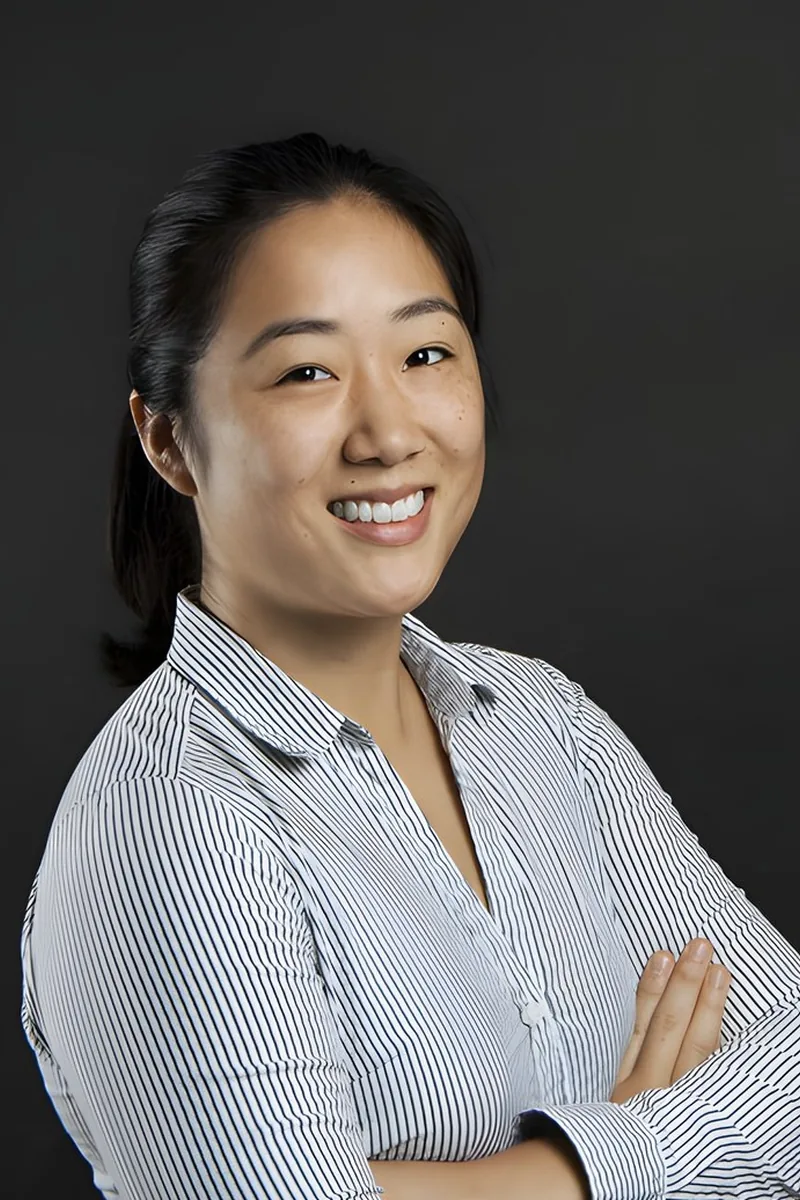
The jump from fifth-grade math to pre-algebra and early geometry catches many middle schoolers off guard, especially when proportional reasoning and negative numbers enter the picture. Asta tackles these transitional concepts by connecting them to patterns students already recognize, making ratios, percents, and coordinate graphing feel less abstract. She holds a 5.0 client rating.

Until about age 16, Viktor thought math was a boring exercise in memorizing formulas — which means he understands exactly how a middle schooler feels staring down fractions, ratios, or integer operations. What changed his mind was a teacher who showed him why the rules work, and that's the approach he brings to every session. He unpacks each concept so students carry understanding forward instead of forgetting everything after the test.
Years of tutoring her younger brother and his friends gave Ellie a front-row seat to the specific places middle schoolers get stuck — fractions turning into decimals, proportional reasoning, and that tricky leap into basic equation solving. She breaks each concept into concrete steps and ties them to scenarios kids actually care about. Her background coaching youth soccer also means she knows how to keep younger learners engaged and motivated.
Every middle school math struggle Molly sees traces back to something specific — maybe fraction operations never fully clicked, or proportional reasoning feels shaky under word-problem pressure. Her three years as an elementary classroom teacher gave her firsthand knowledge of what students were supposed to master in earlier grades, so she can pinpoint and repair gaps fast. She pulls from multiple curricula she's actually taught, matching the explanation to the student rather than repeating the same script.
The jump from elementary math to middle school math introduces fractions, decimals, proportions, and early algebraic thinking all at once — and each concept builds directly on the last. Zac's interest in education and human development gives him a sharp eye for how younger students process new ideas and where frustration sets in. He keeps sessions structured but conversational, turning problems into puzzles rather than chores.
Ratios, proportions, and basic geometry proofs are where a lot of middle schoolers start deciding whether they're "math people" or not. Brett's goal is to make sure that decision goes the right way — he walks through problems step by step, emphasizing the reasoning behind each operation rather than just the answer at the bottom of the page.
Teaching middle school math daily in Chicago Public Schools means Elizabeth sees firsthand where students stumble — whether it's proportional reasoning, negative numbers, or translating word problems into expressions. She turns those sticking points into breakthroughs by connecting abstract concepts to problems students actually find interesting. Rated 5.0 by students.
Math was Gabriel's favorite subject growing up, and that genuine enthusiasm shows when he's breaking down topics like fraction operations, ratios, or the first steps into algebraic thinking — he treats each concept as something worth getting curious about, not just getting through. His PhD work in Comparative Human Development at the University of Chicago gives him real insight into how adolescents learn and process new ideas, which shapes how he paces explanations and builds on what a student already knows. Rated 5.0 by students.
Architecture school at UChicago trained Grace to think spatially and proportionally — calculating scale, working with ratios, and translating between drawings and dimensions — which maps directly onto the geometry and proportional reasoning middle schoolers encounter. Her MAT in middle school teaching means she's studied how this age group actually learns, not just what they're supposed to learn. Rated 5.0 by students.
The jump from arithmetic to pre-algebraic thinking trips up a lot of middle schoolers, especially with fractions, ratios, and negative numbers. Charlie makes that transition smoother by connecting each new concept to reasoning skills students already have. Rated 5.0 by students, he brings the same rigor to sixth-grade proportions that he does to his advanced math sessions.
Fractions, ratios, and proportional reasoning are the concepts that tend to separate students who feel confident in math from those who start to disengage. Ariela re-communicates these ideas in concrete, visual ways that cut through the abstraction. Her knack for organizing information — honed through years of stage management — makes her especially effective at walking through multi-step word problems.
The jump from elementary math to middle school math is really about learning to think in abstractions: ratios, negative numbers, coordinate planes, basic probability. Gabriel spent time tutoring 7th and 8th graders through exactly these concepts and knows how to make the logic behind each topic click before moving on to the next one. He holds a 5.0 rating from past students.
I am a student at the University of Chicago majoring in mathematics & comparative human development. I sing in an acapella group, play violin, and on weekends I love to go for bike rides or long runs, see local theater and music performances, and explore the city of Chicago. Through my studies and bike rides and runs, I enjoy working hard and building personalized, step-by-step plans for pursuing the goals I set. Nonetheless, I also believe in the importance of having fun and finding enjoyment in my day-to-day life, which I do through music and geographic exploration. I believe that this enthusiasm, curiosity, and steady work ethic are the keys to achieving goals once thought impossible, and I hope to inspire such a mindset in the people with whom I work.
Ratios, proportional reasoning, and early equation-solving form the backbone of middle school math — and they're also the skills that determine whether high school math feels manageable or overwhelming. Sparsh earned his engineering degree from Vanderbilt cum laude, so he understands how these foundational concepts thread into everything that comes later. He makes the "why" behind each procedure clear so students aren't just memorizing steps.
I am a recent graduate of Princeton University's Mechanical and Aerospace Engineering Department. I am passionate about teaching and mentoring and have done so in multiple capacities over the last four years, including a fellowship during which I taught pre-algebraic math to a group of middle school students from traditionally underserved backgrounds in Saint Paul, MN. I love interacting with students and seeing them grow over the course of their studies. I'm ecstatic at the opportunity to learn alongside them as we venture into educational rabbit holes and uncover key concepts about math, science, and everything else.
Hanlu scored a 34 on the ACT, which means the math fundamentals middle schoolers are working through — decimals, fractions, ratios, basic geometry — are skills she can explain quickly and from multiple angles when one approach isn't landing. Her international relations coursework at Washington University involves constant data interpretation and quantitative comparison, so she treats these topics as practical tools rather than abstract exercises. She's particularly good at breaking down the transition from straightforward arithmetic into the more symbolic thinking that pre-algebra requires.
Currently pursuing a graduate degree in statistics, Evan knows exactly where middle school concepts like ratios, data displays, and proportional reasoning are headed — and he teaches them with that trajectory in mind, so nothing feels like busywork. His 35 ACT and 5.0 student rating back up a teaching style that emphasizes understanding the structure of a problem before picking up a pencil.
Ratios, proportions, and integer operations click faster when a student sees how they connect to real problems — Lauren draws on her IT and business background to show middle schoolers why these building blocks actually matter. Her 5.0 rating and ongoing volunteer tutoring with Tutoring Chicago in the city keep her sharp on exactly where students this age get stuck.
A strong middle school math student isn't just getting correct answers—they're starting to reason about why proportions work, how negative numbers behave, or what a variable actually represents. Felix, a math major at the University of Chicago, brings that deeper explanatory instinct even to foundational topics like fractions, ratios, and early algebraic thinking.
A neuroscience major at Northwestern, Seong uses math daily in coursework ranging from statistics to data analysis, giving her a practical perspective on why middle school concepts like ratios, proportions, and integer operations actually matter. She's especially effective at identifying the specific gap — whether it's fractions or negative numbers — that's holding a student back and addressing it directly.
Sam's MS in Accounting means he's spent years where getting the math wrong has real consequences — balancing sheets, reconciling figures, catching errors in multi-step calculations — and that precision translates well to teaching middle schoolers the careful habits they need as arithmetic gives way to algebra. He's particularly effective at showing students how to check their own work on integer operations and equation-solving, building the kind of self-correction instinct that pays off long before high school.
Fractions, ratios, and proportional reasoning click once a student sees how they connect to each other — and that's exactly how Anya teaches middle school math. Her biology coursework at the University of Chicago keeps her using these foundational concepts daily, so she brings real examples that make abstract ideas tangible.
Fractions, ratios, and pre-algebra concepts click faster when a student understands the reasoning behind each step instead of just following a formula. Saneha spent three years as an academic coach working with middle schoolers and high schoolers on exactly these building blocks, breaking problems into smaller logical pieces that make sense. Her approach adapts to each student's pace, whether they're struggling with decimals or ready to tackle introductory equations.
Fractions, ratios, and proportional reasoning are the concepts that make or break confidence in middle school math. Gabriela's approach is to slow down at the exact point where a student's understanding gets shaky and rebuild from there, using real-world scenarios — batting averages, recipe scaling, map distances — to make the math click.
Philosophy trains you to follow a chain of logic without skipping steps — which is exactly the habit Gabriel instills when teaching topics like integer operations and solving multi-step equations. His 33 ACT composite confirms he's sharp across quantitative reasoning, and his 4.7 rating suggests he makes that precision accessible rather than intimidating for younger learners.
Fractions, decimals, proportions, and early graphing can feel disconnected to a middle schooler unless someone ties them together into a bigger picture. Mark does exactly that — he shows how converting between fractions and decimals, for instance, is really the same skill students will use later when solving equations. His patient, no-shortcuts approach earned him a 34 ACT and keeps younger students from developing the math anxiety that follows them into high school.
The jump from arithmetic to middle school math trips students up when topics like ratios, proportions, and basic geometry suddenly require multi-step reasoning. Kheya's approach is deliberate and unhurried — she walks through each type of problem until the logic behind it clicks, not just the procedure. Her science-heavy coursework at UIC keeps her sharp on the applied math middle schoolers encounter.
The jump from arithmetic to middle school math — proportional reasoning, basic equations, coordinate graphing — is where a lot of students quietly lose confidence. Brandon catches those gaps early, building fluency with integers and expressions so that the transition into algebra feels natural rather than overwhelming.
Studying computer science and neuroscience at MIT means Mercy lives in math daily — from discrete structures to statistical modeling — so the pre-algebraic concepts middle schoolers are building feel intuitive to her rather than distant. Her 1560 SAT and 33 ACT speak to genuine across-the-board quantitative fluency, and she channels that into breaking down topics like fractions, decimals, and early equation work in ways that prepare students for the jump to high school math.
Scoring a 1540 on the SAT means Felix has the quantitative chops to teach middle school math cold, but it's his science background — three associate degrees including microbiology — that shapes how he actually explains it. He treats topics like ratios, data interpretation, and basic equations as tools for understanding the world, the same way he'd use them in a lab to calculate dilutions or analyze results. Rated 5.0 by students.
The jump from fifth to eighth grade math covers an enormous range: ratios, proportional relationships, the coordinate plane, linear equations, and early geometry proofs. Sarah has taught across this entire span in the classroom and knows that most middle schoolers struggle not because the math is too hard, but because one earlier concept — fractions, usually — never fully landed. She traces mistakes back to their source and rebuilds from there.
Years of teaching ESL and TOEFL prep taught Brenda something that transfers directly to middle school math: how to break down an unfamiliar process into clear, sequential steps that a learner can actually follow. She applies that same scaffolding technique to topics like fraction operations, decimal conversions, and early equation solving — building each skill piece by piece so nothing feels like a leap. Her Northwestern psychology training also means she reads when a student is hitting frustration and knows when to shift gears before confidence drops.
Rebecca scored a 1580 on the SAT, which means she tackled every algebra, geometry, and data analysis concept the test throws at students — the same skills middle schoolers are building right now through topics like integer operations, ratios, and basic equation-solving. Her psychology training at Northwestern also gives her a practical understanding of how confidence and mindset shape math performance, so she's quick to spot when a student needs a different explanation versus just encouragement to push through. Rated 4.9 by families.
The jump from fifth-grade arithmetic to middle school math — ratios, proportional reasoning, negative numbers — is one of the steepest learning curves students face before high school. Taryn especially loves turning word problems into something students can visualize, connecting fractions and percentages to situations they actually encounter. Her approach builds the number sense that makes algebra feel like a natural next step rather than a scary unknown.
The jump from fifth-grade math to pre-algebra and early geometry catches a lot of students off guard, especially when fractions, decimals, and negative numbers start showing up in the same problem. Ali tackles middle school math by identifying exactly where a student's understanding breaks down — whether it's order of operations or ratio reasoning — and rebuilding from that point. He holds a 5.0 client rating.
Ratios, proportions, and introductory equations can feel abstract to a middle schooler until someone connects them to something tangible. Sofia takes concepts like unit rates or percent change and ties them to real scenarios, making the jump from arithmetic to algebraic reasoning feel natural. Her experience tutoring math across grade levels in both New York City and Chicago gives her a clear sense of where students typically get tripped up.
Whether it's ratios, proportions, or the first taste of linear equations, middle school math is full of concepts that spiral back in high school and beyond. Aaron connects each topic to practical examples — budgeting a project, scaling a recipe, interpreting a graph — so the reasoning sticks, not just the procedure. His 5.0 client rating speaks to how well that approach lands with students.
From ratios and percent applications to early equation-solving, middle school math covers a huge range of skills in a short time. Callie has tutored a student continuously from middle school through high school, watching firsthand how gaps at this level snowball later — so she knows exactly which concepts to shore up. She gives students room to work through problems on their own, stepping in to redirect rather than dictate.
My passion for tutoring stems from my experience as a TA, where I discovered that effective teaching goes beyond just delivering content; it's about building relationships and instilling confidence in students. With over two years of tutoring experience in math and computer science, I focus on fostering an interactive learning environment where students actively engage with the material. I believe in the power of practice over passive learning, guiding students to identify their challenges and develop effective study habits. As a National Merit Scholar, I've honed my own test-taking strategies, which I enjoy sharing for SAT prep as well. I'm excited to support you on your academic journey!
The jump from elementary to middle school math catches a lot of students off guard — ratios, proportions, and negative numbers all arrive at once. Masooma tackles each of these topics by tying them to real situations students can visualize, like splitting a bill or tracking temperature changes. Her 4.9 rating speaks to how well that approach clicks with younger learners.
Testimonials
Because the right Middle School Math tutor makes all the difference.
Average Session Rating – Based on 3.4M Learner Ratings
Nearby Middle School Math Tutors
Other Chicago Tutors
Related Math Tutors in Chicago
Frequently Asked Questions
The jump from arithmetic to algebra is significant—it's where math shifts from "how do I calculate this?" to "why does this work?" Many Chicago students struggle when they realize memorizing procedures isn't enough anymore. Personalized tutoring helps bridge this gap by breaking down abstract concepts into concrete steps, showing students how variables represent unknown quantities and why algebraic rules make sense. A tutor can identify exactly where understanding breaks down—whether it's with negative numbers, combining like terms, or balancing equations—and rebuild that foundation before moving forward.
Word problems require students to do three things at once: read carefully, translate language into math, and solve—which is why so many middle schoolers find them overwhelming. Tutors work through proven problem-solving strategies like identifying what's being asked, pulling out relevant information, choosing the right operation, and checking if the answer makes sense. By working through problems together, a tutor helps students recognize patterns ("this is a comparison problem," "this is about rates") and build confidence. Over time, word problems shift from scary to manageable.
Chicago's 12 school districts use different textbooks and teaching approaches, which can make finding aligned support tricky. When you connect with a tutor through Varsity Tutors, you can share your student's specific curriculum materials, textbook, and classroom approach. Tutors are experienced in adapting their teaching to match what your student is learning in school—whether that's a particular sequence, a specific graphing method, or how the teacher emphasizes showing work. This alignment means tutoring reinforces what's happening in the classroom rather than introducing conflicting strategies.
Math anxiety is real and common, and it often spirals—one bad experience or negative comment can make a student shut down before even trying. Personalized tutoring creates a low-pressure environment where mistakes are learning opportunities, not failures. When a tutor works 1-on-1, they can celebrate small wins, break problems into less intimidating chunks, and show students they're more capable than they believe. As students experience success and understand concepts more deeply, anxiety naturally decreases. Building conceptual understanding—not just memorizing steps—gives students the confidence to tackle new problems because they understand the "why" behind what they're doing.
Look for tutors who understand middle school math specifically—it's a unique transition point where conceptual thinking becomes as important as procedural fluency. Ideal tutors are patient, ask questions to find gaps in understanding, and can explain concepts multiple ways. They should be comfortable with the Chicago school district's pacing and curriculum, able to communicate your student's progress to you, and skilled at building confidence alongside skills. When you connect with tutors through Varsity Tutors, you can discuss your student's specific challenges and curriculum to find the best match.
Teachers emphasize showing work because it reveals how a student thinks, not just whether they got the right answer. A student might guess correctly but have fundamental misconceptions, or they might make a small error in an otherwise solid approach. When a tutor sees the work, they can identify exactly where thinking breaks down and address it. This also helps students slow down and think through multi-step problems systematically rather than rushing. Over time, showing clear work becomes a problem-solving tool that helps students catch their own mistakes and feel more in control of the math.
Most students start seeing confidence gains within a few weeks as they experience success on previously challenging problems. Measurable grade improvement typically follows over 4-6 weeks of consistent tutoring, though timelines vary depending on how far behind a student is and how frequently they meet with a tutor. The key is consistency and addressing root causes of confusion rather than just drilling formulas. With regular personalized instruction, students often move from struggling with foundational concepts to tackling grade-level material with real understanding—and that shift sticks because it's built on deeper comprehension.
Let’s find your perfect tutor
Answer a few quick questions. We’ll recommend the right plan and match you with a top 5% tutor.