Award-Winning Economics Tutors
serving Tampa, FL
Economics
Tutors in Tampa
Private 1-on-1 tutoring, weekly live classes for academic support, test prep & enrichment, practice tests and diagnostics, and more to elevate grades and test scores.
Based on 3.4M Learner Ratings
UniversitiesSchools & Universities
DeliveredHours Delivered
ProficiencyGrowth in Proficiency
Who needs tutoring?
No obligation. Takes ~1 minute.

An MBA in Finance and Management gives Hari the kind of fluency with economic reasoning that comes from applying it — building financial models, analyzing market conditions, weighing strategic trade-offs in real business contexts. He teaches micro and macro concepts like elasticity, monetary policy, and market structures by connecting them to the finance and accounting decisions where those ideas actually matter. Rated 5.0 by his students.
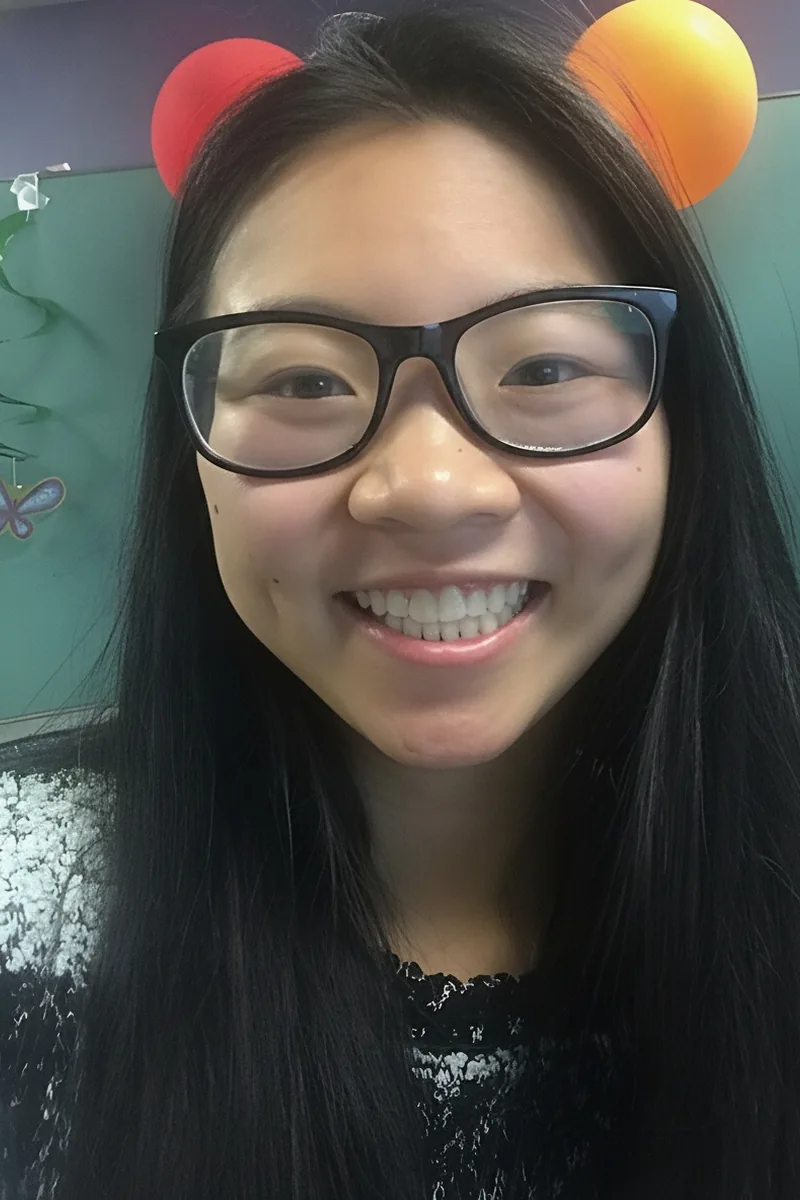
I am graduated from Penn State University in Industrial Engineering in 2017. I've tutored ever since I was in high school, and I love helping people! I like to help my students understand math (and other topics) instead of just doing it blindly. My goal is to help my students improve their math (and other topics) and build skills that will help them find learning easier in the future! Fun fact, I used to work for Disney and I like to salsa dance!
Supply-and-demand curves are intuitive until externalities, elasticity, and market failures enter the picture. Dalila's quantitative background as a math major means she can walk through the graphical and algebraic reasoning behind economic models — not just label the axes, but explain why the curves shift and what the equilibrium actually means.
As an adjunct professor at Fordham, Stephen teaches economics at the university level every day — supply and demand models, market equilibrium, game theory, trade policy, and everything in between. His PhD from Rice and BA from Yale, both in economics, mean he can unpack the subject at any level from introductory to advanced. Thirty-plus years of applied market research also let him ground abstract theory in how real economies behave.
Pursuing an economics degree at Dartmouth means Raphael is actively immersed in micro and macro theory, econometrics, and policy analysis — not recalling material from years ago. He unpacks concepts like elasticity, market equilibrium, and comparative advantage using real-world examples that make abstract models feel intuitive.
As a Certified Financial Planner who holds Series 7, 66, and 24 licenses, Victoria doesn't just teach supply-and-demand curves — she's lived the market dynamics behind them. She unpacks micro and macro concepts like elasticity, monetary policy, and market structures using real financial scenarios that make abstract models feel immediately relevant.
I am working towards a Bachelor of Arts in Pure and Applied Mathematics as well as a Bachelor of Arts in Astronomy and Physics. I have enjoyed studying math and science since I was in elementary school. I would always help my friends out by answering their questions about the material. For about the last five years, I have had my own tutoring business where I have tutored a wide variety of math courses from elementary school math to pre-calculus and calculus. I like to make sure my students have a complete understanding of the core concepts before going into practice questions. I have also had experience helping my peers with physics and computer science courses.
Twenty years at PwC — including seven as a partner — meant Stephen lived economics daily, from analyzing market structures and pricing strategies to advising clients through macroeconomic shifts. He teaches concepts like supply and demand elasticity, monetary policy, and market equilibrium by grounding them in real business decisions he's actually made. Rated 5.0 by students.
Studying business economics at the University of Miami meant Noah spent his coursework inside the overlap between economic theory and actual firm-level decision-making — pricing strategies, cost structures, how managers respond to market signals. That business-side fluency is especially useful for students who need microeconomic concepts like elasticity or profit maximization to feel less abstract and more like tools people actually use.
Caroline's comparative literature degree might seem like an unusual path into economics, but the core skill is the same — reading dense, argument-driven texts and pulling out the logic underneath. She applies that analytical instinct to breaking down concepts like elasticity, market failures, and microeconomic trade-offs, making the reasoning behind models accessible rather than formulaic.
Quantitative reasoning sits at the heart of economics, and Michelle's math and statistics background means she can unpack supply-demand models, elasticity calculations, and cost-benefit analyses with genuine numerical fluency. She approaches economics as applied problem-solving, linking graphical interpretations to the algebra behind them.
Biology might seem unrelated to economics, but Liraz's science training at Vanderbilt sharpened exactly the kind of systems thinking that makes concepts like supply-demand equilibrium and feedback loops in monetary policy click — understanding how changing one variable ripples through an entire system. She also brings quantitative comfort from her STEM coursework, which pays off when economics problems shift from intuition to graphs and equations.
I am a law student, but I took an unusual route to get there. I used to attend medical school but had a change of heart in my career path. Part of this was due to my political science major (double major with biology) in college as well as a number of Spanish and other courses that I took. Tutoring is something, I feel, that has come naturally to me, even back to my high school days. My goal is to help you learn as much as you can and reach your true potential. I will work hard to make sure that this happens, as long as you put in the work, too! We will work together to tailor your learning experience to your needs.
Marketing coursework gave Peyton a front-row seat to economic thinking in action — consumer behavior, pricing strategy, and how firms respond to competitive pressure are all microeconomic concepts dressed in business clothing. That crossover lets her teach ideas like elasticity, market structures, and incentive design by connecting them to the real branding and advertising decisions students encounter every day.
Law school sharpens a very specific economic skill: reading a set of facts, identifying the incentives at play, and predicting how rational actors will respond. Matthew brings that legal reasoning to economics topics like market regulation, game theory, and the logic behind antitrust or trade policy. His 4.8 rating suggests the approach clicks, especially for students who think better through arguments than through graphs.
I am a senior at Rollins College and have my IB diploma from high school. I did TOK, HLs: Psych, Econ, language and literature, and SLs: Spanish, biology, and mathematical studies. I prefer psych, econ, business, and anything English or literature related. I can do paper revisions, essay help, reading comprehension, elementary/middle/high school math. I would prefer more basic math and science, can help with reading and writing in Spanish, and am up for anything.
I am a graduate of SUNY University at Albany. I received my Bachelor of Science in Economics and Japanese with a minor in History in 2010. Since then (and even before as a sub) I have predominantly been teaching in the New York City public education system. I had worked as a substitute teaching assistant since 2008, moving between dozens of NYC public schools before finally settling in late 2011 at M.S. 216 George J. Ryan--an incredibly diverse middle school in Queens. During my tenure in the school system I have spent time teaching students from Pre-K to 12th grade, from all cultural background and socioeconomic statuses. Regardless of whom I have taught, I have always enjoyed it, partly because I often learn as much from my students as they learn from me. Regardless of the subject, I love teaching, and I find it to be one of the most rewarding and meaningful activities, which cliched as it may sound, really can make a difference in people's lives. Besides teaching, I am also keenly interested in the human body, specifically biomechanics, kinesiology, and rehabilitation through movement. I am currently enrolled in a Doctorate of Physical Therapy program at Washington University in St. Louis, which I should finish in 2018.
Pursuing a PhD in Economics at UNC Chapel Hill while holding a BA in both mathematics and economics from Vanderbilt means Olivia is actively immersed in the discipline at a research level — she can unpack microeconomic models like consumer and producer theory with the mathematical rigor her quantitative background demands. Her four years teaching high school math also gave her a sharp sense for when students are losing the thread between an economic intuition and the graph or equation that formalizes it.
I am Ankit Jajoo. I am enrolled in Duke University Class of 2022 studying neuroscience and computer science. STEM is my number one passion, while history is my number one interest. Humanities and STEM not only coexist, but work together often in life. While STEM provides the foundation for the future, humanities contributes to how it is used to advance humanity as a whole. I love biology, chemistry, and computers. It is so cool to see how all these tiny minute parts of the world interact to create you, me, and everything we touch. On the other hand, history is cool to see how societies interacted to create the present world. The past is never separate from us, but always influencing everything from the various countries to cities to the tiny villages all over the world. The world is a combination of all of this and it is my passion to understand the world. Other than just about education and information, I love teaching other people about stuff. I enjoy teaching all my friends some stuff, in return they teach me other stuff. Contrary to popular opinion, teaching is a two way street. I've learned a tremendous amount from students and I hope they learned a similar amount from me. Tutoring students in a field I enjoy such as STEM or history is a dream come true.
Pursuing a Business Technology and Finance degree at the University of Miami means Julian is actively working through the economic reasoning that underpins business strategy — how firms respond to price signals, why markets allocate resources the way they do, and what happens when incentive structures shift. That finance coursework keeps him close to the quantitative side of economics, so he's comfortable walking through supply-and-demand graphs and cost curves without losing sight of the bigger picture they represent.
I'm a current student at the University of Central Florida and I love to tutor passionate students in a variety of subjects. I've taken and passed 15 AP exams in high school, and I've taken several courses at UCF that I could tutor as well.
Three master's degrees across multiple disciplines give Dariel an unusual ability to show how economics connects to everything else — how a concept like elasticity behaves differently when you're talking about healthcare markets versus tech startups, or why the same GDP model tells different stories depending on the industry context. His university teaching experience across dozens of subjects means he's practiced at pulling economic reasoning out of the abstract and anchoring it in whatever field a student already cares about.
I'm from Las Vegas, NV. I am currently a junior at the University of Miami majoring in Industrial Engineering with a double minor in Mathematics and Economics. My hobbies include laying by the pool and listening to new music.
I am an undergraduate student studying both legal studies and accounting at the University of Central Florida. Prior to college I was in the IB (International Baccalaureate) Program at my high school and was named a National Merit Commended Scholar. I've spent a number of years teaching and tutoring, despite my young age, in a variety of subjects ranging from music to different levels of math. I am most passionate about tutoring math related subjects as I see how many students struggle to connect certain concepts with others. I also love to tutor business related fields such as economics as I am an accounting major and it is what I study. I am a strong proponent of the idea that no matter how long it takes, every student is capable of being successful in a subject if they put in the work, with the proper guidance. In my spare time, I really love being a referee and participating in taekwondo tournaments as well as practicing the piano.
I am actively seeking to pursue my own dreams and now look to help those who strive to do the same.
I'm passionate about helping students build confidence, improve their scores, and make challenging material feel manageable. I specialize in SAT preparation and AP subjects, tailoring each session to the student's individual strengths and goals. Whether we're mastering difficult concepts, improving test-taking strategies, or working on timing, my goal is to make learning clear, engaging, and results-focused.
Physics training builds a specific habit that transfers directly to economics: modeling complex systems with graphs, equations, and simplifying assumptions. Avram's three physics degrees mean he's deeply practiced at translating real-world behavior into formal models — exactly the skill students need when working through supply-and-demand curves, elasticity calculations, or equilibrium analysis.
I am highly proficient in other areas in economics, high school mathematics, calculus I and European history.
Studying economics at Dartmouth with a computational emphasis, Eric digs into both the theoretical models and the real-world data that test them. He's particularly effective at unpacking concepts like elasticity, comparative advantage, and market equilibrium — translating the math into plain-language reasoning that sticks.
I'm a 24 year old student of life that graduated from Vanderbilt University in 2014. My first experience with tutoring came 5 years ago when I opened a branch of ACT prep tutoring for Revolution Prep. At that time, I taught small classes of 5-9 students and also worked as a private tutor. I absolutely love to learn and am fulfilled by guiding students to reach their maximum potential.
Studying sociology at the University of Chicago means Zo is constantly analyzing how institutions, incentives, and inequality shape human behavior — which is essentially what economics does through a quantitative lens. That social-science fluency makes her especially sharp on topics like market failures, externalities, and the distributional questions that come up in both micro and macro courses. Rated 5.0 by her students.
Kevin's Philosophy, Politics, and Economics major at the University of Pennsylvania means he studies economics not as an isolated discipline but as something deeply entangled with policy decisions and ethical trade-offs. He breaks down concepts like market equilibrium, elasticity, and game theory by connecting them to real political and social questions that make the logic behind the models click.
Supply and demand curves are simple enough on the surface, but the real challenge is applying them — shifting curves correctly, interpreting elasticity, or reasoning through market failures. Benjamin's Economics degree from Notre Dame gave him deep fluency with both micro and macro frameworks, and he teaches students to think through cause-and-effect chains rather than memorize graph shapes.
Matt's undergraduate economics degree gives him genuine fluency with the core material — supply and demand mechanics, market structures, opportunity cost — while his theatre and acting training means he knows how to make a dry lecture on GDP or fiscal policy feel like a conversation worth having. A 34 ACT composite speaks to the kind of analytical sharpness that keeps explanations tight and precise, especially when students need to connect graphs to the economic reasoning behind them.
Cornell's Labor and Industrial Relations program is essentially applied economics — Andrew has spent semesters working through supply and demand modeling, labor market analysis, and cost-benefit frameworks. He breaks down concepts like elasticity and market equilibrium by tying them to real workforce data, making abstract theory tangible.
Majoring in both economics and mathematics at Boston College means Patrick tackles the subject from both sides — the intuitive reasoning behind concepts like elasticity and market failures, and the quantitative models that formalize them. That dual training is especially useful when students hit the parts of economics where graphs and equations start doing the heavy lifting, like consumer and producer surplus calculations or equilibrium analysis.
Few economics tutors can explain supply-and-demand curves AND describe how those models play out inside a trading floor at Goldman Sachs or a policy meeting at the World Bank. Denise earned her B.S. in Economics from Wharton and her master's in International Finance and Economic Policy from Columbia, giving her the depth to teach everything from microeconomic theory and market structures to macroeconomic policy and international trade with real-world fluency.
Joshua earned his bachelor's in Economics and International Studies, which means he learned economic concepts — trade theory, exchange rates, development policy — through the lens of how they actually shape relationships between countries. That global perspective is especially useful for students who need to connect microeconomic and macroeconomic models to the messy reality of international markets and policy decisions.
Testimonials
Because the right Economics tutor makes all the difference.
Average Session Rating – Based on 3.4M Learner Ratings
Nearby Economics Tutors
Other Tampa Tutors
Related Business Tutors in Tampa
Frequently Asked Questions
Economics tutors in Tampa work with students on Florida's standards for both high school Economics and AP Economics courses. They focus on key concepts like supply and demand, market structures, macroeconomic indicators, and fiscal policy. Tutors tailor instruction to match what students are learning in their classrooms while filling gaps and deepening understanding through personalized 1-on-1 instruction.
Many students struggle with abstract economic concepts like opportunity cost, elasticity, and market equilibrium. Others find it difficult to interpret graphs, analyze data, and apply economic theory to real-world scenarios. Some students also struggle with the mathematical components of Economics, particularly in AP courses. Personalized tutoring addresses these specific challenges by breaking concepts into manageable pieces, using relevant examples, and building confidence step-by-step.
In a typical Tampa classroom with a 16.6:1 student-teacher ratio, teachers manage diverse learning needs across many students. Personalized Economics tutoring provides dedicated attention to your specific challenges and learning pace. A tutor can spend extra time on concepts you're struggling with, adjust explanations to match your learning style, and provide immediate feedback—all impossible in a group setting. This focused approach leads to deeper understanding and stronger performance on assessments.
Yes. Tutors work with students preparing for both the AP Microeconomics and Macroeconomics exams. They help you master the specific concepts tested, practice free-response questions, analyze graphs and data, and develop test-taking strategies. With consistent personalized instruction, students strengthen their understanding of economic principles and build the skills needed to perform well on exam day.
Strong Economics tutors connect abstract concepts to real events and decisions you care about—from inflation and unemployment to stock markets and international trade. By analyzing current events, case studies, and personal financial decisions through an economic lens, you develop critical thinking skills and see why Economics matters. This approach not only improves your grades but also builds genuine understanding that extends beyond the classroom.
Many students find supply-and-demand curves, Phillips curves, and other economic graphs challenging at first. Tutors break down graph interpretation step-by-step, helping you understand what each axis represents, how to read and draw graphs correctly, and how to connect visual information to economic concepts. With practice and personalized explanation, graph analysis becomes intuitive rather than confusing.
Varsity Tutors connects you with Economics tutors in Tampa who have strong subject knowledge and experience teaching students at your level. You can share your specific goals—whether that's improving your grade, preparing for AP exams, or mastering specific concepts—and get matched with a tutor whose expertise and teaching style fit your needs. The matching process ensures you work with someone who can help you succeed.
Let’s find your perfect tutor
Answer a few quick questions. We’ll recommend the right plan and match you with a top 5% tutor.