Award-Winning College Algebra Tutors
serving Chicago, IL
Award-Winning
College Algebra
Tutors in Chicago
Private 1-on-1 tutoring, weekly live classes for academic support, test prep & enrichment, practice tests and diagnostics, and more to elevate grades and test scores.
Based on 3.4M Learner Ratings
UniversitiesSchools & Universities
DeliveredHours Delivered
ProficiencyGrowth in Proficiency
Who needs tutoring?
No obligation. Takes ~1 minute.
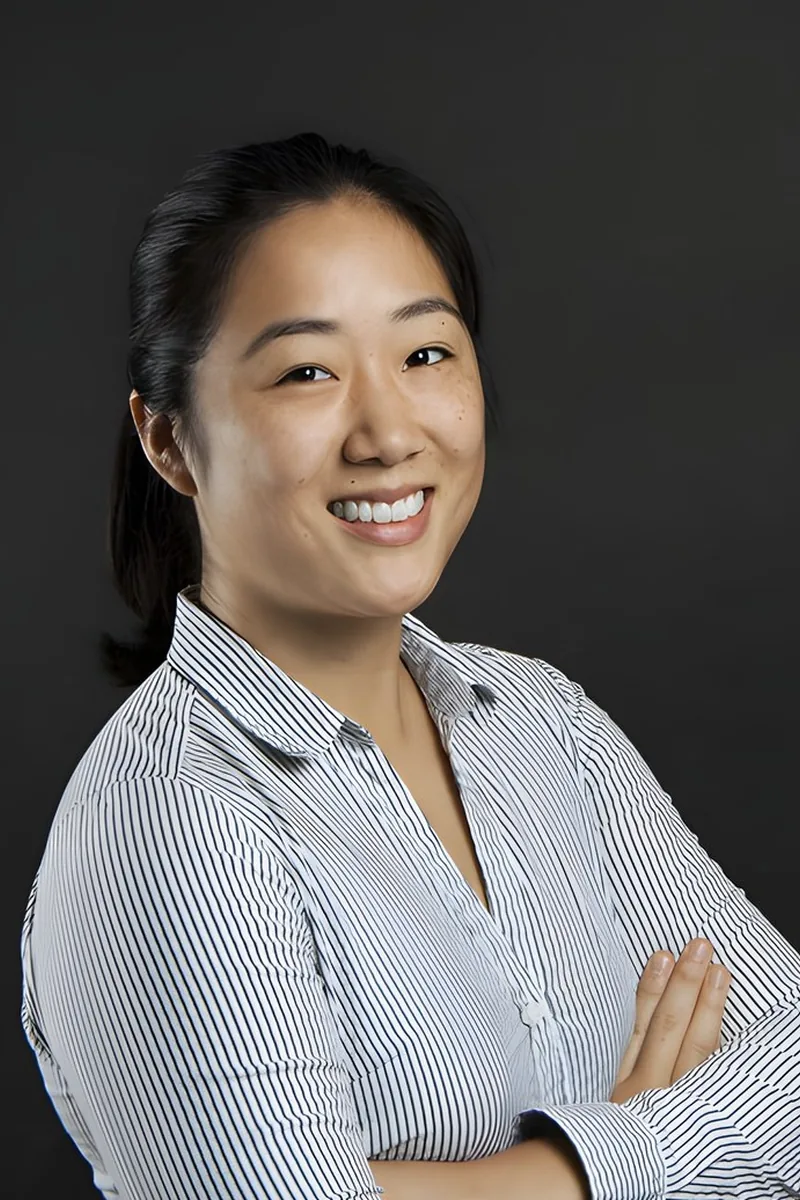
Political science at the University of Chicago is deceptively quantitative — game theory models, statistical analysis of polling data, and policy cost projections all run on the same algebraic machinery that college algebra courses formalize. Asta brings that background to topics like systems of equations and exponential functions, connecting abstract procedures to the kind of real-world modeling she actually did in her coursework. A 35 ACT and 5.0 tutoring rating back up the math instincts.

Economics coursework at the University of Chicago means Ellie uses college-level algebra constantly — solving systems of equations, working with logarithmic and exponential functions, and manipulating matrices for applied models. She brings that daily fluency to sessions, connecting abstract algebraic techniques to problems students can actually visualize. Her 1520 SAT score speaks to the quantitative precision she carries into every topic.
A PhD in Comparative Human Development at the University of Chicago might not scream algebra, but Gabriel's lifelong love of math — and years of tutoring it across age levels — means he can unpack topics like logarithmic properties and polynomial operations with genuine enthusiasm rather than rote procedure. He's especially effective at diagnosing exactly where a student's reasoning breaks down and rebuilding the logic from that point forward. Rated 5.0 by students.
Zac scored a 34 on the ACT, which means he's sharp with the algebraic reasoning that college algebra courses hammer — solving systems, working through polynomial and rational expressions, and making sense of function behavior. His Human and Organizational Development major at Vanderbilt doesn't scream math, but it's built on quantitative problem-solving frameworks, and he brings that structured, break-it-into-pieces thinking to every equation he walks through. Rated 4.9 by students.
Studying computational neuroscience at the University of Chicago means Gabriel uses college-level algebra daily — from modeling neural firing rates to manipulating complex functions in research. He brings that applied fluency to topics like polynomial division, logarithmic equations, and systems of inequalities, connecting abstract procedures to the quantitative reasoning behind them.
Polynomial division, rational expressions, and logarithmic equations all become more manageable when a student understands the underlying structure instead of memorizing isolated rules. Jhonatan approaches College Algebra by linking each new function type back to ideas students already know, so concepts like domain restrictions and transformations feel like natural extensions rather than brand-new territory.
Jack's economics degree from Northwestern kept him deep in algebraic modeling — supply and demand curves, cost functions, optimization problems — so the polynomial, logarithmic, and rational expression work in college algebra is territory he navigates fluently. His 35 ACT and 5.0 tutoring rating back up what his students already know: he breaks down multi-step problems into clean, logical sequences that make the algebra feel less like guesswork and more like a system you can actually trust.
Isabel's Harvard art and architecture training is more algebraic than most people realize — analyzing proportional systems, geometric relationships, and structural ratios gave her a concrete visual vocabulary for the function behavior and equation-solving that define college algebra. She likes to start by having a student pinpoint exactly where a problem stops making sense, then rebuild from that spot with a similar example until the technique clicks on its own.
Perfect scores on the SAT math, SAT II Math IIC, and GRE quantitative sections don't happen without deep algebraic fluency — and Richard's PhD work in biology at Northwestern keeps him actively using that toolkit, from modeling microbial growth with exponential and logarithmic functions to solving complex systems of equations in research data analysis. He's especially effective at demystifying the transition from procedural equation-solving to the more abstract function behavior that trips up so many college algebra students. Rated 5.0 by students.
I am a graduate of Cornell University's College of Arts and Sciences. I received my Bachelor of Arts in Chemistry with Distinction in 2015. Since graduation, I was a physics/chemistry teacher and soccer coach at a private school in Virginia for a year, where I led the soccer team to an undefeated season. Before teaching and coaching professionally, I was a Teaching Assistant for the Cornell Math and Physics Departments, where I taught many subjects including calculus, mechanics, electromagnetism. Throughout my time at Cornell and as a teacher, I tutored subjects ranging from the SAT to AP Physics and Algebra II, which is where my true talents lie: in small group or one-on-one settings where I can give students the full attention they deserve and tailor my approach specifically to their learning styles. This is why I am now pursuing tutoring as a part-time occupation at Varsity Tutors. I embrace teaching all math and science subjects, especially physics and calculus, at both the college and high school level and will go above and beyond to make sure all of my students succeed, according to their definition of success. In my spare time, I enjoy playing league soccer, basketball, tennis and guitar, and also like to travel and see as much of the world as I can.
Polynomial division, rational functions, and logarithmic equations tend to be the sticking points in college algebra — places where gaps from earlier courses suddenly matter. Alan earned his bachelor's in mathematics and has the teaching credentials to diagnose exactly where those gaps are and close them quickly. He walks through each problem type with enough repetition that the underlying logic becomes second nature.
Graduate-level public health coursework at George Washington University is more quantitative than most people expect — Nicki regularly worked with exponential models for disease spread, logarithmic scales for epidemiological data, and systems of equations in biostatistical analysis. That means she teaches college algebra concepts like function behavior and exponential/logarithmic relationships by connecting them to problems she's actually encountered in research. Rated 5.0 by students.
Most returning college students hit a wall when algebra shifts from solving basic equations to navigating function behavior — compositions, transformations, and logarithmic relationships that feel nothing like high school. Sam's MS in Accounting means he's been manipulating these algebraic structures in financial modeling and quantitative analysis for years, so he breaks down each concept with the practicality of someone who actually uses the math. He's especially effective at rebuilding algebraic fluency for students who've been away from math courses and need to get up to speed quickly.
Polynomial division, rational expressions, and logarithmic equations all require a confidence with algebraic manipulation that many college students never fully built in high school. Sarah identifies those foundational gaps quickly and rebuilds the reasoning behind each operation so that higher-level problem sets stop feeling impossible. Her 5.0 rating speaks to how well that approach works across age groups.
Neuroscience at the University of Chicago involves a surprising amount of algebraic heavy lifting — modeling neural firing rates with exponential functions, linearizing dose-response curves with logarithmic transformations, and solving systems that describe competing biological signals. Gabriela brings that applied perspective to college algebra, unpacking topics like function behavior and exponential equations by connecting them to the quantitative problems she's actually working through in her coursework.
Studying computer science at MIT means Mercy uses algebraic structures daily — from polynomial manipulation to function composition to systems of equations — in contexts that go well beyond a textbook. She brings that applied fluency to college algebra, connecting abstract rules to the reasoning behind them so students can tackle problems they haven't seen before.
Bioengineering grad work throws Mark into algebraic problem-solving constantly — modeling biological systems with exponential and logarithmic functions, linearizing data sets, and solving the kinds of multi-step equations that college algebra courses build toward. His 34 ACT confirms the quantitative instincts, but it's the engineering habit of checking whether an answer actually makes physical sense that keeps his approach grounded in understanding rather than rote symbol-pushing.
Ali's premed track alongside a theatre degree meant juggling organic chemistry stoichiometry and physics problem sets — all of which lean heavily on the polynomial, exponential, and logarithmic manipulation that college algebra courses drill. That quantitative backbone, paired with a 1580 SAT, means he can walk through a tricky rational equation or function transformation with the kind of clarity that comes from actually needing algebra to survive a science-heavy curriculum. Rated 5.0 by students.
Two biomedical engineering degrees gave Lee years of practice turning messy biological systems into clean algebraic models — solving systems of equations for compartmental drug models, using exponential and logarithmic functions to describe tissue growth, and manipulating rational expressions in fluid dynamics calculations. That engineering instinct for checking whether an answer actually makes physical sense transfers directly to college algebra, where Lee teaches students to verify their work by reasoning about what a function should do before crunching through the steps. Rated 4.9 by students.
A PhD in chemistry means Taryn has spent years wrangling the algebraic machinery behind quantitative science — manipulating exponential rate expressions, solving systems of equilibrium equations, and transforming logarithmic relationships long after most people forget what a log rule even looks like. She especially enjoys tackling word problems, translating messy real-world setups into clean algebraic structures students can actually work through step by step.
Years of working with learners who have different processing styles — including young adults with developmental disabilities — taught Hannah to spot exactly where an algebraic concept stops making sense and restructure the explanation on the fly. Her pre-med coursework leaned heavily on the college algebra toolkit (exponential models, logarithmic relationships, systems of equations), so she teaches those topics from genuine fluency rather than a script. Rated 5.0 by students.
The jump to college algebra is where many students first encounter function composition, piecewise definitions, and rational expressions that demand genuine algebraic fluency rather than calculator shortcuts. Irene tackles these sticking points by teaching the reasoning behind each manipulation so that factoring, domain restrictions, and transformations start to feel predictable. Her 4.9 rating speaks to an approach that's both rigorous and accessible.
I am a 2009 graduate of the University of Chicago in Statistics and Political Science. I have been a tutor for test prep (including ACT, SAT, LSAT and AP testing), academic and creative writing, and general academic assistance for three years.
The jump from high school algebra to college algebra often trips students up at rational functions, polynomial division, and logarithmic equations. Ignacio earned his BS at the University of Chicago, where quantitative rigor was baked into every course, and he approaches college algebra by connecting abstract function behavior to graphs students can actually visualize. He's especially effective at demystifying composite and inverse functions.
Polynomial division, rational expressions, and logarithmic equations tend to pile up fast in a college algebra course. Kishore tackles these topics by connecting them back to the engineering problems he solves at UIC, giving each concept a tangible reason to exist beyond the homework set.
Gabe's neuroscience degree required him to model neural firing rates, dose-response curves, and behavioral data sets — all problems built on the exponential, logarithmic, and polynomial relationships that college algebra courses drill. That science-lab fluency means he can unpack why a technique like completing the square or solving a rational equation actually works, not just walk through the steps. Holds a 5.0 rating and a 35 ACT.
Elise studied physics and linguistics at MIT — a combination that means she's spent years translating between symbolic systems, whether that's solving differential equations or diagramming sentence structures. For college algebra, that dual fluency is especially useful when unpacking how logarithmic and exponential rules actually work as a coherent system rather than a grab bag of formulas to memorize.
Polynomial long division, rational expressions, and logarithmic equations all show up constantly in Thomas's computer science coursework at DePaul, so he teaches college algebra with real context for how these tools get used beyond the classroom. He's especially good at breaking down function transformations and systems of equations for students who need to see the logic behind each step before it clicks.
A year as an ACT classroom instructor with Kaplan gave Smith structured methods for breaking down the algebraic reasoning that underpins the test — and those same techniques for tackling functions, inequalities, and polynomial operations translate directly to college algebra coursework. His 33 ACT confirms the quantitative fluency, while his theatre background means he's unusually good at reading a student's confusion in real time and adjusting his explanation on the fly. Rated 4.9 by students.
Three separate bachelor's degrees — including one in economics — mean Victor has worked through college algebra's core toolkit from multiple angles: modeling with functions, solving systems, and manipulating expressions in both pure math and applied contexts. He's especially effective at unpacking word problems and translating real-world scenarios into algebraic setups, a skill economics coursework demands constantly. Rated 5.0 by students.
Polynomial division, rational functions, and logarithmic equations all click faster when you understand the logic behind each step instead of memorizing procedures. May earned her B.A. in Computer Science and Biology at Bryn Mawr College, where she also served as a Calculus TA — giving her deep practice in breaking down algebraic structures for students who need more than just the answer key. Rated 4.9 by students.
An economics degree from the University of Chicago meant working through polynomial functions, matrix algebra, and systems of equations on a daily basis. Marvin applies that same quantitative rigor to college algebra, walking students through the logic behind each manipulation so the steps feel purposeful rather than arbitrary.
A PhD in linguistics might seem like an odd fit for college algebra, but Lewis's work involves the same core skill: recognizing formal rule systems and applying them consistently across new contexts. He teaches topics like solving rational equations and working with logarithmic properties the way he'd teach a grammatical paradigm — by making the underlying pattern explicit so students can extend it to unfamiliar problems instead of relying on memorized steps.
Three economics degrees gave Joseph a daily relationship with the algebraic machinery most college algebra students are encountering for the first time — solving systems of equations for market equilibria, manipulating functions to model supply and demand, and working through logarithmic and exponential relationships in growth models. He breaks down problems by connecting the abstract notation to the economic logic underneath, so techniques like function transformations or rational expressions start making intuitive sense rather than feeling like arbitrary symbol-shuffling.
Most college algebra students struggle not with the arithmetic but with the leap into abstraction — suddenly a problem asks them to compose two functions or interpret a logarithmic equation, and the familiar ground disappears. William's strength is translating that abstraction into structured, step-by-step reasoning, drawing on the same analytical rigor that carried him through NYU's history program and earned him a 1490 SAT. Rated 5.0 by students.
The jump from high school algebra to college algebra often catches students off guard, especially when rational functions, logarithmic equations, and polynomial behavior all show up in the same exam. Joseph tackles these topics by building up the reasoning behind each rule so that applying it feels natural. His math degree at UChicago means he's seen where these foundational ideas lead, which gives his explanations real depth.
Economics at Yale meant Rachel spent four years working with polynomial models, systems of equations, and function transformations long before most students encounter them in a college algebra course. She connects abstract algebraic concepts — like logarithmic and rational functions — to real economic applications, which makes the material click faster.
Rational expressions, logarithmic equations, and systems of inequalities all show up in college algebra, often at a pace that leaves little room for questions in lecture. Anthony uses collaborative problem-solving to unpack each concept in real time, adjusting to whatever a student finds confusing rather than re-lecturing. His BS in mathematics from UIC means the underlying theory is second nature to him.
Zach's approach to college algebra is all about narrowing down options — for any given problem with rational expressions or logarithmic equations, he maps out the two or three possible solution paths and teaches students to pick the cleanest one fast. A 34 ACT and a music performance background might seem like an odd combination, but reading complex musical scores builds exactly the kind of pattern recognition that makes simplifying algebraic expressions feel intuitive. Rated 5.0 by students.
Civil engineering coursework at the undergraduate level is built on algebraic scaffolding — solving systems of equations for structural loads, manipulating rational expressions in fluid mechanics, and applying logarithmic functions to model material behavior. Kyle brings that applied perspective to college algebra, walking through each technique with the patience (4.9-rated) to make sure the reasoning clicks before moving to the next problem.
Testimonials
Because the right College Algebra tutor makes all the difference.
Average Session Rating – Based on 3.4M Learner Ratings
Practice College Algebra
Free practice tests, flashcards, and AI tutoring for College Algebra
Nearby College Algebra Tutors
Other Chicago Tutors
Related Math Tutors in Chicago
Frequently Asked Questions
College Algebra requires a shift from memorizing procedures to understanding the concepts behind them—many students struggle with this transition. Common pain points include working with functions and their transformations, solving multi-step equations, word problems that require translating real-world scenarios into algebraic expressions, and graphing. Additionally, students often feel disconnected from how these topics connect to each other, which makes problem-solving feel like isolated tasks rather than a cohesive skill set.
Personalized 1-on-1 instruction allows tutors to identify exactly where your understanding breaks down—whether it's foundational gaps, conceptual confusion, or test-taking strategy. Rather than moving at a class pace, tutors can slow down on challenging topics like function composition or systems of equations, use multiple approaches to explain a concept, and help you see the patterns and connections that make algebra click. This targeted approach builds genuine confidence and reduces math anxiety by proving that you can master these skills.
The first session is about building rapport and understanding your specific needs. Tutors will ask about your current challenges, review recent assignments or exams to identify gaps, and discuss your goals—whether that's improving your grade, preparing for a placement exam, or building foundational skills. This diagnostic conversation helps tutors create a personalized plan tailored to your learning style and pace, so subsequent sessions are focused and productive from day one.
Absolutely. Many students can get an answer but struggle to show clear work or explain their reasoning—both critical for College Algebra exams and future math courses. Tutors help you develop systematic problem-solving strategies: breaking multi-step equations into manageable parts, organizing your work so it's easy to follow, and learning to check your answers. This builds both accuracy and the communication skills that professors expect.
Yes. Chicago's 12 school districts and various colleges use different textbooks and teaching approaches—some emphasize graphical understanding, others focus on algebraic manipulation, and some blend both. Tutors are experienced working across different curricula and can align their instruction with whatever materials and methods your course uses, ensuring consistency between tutoring and classroom learning.
Math anxiety is real and common, but personalized tutoring is one of the most effective ways to overcome it. Working 1-on-1 with a tutor creates a low-pressure environment where you can ask questions without judgment, go at your own pace, and experience small wins that rebuild confidence. As you start understanding concepts more deeply and solving problems successfully, the anxiety often decreases naturally—you're building proof that you can do this.
Varsity Tutors connects you with expert tutors who specialize in College Algebra and understand the specific challenges students face. You can share details about your course, current struggles, and learning preferences, and we'll match you with a tutor whose expertise and teaching style fit your needs. The process is straightforward, and you can start personalized instruction quickly.
Word problems and graphing are where many students struggle because they require translating between different representations—words, equations, and visual graphs. Tutors break down the process step-by-step: teaching you how to identify what a problem is asking, set up the equation correctly, and interpret your answer in context. For graphing, they help you understand transformations and key features rather than just plotting points, so you can approach any graph with confidence.
Let’s find your perfect tutor
Answer a few quick questions. We’ll recommend the right plan and match you with a top 5% tutor.