Award-Winning Accounting Tutors
serving Tampa, FL
Accounting
Tutors in Tampa
Private 1-on-1 tutoring, weekly live classes for academic support, test prep & enrichment, practice tests and diagnostics, and more to elevate grades and test scores.
Based on 3.4M Learner Ratings
UniversitiesSchools & Universities
DeliveredHours Delivered
ProficiencyGrowth in Proficiency
Who needs tutoring?
No obligation. Takes ~1 minute.
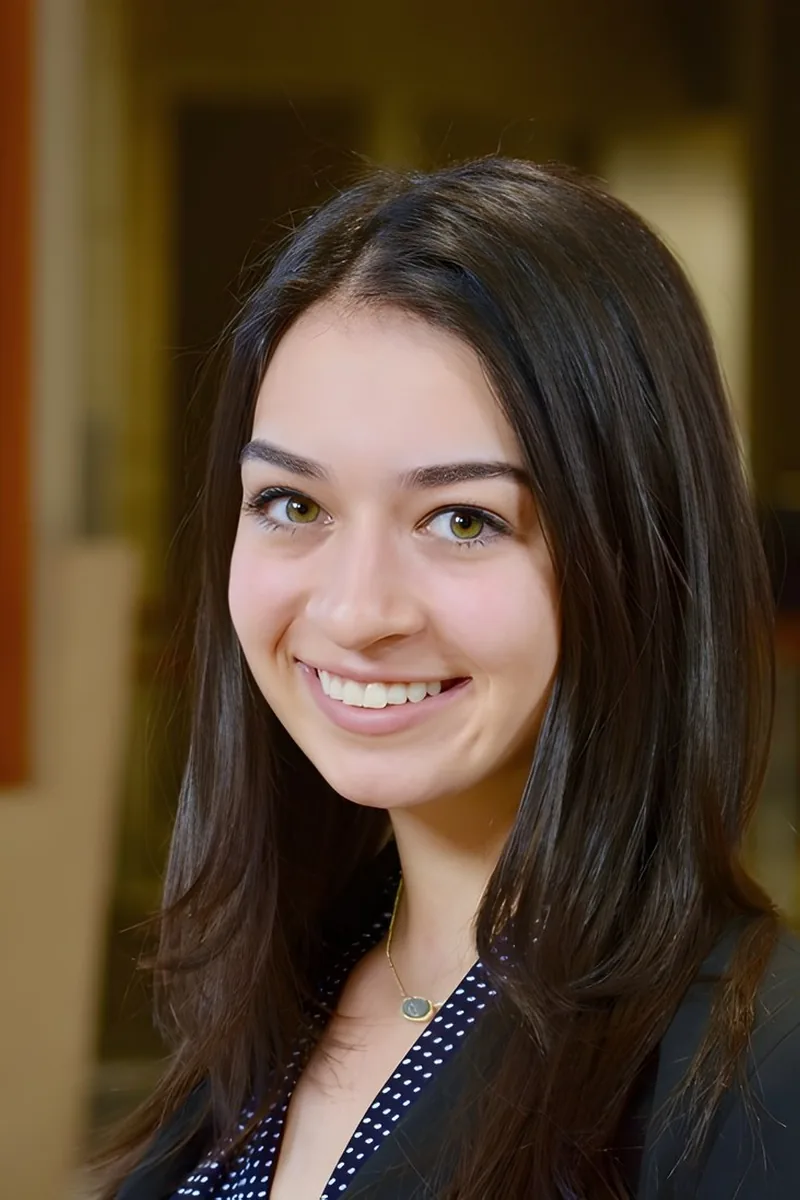
Tiffany's undergraduate degree is in accounting, so she teaches from genuine fluency with debits and credits, journal entries, and the full accounting cycle. Whether a student is struggling with adjusting entries, bank reconciliations, or the relationship between the income statement and balance sheet, she connects each concept back to the underlying logic of double-entry bookkeeping.

Debits and credits follow a logic that, once internalized, makes everything from journal entries to financial statement preparation feel systematic rather than arbitrary. Hari teaches across financial, managerial, and cost accounting, and his finance MBA means he connects each ledger entry to the bigger picture of how businesses actually use accounting data to make decisions.
Between serving as a supplemental instruction leader and a tutor at the University of North Florida, Daniel has spent years walking students through accounting coursework at every level — from high school basics to upper-division topics like cost accounting and managerial accounting. His dual degree in accounting and finance means he doesn't just know how to post entries; he understands how those numbers feed into the financial decisions that give them purpose. Rated 4.9 by students.
Debits, credits, and the accounting equation click faster when someone can explain the logic behind them — not just the rules. Valerie holds an MBA and a Florida certification in Business Education, and she breaks down journal entries, trial balances, and adjusting entries by connecting each step to the bigger picture of how financial statements actually come together.
Few tutors can teach accounting from both the academic and professional side the way Stephen can. A Notre Dame accounting graduate who spent over twenty years at PwC — including seven-plus as a partner — he walks students through debits and credits, journal entries, and financial statement analysis with the authority of someone who's prepared and reviewed these documents for Fortune-level clients.
Noah's business economics degree required coursework across financial accounting, managerial accounting, and cost accounting — giving him a breadth that lets him match explanations to whichever course a student is actually taking. He connects accounting concepts to the broader economic decisions businesses face, like how cost behavior shapes pricing or how variance analysis informs budgeting. That business-side perspective makes the numbers feel purposeful instead of abstract.
Pre-med biology coursework demands the same meticulous attention to detail that accounting does — every data point matters, and one misplaced number throws off the whole picture. Anup applies that systematic precision to the accounting equation, journal entries, and financial statement basics, treating each transaction as a logical sequence rather than a rote procedure. Holds a 5.0 rating.
Jordan's Italian Studies degree might seem far from accounting, but the discipline required to master a foreign language's rule systems — conjugation tables, grammatical structures, precise syntax — maps surprisingly well onto double-entry bookkeeping and the accounting equation. She treats debits and credits as a grammar to learn: once students internalize the underlying logic of how transactions balance, the rest of the accounting cycle clicks into place.
Sean's pre-med track means he's navigating the quantitative, detail-oriented coursework that makes accounting's logic feel familiar — tracking inputs, balancing outputs, and making sure every number has a purpose. He breaks down the accounting equation and basic journal entries by treating each transaction like a problem to solve systematically rather than a rule to memorize. Rated 4.9 by students.
I am an undergraduate student studying both legal studies and accounting at the University of Central Florida. Prior to college I was in the IB (International Baccalaureate) Program at my high school and was named a National Merit Commended Scholar. I've spent a number of years teaching and tutoring, despite my young age, in a variety of subjects ranging from music to different levels of math. I am most passionate about tutoring math related subjects as I see how many students struggle to connect certain concepts with others. I also love to tutor business related fields such as economics as I am an accounting major and it is what I study. I am a strong proponent of the idea that no matter how long it takes, every student is capable of being successful in a subject if they put in the work, with the proper guidance. In my spare time, I really love being a referee and participating in taekwondo tournaments as well as practicing the piano.
I am a senior at Rollins College and have my IB diploma from high school. I did TOK, HLs: Psych, Econ, language and literature, and SLs: Spanish, biology, and mathematical studies. I prefer psych, econ, business, and anything English or literature related. I can do paper revisions, essay help, reading comprehension, elementary/middle/high school math. I would prefer more basic math and science, can help with reading and writing in Spanish, and am up for anything.
I am qualified to tutor many subjects, my favorite subject by far is math, specifically calculus. Math is a subject almost universally hated, and I believe that is mainly due to the narrow way in which it is taught. I have ADHD, and I often don't understand things the first time they are explained to me, meaning over the years I have had to figure out different ways of looking at information. Oftentimes, all a student needs is for something to be explained in a different way, and I love watching people finally understand a concept. Everyone learns differently, but everyone can learn.
Studying finance and statistics at NYU means Eric encounters accounting principles from the other side — as the language businesses use to communicate financial health. That perspective lets him teach concepts like the accounting equation, income statements, and balance sheets by showing what the numbers mean in practice, not just how to record them. Rated 5.0 by students.
Tony holds both a bachelor's and a master's degree in accounting, which means he can dig into topics like adjusting entries, depreciation methods, and financial statement analysis with real depth. He breaks down the logic behind debits and credits so the accounting equation stops feeling like arbitrary rules and starts making intuitive sense.
Nearly twenty years as a licensed CPA — spanning public practice, manufacturing, banking, and nonprofit work — means Sharon has seen the full accounting cycle play out in wildly different contexts. She unpacks debits, credits, journal entries, and financial statement preparation by connecting textbook rules to how transactions actually move through a real organization. Rated 5.0 by students.
Debits and credits confuse almost everyone at first because the logic feels backward until the balance sheet clicks as a complete system. Shih, a finance major and state-certified teacher from UGA, unpacks the accounting equation by building each journal entry from the transaction's economic reality — making adjusting entries, depreciation schedules, and financial statement preparation far more intuitive.
Holding a diploma in accounting on top of his economics degree, Stuart brings both the theoretical framework and the practical detail that financial and managerial accounting courses demand. He digs into journal entries, T-accounts, and the full accounting cycle, making sure students understand why debits and credits balance — not just that they do.
I am a recent graduate of the University of South Carolina with degrees in International Business and Accounting with a minor in German.
Debits and credits follow a logic that, once internalized, makes every journal entry and T-account feel intuitive rather than arbitrary. Matt studied finance at the university level and applies that background to teach accounting as a coherent framework — from the balance sheet equation through adjusting entries and financial statement preparation.
Jonathan is a CPA and CFA Level III candidate who has lived the full arc of accounting — from introductory journal entries through complex consolidations and SEC reporting standards. He breaks down topics like accrual adjustments, depreciation methods, and statement analysis by connecting each entry to its real-world business impact. Rated 4.9 by students.
Currently pursuing a Master of Professional Accountancy at UT and a CPA license, Emily is working through advanced accounting material in real time — which sharpens how she teaches everything from introductory journal entries to intermediate topics like depreciation methods and accrual adjustments. Her undergraduate accounting degree and part-time tutoring experience mean she's already spent years translating tricky ledger mechanics into language that actually sticks.
Alexandra's accounting expertise spans financial, corporate, intermediate, and tax accounting, giving her unusual depth across the discipline. She unpacks the logic behind journal entries, T-accounts, and financial statement preparation so that debits and credits stop feeling like arbitrary rules and start making intuitive sense.
Lulu spent an entire career in accounting after completing her master's in the field at UT Arlington, so she teaches debits, credits, journal entries, and financial statements from real-world experience rather than textbook theory alone. Whether the challenge is managerial accounting, cost allocation, or preparing for an intermediate exam, she connects each concept back to how businesses actually use the numbers.
Testimonials
Because the right Accounting tutor makes all the difference.
Average Session Rating – Based on 3.4M Learner Ratings
Practice Accounting
Free practice tests, flashcards, and AI tutoring for Accounting
Nearby Accounting Tutors
Other Tampa Tutors
Related Business Tutors in Tampa
Frequently Asked Questions
Many students struggle with understanding the fundamental concept of debits and credits, which forms the foundation for all accounting work. Others find it difficult to connect individual journal entries to the bigger picture of financial statements, or they rush through calculations and make careless errors. Personalized tutoring helps identify exactly where the confusion lies—whether it's conceptual understanding, procedural skills, or test-taking strategies—so a tutor can address those specific gaps rather than reviewing material the student already understands.
Florida's accounting courses, whether at the high school level (like Accounting 1 and 2) or in college, emphasize both practical bookkeeping skills and the conceptual framework behind financial reporting. Tutors working with students in Tampa are familiar with these standards and can ensure instruction covers required topics like the accounting cycle, financial statements, and internal controls. If you're preparing for AP Accounting or college-level courses, personalized instruction can help you master material at a deeper level than classroom pace alone allows.
During your first session, a tutor will assess your current understanding of accounting concepts, identify specific areas of weakness, and learn about your goals—whether that's improving a grade, preparing for an exam, or building confidence with a particular topic. This diagnostic conversation helps the tutor create a personalized plan tailored to your learning style and pace. Subsequent sessions build on this foundation with targeted instruction, practice problems, and strategies to help concepts stick.
In a classroom of 16-17 students per teacher (Tampa's average), instruction moves at a pace designed for the middle of the class—some students rush ahead while others fall behind. Personalized tutoring adapts in real time to your pace and learning style, spending extra time on concepts you find challenging and moving quickly through material you've mastered. A tutor can also use teaching methods that work best for you, whether that's visual diagrams of the accounting cycle, hands-on practice with journal entries, or real-world case studies.
Clear progress markers in accounting include improved accuracy on practice problems, ability to complete the accounting cycle without errors, understanding of how different accounts affect financial statements, and stronger performance on quizzes and exams. Your tutor will track these improvements and adjust the focus of sessions based on what's working. Many students see noticeable gains within 4-6 weeks of consistent tutoring, especially when tackling a specific challenge like reconciling accounts or preparing financial statements.
Varsity Tutors connects you with expert tutors who have accounting expertise and understand how to teach it effectively. You can share your specific needs—your current grade level, the accounting topics you need help with, and your availability—and we'll match you with a tutor who's a good fit. The process is straightforward, and you can get started with your first session quickly.
Yes. Beyond foundational bookkeeping, tutors can help with intermediate and advanced topics like cost accounting, managerial accounting, auditing principles, and tax accounting. Whether you're in an honors accounting class, taking AP courses, or preparing for college-level accounting, personalized instruction helps you master complex concepts like variance analysis, consolidation accounting, or audit procedures. Tutors can also help you connect these advanced topics back to core accounting principles so everything makes sense.
Accounting exams require both conceptual understanding and procedural accuracy, and tutors help you develop both. Your tutor can review past exams or practice problems, identify patterns in mistakes, teach test-taking strategies specific to accounting (like checking your work on calculations), and build your confidence with timed practice. This targeted preparation often leads to significant score improvements because you're focusing effort on what actually matters for your specific exam.
Let’s find your perfect tutor
Answer a few quick questions. We’ll recommend the right plan and match you with a top 5% tutor.