Award-Winning AP Biology Tutors
serving El Paso, TX
AP Biology
Tutors in El Paso
Private 1-on-1 tutoring, weekly live classes for academic support, test prep & enrichment, practice tests and diagnostics, and more to elevate grades and test scores.
Based on 3.4M Learner Ratings
UniversitiesSchools & Universities
DeliveredHours Delivered
ProficiencyGrowth in Proficiency
Who needs tutoring?
No obligation. Takes ~1 minute.

Rice University's biochemistry program is notoriously rigorous, and Michelle came out of it with a deep understanding of how molecular processes — protein folding, enzyme kinetics, gene regulation — drive the larger biological systems AP Bio tests at every level. Now in her second year of medical school at Baylor, she's actively applying concepts like metabolic pathways and cellular communication in clinical settings, which means she can teach students not just what happens during something like signal transduction, but why it matters physiologically.
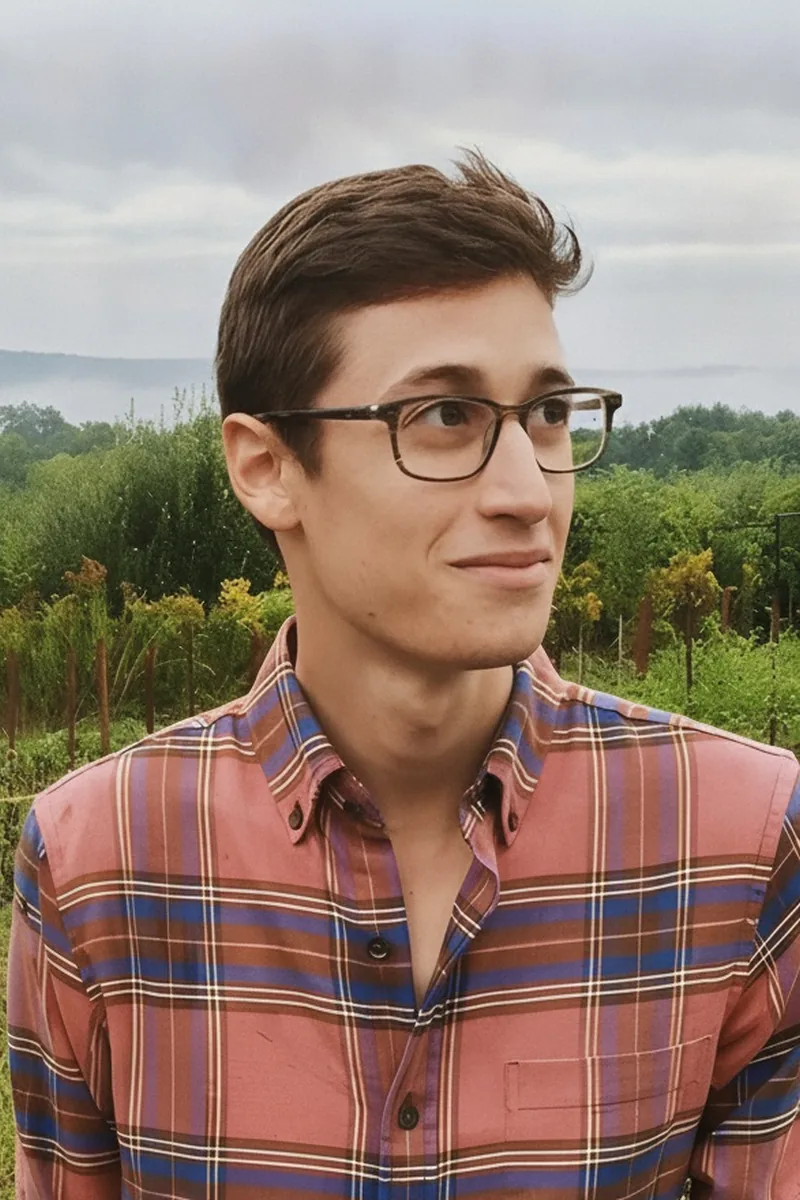
A human biology degree from Cornell plus current graduate work in human development means Jonathan has studied the organism-level physiology and developmental processes that AP Bio's later units build toward — growth, reproduction, and how organisms maintain homeostasis through feedback mechanisms. He's particularly good at teaching students to read experimental data and construct the kind of evidence-based arguments the free-response section demands, a skill sharpened by his own med school prep and 1550 SAT analytical training. Rated 4.9 by students.
Succeeding on the AP Biology exam means going beyond memorizing cell structures and metabolic pathways — it means interpreting experimental data, constructing explanations, and reasoning across biological scales from molecules to ecosystems. Jake studies Human Biology at Stanford, where his coursework in genetics, physiology, and ecology maps directly onto the AP curriculum's four big ideas.
As a pre-med biosciences major at Rice University, Tegan is studying the same cellular processes, genetics, and ecological concepts that AP Bio covers — but at the college level, which means she can explain the *why* behind topics like enzyme kinetics or signal transduction rather than just the textbook summary. She's especially good at breaking down the plant biology and photosynthesis material that many students rush past, connecting light reactions and carbon fixation to the energy flow concepts the exam circles back to repeatedly. Rated 4.9 by students.
As a premed biosciences student at Rice University, Jessy is actively working through the same molecular biology, genetics, and physiology content that AP Bio covers — which means she can pinpoint exactly where textbook explanations lose students and rephrase them on the fly. She recently peer-tutored classmates through AP-level coursework in high school and earned a 34 ACT, so she understands both the science and the test-taking strategy behind interpreting data sets and constructing free-response answers. Rated 5.0 by students.
Biophysics at Rice means Aadith studies biological systems through a quantitative lens — analyzing protein folding energetics, membrane dynamics, and molecular interactions — which gives him an unusual edge on AP Bio's units covering macromolecule structure, enzyme kinetics, and cellular energetics. He's also actively taking biochemistry coursework alongside his physics major, so he can explain concepts like the chemiosmotic mechanism or allosteric regulation with the kind of molecular-level precision that earns full credit on free-response questions.
The trickiest part of AP Bio for most students isn't memorizing content — it's learning to think across units, like connecting how a mutation in a gene regulation sequence cascades through protein expression and ultimately shifts a population's allele frequencies. Kendall's broad science background, including coursework in both AP Chemistry and AP Biology, lets her teach students to build those multi-concept chains rather than treating each unit as isolated material. Rated 4.9 by students.
I am most passionate about biology and chemistry. I am a firm proponent of education, believing it to be absolutely necessary for an improved quality of life, and I try to impart this appreciation to all of my students.
Genome editing research at Rice and computational neuroscience work at Hopkins mean Emmanuel has done the actual bench science behind AP Bio's toughest molecular and cellular units — manipulating DNA sequences, analyzing gene expression data, and studying how neural signals propagate. His Behavioral Biology degree from Johns Hopkins wove together genetics, cell biology, and animal behavior in a way that mirrors how the AP exam asks students to connect molecular mechanisms to organism-level outcomes. Rated 5.0 by students.
Having taught biology and microbiology at the college level — including to early college high school students — Kelsey knows exactly where the AP Bio curriculum ramps up in difficulty. She digs into the toughest units, like cellular respiration energetics, gene regulation, and phylogenetic analysis, with the kind of molecular-level detail her cellular and molecular biology degree trained her in.
AP Biology's free-response questions demand more than recall — they require connecting cellular respiration to ecology, or explaining how a mutation ripples through gene expression, protein function, and phenotype. James holds a B.S. in Biology and unpacks those cross-unit connections so students can construct the multi-paragraph explanations the exam rewards. He also drills data-analysis questions, where interpreting graphs and experimental design separates 4s from 5s.
Brian teaches AP Biology with the depth of someone who's lived it — he holds a PhD in Microbiology and works as a research associate at the Botanical Research Institute of Texas. He digs into the exam's trickiest areas, like cellular energetics, gene regulation, and experimental design questions, connecting each concept to the kind of scientific reasoning the College Board actually rewards.
A neuroscience degree and medical training mean Jordan has encountered AP Biology's toughest topics — cellular respiration, signal transduction, gene expression, evolution — at a much deeper level than the course requires. That depth lets her explain *why* a process works, not just *what* happens, which is exactly what the AP exam's data-analysis and experimental-design questions reward. She holds a 5.0 rating from students.
With degrees in biology and anthropology plus a public health master's from UT Austin, Anna has studied life sciences from the molecular scale up through population-level dynamics — a range that covers nearly every AP Bio unit, from cellular processes and genetics to ecology and evolution. She's particularly strong at teaching students to think across those scales, like connecting how a mutation at the DNA level can shift allele frequencies in a population, which is the kind of multi-unit reasoning the exam's free-response questions consistently demand.
Studying Medicine, Health and Society in college gave Kevin a deep familiarity with the biological systems that dominate the AP Bio exam — cellular respiration, signal transduction, gene expression and regulation. He teaches students to think in terms of energy flow and information transfer, the two conceptual threads the College Board uses to tie together everything from ecology to molecular biology.
As a senior biomedical science major heading into Texas A&M's medical school, Enoch is studying AP Bio's core content — gene expression, cellular energetics, and organismal physiology — at the college level right now, which keeps the material sharp rather than secondhand. He's especially effective at breaking down plant biology and ecology concepts that many pre-med tutors gloss over, since his coursework spans the full breadth of biological sciences rather than just the medically relevant units. Rated 4.9 by students.
Hello! My name is Adla Farra and I am a senior at Rice University aiming to complete a Bachelor's of Science in Biosciences with a concentration in Cell Biology. I have had experience tutoring since high school in a variety of subjects including reading, mathematics, and sciences. My teaching style emphasizes compassion and communication! I'm always here to help talk and work through any confusion and will always accommodate to each student's unique learning styles. As the older sister to a sibling with dyslexia, I am confident in my abilities in navigating different learning techniques and approaches!
A chemistry degree gives Andrew an edge when AP Bio dives into biochemistry — enzyme kinetics, the energetics of photosynthesis and cellular respiration, and how molecular structure dictates protein function. He's also deep in MCAT prep right now, which keeps topics like genetics, cell signaling, and organ system physiology sharp and current rather than dusty textbook memories. Rated 5.0 by students.
A chemical engineering degree with a biotechnology specialization from Rice means David has worked through the biochemistry and cellular processes underlying AP Bio's toughest units — enzyme kinetics, metabolic pathways, and membrane transport — with an engineer's attention to how systems interact. Now a first-year medical student at Baylor College of Medicine, he's actively reinforcing concepts like gene expression and physiological regulation in a clinical context, which keeps the material sharp and immediately applicable. Rated 5.0 by students.
I am a graduate of UC San Diego with a Bachelors in Neuroscience through the Psychology department. After graduating, I went to Michigan Technological University and did some graduate work, before moving to Texas to be closer to my parents. I did my alternative certification program through Texas Teachers and am highly qualified to teach Science for grades 7-12. I have been a teacher in public and charter schools for the last four years, and have tutoring experience extending over ten years behind me as well.
AP Biology's free-response questions demand more than recall; they require students to design experiments, interpret data, and build arguments using biological evidence. Asad tutored Rice student-athletes through college-level biology and knows how to unpack dense topics like cellular respiration pathways, gene regulation, and ecological modeling so they stick on exam day. Rated 4.7 by students.
As a pre-med student at UT Austin pursuing a public health degree, Chantelle is actively studying the biology that AP Bio tests — from cellular processes and genetics to the ecology and population dynamics that her public health coursework emphasizes daily. She's especially sharp at teaching students how to interpret data-based questions, since public health training is built around reading studies, analyzing graphs, and drawing evidence-based conclusions — exactly what the exam's experimental design prompts demand. Rated 5.0 by students.
AP Biology's free-response questions reward students who can design experiments, interpret data, and connect molecular details to big-picture processes like evolution and ecology. As a physician with a biology degree, Ted knows these systems at a depth that goes well beyond the AP curriculum, which means he can explain cellular respiration or gene regulation from multiple angles until the right one lands. He also teaches the data-analysis and graphing skills that the redesigned exam heavily tests.
Christina holds two master's degrees in science fields on top of her biology B.S., which means she's encountered AP Bio's toughest content — from gene regulation to ecological dynamics — multiple times at increasing depth. That layered understanding is especially useful when students need to move beyond memorizing the steps of cellular respiration or photosynthesis and start explaining *why* each step matters, which is what the exam's free-response questions actually score. She's also strong at tying individual units back to the course's four big ideas, so concepts like evolution and information transfer stop feeling like isolated chapters.
As a neuroscience major in a BS/MD program, Meghana lives inside the content that AP Biology tests: signal transduction, gene expression, cellular energetics, and ecological dynamics. She knows which free-response question styles the exam favors and teaches students to construct answers that earn full points by connecting molecular-level detail to big-picture biological themes.
Phoebe's Master's in Biomedical Sciences means she's worked through the biochemistry and cell biology that underpin AP Bio's most conceptually dense units — particularly enzyme kinetics, metabolic pathways, and protein structure-function relationships. She teaches students to build explanations from the molecular level up, which is exactly what the exam's free-response questions demand when they ask why a process works, not just what happens. Rated 5.0 by students.
Cellular respiration, genetics, evolution, and ecology all converge on the AP Biology exam, and the free-response questions punish surface-level memorization. Huan's biomedical engineering training means he regularly works with molecular biology and physiology concepts at the college level, so he can unpack dense topics like signal transduction or gene regulation with real clarity. He pushes students to think through experimental design questions the way a scientist would — identifying variables, predicting outcomes, and defending conclusions with data.
Felipe's pre-med track and biomedical engineering major at UT Austin put him squarely at the intersection of biology and quantitative reasoning — exactly what AP Bio now demands. He tackles the toughest units on the exam, like cellular energetics, gene expression, and ecology data analysis, by explaining the underlying mechanisms rather than just the vocabulary. Students preparing for the free-response section benefit from his ability to connect molecular-level details to big-picture biological systems.
Fourteen AP classes in high school plus a full biochemistry degree means Gabriel didn't just take AP Biology — he kept building on it through molecular biology, genetics, and cell biology at the college level. He tackles the toughest AP Bio units, like cellular energetics and gene expression, by connecting them to the deeper biochemical mechanisms most high school textbooks only hint at.
Studying neuroscience means Arlin lives inside the same biological systems that AP Bio tests on — signal transduction, gene expression, cellular respiration, and ecology all show up in his own coursework. He unpacks dense College Board free-response questions by teaching students to identify exactly what's being asked before writing a single word. His 4.8 rating speaks to how comfortable students feel tackling tough material in his sessions.
Neurobiology at UT Austin meant Hiral didn't just memorize biological systems — she studied how neurons signal, how organisms regulate internal environments, and how behavior emerges from cellular processes, all of which map onto AP Bio's units on cell communication, homeostasis, and ecology. That neuroscience lens is especially useful when students hit the signal transduction and feedback mechanism questions that trip up most test-takers. Rated 5.0 by students.
Three separate bachelor's degrees — including one in neuroscience — mean Brody has taken the full gauntlet of biology coursework: cell bio, molecular biology, genetics, and developmental biology, all of which feed directly into AP Bio's curriculum. He's especially sharp on the nervous system and animal behavior units that trip up students who've only studied biology at the introductory level, since his neuroscience training required him to trace signaling pathways from the molecular scale up to whole-organism responses.
AP Biology's free-response questions reward students who can design experiments, interpret data, and connect molecular details to big-picture biological systems. Snipta's research experience at the National Institutes of Health gave him firsthand exposure to genetics, cellular processes, and data analysis — exactly the skills the AP exam tests. He's rated 5.0 by students.
As a biochemistry major carrying a 4.0 at UT Austin, Don lives inside the material that AP Bio tests hardest: cellular respiration pathways, gene expression, enzyme kinetics, and ecological modeling. He digs into the "why" behind each process so students can handle the application-heavy free-response questions without relying on rote memorization. Rated 5.0 by his students.
As a DAT instructor for Kaplan and a math and science tutor at Austin Community College, Roozbeh regularly teaches the biology content that overlaps with AP Bio — genetics, cellular processes, and ecological relationships — in high-stakes testing contexts where students need to apply concepts quickly and accurately. His industrial management background also gives him an unusual edge with the data interpretation and experimental design questions that trip up many AP Bio students, since he's trained to analyze systems and spot patterns in complex datasets. Rated 5.0 by students.
Bioinformatics trains you to think about biology computationally — analyzing gene sequences, modeling protein interactions, and mining data from large-scale experiments — which gives Hamza an unusual angle on AP Bio's genetics and molecular biology units. He's particularly good at breaking down how information flows from DNA to protein and why mutations matter at the molecular level, connecting the kind of sequence-level logic he uses daily to the conceptual reasoning the exam demands.
Molecular and cell biology was Daniel's actual undergraduate major, so the AP Bio units on gene expression, membrane dynamics, and cellular communication aren't material he's revisiting — they're the core of his degree. He's heading to UC Davis medical school this fall, which means he can teach students to think about biological mechanisms the way the exam's free-response questions demand: tracing a process from molecular trigger to organism-level outcome. Rated 5.0 by students.
Physician Assistant training at UNT Health Science Center means Joyce doesn't just recall AP Bio content — she's actively applying cell biology, physiology, and microbiology in clinical rotations, which gives her a practitioner's intuition for how biological systems actually behave under real conditions. Her master's in biomedical sciences deepened the molecular side, so she can walk students through topics like signal transduction or immune response pathways with the kind of mechanistic detail that earns full credit on free-response questions. Rated 5.0 by students.
As a biology major at Texas A&M who started in biomedical engineering, Elliot brings both the quantitative rigor and the biological depth that AP Bio demands — especially useful for units where math meets biology, like Hardy-Weinberg equilibrium calculations and chi-square analysis in genetics labs. He's studying this material in his college courses right now, which means the content is active knowledge rather than something he's dusting off. Rated 5.0 by students.
Engineering coursework at Texas A&M means Mutaharah tackles AP Bio's quantitative demands — chi-square genetics problems, water potential calculations, and interpreting data from controlled experiments — with a precision that pure biology students sometimes lack. She also brings strong chemistry chops to the cellular energetics and enzyme kinetics units, where understanding reaction rates and energy transfer is what separates a 3 from a 5. Rated 4.9 by students.
Testimonials
Because the right AP Biology tutor makes all the difference.
Average Session Rating – Based on 3.4M Learner Ratings
Practice AP Biology
Free practice tests, flashcards, and AI tutoring for AP Biology
Nearby AP Biology Tutors
Other El Paso Tutors
Related Science Tutors in El Paso
Frequently Asked Questions
AP Biology covers eight major units: chemistry of life, cell structure and function, cellular transport, cell communication and cell cycle, heredity, gene expression and regulation, natural selection, and ecology. The exam tests your understanding of these concepts through multiple-choice questions, free-response questions, and lab-based reasoning. A tutor can help you master the connections between units, which is key to scoring well on the exam.
Score improvement depends on your starting point and effort level, but students who work with a tutor typically see gains of 1-2 points on the 1-5 scale. The biggest improvements come from targeted practice on your weakest units, learning to manage exam timing, and understanding how to apply concepts to unfamiliar scenarios. Consistent study over 8-12 weeks before the exam gives you the best chance to strengthen your score.
Students in El Paso often struggle with the quantitative reasoning sections—especially photosynthesis, cellular respiration, and genetics calculations—and with synthesizing information across multiple units on free-response questions. Another common challenge is managing the exam's pace: you have about 90 minutes for 60 multiple-choice questions and 90 minutes for three free-response questions. A tutor can break down these difficult topics into manageable pieces and teach you strategies to work through problems efficiently.
Your first session focuses on understanding where you stand. A tutor will review your current knowledge, identify which units or question types give you the most trouble, and discuss your AP Biology goals and timeline. From there, you'll develop a personalized study plan that targets your weak areas while reinforcing your strengths. This diagnostic approach ensures your tutoring time is spent on what matters most for your score.
Practice tests are essential—they help you get comfortable with the exam format, identify weak topics, and build your pacing skills under timed conditions. The College Board releases official practice materials, and working through full-length exams every 2-3 weeks is ideal. A tutor can review your practice test results with you, pinpoint patterns in your mistakes, and help you develop strategies to avoid repeating them on test day.
Test anxiety often stems from feeling unprepared or unsure how to approach certain question types. Regular practice with full-length exams, review of your mistakes, and learning proven test-taking strategies (like reading questions carefully and managing your time) all build confidence. A tutor can also help you develop a pre-exam routine and teach you techniques to stay calm during the test, so you can focus on applying what you know.
Look for a tutor with strong biology credentials—ideally a background in biology, life sciences, or a related field, plus experience teaching or tutoring AP Biology specifically. They should understand the current AP Biology curriculum and exam format, be able to explain complex concepts clearly, and have a track record helping students improve their scores. Varsity Tutors connects you with expert tutors in El Paso who meet these standards and can tailor their teaching to your learning style.
Ideally, you'll begin focused exam prep 8-12 weeks before the May test date, though earlier is always better if you're struggling with foundational concepts. If you're starting closer to exam day, intensive tutoring combined with daily practice can still help you make meaningful gains. A tutor can assess where you are now and create a realistic timeline based on your current level and target score, ensuring you use your study time efficiently.
Let’s find your perfect tutor
Answer a few quick questions. We’ll recommend the right plan and match you with a top 5% tutor.