Award-Winning Physics Tutors
serving Denton, TX
Physics
Tutors in Denton
Private 1-on-1 tutoring, weekly live classes for academic support, test prep & enrichment, practice tests and diagnostics, and more to elevate grades and test scores.
Based on 3.4M Learner Ratings
UniversitiesSchools & Universities
DeliveredHours Delivered
ProficiencyGrowth in Proficiency
Who needs tutoring?
No obligation. Takes ~1 minute.
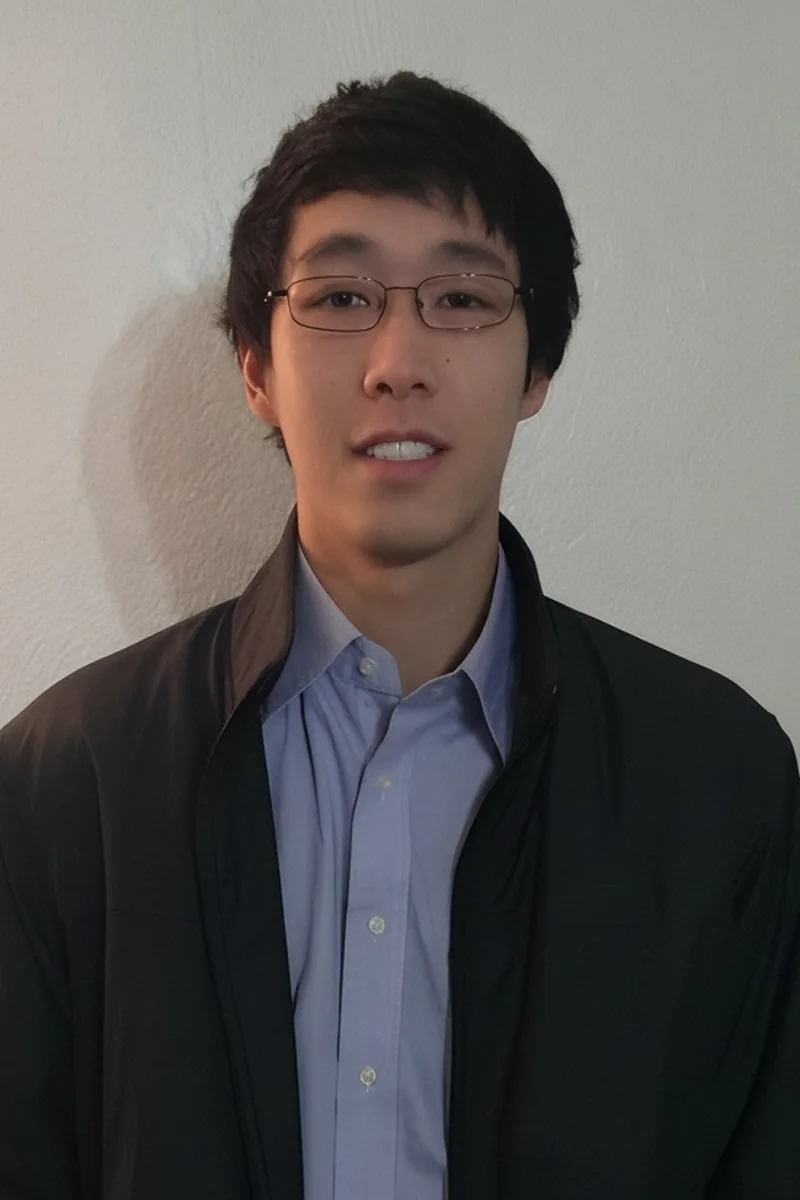
I am working on getting my pilot licenses and when I have some free time I enjoy music, basketball and video games.

Bidyut's dual focus in biomedical engineering and computer science at Johns Hopkins means physics isn't something he studied once — it's embedded in his daily coursework, from mechanics to electromagnetism to fluid dynamics. He teaches students to translate word problems into free-body diagrams and equations systematically, rather than guessing which formula to use. That structured approach, combined with his 5.0 client rating, makes him especially effective for students who feel lost in problem-solving.
Kinematics equations and free-body diagrams are straightforward once a student learns to read a physics problem like a story — identifying what's moving, what forces act on it, and what the question is really asking. Maggie teaches that translation process explicitly, drawing on her science background to walk through mechanics, energy conservation, and wave behavior with clarity. She holds a 5.0 student rating.
Majoring in both Physics and Biochemistry at Rice, Aadith tackles the subject from two directions — the pure mechanics and electromagnetism side alongside the biophysical applications where those principles govern everything from membrane potentials to protein folding dynamics. That dual lens is especially useful for students who need more than abstract derivations to make Newton's laws or conservation of energy feel real. His 1590 SAT underscores the quantitative precision he brings to problem setup and calculation.
Studying computer science and mathematics at Rice, William tackles the same calculus and linear algebra that underpin every physics problem — from resolving force vectors to setting up integrals for work and energy. He teaches high school physics alongside AP Calculus AB and BC, so when a kinematics or momentum problem demands clean mathematical reasoning, he can address both the physics logic and the math execution without skipping a beat.
Two doctoral degrees — one specifically in physics — mean Zhengdong has spent years living inside Newtonian mechanics, electromagnetism, thermodynamics, and quantum theory. He doesn't just solve problems; he teaches students to diagram a scenario, identify the governing principles, and translate words into equations before touching a calculator. That systematic process is what turns physics from intimidating to intuitive.
Studying both economics and biochemistry at Rice means Jennifer regularly crosses between quantitative modeling and lab science — the exact combination that makes physics problems tractable, since she's comfortable with both the math and the physical reasoning. Her 1570 SAT score speaks to that quantitative fluency, and she applies it to everything from free-body diagrams in mechanics to pressure and energy concepts that bridge her two majors. Rated 4.9 by students.
I am most passionate about biology and chemistry. I am a firm proponent of education, believing it to be absolutely necessary for an improved quality of life, and I try to impart this appreciation to all of my students.
Kinematics equations and free-body diagrams are straightforward once a student learns to translate a word problem into a physical picture before reaching for a formula. Raj approaches physics that way — sketching the scenario first, identifying forces or energy transfers, then selecting the right tool — which mirrors how his Rice science coursework trained him to think. He's rated 5.0 by students.
A PhD in materials engineering means Nivedina lives in the overlap of physics and chemistry — she applies Newton's laws, energy conservation, and wave behavior to real research problems every day. She unpacks tricky topics like free-body diagrams and rotational motion by tying them to tangible scenarios rather than leaving students adrift in formulas. Her own path through physics wasn't effortless, which gives her sharp intuition for where confusion typically sets in.
A retired PhD chemical engineer, Steven tackles physics problems by explaining the concept once, then reframing it from a different angle, then grounding it in a real-world application — so the idea actually sticks. His engineering career gave him deep fluency with everything from Newtonian mechanics to electromagnetic wave behavior. Rated 4.9 by students.
Kinematics equations are easy to memorize but surprisingly hard to apply when a problem introduces friction on an incline or two objects moving in different directions. Kinjal approaches physics by teaching students to draw the scenario first — free-body diagrams, energy bar charts, momentum vectors — before touching any formula. Her science background at Texas A&M included multiple physics courses, and her 5.0 rating speaks to how well that visual, concept-first method translates for students.
Kinematics and Newton's laws demand both math fluency and physical intuition, which is a combination that doesn't come naturally to most students. Malcolm's coursework at Rice spans physics and biochemistry, so he's practiced at unpacking force diagrams, energy conservation problems, and wave behavior in ways that connect the equations to what's actually happening.
A mechanical engineering doctorate is essentially a decade spent living inside physics — Newtonian mechanics, thermodynamics, fluid dynamics, and wave behavior all show up daily in that field. Sungae unpacks force diagrams, energy conservation, and kinematics problems by linking equations to the physical scenarios they describe, so students learn to reason through setups instead of hunting for formulas.
Free-body diagrams, conservation laws, kinematics equations — physics demands that students translate word problems into mathematical models, which is a skill most textbooks barely teach explicitly. Mingee earned her degree in biological and physical sciences, so she tackles physics problems the way a scientist would: identify the system, choose the right principle, then let the math follow. That structured approach keeps students from freezing when problems look unfamiliar.
John teaches AP Physics 1, AP Physics C: Mechanics, and IB Physics alongside calculus — which means when a student gets stuck on a projectile motion or rotational dynamics problem, he can tell whether the confusion is in the physics or the math and address the right one. His drama training also makes him unusually good at talking through problems out loud, modeling the internal monologue that strong physics students develop for breaking a scenario into forces, constraints, and equations. Rated 4.9 by students.
Engineering students see physics differently — every free-body diagram and energy conservation problem is a tool they'll use again in design courses. Casey brings that applied perspective to topics like kinematics, Newton's laws, and circuit analysis, showing students how to translate word problems into equations systematically. She also creates supplemental problems that push beyond standard homework difficulty, which is particularly useful for students aiming to master the material rather than just survive the exam.
Attending the Texas Academy of Mathematics and Science meant Michael was solving university-level mechanics and electromagnetism problems before most students finish high school — and his statistics degree at Rice keeps the quantitative rigor sharp through calculus, linear algebra, and data modeling. He breaks multi-step physics problems into their underlying math, so students see exactly where the algebra or trig connects to the physical principle instead of guessing which formula to grab. Rated 5.0 by students.
A chemical engineering degree means Jonathan didn't just study physics — he applied it daily across fluid mechanics, heat transfer, and materials science. He digs into the conceptual reasoning behind force diagrams, energy conservation, and kinematics so that setting up the problem becomes second nature. Once the physics makes sense, the math follows.
Kinematics, Newton's laws, energy conservation, electromagnetism — Roni doesn't just teach these topics, he applies them every day in his mechanical engineering studies at Brown. He digs into the physical intuition behind each equation, so students learn to sketch the scenario, identify the forces, and reason through a problem rather than hunting for a formula to plug numbers into.
Nathan's AP Physics 1 and AP Physics 2 background means he's comfortable across mechanics, electricity, and thermodynamics — but his real strength is teaching students to set up problems before solving them. He walks through free-body diagrams, energy conservation arguments, and unit analysis step by step, so the math serves the physics instead of the other way around.
Understanding physics means learning to translate a word problem into a free-body diagram or energy bar chart before touching an equation. Anna breaks down topics like kinematics, Newton's laws, and conservation of momentum by emphasizing that translation step, drawing on her math and science background to bridge the gap between conceptual reasoning and calculation.
A physics background changes how someone teaches the subject — instead of presenting formulas to memorize, Logan starts with the physical situation and builds the math around it. His bachelor's in physics means he can move fluidly from Newtonian mechanics through electromagnetism and thermodynamics, explaining not just how to solve a free-body diagram but why the forces balance the way they do. He also covers AP Physics 1 and 2, college physics, and astrophysics, so he's comfortable at nearly every level of the discipline.
Lila teaches both AP Physics C courses — Mechanics and E&M — alongside calculus and pre-calculus, which means she can seamlessly bridge the gap when a physics problem turns into an integration or vector decomposition challenge. Her approach to force and circuit problems emphasizes building the physical picture first, then letting the math follow from clear reasoning rather than formula hunting. Rated 4.9 by students.
Studying chemical engineering means living inside physics — fluid mechanics, energy balances, and thermodynamics all rely on the same force, motion, and energy principles covered in introductory physics courses. Howard unpacks problems by teaching students to draw free-body diagrams and track units before touching an equation, a habit that eliminates most common errors. He holds a 5.0 rating.
Kinematics, Newton's laws, energy conservation, electromagnetism — physics covers enormous ground, and each topic demands its own blend of conceptual reasoning and mathematical setup. Aurnab tackles problems by first identifying which physical principles apply and then translating them into equations, an approach sharpened by his engineering coursework at Rice and reflected in his 4.9 client rating.
Kinematics equations and free-body diagrams are often the first place students encounter math applied to the physical world, and the conceptual leap can be disorienting. Andrew's chemistry PhD involved extensive coursework in thermodynamics, quantum mechanics, and electromagnetism, giving him a physicist's intuition for connecting formulas to what's actually happening in a system.
Paris approaches physics problems by teaching students to draw the situation before writing a single equation — free-body diagrams, energy bar charts, momentum vectors. Her science-heavy coursework at Texas A&M means she's comfortable moving between kinematics, electrostatics, and thermodynamics depending on what a student needs. She treats every word problem as a translation exercise: English to diagram to math.
Jack's computer science major at UChicago pairs with a math minor, which means he's constantly working through the kinematics, energy, and force problems that bridge physics and computation. He teaches students to slow down and identify which principle — Newton's second law, conservation of momentum, work-energy theorem — actually governs a problem before touching any algebra. Rated 5.0 by students.
An applied physics degree doesn't just mean Christina studied physics — it means she spent years solving real engineering problems with Newtonian mechanics, electromagnetism, and wave theory. She digs into free-body diagrams, energy conservation, and circuit analysis with the confidence of someone who's used these concepts well beyond the textbook.
Engineering school doesn't let you hand-wave through physics — every force diagram, energy balance, and momentum calculation has to hold up under scrutiny. David carried that rigor through four years at Rice and now unpacks mechanics, electromagnetism, and wave behavior in ways that make the underlying logic visible rather than hidden behind formulas.
I am a graduate of UC San Diego with a Bachelors in Neuroscience through the Psychology department. After graduating, I went to Michigan Technological University and did some graduate work, before moving to Texas to be closer to my parents. I did my alternative certification program through Texas Teachers and am highly qualified to teach Science for grades 7-12. I have been a teacher in public and charter schools for the last four years, and have tutoring experience extending over ten years behind me as well.
Every semester of Anne's architectural engineering program at Texas A&M layers on more physics — from Newtonian mechanics to thermodynamics to wave behavior. She tackles force diagrams, energy conservation, and kinematics problems by teaching students to identify what's actually happening physically before reaching for an equation.
Nathaniel's biochemistry degree means he learned physics the way it actually matters — as the engine behind everything from enzyme kinetics to membrane potentials. He breaks down kinematics, forces, and energy conservation by tying abstract equations to tangible, real-world scenarios that make the math click.
I am a bit of a Swiss army knife. I can help you with math, programming, physics and a bunch of other courses. Other than homework and exams, you can ask me for help with projects or papers as well.
A computer science major with a math minor at Texas A&M, Payton regularly works through the same vector math, kinematics equations, and energy models that define introductory physics — and a 34 ACT confirms the quantitative chops to back it up. She tackles physics problems the way she approaches code: break the system into components, track what each variable does, and build the solution step by step. Rated 4.9 by students.
I am a graduate of Georgetown University where I earned my Bachelor of Science degree in International Politics with a concentration on Foreign Policy. I also earned a Certificate in Latin American Studies and am a member of Pi Sigma Alpha, The National Political Science Honor Society. I have experience tutoring students in both the SAT and the SSAT. Additionally, my time as an 8th Grade Science teacher here in Dallas has prepared me for the curriculum and challenges facing students in the area. While I offer tutoring in a broad range of subjects from foreign languages to grammar and writing to math and science, I find Physics to be the most enjoyable subject to teach. I see Physics as the science that allows all the other sciences to occur, and I find it helpful to use Physics demonstrations when studying the subject. When it comes to tutoring, I believe that whoever is doing the talking is doing the learning, so my students will be doing the leg work when it comes to their learning. I believe that every student can achieve success in school; each student just learns at their own pace and in their own way. When I have free time, I enjoy reading a good book, playing a game of tennis, or participating in or watching theatrical events.
Alicia didn't just study physics in a classroom — she taught it, serving as a TA for several college-level physics courses while earning her architecture degree at MIT. That means she's diagnosed hundreds of student misconceptions around mechanics, thermodynamics, electromagnetism, and wave behavior firsthand. She unpacks problems by connecting free-body diagrams and equations back to physical intuition, which is why students rate her 5.0.
Working as an engineer in Fort Worth means Nate solves mechanics and thermodynamics problems professionally — the same force, energy, and motion concepts that make up the bulk of introductory physics courses. He's a hands-on problem solver who teaches students to restate each scenario in plain language before translating it into equations, which cuts through the intimidation of multi-step problems. Rated 5.0 by students.
Having taken AP Physics and then re-encountered mechanics, thermodynamics, and electromagnetism through his biochemistry degree at Texas A&M, Gabriel learned the same core concepts from multiple angles — which means he usually has two or three different ways to explain why a free-body diagram looks the way it does or how energy transfers through a system. That versatility is especially useful for students who understood the lecture but freeze on multi-step problems. Rated 5.0 by students.
Testimonials
Because the right Physics tutor makes all the difference.
Average Session Rating – Based on 3.4M Learner Ratings
Practice Physics
Free practice tests, flashcards, and AI tutoring for Physics
Nearby Physics Tutors
Other Denton Tutors
Related Science Tutors in Denton
Frequently Asked Questions
Physics students in Denton often struggle with visualizing abstract concepts like forces, motion, and energy—especially when they're presented only in equations and diagrams. Many students also find unit conversions challenging and get stuck balancing equations or applying formulas to unfamiliar problems. Personalized tutoring helps bridge the gap between memorizing formulas and truly understanding the physics principles behind them, so concepts click rather than just feel like rules to follow.
Expert tutors connect theoretical physics to everyday situations—like explaining how friction and Newton's laws apply to a car braking, or how energy conservation works in sports. This approach makes abstract ideas concrete and memorable, helping you see why physics matters beyond the classroom. When you understand the real-world 'why' behind a concept, solving textbook problems becomes much easier.
Yes—tutors can help you design experiments, understand the scientific method, collect and analyze data, and write lab reports that connect your observations to physics principles. They can also help you troubleshoot when experiments don't go as planned and explain what the results mean. Strong lab skills are just as important as problem-solving, and personalized instruction ensures you develop both.
Your first session focuses on understanding where you are right now—what topics feel solid, where you're stuck, and what your goals are (acing a test, understanding a unit, improving your grade). The tutor will likely work through a problem or concept with you to see your thinking process and identify gaps. From there, you'll build a personalized plan that targets your specific needs and learning style.
Tutors help you understand where formulas come from and what each variable represents, rather than treating them as magic rules. By working through derivations and applying the same formula to different scenarios, you develop deeper understanding that makes it easier to remember and use formulas correctly. This approach also helps you know which formula to use when you're facing a new problem.
Varsity Tutors connects you with tutors who have strong backgrounds in physics—many hold degrees in physics, engineering, or related sciences, and have experience teaching or tutoring the subject. Each tutor is matched to your specific needs, whether you're in introductory physics, AP Physics, or honors-level coursework. You can discuss a tutor's background and teaching approach before your first session.
Start by identifying which concepts are causing the most trouble—is it kinematics, forces, energy, or something else? A tutor can assess your foundation and work backward to fill in gaps that might be holding you back. Even small clarifications on core ideas like vectors, acceleration, or Newton's laws can unlock your understanding of more complex topics.
This depends on your starting point and goals, but most students see meaningful progress within 4-6 weeks of consistent sessions. For students preparing for a test or exam, even a few focused sessions can boost confidence and performance. A tutor can help you create a realistic timeline based on what you're working toward.
Let’s find your perfect tutor
Answer a few quick questions. We’ll recommend the right plan and match you with a top 5% tutor.