Award-Winning AP World History Tutors
serving Dallas, TX
AP World History
Tutors in Dallas
Private 1-on-1 tutoring, weekly live classes for academic support, test prep & enrichment, practice tests and diagnostics, and more to elevate grades and test scores.
Based on 3.4M Learner Ratings
UniversitiesSchools & Universities
DeliveredHours Delivered
ProficiencyGrowth in Proficiency
Who needs tutoring?
No obligation. Takes ~1 minute.
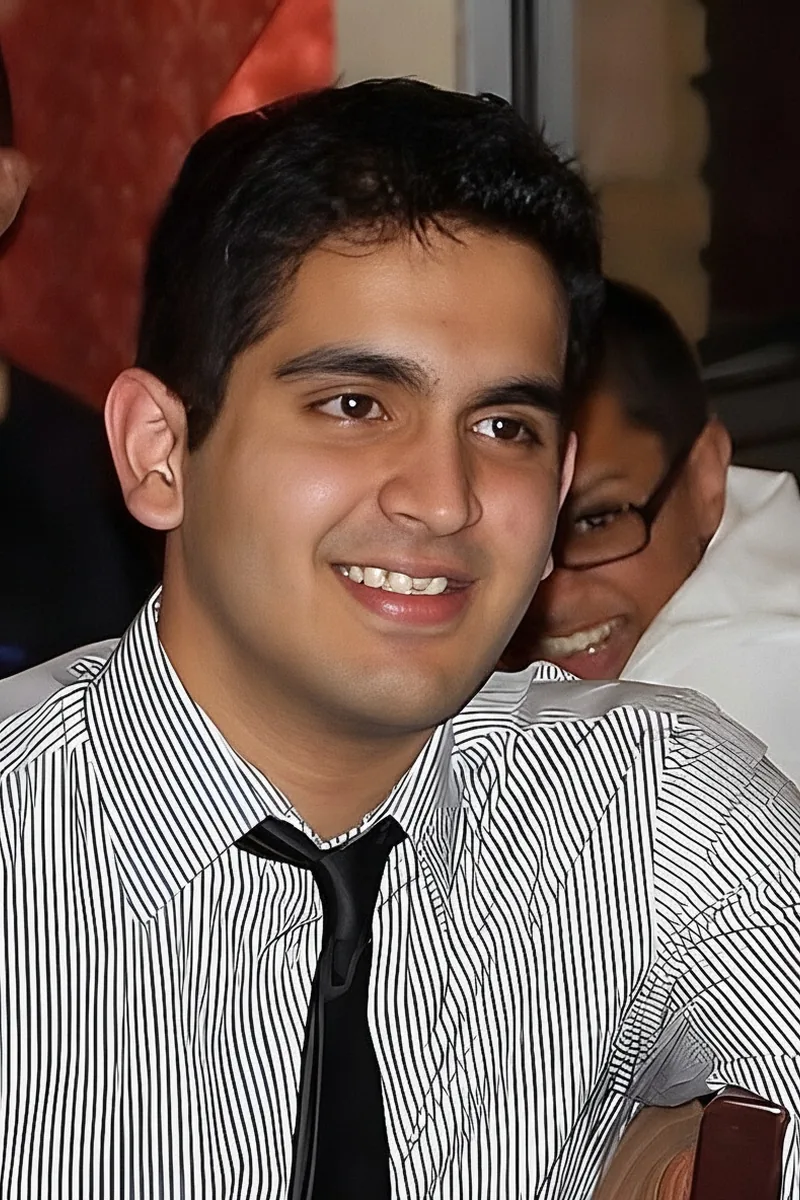
An electrical engineering major might seem like an unlikely fit for AP World History, but Muhammad's strength is in systematic thinking — breaking sprawling content into cause-and-effect chains, which is exactly how the exam's continuity-and-change and causation essays need to be structured. He treats each historical period like a circuit: inputs (technological, economic, or cultural forces) flow through systems (empires, trade networks, belief structures) and produce measurable outputs that students can trace and argue in their writing.

A double major in Spanish and English Creative Writing, Alexandra brings a cross-cultural lens to AP World History that's especially useful when students need to analyze how language, religion, and artistic traditions moved along trade routes or shifted under colonial rule. Her 33 ACT composite reflects sharp reading and argumentation skills — exactly what the DBQ and LEQ demand. Rated 4.9 by students, she's particularly strong at teaching how to build a thesis quickly from unfamiliar source material.
Elena's dual undergraduate majors in Art History & Archaeology and History — with a focus on medieval civilizations — gave her deep practice in the kind of cross-regional, cross-temporal analysis that AP World History demands. She teaches students to read primary sources the way an art historian reads an artifact: pulling context, audience, and purpose out of a single document, which is exactly what the DBQ requires. Rated 4.7 by students.
Sociology trains you to ask how societies organize, stratify, and transform — which is essentially what every AP World History essay prompt is getting at when it asks why empires rise, trade networks reshape cultures, or revolutions spread across borders. Caio brings that sociological lens from his studies at Rice to the exam's comparative and causation questions, teaching students to analyze documents through the structures of power, class, and cultural exchange rather than just chronology. Rated 5.0 by students.
The AP World History exam tests whether students can synthesize broad patterns — trade networks, empire-building, cultural diffusion — into tightly argued essays in under forty minutes. John approaches this as a writing and analytical reasoning problem, teaching students to structure comparison and causation arguments that hit every rubric point.
Covering thousands of years across every continent, AP World History overwhelms students who try to memorize everything. Nathan's approach is to teach through comparative frameworks — connecting the collapse of the Han Dynasty to the fall of Rome, or linking the Atlantic slave trade to Indian Ocean commerce — so that patterns replace isolated facts. As a Rice History major, he brings genuine depth to the cross-cultural analysis the exam demands.
Covering thousands of years across every continent, AP World History overwhelms students who try to memorize their way through it. Kristina's approach is to teach through comparative frameworks — trade networks, empire-building patterns, cultural diffusion — so students can tackle any stimulus-based question by recognizing recurring dynamics. Her contemporary studies training gives her a cross-disciplinary lens that fits this course's global scope.
Having earned a 35 ACT composite and National AP Scholar status across multiple subjects, Whitney knows how to distill massive amounts of content into the kind of structured, evidence-based arguments that AP World History's DBQ and LEQ sections reward. Her biomedical engineering training sharpens the cause-and-effect reasoning that's central to the exam — tracing how technological innovations like gunpowder or the printing press rippled across civilizations. Rated 5.0 by students.
Shroothi's mechanical engineering background means she thinks in systems — how forces, resources, and constraints interact to produce outcomes — which is precisely the analytical muscle AP World History flexes when asking why the Industrial Revolution erupted in Britain or how maritime technology reshaped global trade networks. She teaches students to approach DBQ and LEQ prompts with that same structured reasoning, building arguments from evidence rather than dumping memorized facts. Rated 5.0 by students.
Covering ten thousand years of global history means students need frameworks, not just facts. Michael's dual background in Asian Studies and Political Science gives him unusual range across regions that many tutors gloss over — Song Dynasty economics, Ottoman administrative systems, Indian Ocean trade networks. He teaches students to spot cross-cultural patterns that the AP exam's comparison and continuity questions demand.
Kiara's psychology background gives her a distinct angle on AP World History — she teaches students to analyze why civilizations made the choices they did, connecting concepts like in-group bias and social hierarchy to everything from caste systems to revolutionary movements. That lens is particularly useful on the LEQ and comparative essays, where examiners reward arguments that go beyond surface-level description to explain human motivation across cultures and time periods. Rated 4.8 by students.
Samuel's political science degree means he already thinks in terms of state formation, legitimacy, and power transitions — the exact framework AP World History uses to organize everything from Han Dynasty bureaucracy to post-colonial nation-building. He teaches students to read DBQ documents as political arguments with context and purpose, not just historical artifacts to summarize. That government-trained instinct for analyzing how institutions rise and fall gives his essay coaching a structural backbone most content-review approaches miss.
Spanning thousands of years and dozens of civilizations, AP World History can feel overwhelming without a framework for comparison. Frances draws on her Master's in Humanities to teach students how to identify cross-cultural patterns — trade networks, empire-building, religious diffusion — and turn those connections into strong comparative and continuity-and-change essays.
Jacob's history degree with a specialization in the American Gilded Age means he understands how to read industrialization, labor movements, and imperial expansion as interconnected global forces — exactly the kind of cross-regional thinking AP World History's LEQ and causation prompts demand. His editorial background sharpens student writing at the sentence level, turning loose document summaries into tight, evidence-driven arguments. Rated 4.9 by students.
Lianna's political science and criminal justice studies at UNT mean she's spent years tracing how legal systems, governance, and social movements develop across different societies — the exact kind of cross-regional political analysis that AP World History essay prompts demand. Her additional focus on Latine/Mexican American studies gives her genuine depth on colonialism, resistance movements, and cultural exchange in the Americas, content areas where many tutors default to a purely European perspective. Rated 4.8 by students, she's especially sharp on the state-building and empire themes that thread through nearly every period on the exam.
Rachel's political science degree gives her a sharp eye for the power-structure questions that run through the entire AP World History exam — how states consolidate authority, why revolutions cluster in certain eras, and what makes empires collapse in strikingly similar ways across continents. Her Mandarin fluency also adds real texture when covering Chinese dynastic cycles and East Asian trade networks, topics where most tutors rely solely on English-language sources. A 34 ACT scorer, she brings strong timed-writing instincts to DBQ and LEQ prep.
Student teaching Pre-AP Texas and U.S. History in Lake Travis ISD gave Samantha daily practice turning dense timelines into arguments students can actually write — a skill that transfers directly to AP World History's DBQ and LEQ prompts, where knowing the content means nothing without a defensible thesis. Her certified 7-12 Social Studies background and history degree from UT Austin ground her in the sourcing and periodization work the exam demands, and her theatre experience means she knows how to make even the driest unit on early state formation feel vivid. Rated 4.9 by students.
Tackling AP World History means making sense of massive comparisons — why did maritime empires develop differently in the Indian Ocean versus the Atlantic, or how did the Columbian Exchange reshape demographics on four continents? Kayley breaks these cross-cultural connections into digestible patterns and teaches students to write the comparative and causation essays the exam demands. Her science training actually sharpens this work, since she's used to tracing cause-and-effect chains across complex systems.
Wyatt's Classics degree means he's spent years with the primary sources — Greek, Roman, Persian — that form the backbone of AP World History's ancient and classical periods, giving him a textual fluency most tutors can't match when it comes to early civilizations, empire-building, and cultural diffusion across the Mediterranean. That foundation extends forward too: understanding how Rome fell, how Byzantine and Islamic empires inherited its structures, and how classical ideas resurfaced during the Renaissance are all threads he traces with real specificity. Rated 5.0 by students.
Lee's subject range — from macroeconomics and government to calculus and literature — reflects the kind of cross-disciplinary thinking that AP World History's essay prompts actually test, where a question about the Industrial Revolution might demand economic reasoning, political analysis, and close reading of documents all at once. He tackles the nine-period timeline by connecting themes across units rather than treating each era in isolation, which is especially useful for comparative and continuity-and-change prompts. Rated 5.0 by students.
Fourteen AP classes in high school means Sara didn't just pass through AP World History's content — she learned how to manage the sheer volume of periods, themes, and essay formats that overwhelm most students juggling multiple AP exams simultaneously. Her pre-med psychology background adds a distinct angle: she teaches students to analyze why civilizations made the choices they did, connecting human behavior patterns to political and economic shifts across regions. That psychological lens is especially useful on continuity-and-change prompts where surface-level descriptions won't earn the point.
Hi y'all! I hold my Master of Science in Psychology of Sport and my Bachelor of Science in both Psychology and Applied Human and Sport Physiology. I have many years of tutoring under my belt, working with people of all levels from elementary school through college in hard science subjects (Biology, Chemistry, and Mathematics), a few social sciences (History, Psychology, Economics), and language arts. When not tutoring, I love playing soccer and I even coach a youth team. I love encouraging students to learn, grow, and think critically for themselves.
Hi! I'm an Aerospace Engineering student at UT Austin with experience tutoring physics and a passion for helping students succeed in STEM. I focus on making challenging topics clear, engaging, and approachable through personalized, student centered instruction. As a Microsoft Certified Educator, I aim to build confidence, strengthen understanding, and help students reach their academic goals in a supportive learning environment.
Covering thousands of years across every continent, AP World History overwhelms students who try to memorize everything instead of learning to spot patterns — trade networks, empire-building, cultural diffusion. Paula's Communication Studies background makes her especially effective at teaching the comparative and continuity-and-change essay formats the exam demands, where clear argumentation matters more than encyclopedic recall.
The sheer scope of AP World History — from river valley civilizations to globalization — overwhelms most students long before exam day. Tessa, a History major at Yale, teaches students to organize that breadth through comparative and continuity-and-change frameworks that the AP rubric actually rewards. She zeroes in on building the skill of connecting specific evidence to broader historical processes, which is where most essays lose points.
Though Nima's core strengths are in physics and math, the analytical habits from a physics degree — isolating variables, tracing how one change propagates through a system — map surprisingly well onto AP World History's causation essays, where students must explain how developments like gunpowder technology or maritime innovations rippled across civilizations. His 1580 SAT demonstrates the timed reading and argumentative writing skills the DBQ section demands. He's strongest as a complement for students who already know the content but need sharper analytical structure in their essays.
Covering ten thousand years of human history means AP World History can feel impossibly broad — until a student learns to think in patterns. Iris's anthropology training at the University of Chicago is built around exactly that: tracing how trade networks, belief systems, and state structures evolve and interact across cultures. She teaches students to spot those cross-cultural comparisons and continuity-and-change themes that the AP exam tests hardest.
Iliana studied government and political philosophy at Dartmouth with a focus on Western colonialism and indigenous political movements — exactly the kind of cross-cultural power dynamics that run through the AP World History curriculum. She brings that lens to topics like imperialism, decolonization, and the political structures that shaped colonial and post-colonial societies, giving students a richer read on the exam's modern period content.
Brian's dual training in economics and computer science at Caltech built the kind of analytical framework that AP World History's toughest prompts actually test — tracing how economic systems, trade networks, and technological innovations reshaped societies across periods, from Indian Ocean commerce to industrial capitalism. His 1580 SAT reflects the timed reading and argumentative writing skills the DBQ demands, and his economics background gives him a concrete lens for teaching students why empires rose and fell rather than just when.
Covering ten thousand years of global history means students need a mental framework, not a memorized timeline. Jake approaches AP World History through recurring themes like empire-building, trade networks, and cultural diffusion, then shows students how to deploy that thematic knowledge in the continuity-and-change and comparison essays the exam actually tests.
The sheer scope of AP World History — from Mesopotamia to globalization — overwhelms students who try to memorize everything. Christie's approach zeroes in on comparative frameworks and thematic throughlines like trade networks, empire-building, and cultural diffusion, so students can tackle any prompt by drawing connections across regions and time periods. She currently teaches history at the college level and holds a 5.0 rating.
Keeping six thousand years of civilizations straight requires more than flashcards — it requires a framework for comparison. Deana teaches AP World History students to think in terms of continuity and change over time, causation, and cross-cultural comparison, which are the exact reasoning skills the exam rewards. She's especially effective at showing students how to attack stimulus-based multiple choice questions efficiently.
Having taught and tutored across Colombia, Mexico, Germany, Canada, and the United States, Esteban brings an anthropologist's instinct for reading how cultures interact — the exact skill AP World History's DBQ and comparative essays test when students must explain why civilizations borrowed, resisted, or transformed each other's practices. His anthropology training means he teaches cultural diffusion and state formation not as textbook vocabulary but as lived human patterns, connecting concepts like syncretism or tributary systems to real-world examples he's encountered firsthand. Rated 4.9 by students.
An English major with a 1540 SAT and a 5.0 tutoring rating, Ayako treats AP World History's essay sections as writing problems first — teaching students to craft tight thesis statements and weave document evidence into arguments that actually persuade, not just summarize. Her literature training at Trinity College Dublin means she's practiced at close reading unfamiliar texts under pressure, which is exactly what the DBQ throws at students. She's especially effective for those who grasp the historical content but struggle to translate it into structured, rubric-hitting prose.
Jonathan's debate background at the University of Chicago — where arguing both sides of a position was the norm — translates directly to the AP World History DBQ, which asks students to weigh conflicting documents and stake out a defensible claim under time pressure. His political science training sharpened his ability to trace how governance structures and revolutionary movements echo across regions, from the Abbasid caliphate to Atlantic revolutions. A 1550 SAT scorer, he brings the same analytical discipline to teaching students how to connect specific evidence to sweeping historical arguments.
Testimonials
Because the right AP World History tutor makes all the difference.
Average Session Rating – Based on 3.4M Learner Ratings
Practice AP World History
Free practice tests, flashcards, and AI tutoring for AP World History
Nearby AP World History Tutors
Other Dallas Tutors
Related Social Studies Tutors in Dallas
Frequently Asked Questions
AP World History spans human civilization from 1200 CE to the present, organized into four units: Developments in East Asia, South Asia, the Middle East, and Africa (Unit 1); European and Asian trade networks and cultural exchange (Unit 2); New global interconnections through exploration and colonialism (Unit 3); and the modern world from industrialization through contemporary times (Unit 4). The exam emphasizes understanding historical processes, comparing civilizations across regions, and analyzing cause-and-effect relationships rather than memorizing isolated facts.
Score improvement depends on your starting point and study consistency, but students who work with tutors typically see gains of 1-3 points on the AP scale (out of 5). The biggest improvements come from developing strong essay-writing skills and learning to analyze primary sources efficiently—two areas where personalized feedback makes a real difference. Your tutor will help you identify weak regions and historical periods, then build targeted practice around those gaps.
The essay section requires you to construct complex historical arguments quickly—you have limited time to analyze sources, develop a thesis, and support it with specific evidence across multiple civilizations. Many students struggle with time management and end up rushing their conclusions, or they choose examples that don't directly support their argument. A tutor can teach you proven strategies for outlining essays under pressure, selecting the strongest evidence, and crafting thesis statements that earn full credit.
Ideally, students benefit from consistent tutoring starting 3-4 months before the exam in May, though even 6-8 weeks of focused work can strengthen weak areas. For Dallas students taking the exam in spring, starting in January or February gives you time to review all four units systematically and complete multiple practice tests. Your tutor will create a customized study schedule that balances broad review with targeted practice on your specific weak points.
Practice tests are essential—they reveal which time periods, regions, and question types trip you up, and they build the stamina and pacing skills you need for the actual 3-hour exam. Taking full-length practice tests under timed conditions helps you discover whether you're rushing through the multiple-choice section or spending too long on essays. Tutors use your practice test results to pinpoint exactly where to focus your study efforts, making your preparation much more efficient than generic review.
The AP exam tests all major world regions, but you don't need encyclopedic knowledge of every country—you need strong examples from diverse areas that you can explain clearly and quickly. Many students focus too heavily on European history and neglect Asia and Africa, which limits their ability to answer comparative questions. A tutor helps you build a balanced toolkit of examples across all regions and time periods, so you're never caught without a relevant historical case to support your argument.
Test anxiety often stems from feeling unprepared or unfamiliar with question formats—tutoring addresses both by building genuine confidence through repeated practice and teaching specific strategies for staying calm under pressure. Your tutor can help you develop a pre-exam routine, teach you how to quickly skip difficult questions and return to them later, and practice breathing techniques during timed sessions. Knowing you've practiced with an expert and reviewed your weak spots significantly reduces anxiety on exam day.
Varsity Tutors connects Dallas students with expert tutors who have deep knowledge of AP World History curriculum and proven success helping students improve their scores. When you get matched with a tutor, you can discuss your current level, specific challenges (like essay writing or certain regions), and your target score so they can tailor their approach from day one. Most students benefit from starting with a consultation to ensure the tutor's teaching style and expertise align with your learning needs.
Let’s find your perfect tutor
Answer a few quick questions. We’ll recommend the right plan and match you with a top 5% tutor.