Award-Winning Spanish Tutors
serving Knoxville, TN
Spanish
Tutors in Knoxville
Private 1-on-1 tutoring, weekly live classes for academic support, test prep & enrichment, practice tests and diagnostics, and more to elevate grades and test scores.
Based on 3.4M Learner Ratings
UniversitiesSchools & Universities
DeliveredHours Delivered
ProficiencyGrowth in Proficiency
Who needs tutoring?
No obligation. Takes ~1 minute.
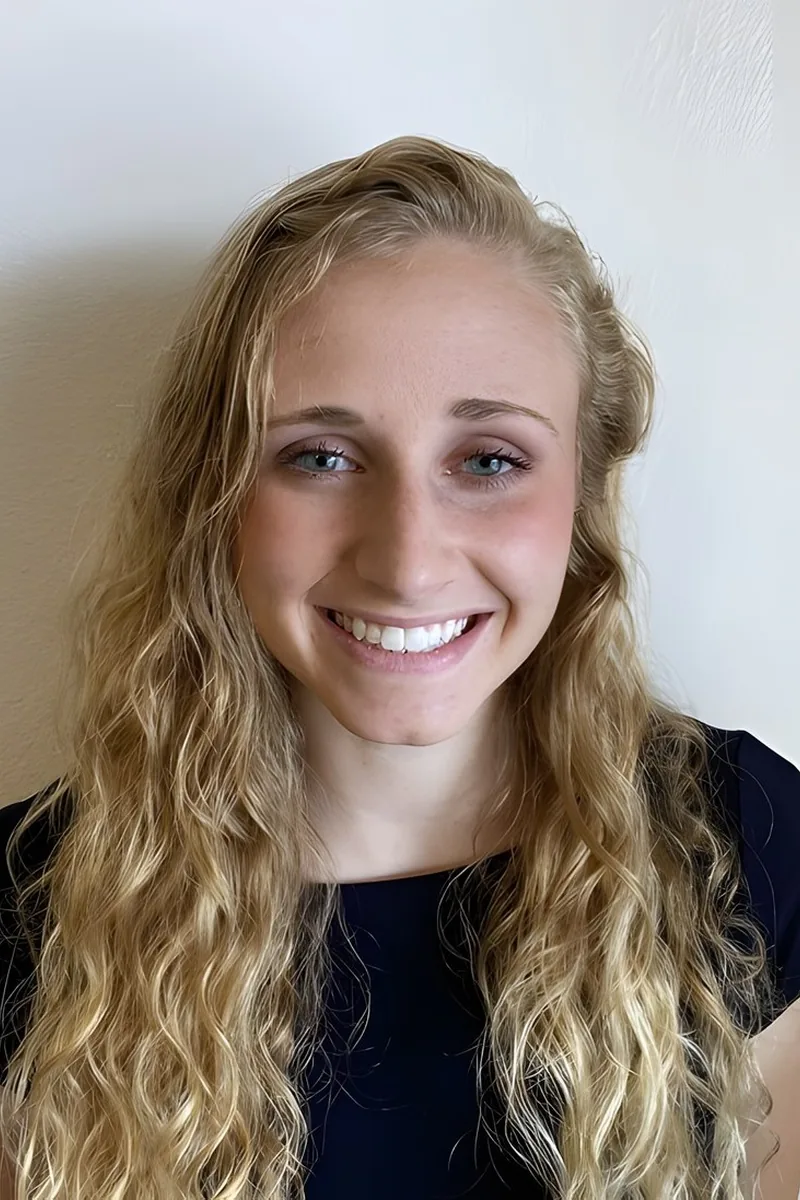
I am an Applied Physics Major with an Emphasis in Mechanical Engineering at Brigham Young University. I love to share the joy I have in the sciences and math to show truly the applications are so far-reaching.

Lisa teaches Spanish with an emphasis on building grammar systematically — verb conjugations across tenses, pronoun placement, ser versus estar — so that students can construct sentences on their own rather than translating word-by-word from English. She covers Spanish 1 through Spanish 2 material and tailors sessions to whether a student needs help with classroom assignments, conversational fluency, or exam prep. Her background in anthropology also brings cultural context into language learning, which makes vocabulary and idiomatic expressions easier to retain.
Pre-law coursework at Vanderbilt means Kit spends most of his time building arguments, analyzing texts, and writing persuasively — skills that transfer surprisingly well to learning a second language, where reading comprehension and grammatical precision matter just as much. He tackles Spanish grammar and vocabulary with the same structured, detail-oriented approach he applies to political science, breaking down sentence construction and verb forms into clear, logical steps.
Kelly teaches Spanish across multiple levels — from foundational verb conjugations and noun-adjective agreement through more complex territory like subjunctive mood and indirect object pronouns. She breaks grammar patterns into logical systems, which makes irregular forms and tricky constructions feel less like random memorization and more like solvable puzzles.
Coding in Java and Python all day trains your brain to see language as a set of rules, exceptions, and patterns — and Michelle applies that same logic-first mindset to Spanish conjugation, sentence structure, and vocabulary acquisition. Her Duke sociology coursework also involved analyzing how communities shape language use, which adds a cultural dimension to her grammar instruction. Rated 5.0 by students.
Elsa's chemistry coursework at Vanderbilt means she's spent years decoding Latin and Greek roots in scientific nomenclature — a habit that transfers surprisingly well to building Spanish vocabulary, where the same root systems show up across hundreds of everyday words. She also lists conversational Spanish among her teaching subjects, so sessions move beyond grammar drills into actual spoken practice that builds real comfort with the language.
Caroline double-majored in Spanish at Vanderbilt, so she's spent years inside the language — reading literature, writing essays, and navigating verb tenses well beyond the present indicative. Whether a student is wrestling with the subjunctive mood or trying to nail down ser versus estar in context, she explains the underlying logic that makes grammar rules stick.
Jumping from vocabulary lists to actual comprehension is the hardest transition in Spanish, and it usually stalls around verb conjugation and sentence structure. Grant tackles conjugation patterns systematically — present, preterite, imperfect — and ties each tense to real contexts so students internalize when to use each one, not just how to form it.
Having studied Spanish through advanced coursework, Ryan tackles the language from both the grammar-intensive side — subjunctive mood, preterite vs. imperfect distinctions, pronoun placement — and the practical communication side. His international business background means he can contextualize vocabulary and reading passages around real-world topics like trade, travel, and current events, which keeps practice sessions engaging.
As a foreign language instructor at Drexel University with a bachelor's in Modern Languages, Edgar teaches Spanish at every level — from present-tense conjugations to subjunctive mood and nuanced essay writing. His professional interpreting work at the United Nations keeps his Spanish sharp, current, and rooted in real-world usage that goes far beyond textbook dialogue.
Joshua earned his degree in Spanish with an education licensure, which means he didn't just study the language — he trained specifically to teach it. He digs into the grammar structures that trip students up most, like the subjunctive mood and ser versus estar, connecting each rule to real usage so it sticks beyond the next quiz. His professional-level proficiency keeps sessions grounded in how Spanish actually sounds and functions.
Meredith has studied Spanish through the advanced level and approaches the language with the same close-reading instincts she brings to her English degree at Sewanee. She breaks down tricky grammar concepts like subjunctive mood and ser versus estar by connecting them to how meaning actually shifts in real conversation and writing.
Joshua has studied Spanish through the intermediate level and tackles grammar topics like preterite versus imperfect, ser versus estar, and direct object pronouns by breaking each rule into its component logic. His approach works especially well for students who think systematically and want to understand why Spanish grammar works the way it does, not just memorize conjugation charts.
Growing up in a Chilean household where Spanish was the daily language, then studying abroad in Salamanca, Spain, gave Carlos fluency rooted in two distinct dialects and cultural traditions. He teaches grammar structures like the subjunctive and preterite-vs-imperfect distinction through real conversation patterns, connecting verb tenses to the situations where native speakers actually use them.
Jenny holds a Master's in Spanish Teacher Education and a Bachelor's in Spanish, which means she doesn't just speak the language — she understands exactly how English speakers stumble over subjunctive conjugations, ser versus estar, and pronoun placement. She builds lessons around those specific friction points so students internalize patterns instead of relying on translation. From Spanish 1 grammar through advanced Spanish 4 literature, she covers the full arc of the curriculum.
Studying international business meant Alex didn't just learn Spanish in a classroom — he learned it as a working language for negotiation, correspondence, and cross-cultural communication. He unpacks tricky grammar concepts like the subjunctive mood and ser versus estar by grounding them in real usage patterns that stick.
A double major in English and Spanish from Butler University, Darby spent four years immersed in the language across grammar, conversation, and literature courses through the advanced level. She teaches verb conjugation, sentence structure, and vocabulary acquisition by connecting Spanish to patterns students already recognize in English — making tense systems like the subjunctive feel less foreign.
Isaac's Spanish skills run deep enough that he tutors AP Spanish Literature and Culture alongside conversational and grammar-focused sessions. He breaks down tricky areas like subjunctive mood usage, ser vs. estar distinctions, and pronoun placement by connecting them to patterns students already recognize from English. His biology background also means he's comfortable helping students build Spanish vocabulary around scientific and medical terminology.
Monitha has taught Spanish at multiple levels and treats grammar not as a set of rules to memorize but as patterns that start making intuitive sense with the right practice. Whether a student is wrestling with ser vs. estar or navigating preterite vs. imperfect, she builds lessons around real usage so the language sticks outside the classroom.
Neuroscience training at Vanderbilt means Jordan spends most of his time parsing dense scientific systems — but that same habit of breaking complex structures into learnable chunks carries over when he tackles Spanish grammar concepts like ser versus estar or navigating the subjunctive. His coursework in Spanish through the university level keeps him actively engaged with the language, and his 4.8 rating suggests the analytical approach lands well with students.
Charlotte has studied Spanish through the advanced level and understands the grammar hurdles — subjunctive mood, ser versus estar, preterite versus imperfect — that trip students up most often. She connects new verb forms and sentence structures to patterns students already recognize, making conjugation tables feel less random. Her experience across Spanish 1 through 4 means she can pinpoint exactly where a gap started and address it directly.
As a native Spanish speaker who grew up studying abroad before moving to Miami, Jorge teaches Spanish with an intuitive grasp of how the language actually sounds and flows in real conversation. He digs into the grammar — subjunctive mood, ser versus estar, preterite versus imperfect — but always ties rules back to how native speakers naturally use them. He also prepares students for AP Spanish exams across all skill levels.
Jeana teaches Spanish 1 and 2 with an emphasis on building practical fluency alongside grammar fundamentals — verb conjugations, pronoun agreement, and sentence construction that students can actually use in conversation. Her experience with conversational Spanish means lessons stay grounded in real communication, not just textbook exercises.
Hi, my name is Jorge and I am from Lima Peru. Most of my academic experience is related to Biomedical sciences, in the fields of Molecular Biology, Genetics, Biochemistry, Cell Biology and development. During my PhD, I had a proactive role organizing scientific symposiums and retreats. This trained my presentation skills to share my research in important scientific meetings in the US: I won best poster award at the Gordon Research Conference (GRC) in 2022 and was an invited speaker at Cold Spring Harbor meeting in 2023, among others. Besides my research experience, I have a strong commitment to improve higher education in STEM. Since 2020, I co-direct the Research Experience for Peruvian Undergrads (REPU) program, that provides international scientific internships to Peruvian undergrads in top universities in the US and Europe. I have the chance to mentor undergards in STEM. Additionally, I am a native Spanish speaker, which allowed me to give Spanish lessons to some students in the USA. I want to use my best of my abilities to support students and build a career for myself in Education.
Aditi teaches Spanish with an emphasis on building grammar systematically — verb conjugations, pronoun usage, sentence structure — so students can construct their own sentences instead of relying on memorized phrases. She covers beginner through intermediate levels and connects vocabulary to real-world contexts that make retention easier.
Having studied Spanish through the advanced level — Spanish 2, 3, and 4 — Sarah can walk students through tricky grammar concepts like subjunctive mood, preterite vs. imperfect, and ser vs. estar with clear, practical explanations. She pairs grammatical accuracy with conversational practice so that conjugation charts actually translate into usable language skills.
Learning Spanish clicks faster when grammar rules connect to real usage — why the subjunctive shows up in certain emotional expressions, or how reflexive verbs change meaning in everyday conversation. Rebecca teaches across four levels of Spanish and uses that range to meet each student at their current stage, building verb conjugation and sentence structure into contexts that actually stick.
Four years living in Viña del Mar, Chile, gave Anna the kind of Spanish fluency you can't get from a textbook — she taught at a Chilean university, navigated daily life in Spanish, and absorbed the idiomatic rhythms of real conversation. She brings that immersion experience into lessons on verb conjugation, subjunctive mood, and reading comprehension, connecting grammar rules to how Spanish is actually spoken.
Though French is Daniel's primary language specialty, his experience with Romance language grammar gives him a practical framework for teaching Spanish fundamentals like ser vs. estar, preterite vs. imperfect, and pronoun placement. He approaches Spanish 1-level concepts by drawing parallels between the two languages, which accelerates pattern recognition for students.
Lucas teaches Spanish with an emphasis on building conversational confidence alongside grammatical structure — verb conjugations, pronoun placement, and sentence formation in real-world contexts. His experience with ESL learners gives him a sharp sense of how language acquisition actually works, which he applies in reverse when English speakers are tackling Spanish.
Diana's TESOL training gave her deep expertise in how languages are structured and acquired, which she applies directly to Spanish instruction. She breaks down verb conjugation patterns, pronoun placement, and sentence-building in ways that make the grammar feel logical rather than arbitrary. Students in Spanish 1 or 2 especially benefit from her ability to explain why the language works the way it does.
Studying Latin American history at Duke meant Jean spent years reading Spanish-language primary sources — colonial documents, political speeches, literary texts — and building fluency that goes well beyond classroom drills. She teaches grammar and vocabulary in context, connecting verb tenses and sentence structures to how Spanish is actually used in writing and conversation.
Isaiah teaches Spanish with an emphasis on building real comprehension, not just conjugation drills. Whether a student is wrestling with the subjunctive mood or struggling to keep preterite and imperfect straight, he connects grammar rules to how Spanish is actually spoken and written. He covers Spanish 1 through 3 and scored high enough on the SAT Subject Test in Spanish with Listening to tutor it.
Samantha teaches Spanish across multiple levels, from foundational verb conjugations and noun-adjective agreement through advanced grammar like the subjunctive mood and complex sentence structures. Her analytical approach — honed through a Duke science education — treats language acquisition as a system to decode rather than a list to memorize.
Paul picked up conversational and reading-level Spanish while traveling through South America, which gives his tutoring a practical edge — he knows what it's like to need the subjunctive tense in an actual conversation, not just on a worksheet. He's strongest with students working on verb conjugation, reading comprehension in Spanish, and building everyday vocabulary.
Tony earned his bachelor's degree in Spanish and continued using the language throughout his Latin American Studies master's program, so his command of the language spans academic writing, literary analysis, and everyday conversation. He tackles tricky grammar concepts like the subjunctive mood and ser-versus-estar distinctions by grounding them in real usage patterns rather than rote conjugation charts. Rated 5.0 by students.
Testimonials
Because the right Spanish tutor makes all the difference.
Average Session Rating – Based on 3.4M Learner Ratings
Nearby Spanish Tutors
Other Knoxville Tutors
Related Languages Tutors in Knoxville
Frequently Asked Questions
Speaking practice is one of the biggest challenges in traditional classrooms, where students often get limited opportunities to speak. With personalized 1-on-1 instruction, tutors can dedicate entire sessions to conversation, listening comprehension, and pronunciation—skills that are difficult to develop in a group setting. Tutors also provide real-time feedback on accent and grammar, helping you build confidence and fluency much faster than classroom instruction alone.
Verb conjugation is one of the most common pain points for Spanish learners, but it becomes manageable with consistent practice and clear patterns. Expert tutors break down conjugation into logical groups (regular vs. irregular verbs, tenses, moods) rather than overwhelming you with memorization. They then use spaced repetition and practice exercises tailored to your level, so you internalize patterns rather than just memorize rules.
Vocabulary sticks best when you encounter words in context and use them actively in conversation—not through flashcard cramming alone. Tutors help you build vocabulary by using words in real dialogues, connecting new words to familiar concepts, and reviewing strategically over time. This approach means the words you learn actually stay with you and transfer to real conversations.
Understanding culture is essential to truly learning a language—it shapes how Spanish speakers communicate and express ideas. Tutors weave cultural context into lessons, discussing customs, media, literature, and regional differences across Spanish-speaking countries. This immersion-style approach helps you understand not just the language, but how and why it's used, making your learning deeper and more meaningful.
Balanced language development requires attention to all four skills: reading, writing, speaking, and listening. Tutors create personalized lesson plans that address your specific needs—whether that's reading comprehension, essay writing, or listening to native speakers. This well-rounded approach ensures you're prepared for Spanish in academic settings, travel, or professional contexts.
The best approach combines both: understanding grammar rules gives you a foundation, but natural usage comes from hearing and practicing how native speakers actually communicate. Expert tutors teach you grammar in context, showing you how rules apply in real conversations rather than in isolation. This balance helps you sound natural while maintaining grammatical accuracy.
Knoxville's two school districts serve over 54,000 students with varying Spanish programs and proficiency levels. Tutors are familiar with local curriculum standards and can support students whether they're in middle school Spanish, AP Spanish, or preparing for proficiency exams. They can also supplement classroom learning, help with specific assignments, or accelerate your progress beyond what's covered in class.
Fluency depends on your starting level and goals, but research suggests reaching professional proficiency typically requires around 600 hours of study. With personalized tutoring, you can accelerate this timeline by focusing on exactly what you need and practicing actively rather than passively. Many students see noticeable improvement in conversation skills within a few weeks of consistent 1-on-1 instruction.
Let’s find your perfect tutor
Answer a few quick questions. We’ll recommend the right plan and match you with a top 5% tutor.