Award-Winning AP Computer Science Tutors
serving Buffalo, NY
AP Computer Science
Tutors in Buffalo
Private 1-on-1 tutoring, weekly live classes for academic support, test prep & enrichment, practice tests and diagnostics, and more to elevate grades and test scores.
Based on 3.4M Learner Ratings
UniversitiesSchools & Universities
DeliveredHours Delivered
ProficiencyGrowth in Proficiency
Who needs tutoring?
No obligation. Takes ~1 minute.
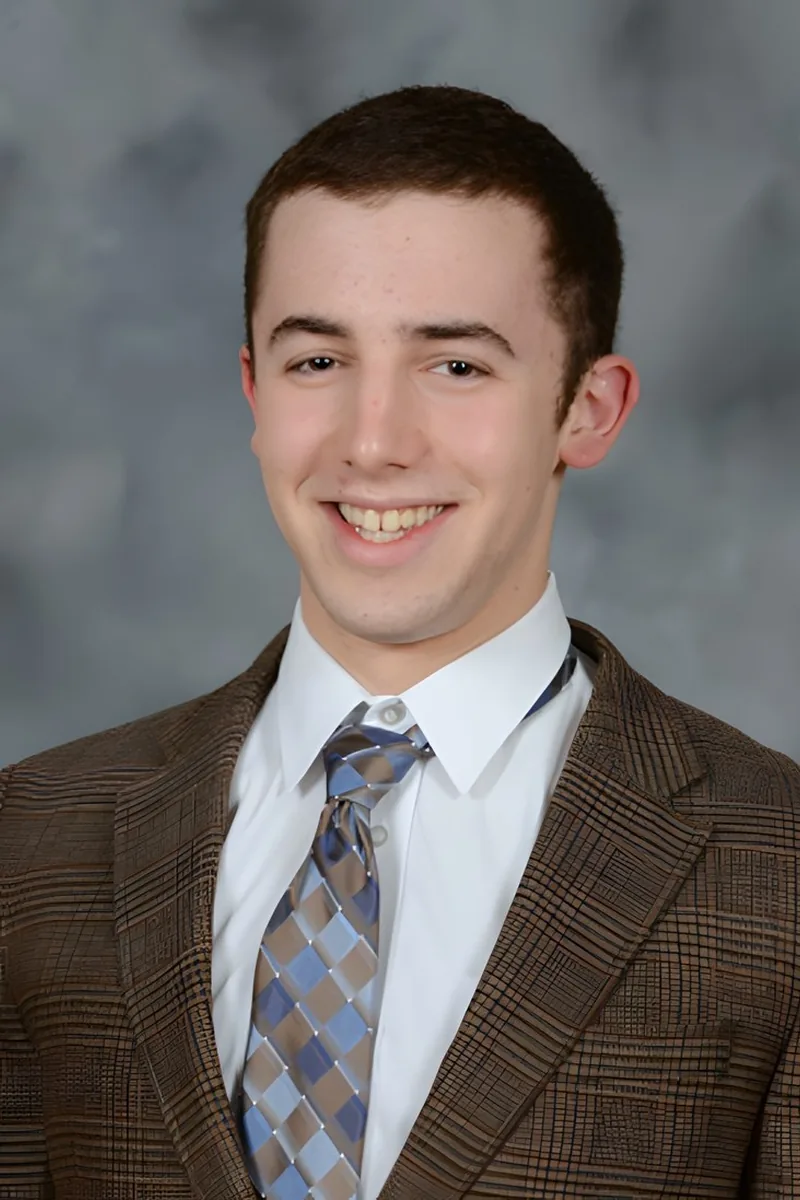
Studying Computer Science at Cornell gives Jonathan daily exposure to the data structures, object-oriented design, and algorithmic thinking that drive the AP Computer Science exam. He breaks down topics like recursion and sorting algorithms by connecting them to real engineering problems from his coursework, making abstract concepts click faster.
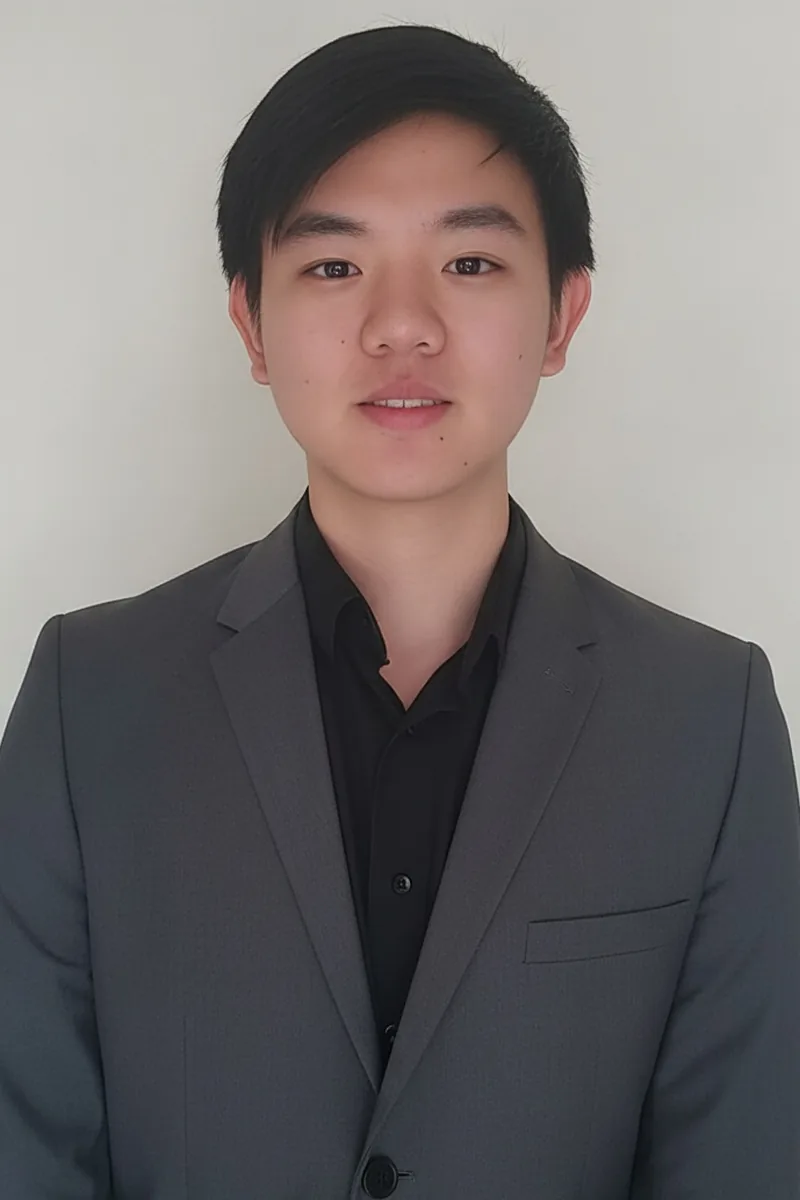
Kevin earned his master's in computer science from NYU, so the Java fundamentals tested in AP Computer Science A — class design, control flow, recursion — are concepts he's built on for years rather than topics he's revisiting. He's the kind of tutor who'd rather over-explain a tricky loop trace than leave any ambiguity, which pays off when students hit the free-response section and need to write clean, correct code under pressure. Rated 4.8 by students.
Engineering coursework trains you to think in systems — breaking complex problems into modular, testable pieces — which is exactly the reasoning AP Computer Science A demands when students write classes, trace through nested loops, or debug recursive methods. Wesley's biomedical engineering degree and research in biophysical chemistry mean he's been coding to solve real scientific problems, not just completing textbook exercises. That applied perspective makes abstract Java concepts feel purposeful rather than arbitrary.
Ryan studies computer science at UVA and knows the AP Computer Science curriculum inside out — from object-oriented design and recursion to array manipulation and sorting algorithms in Java. He teaches students to think through problems before writing a single line of code, building the kind of algorithmic reasoning that earns 5s on the exam. Rated 5.0 by students.
The AP Computer Science exam tests both coding fluency and the ability to trace through unfamiliar code under time pressure. Shlomo tackles both sides — drilling array manipulation, recursion, and ArrayList operations while also teaching the test-taking strategy that keeps students from burning time on free-response questions. His math background is especially useful for the algorithm-analysis problems that blend logic with computation.
The AP Computer Science exam tests more than just writing code — it demands quick reasoning about recursion, sorting algorithms, and array manipulation under time pressure. Kirollos, a CS major at NYU, unpacks each of these topics by having students trace through code by hand before ever touching a keyboard, building the kind of fluency the exam rewards.
Computer science isn't Zain's primary academic background, but his interdisciplinary training at Wesleyan sharpened the logical and analytical thinking that underpins AP Computer Science concepts like algorithm design and object-oriented programming. He's particularly effective at walking through the exam's free-response questions, where clear reasoning matters as much as correct syntax.
The AP Computer Science exam tests both conceptual understanding and the ability to trace through code under time pressure — two skills that require different preparation strategies. Sam's electrical and computer engineering background means he can walk students through recursion, object-oriented design, and array manipulation with the kind of precision that turns confusing exam questions into recognizable patterns.
I am currently an undergraduate student at Stanford University, and I recently graduated top of my class from Phillips Academy, a prestigious private boarding school in Massachusetts. For the past few years, I have tutored students of all different ages, serving as a peer tutor, faculty-nominated department tutor, and mentor for elementary school students. Although I tutor many different subjects, I am particularly passionate about Writing, Math, Physics, and Economics. My tutees and I always have a lot of fun revising essays, and academic research experience has given me a better appreciation of the other subjects. I am also well-versed in standardized test prep. My teaching philosophy is that no subject or concept is beyond the capabilities of any studentwe must only find the right teaching method. I would characterize my tutoring style as adaptable and empowering. I want to focus on not only solving the given problem or revising an essay, but also developing the skills and thinking process to apply to other assignments. For instance, one of my preferred teaching methods utilizes the Socratic method.
I am very passionate about teaching material in a way that works with each student's personal learning needs and making sure that they understand the material at its core, not just how to answer a test question. Because I majored in Neuroscience, I have expertise in a wide range of sciences, as Neuroscience is a very interdisciplinary subject. I have also had extensive experience in Computer Science. Outside of Neuroscience, I devoted a lot of time to studying the humanities. I even started a blog my junior year as an outlet to further pursue these academic interests! As a result, I also enjoy tutoring in Literature, English, and Writing.
I am currently a senior at Stony Brook University, and a physics and computer science double-major. I hail from the town of Clarence, New York, a suburb of Buffalo. I enjoy tutoring in part because of my affinity for the subjects that I'll be teaching, but the primary reason is that I like working with people and forming interpersonal connections.
I'm a freshman engineering student at Cornell University studying Computer Science. If you need help in any STEM subject, I'm your guy. But if you still want to talk about you English Essay problems or SAT Writing issues, I can definitely help there. Outside of that, I'm willing to help in whatever issues you have, school related or not. Hoping to hear from a lot of you.
I am currently studying Computer Science at Cornell University and would love to help anyone with STEM related fields and SAT/ACT Math test prep.
I am here to support students in navigating and understanding STEM topics. I have been a tutor for nearly 3 years and I hold a B.S. in Computer Science from The Pennsylvania State University. My tutoring philosophy revolves around maintaining an individualized and open learning environment where I can support students through their learning journey. I look forward to helping my students achieve their goals, whatever they may be.
I'm passionate about financial markets, technology and economics. My philosophy towards education is one of efficiency. I believe that time management is the key to accomplishing your academic and professional goals. I'm here to help you not only learn but absorb the material into your skill set.
I am a Junior at New York University's Courant institute of Mathematics and currently studying Computer Science and Data Science with a minor in Cybersecurity. I have 4 years of experience tutoring elementary through high school level students. Of my subject range, I enjoy tutoring ACT test prep and high school math related courses the most. I enjoy teaching because I love seeing the "lights come on" expression when my students finally grasp a concept they've been struggling with. My teaching style is active and organization focused, and I also hope to impart the mentality that has helped me succeed in my academic career. In my free time I cook some mean steaks, play valorant, listen to true crime podcasts and practice martial arts.
I'm a current junior studying Computer Science at the Engineering School at UCLA. Most recently, I interned as a Software Engineer at Adobe. My emphasis is on computer science, math, and physics. Reach out to me and say hi!
I'm Susanna, a third-year physics major and electrical engineering minor at UC Berkeley. I'm passionate about science education and outreach, and love helping students achieve their full potential in STEM classes! With each student, I focus on creating a personalized plan to best meet their classroom needs.
I'm a professional software engineer at a top tech company in New York City. I have a strong passion for software development, most notably in the areas of full-stack web development, iOS development, Artificial intelligence, large scale distributed systems, and micro services.
I am currently a sophomore at New York University studying Mathematics. Math and science have always fascinated me due to their application towards everyday technology. Along with economics, these are my favorite subjects to tutor because they involve concrete answers deeply rooted in logic. As a tutor, I strive to help students better understand complex problems and develop problem-solving skills. This mindset is obviously crucial for tests, but it also helps students develop analytical techniques that can benefit them in innumerable ways. Outside academics, I enjoy reading about current affairs, weight lifting, and of course, watching Netflix.
I am a current sophomore at Barnard College studying Biochemistry with a minor in Dance. I have previous tutoring experience in AP Chemistry and Organic Chemistry, for both high school and college age students. My personal teaching philosophy is to lead my sessions with a student-based approach. As a current student myself, I understand the frustrations that we can encounter when working to learn a new subject, and I am committed to working with students to help them learn in the best way for them. Outside of school, I am on the dance team, I pursue neural engineering research, and I am the Assistant VP of Diversity, Equity, and Inclusion in my sorority.
I am a sophomore at Columbia University, studying political science and philosophy. I often like to joke that teaching runs in my blood I come from a family of teachers who instilled in me the passion to help others learn. Since I could grasp concepts I learned in school, I've always gone out of my way to help my fellow classmate. As I got older, that became formalized tutoring through school organizations and I eventually worked for the New York City Department of Education. There, I helped students with their standardized testing for the state assessments and the SAT. I love teaching math because I feel it's the subject where I can gauge the strength of my students best. Math is such a versatile (though widely-hated) subject, where every unique learning style can always result in the same answer. I also get the most freedom when it comes to designing questions to help students grow and practicing alongside them easily the most fun part of a tutoring session with me. I'm never shy when it comes to tutoring anything else, though, whether it be any sort of history, literature, or government-related topic. My goal as a tutor is not all about teaching anything new to my students, but instead drawing out the skills they already have.
I am a lifelong learner and teacher who loves helping others. I want to help you grasp new concepts and understand difficult ideas. Seeing others succeed is my passion and I love ensuring students succeed academically.
I am a graduate of the University of Alabama at Birmingham (UAB). I received my Bachelor of Science in Computer Science and Bioinformatics. I, also, received my Master of Science in Computer Science. While studying at UAB, I was a Teaching Assistant (TA) for the entire time. I have been a TA for Introductory Chemistry, General Chemistry, Introduction to Computation in Python, Automata and Formal Languages, and Computer Vision. I tend to tutor courses in computer science and basic biology/ genetics courses. Although, I do tend to gravitate towards tutoring for computer science courses in Python and Java. My teaching philosophy is that everyone deserves to learn in an environment and pace at which they are comfortable. I, also, believe that learning should be fun. I try to impart these ideals on the students that I tutor. In my spare time, I enjoy watching documentaries and finding new movies/ TV shows to watch and coding.
I'm a senior at Yale University double majoring in Economics and Computer Science with 6+ years of K-12 tutoring experience. I support students in K-12 Math, SAT Math, Introductory Computer Science, and College Essay Writing / Editing. As a former competitive athlete in synchronized figure skating, I bring patience, discipline, and tailored encouragement to every session.
I am a senior studying computer science at MIT. I have 5+ years experience teaching students through nonprofit organizations, private tutoring, and being a teaching assistant for MIT courses. I have experience teaching computer science, math, and SAT to students ranging from middle school to college. I hope to help students reach their goals and gain a love for learning.
Swarthmore's CS curriculum throws students into Java early and often, so Eric isn't just reviewing AP Computer Science A material — he's actively building on it in his own coursework every week. That proximity to the content means he can pinpoint exactly where topics like array manipulation or class hierarchy design tend to trip students up, and explain them in the clear, plain-language style his liberal arts training sharpened.
Christina's CS degree means she's written enough Java to know exactly where AP Computer Science A gets tricky — the leap from writing simple methods to designing full classes with inheritance, or the moment recursion stops feeling like magic and starts making sense. She teaches students to trace through code systematically, building the kind of debugging instinct that pays off on both multiple-choice and free-response sections.
I'm Kyle, I'm from Pittsburgh, PA and I go to Penn State at the Schreyer Honors College. My favorite subject is math and in high school my favorite activities were FBLA and Forensics Speech and Debate. I'm a huge sports fan, especially for Penn State football and basketball, Pirates baseball, and Steelers football.
I am a undergraduate student at Cornell University. I am studying computer science in the College of Engineering. I have been tutoring in all subjects since 9th grade, mostly computer science and mathematics and SAT. My teaching philosophy is based on hands-on learning, and the motto of 'practice makes perfection'. The more you face the problem head on and break it into smaller pieces, the easier the problem becomes to solve. In my spare time, I like to go outside on runs and play basketball with my friends
I am a Stanford student from Maryland studying Political Science and Computer Science. I graduated from high school in 2015, where I was active as the captain of my high school sailing team, a section leader in the orchestra, and part of the STEM magnet program Project Lead the Way. I am currently taking some time off from school to be around family here in Massachusetts and while I will be taking a few classes, I have plenty of time and lots of flexibility. I am excited to work with middle and high school students in math, reading and writing, social studies, and computer science. In addition to taking classes and tutoring this fall I will be volunteering in after school programs with low income middle and elementary school students.
I am graduated from Penn State University in Industrial Engineering in 2017. I've tutored ever since I was in high school, and I love helping people! I like to help my students understand math (and other topics) instead of just doing it blindly. My goal is to help my students improve their math (and other topics) and build skills that will help them find learning easier in the future! Fun fact, I used to work for Disney and I like to salsa dance!
Double-majoring in computer science and English gives Milan an unusual edge when it comes to AP Computer Science A — he writes Java with technical precision but also explains it in plain language, which matters when students are stuck on why a recursive call unwinds the way it does or how inheritance actually changes method behavior. His CS coursework means topics like array traversal, class design, and algorithm tracing are daily practice, not distant exam material.
Hackathons and robotics competitions taught June to debug under pressure and think through code systematically — exactly the skills AP Computer Science A tests on free-response questions. Her electrical engineering studies at Brown mean she understands computing from the hardware up, giving her a concrete way to explain why Java handles variables, memory, and control flow the way it does.
I'm a sophomore at Vanderbilt University, majoring in Physics and Classics and minoring in Mathematics and Computer Science. I'm qualified to teach a wide variety of subjects, but prefer to focus on the fields I'm studying in school listed above; I have a passion for those areas that I want to share with everyone, no matter the education level or confidence. I believe that no one is "bad at math," but many people haven't been taught math and science concepts in a way that matches how they best learn. As a result, I try to tailor my teaching style to be the best it can be for each individual student. With regard to math and physics, I myself prefer a physical, graphical understanding of different concepts, so I do best at explaining what seemingly abstract concepts actually mean in the real world and how they act on a graph.
Sandra's CS degree means she didn't just learn Java for a single course — she built with it across semesters of data structures, algorithms, and software design, giving her a deep understanding of the object-oriented concepts AP Computer Science A hammers on free-response questions. She also scored a perfect 1600 on the SAT, which speaks to the kind of precise, methodical reasoning that translates directly to tracing through recursive calls and debugging logic errors. Rated 5.0 by students.
Most AP Computer Science A students get tripped up not on syntax but on thinking through what their code actually does — tracing a loop iteration by iteration or figuring out why a method returns the wrong value. Dennis teaches across Java, JavaScript, and web development, which means he can explain object-oriented concepts from multiple angles and show students how the same logical patterns appear across languages. Rated 5.0 by students.
Studying computer science while double-majoring in studio art gives Parker an unusual edge when teaching AP Computer Science — he thinks visually about code structure, sketching out class hierarchies and loop logic as diagrams before translating them into Java. That creative problem-solving approach, paired with daily coursework in algorithms and data structures, means students get explanations tailored to how they actually think rather than a one-size-fits-all walkthrough. Rated 5.0 by students.
Testimonials
Because the right AP Computer Science tutor makes all the difference.
Average Session Rating – Based on 3.4M Learner Ratings
Nearby AP Computer Science Tutors
Other Buffalo Tutors
Related Technology and Coding Tutors in Buffalo
Frequently Asked Questions
AP Computer Science covers two main areas: AP Computer Science Principles (CSP) and AP Computer Science A (CSA). CSP focuses on broad computational thinking, data representation, algorithms, programming, and the internet, while CSA dives deeper into object-oriented programming using Java. Both courses emphasize problem-solving, algorithm design, and real-world applications. Understanding which exam you're taking is the first step—tutors can help clarify the curriculum and create a study plan tailored to your specific course.
AP Computer Science scores range from 1-5, with a 3 typically considered passing and qualifying for college credit at most universities. Many competitive colleges expect scores of 4 or 5. Your target score depends on your college goals and major—computer science programs often prefer higher scores. A tutor can help you set a realistic goal based on your current skill level, then develop a focused study strategy to reach it.
Students often struggle with algorithm design, understanding how to break complex problems into manageable steps, and debugging code efficiently. The free-response section—where you write actual code—can be particularly challenging because it requires both conceptual understanding and practical coding skills. Time management during the exam is another common issue, as students may spend too long on one question. Personalized tutoring helps you identify your specific weak areas and practice targeted strategies to overcome them.
Most students benefit from starting exam prep 3-4 months before the May test date, dedicating 5-10 hours per week to review and practice. However, this varies based on your current comfort level with programming and problem-solving. If you're starting from scratch or struggling with core concepts, beginning earlier gives you time to build foundational skills. A tutor can assess where you stand and recommend a personalized study schedule that fits your pace and goals.
Practice tests are essential for AP Computer Science success. They help you get familiar with the exam format, timing constraints, and question types—especially the free-response coding section. Taking full-length practice tests under timed conditions reveals which topics need more work and helps you develop pacing strategies. Tutors use practice test results to pinpoint gaps and focus your remaining study time on areas where you'll gain the most points.
Varsity Tutors connects Buffalo students with expert tutors who specialize in AP Computer Science and understand the specific curriculum you're studying. When you get matched with a tutor, you can discuss your current level, target score, and preferred learning style—whether you need help with coding fundamentals, algorithm design, or exam strategy. The first session is a great opportunity to see if the tutor's teaching approach works for you and to outline a personalized study plan.
Test anxiety is common in programming-heavy exams because the pressure to write correct code can feel intense. Effective strategies include practicing problems under timed conditions to build confidence, breaking the exam into manageable chunks (tackle easier questions first), and using deep breathing or grounding techniques during the test. Tutors can help you develop a pre-exam routine, work through timed practice sessions to build stamina, and teach you how to approach difficult questions strategically rather than panic.
Your first session is focused on understanding where you are and where you want to go. The tutor will likely assess your current programming skills, review your course material, discuss your target score, and identify specific topics causing confusion. Together, you'll outline a personalized study plan with clear milestones and decide on the frequency and focus of future sessions. This foundation ensures every tutoring hour is spent on what matters most for your success.
Let’s find your perfect tutor
Answer a few quick questions. We’ll recommend the right plan and match you with a top 5% tutor.