Award-Winning Math Tutors
serving Kansas City, MO
Math
Tutors in Kansas City
Private 1-on-1 tutoring, weekly live classes for academic support, test prep & enrichment, practice tests and diagnostics, and more to elevate grades and test scores.
Based on 3.4M Learner Ratings
UniversitiesSchools & Universities
DeliveredHours Delivered
ProficiencyGrowth in Proficiency
Who needs tutoring?
No obligation. Takes ~1 minute.
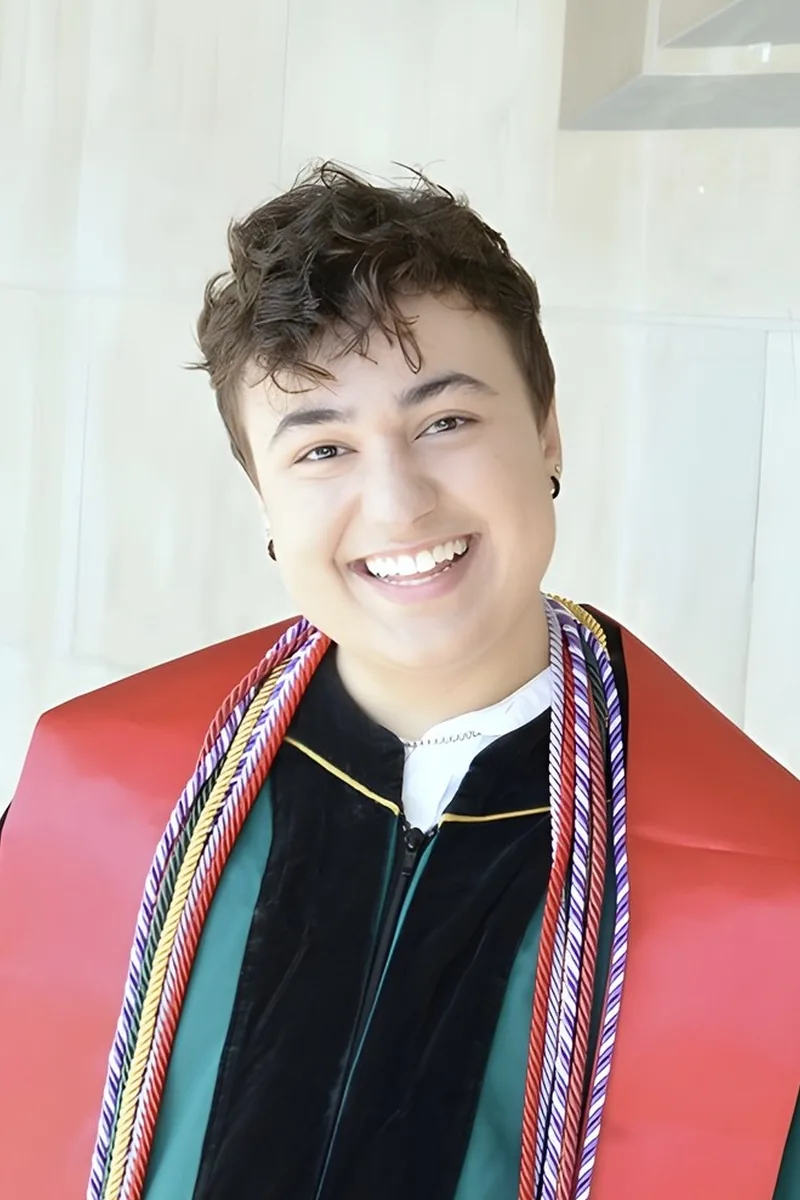
Scoring a 32 on the ACT required solid math fundamentals, and Nik brings that same structured problem-solving approach to topics like fractions, proportions, linear equations, and basic geometry. He's especially effective at identifying exactly where a student's understanding breaks down — whether it's setting up word problems or working with negative numbers — and rebuilding from that specific point. Rated 4.9 by students.

Victoria tackles math by connecting abstract procedures to concrete reasoning — showing a student why cross-multiplication works, for instance, rather than just drilling the steps. Her experience teaching across grade levels means she can pinpoint exactly where a concept stopped making sense and rebuild understanding from that point forward.
Understanding the how and why behind a formula — not just plugging in numbers — is the thread that runs through Mubariz's approach to everything from pre-algebra through calculus. His chemistry major at WashU means he's constantly using math as a working tool, whether it's dimensional analysis, rate equations, or modeling molecular behavior, so he teaches concepts with that applied mindset baked in. He scored a 34 on the ACT and tutors across nine math-related subjects.
Ann's teaching certification means she knows how to break down arithmetic, fractions, and basic operations in multiple ways until a concept actually clicks. Her classroom experience across middle and elementary grades — including time at a French immersion school — taught her that math vocabulary itself can be a barrier, so she pays close attention to how students interpret word problems and instructions.
From pre-algebra through calculus, Samuel covers the full secondary math sequence and connects each concept to the quantitative reasoning his science students already use in labs. He's especially effective at unpacking word problems and applied math, showing students how to translate real scenarios into equations they can actually solve.
I am interested in Physics and Mathematics and working out practical problems from plumbing to electronics. I will someday go back for my Ph.D. in Physics but until then I am looking to grow as an engineer or computer programmer.
Between his aerospace and biotechnology coursework, Drew has taken math from pre-algebra through calculus and used it in real engineering contexts. That depth means he can explain not just how to solve an equation but why a particular method works — which makes the next problem easier, not just the current one.
While English and administration are Anthony's home base, his tutoring in math zeroes in on building the problem-solving logic that gets students through algebra and foundational concepts. He's especially effective with students who've convinced themselves they're "not math people" — his teaching background means he can diagnose exactly where understanding breaks down and rebuild from that point.
Elementary and middle school math often trips students up not because the concepts are too hard, but because earlier gaps — in fractions, place value, or order of operations — quietly compound. Kristen's elementary education training means she knows how to trace a mistake back to its root and rebuild understanding from that exact point. Her ACT Math experience also lets her bridge younger students toward the algebraic thinking they'll need later.
From fractions and ratios in middle school to functions and graphing in pre-algebra, Jacob breaks math problems into logical steps that actually make sense on a second read. His medical school training at UMKC demands constant quantitative reasoning — dosage calculations, statistical analysis, data interpretation — so he brings real-world context to abstract concepts.
From pre-algebra fundamentals through calculus and competition-level problems, Anatoliy covers an unusually wide range of math. He's particularly effective at showing students the reasoning behind formulas — why the quadratic formula works, what a derivative actually measures — so that new topics feel like extensions of ideas they already understand rather than disconnected procedures.
Years of applied math in biology and dental science courses — from dosage calculations to statistical analysis — gave Katherine a practical fluency with arithmetic, fractions, ratios, and basic algebraic reasoning. She breaks down word problems by teaching students to identify what the question is actually asking before touching any numbers.
From basic operations and fractions through algebraic reasoning, Taylor covers the full K-12 math spectrum and adjusts her explanations depending on where a student gets stuck. Her 33 ACT composite means she's tackled timed math under pressure and knows which core skills — number sense, proportional thinking, equation setup — make the biggest difference across grade levels.
From arithmetic fundamentals to early algebraic thinking, Anita pinpoints exactly where a concept stops making sense and rebuilds understanding from that point. She teaches across the full math spectrum — pre-algebra through calculus — so she knows which foundational skills matter most for what's coming next. That long-range view keeps students from just surviving a unit and actually retaining what they learn.
Brianna approaches math by connecting abstract procedures to concrete reasoning — so when a student learns to solve for x, they understand what the variable actually represents, not just which steps to follow. Her teaching covers everything from fractions and decimals through pre-algebra and introductory algebra, drawing on daily classroom experience with students at varying skill levels.
From fraction operations in pre-algebra to integration techniques in calculus, Austin has taught nearly every level of math and knows exactly where the common stumbling blocks sit. His chemical engineering training means he naturally connects abstract math to tangible applications — showing why a concept matters, not just how to execute the procedure. Students who feel stuck at one level often find that a single conceptual gap, once closed, unlocks everything above it.
While math isn't Bri's primary credential, her experience tutoring arithmetic through algebra means she knows exactly where students tend to lose the thread — usually when word problems demand translating English into equations. She breaks down that translation process step by step, connecting math concepts to the reading comprehension skills she knows inside out.
Covering everything from fractions and proportions to quadratics and beyond, Jessica approaches math by first pinpointing exactly where a student's understanding breaks down. Her science-heavy coursework in medical school keeps her sharp on applied math, and she's especially good at connecting abstract operations to real problems so the "why" behind each step clicks.
K-12 classroom experience means Meaghan has taught math at multiple levels and knows exactly where younger students tend to stumble — whether it's fractions, long division, or early work with variables. She uses structured, step-by-step explanations that build confidence before ramping up difficulty.
Spanning everything from pre-algebra through differential equations, Jordan's math teaching draws on the same problem-solving instincts he built earning a BS in Mechanical Engineering. Whether a student is wrestling with fraction operations for the first time or setting up a system of differential equations, he breaks each problem into smaller logical steps and shows why each step works — not just what to do next.
From fractions and ratios to early algebraic thinking, the math concepts students encounter before high school set the trajectory for everything that follows. Laura's coursework through calculus and biostatistics means she understands where each skill is heading, so she can explain why finding a common denominator or solving for x matters beyond the worksheet. Rated 5.0 by students.
From arithmetic fundamentals through calculus, Sidney covers the full math pipeline and knows exactly where common gaps hide — especially the algebra-to-functions transition that trips up so many students. Her engineering career means she uses math daily for real modeling and analysis, which gives her a practical lens for explaining why a concept matters beyond the textbook. She's quick at diagnosing whether a mistake is conceptual or computational and adjusting accordingly.
Jessica's accounting degree required heavy quantitative coursework, giving her a solid handle on the arithmetic, pre-algebra, and algebraic concepts that come up in general math tutoring. She's particularly effective at translating word problems into equations — a skill she uses daily in her professional life. Her SAT score of 1370 reflects strong performance across both verbal and quantitative reasoning.
From simplifying fractions to tackling polynomial functions, Vijaya covers the full math landscape with an emphasis on understanding the logic behind each step. Her approach is to make sure a student can explain a solution in their own words before moving on — a standard that builds genuine fluency, not just the ability to mimic a worked example. She scored a 1550 SAT and holds a 5.0 student rating.
The "why" behind a math concept matters more to Hannah than the "how." Whether a student is working through fraction operations, tackling linear equations, or graphing inequalities, she pushes them to reason through each step on their own rather than follow a memorized recipe. Her mathematics degree gives her the depth to explain the logic underneath every procedure.
A mechanical engineering background means Matt doesn't just know how to solve math problems — he knows where they actually show up, from calculating forces to modeling motion. He breaks down arithmetic, fractions, ratios, and pre-algebra concepts by tying them to real scenarios that make abstract numbers feel concrete. Rated 5.0 by students.
While math isn't Parag's primary academic focus, his 32 ACT composite demonstrates solid quantitative reasoning across algebra, geometry, and data interpretation. He's especially effective with students who need to strengthen their math fundamentals for standardized tests or keep up with coursework.
From arithmetic fundamentals through multivariable calculus, Kathleen has taught nearly every level of math during her four years of tutoring — and her degree in mathematics from Washington University means she understands how each topic connects to the next. She zeroes in on the exact concept a student is missing, whether that's fraction operations holding back their algebra or shaky trig identities slowing down their calculus.
Rachel teaches math across a wide range — from foundational algebra through calculus and trigonometry — and her approach centers on making each step in a problem feel logical rather than arbitrary. She's particularly good at spotting the exact moment a student's understanding breaks down and rebuilding from that specific gap. Her ACT composite of 31 speaks to her cross-subject analytical ability.
Ten years teaching in a Chinese immersion school meant Ruth taught math concepts like fractions, ratios, and word problems across two languages — forcing her to break ideas down to their clearest, most logical form. That habit of stripping away confusion and building toward understanding carries into every math session she runs.
Derrick holds three bachelor's degrees, including one in political science — a field that leans harder on quantitative reasoning than most people expect, from interpreting polling data to analyzing policy cost projections. That cross-disciplinary background means he's practiced at translating math into plain language, which is especially useful when a student stares at a word problem and can't figure out where the equation even starts. He also tutors calculus and algebra, so he's comfortable across the full range of K-12 math content.
Creative writing and conflict resolution might seem far from math, but Madison's entire graduate training at Queen's University Belfast revolves around structured analytical thinking — breaking complex problems into components, weighing variables, and building toward a logical conclusion. She applies that same methodical approach to arithmetic, pre-algebra, and word problems, and her experience mentoring young people in foster care means she's especially tuned in to building confidence alongside competence. Rated 5.0 by students.
From basic fraction operations through integral calculus, John covers the full span of math and genuinely enjoys every level of it. He's particularly good at diagnosing exactly where a concept broke down — often a gap from two or three years back — and rebuilding understanding from that specific point forward.
From simplifying fractions in pre-algebra to working through derivatives in calculus, Jacob covers a wide range of math and looks for the specific step where a student's understanding breaks down. His chemistry degree required heavy math coursework — algebra, trig, calculus — so he explains these topics with the fluency of someone who's used them daily to solve real problems.
From fraction operations in middle school to derivatives in calculus, Mason has tutored math at every level through both the TCU Mathematics Department and his own independent work. He's particularly good at identifying the specific step where a concept breaks down — whether that's setting up proportions, manipulating exponents, or translating word problems into equations — and rebuilding understanding from that exact point.
Whether a student is stuck on fractions or pushing through advanced problem sets, Evan's first move is figuring out exactly where comprehension breaks down — not just which problem they got wrong, but which underlying concept isn't solid yet. His aerospace engineering program at CU Boulder keeps him immersed in math daily, from basic computation through multivariable calculus and linear algebra.
I am excited to help anyone who might need it!
A triple undergraduate background in physics, mathematics, and statistics means Mayuri can connect math concepts across contexts — showing how fractions relate to ratios, how percentages appear in data, or why order of operations matters before algebra. She builds numerical fluency by explaining the reasoning behind each step, not just the procedure.
Running statistical analyses for seven years of psychology research kept Anna's math skills sharp and grounded in real application. She tackles everything from fraction operations and linear equations to the algebraic foundations that feed into statistics, connecting abstract procedures to concrete problems so the logic behind each step is clear.
From fraction operations in elementary school to derivatives in calculus, Megan has taught across the full math spectrum and knows exactly where conceptual gaps tend to hide. She's especially sharp at catching the moments when a student is following a procedure correctly but doesn't understand why it works — and then backing up to rebuild that reasoning. Her 5.0 rating speaks to how well that approach lands with students.
Testimonials
Because the right Math tutor makes all the difference.
Average Session Rating – Based on 3.4M Learner Ratings
Practice Math
Free practice tests, flashcards, and AI tutoring for Math
Nearby Math Tutors
Other Kansas City Tutors
Related Math Tutors in Kansas City
Frequently Asked Questions
Tutors work with students to understand their textbook, curriculum approach, and teacher's expectations—whether that's traditional algorithms, Singapore Math, or Common Core methods. This matters because Kansas City's 24 school districts use different approaches, and what works in one classroom might need adjustment for another. During the first session, tutors assess your student's current materials and teaching style to provide aligned, personalized instruction.
Yes. Math anxiety often stems from gaps in understanding or past negative experiences, and personalized 1-on-1 instruction builds genuine confidence by addressing those root causes. Tutors help students work through problems at their own pace, celebrate small wins, and develop problem-solving strategies that feel manageable. Over time, students move from feeling stuck to recognizing patterns and trusting their own thinking.
Word problems require students to translate language into mathematical thinking—a skill that's separate from computation. Many students can do calculations but struggle to identify what the problem is asking or which operation to use. Tutors help break this down by teaching students to extract information, visualize the problem, and connect it to familiar concepts. With practice and guided strategies, word problems become less intimidating.
Showing work isn't just about getting the right answer—it's about communicating mathematical thinking. Tutors model how to organize steps, label calculations, and explain reasoning in ways teachers can follow. This is especially important because clear communication is valued across Kansas City schools and builds deeper understanding. When students explain their process, tutors can also spot where confusion exists and address it directly.
Absolutely. Graphing and proofs are conceptual skills that benefit greatly from personalized guidance. Tutors help students understand why we graph (not just how), recognize patterns in coordinate systems, and approach proofs as logical arguments rather than mysterious procedures. These topics often feel abstract, but with visual explanations and step-by-step practice, students develop the confidence and reasoning skills needed to tackle them independently.
Multi-step equations require students to understand both the procedure and the reasoning behind each step. Tutors help by starting with simpler equations, building conceptual understanding of how operations work, and then scaffolding up to more complex problems. The goal is for students to see equations as balanced statements they're solving, not just a series of rules to follow. This shift from procedural to conceptual understanding makes multi-step equations feel logical rather than overwhelming.
The first session is diagnostic and relationship-building. A tutor will assess your student's current level, understand specific challenges (whether it's word problems, multi-step equations, or test anxiety), and learn about their learning style. They'll also review what curriculum your student is using so they can align future sessions. By the end, both tutor and student have a clear picture of goals and how personalized instruction will help.
Many students learn math as isolated procedures without seeing how concepts connect. Tutors help by showing how fractions relate to division, how algebra builds on arithmetic, or how graphing visualizes equations. When students see these relationships, math becomes more cohesive and easier to remember. This deeper understanding also makes it easier to tackle new topics because they have a framework to build on, rather than memorizing disconnected rules.
Let’s find your perfect tutor
Answer a few quick questions. We’ll recommend the right plan and match you with a top 5% tutor.