Award-Winning College Algebra Tutors
serving Grand Rapids, MI
Who needs tutoring?
FEATURED BY


TUTORS FROM
- YaleUniversity
- PrincetonUniversity
- StanfordUniversity
- CornellUniversity
Award-Winning College Algebra Tutors serving Grand Rapids, MI

Certified Tutor
Christopher
Mechanical engineering at Harvard means Christopher doesn't just remember college algebra — he's actively building on it every semester, using polynomial models, systems of equations, and logarithmic relationships as the foundation for thermodynamics and structural analysis problems. He's especially...
Harvard College
Bachelor of Science, Mechanical Engineering
Certified Tutor
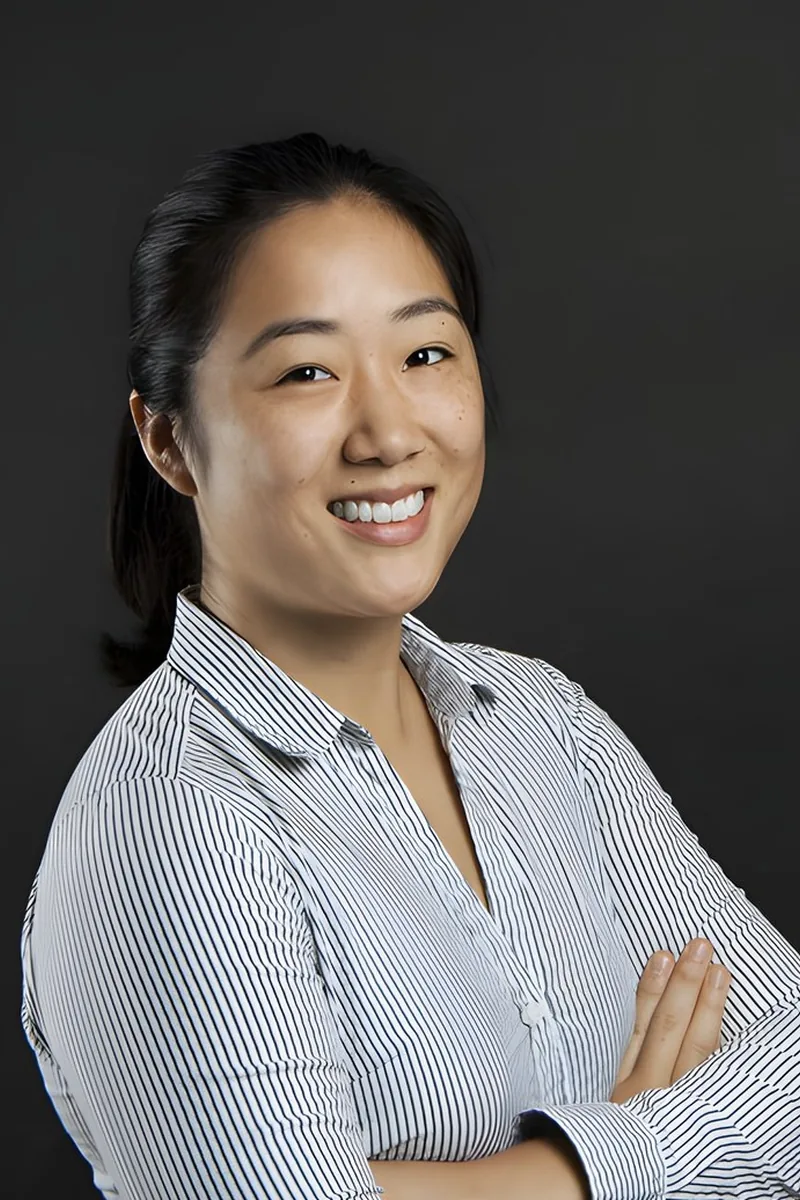
Asta
Political science at the University of Chicago is deceptively quantitative — game theory models, statistical analysis of polling data, and policy cost projections all run on the same algebraic machinery that college algebra courses formalize. Asta brings that background to topics like systems of equ...
University of Chicago
Bachelor in Arts in Political Science
Certified Tutor
6+ years
Andrew
Rational expressions, polynomial division, and logarithmic equations tend to be the topics where college algebra students lose their footing. Andrew breaks these down by connecting each algebraic technique to the physics and engineering problems he's solved throughout his PhD, giving students a reas...
University of North Texas
Bachelor of Science, Physics
Vanderbilt University
Doctor of Philosophy, Biomedical Engineering
Certified Tutor
10+ years
Ben
Ben's mathematics degree from Penn means college algebra isn't something he vaguely remembers — it's the foundation he's actively building on in courses like linear algebra and multivariable calculus every semester. That proximity lets him pinpoint exactly why a student's approach to, say, solving a...
University of Pennsylvania
Bachelors, Mathematics
Certified Tutor
Valerie
Twenty writing prizes before eighteen might not scream 'algebra tutor,' but the University of Chicago's core curriculum put Valerie through rigorous quantitative coursework alongside her Classics and Theatre studies — including the kind of function analysis, polynomial manipulation, and equation-sol...
University of Chicago
Bachelor in Arts, Classics, Theatre
Certified Tutor
Julie
Polynomial long division, rational expressions, systems of equations — college algebra covers a huge range of material at a pace that can feel relentless. Julie approaches each topic by identifying exactly where a student's reasoning breaks down and rebuilding from that point. Her philosophy trainin...
Princeton University
Bachelor in Arts, Philosophy
Certified Tutor
Jessica's path from a Penn history degree through medical school means she's tackled college algebra from both sides — first as a prerequisite she had to master, then as a tool she relied on for pharmacology dosing calculations and statistical reasoning in clinical research. That dual perspective le...
Nova Southeastern University
PHD, Medicine
University of Pennsylvania
Bachelors, History
University of Pennsylvania
undergraduate
Certified Tutor
Tom's PhD in American Studies might not scream algebra, but his 1520 SAT and years teaching quantitative reasoning mean he's genuinely comfortable with the polynomial operations, function behavior, and equation-solving that college algebra demands. What sets him apart is a humanities-trained instinc...
Boston University
PHD, American Studies
Harvard University
Bachelors
Certified Tutor
Kate
Rational expressions, logarithmic equations, and function composition tend to be the spots where college algebra students get stuck — not because the ideas are impossibly hard, but because the notation gets dense fast. Kate unpacks each step methodically, drawing on the same algebraic toolkit she re...
Massachusetts Institute of Technology
Masters, Environmental Engineering
Massachusetts Institute of Technology
Bachelors
Certified Tutor
Mechanical and aerospace engineering at Princeton means Matthew doesn't just remember college algebra — he's actively building on it every semester, using polynomial models, systems of equations, and function analysis as the foundation for his coursework in dynamics and thermodynamics. His teaching ...
University
Bachelor's
Certified Tutor
5+ years
Sugi
Medical school at Baylor demands constant quantitative reasoning — pharmacokinetic models built on exponential decay, dosage calculations requiring fluency with rational expressions, and data interpretation grounded in logarithmic scales. Sugi's dual Rice degree in Cognitive Science and Biochemistry...
Rice University
Bachelor's degree in Cognitive Science and Biochemistry & Cell Biology
Baylor College of Medicine
Doctor of Medicine, Ophthalmic Technology
Certified Tutor
Theater and casting might seem worlds apart from polynomial division and logarithmic equations, but Amber's 35 ACT and 1570 SAT prove her quantitative instincts are serious — she's someone who genuinely operates across both hemispheres. She breaks college algebra problems into structured, sequential...
Dartmouth College
Bachelor in Arts
Certified Tutor
Richard
A year as a course assistant in Harvard's math department teaching introductory calculus gave Richard a front-row seat to the exact algebra mistakes that derail students — sign errors in rational expressions, shaky intuition around function behavior, confusion over logarithmic properties. He learned...
Harvard University
Bachelor in Arts, Government
Certified Tutor
9+ years
Dennis
Dennis's physics research at Princeton — simulating cosmic ray acceleration through turbulent plasmas — required manipulating complex algebraic structures daily, from systems of equations to exponential and logarithmic models. That hands-on fluency means he teaches college algebra as a toolkit with ...
Princeton University
Bachelor of Science
Certified Tutor
10+ years
Samantha
Medical school admissions required Samantha to ace quantitative reasoning long before she started her MD — her perfect 1600 SAT and 36 ACT came from the kind of algebraic fluency that makes polynomial operations, inequalities, and function transformations feel automatic rather than formulaic. Her gl...
Duke University
Bachelors in Global Health Determinants, Behaviors, and Interventions
Harvard Medical School
Current Grad Student, MD
Practice College Algebra
Free practice tests, flashcards, and AI tutoring for College Algebra
Other Grand Rapids Tutors
Related Math Tutors in Grand Rapids
Frequently Asked Questions
College Algebra typically covers linear and quadratic equations, polynomials, rational functions, exponential and logarithmic functions, systems of equations, and graphing. The course emphasizes both procedural skills and conceptual understanding—knowing not just how to solve an equation, but why the methods work and how to apply them to real-world situations. For students in Grand Rapids, personalized tutoring can help clarify how these topics connect to each other and to calculus concepts that may come next.
Word problems require translating everyday language into mathematical equations—a skill that's different from solving equations directly. Many students struggle because they're not sure where to start or how to identify which operations to use. Tutors can teach you to break problems into smaller steps, identify key information, and develop a problem-solving strategy before jumping into calculations. With practice and guidance, word problems become a way to see algebra's real-world relevance rather than a source of frustration.
Graphing requires understanding the relationship between equations and their visual representations—seeing how changes in an equation affect the shape and position of a graph. Many students memorize steps without building this visual intuition. Personalized tutoring helps you explore how different coefficients and transformations change a graph, and why certain features (like intercepts and asymptotes) matter. When you understand these connections, graphing becomes a tool for checking your algebraic work rather than a separate, confusing skill.
Showing work reveals your thinking process and helps instructors identify where misconceptions occur—even if your final answer is correct. It also helps you catch your own mistakes and learn from them. In College Algebra, showing work is especially important because partial credit often depends on demonstrating correct methods, not just answers. Tutors can help you develop clear, organized problem-solving habits that make your reasoning easy to follow and make it easier to spot errors before submitting assignments or exams.
Math anxiety often stems from past negative experiences or feeling lost when concepts aren't explained in a way that clicks for you. Personalized 1-on-1 instruction creates a low-pressure environment where you can ask questions without judgment and work at your own pace. Tutors help rebuild confidence by breaking complex topics into manageable pieces, celebrating progress, and showing you that struggling with a concept doesn't mean you're not capable of understanding it. Many students find that working with a tutor transforms their relationship with math from fear to genuine understanding.
Your first session is about building a foundation for success. Expect to discuss your current challenges, goals, and learning style so your tutor can understand where you need the most support. You'll likely work through a problem or two together to identify specific gaps—whether that's in foundational skills, conceptual understanding, or test-taking strategies. Varsity Tutors connects you with tutors who specialize in College Algebra, so they'll tailor their approach to your needs from day one.
Yes. Different textbooks and instructors emphasize different approaches to College Algebra—some focus heavily on graphing, others on algebraic manipulation, and some blend conceptual and procedural learning. When you connect with a tutor through Varsity Tutors, you can share your syllabus, textbook, and specific assignments so they can align their instruction with what your course requires. This personalized approach means you're not just learning College Algebra in general—you're mastering it in the context of your actual class.
College Algebra is fundamentally about recognizing patterns—how equations relate to graphs, how different function families share similar properties, and how algebraic rules apply across different contexts. Expert tutors help you move beyond memorizing procedures to seeing these deeper connections. For example, understanding why the quadratic formula works, or how logarithms undo exponentials, transforms isolated skills into a coherent system. When you see these connections, solving new problems becomes about applying patterns you understand rather than guessing which method to use.
Connect with College Algebra Tutors in Grand Rapids
Get matched with local expert tutors