Award-Winning Biology Tutors
serving Grand Rapids, MI
Biology
Tutors in Grand Rapids
Private 1-on-1 tutoring, weekly live classes for academic support, test prep & enrichment, practice tests and diagnostics, and more to elevate grades and test scores.
Based on 3.4M Learner Ratings
UniversitiesSchools & Universities
DeliveredHours Delivered
ProficiencyGrowth in Proficiency
Who needs tutoring?
No obligation. Takes ~1 minute.
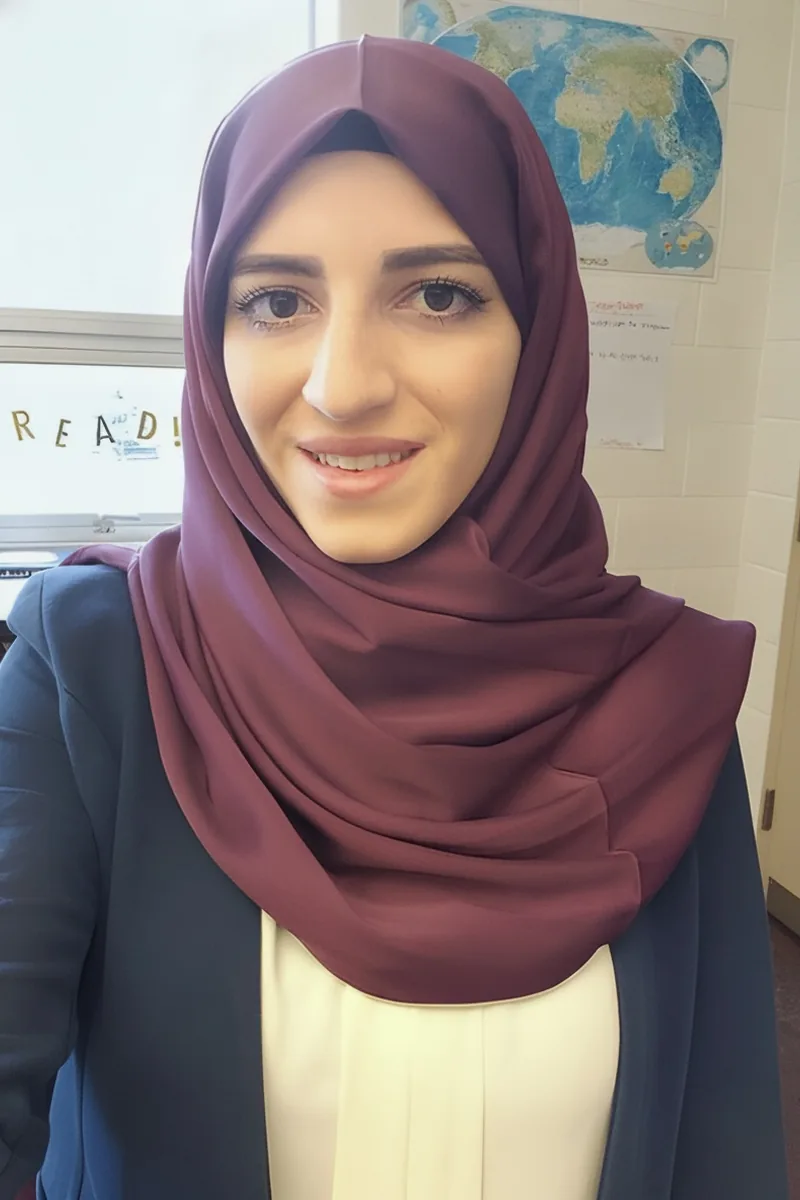
Certified to teach both biology and chemistry at the secondary level, Israa brings a dual-science perspective that's especially useful when topics like cellular respiration or photosynthesis demand as much chemistry intuition as biological knowledge. Her BS in Biology and classroom teaching experience mean she knows how to sequence a tough unit — building from basic cell structure through energy transfer — so that each piece locks into the next before an exam.
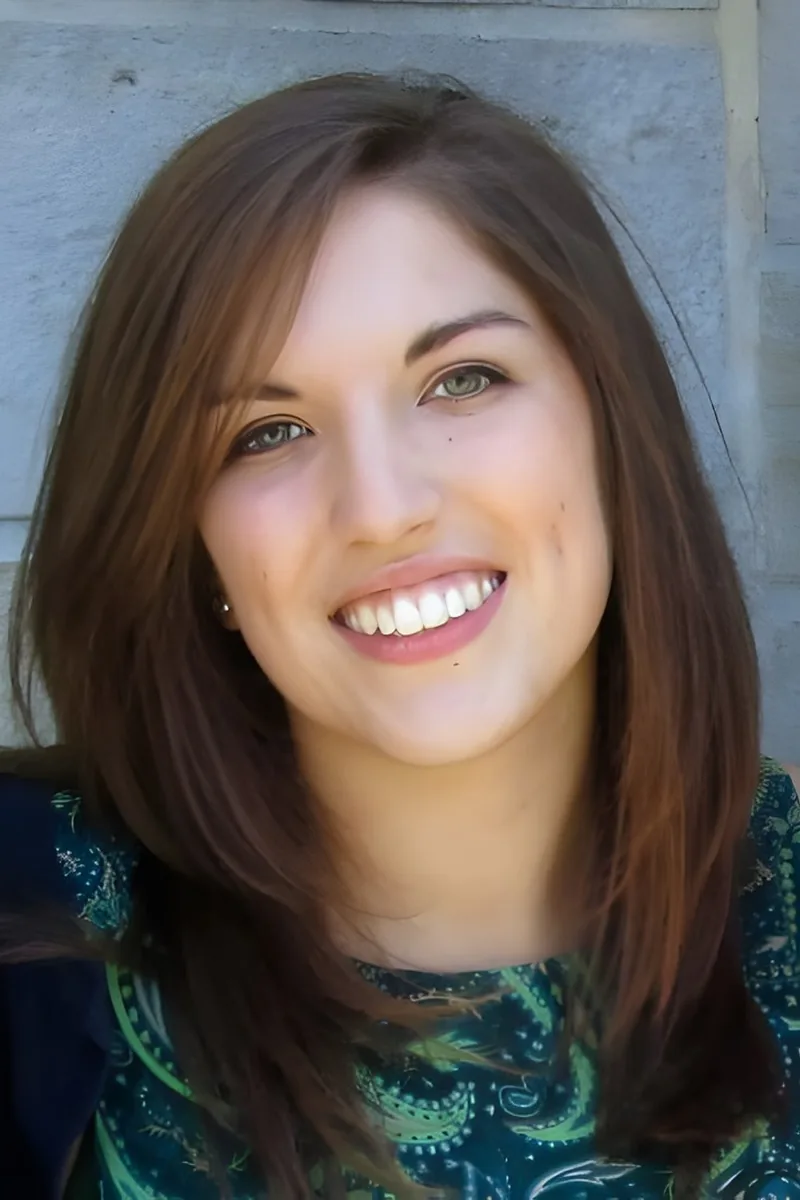
Currently working toward an MD/PhD at Michigan Medical School, Suzie teaches biology with the kind of cross-disciplinary perspective that makes cell signaling pathways and genetics feel less like rote memorization. Her engineering background adds a quantitative edge — especially useful when students hit topics like population dynamics, enzyme kinetics, or Mendelian probability.
Cell biology, genetics, and ecology each require a different kind of thinking — memorization alone won't carry a student through Punnett squares or energy flow diagrams. Rebecca is a certified biology teacher who taught STEM in Detroit, and she connects biological concepts to real-world examples that make the material easier to retain and apply.
Ruth earned her biology degree summa cum laude at the University of Alabama before heading to medical school at Michigan, so she's spent years living inside topics like genetics, ecology, and molecular biology. She teaches biology as a set of interconnected stories — evolution explains anatomy, biochemistry explains physiology — rather than isolated chapters to memorize.
As a premed biology major at Cornell, Pratik doesn't just know the material — he's actively using it in upper-level coursework every week. He breaks down topics like cellular respiration, genetics, and ecology by connecting them to real biological questions rather than treating each chapter as an isolated set of vocabulary terms.
Henry pairs a biochemistry minor with two years of college-level tutoring experience, which means he's already walked dozens of students through topics like cell signaling, genetics, and metabolic pathways. He connects biological concepts to their molecular underpinnings — the kind of depth that turns rote memorization into actual understanding.
As a fourth-year medical student with a Biomedical Sciences degree, Naveena has watched biology concepts like cell signaling, genetics, and organ-system physiology evolve from introductory diagrams into the clinical reasoning she uses on hospital rotations — and she knows how to reverse-engineer that progression for students still building the basics. She tackles the spots where biology gets abstract, like linking gene expression to actual protein function, by breaking each mechanism into its simplest cause-and-effect steps.
Jack's biomedical engineering training at Michigan — both undergrad and master's — means he's studied biology through the lens of how living systems actually work as systems: how cells signal, how tissues respond to mechanical forces, how developmental processes build complexity from simple genetic instructions. That engineering perspective is especially useful for students who can see the individual pieces of a topic like cell division or gene regulation but struggle to understand how those pieces fit into a functioning whole.
A neuroscience degree is really a biology degree with extra depth in cell signaling, neuroanatomy, and molecular pathways — which means Arianna has covered virtually every topic in a standard biology course and then some. She's particularly sharp on genetics and cellular processes, explaining everything from meiotic crossing-over to enzyme kinetics with concrete analogies. Her 4.8 rating speaks to how well that translates for students.
Mathew taught biology to over 150 ninth graders each year, covering everything from cell structure and genetics to ecology and evolution. Now an incoming medical student, he connects molecular-level concepts like DNA replication and protein synthesis to the bigger physiological picture, which makes dense material easier to retain.
As a final-year medical student, Pareesa lives inside biology every day — from cellular respiration pathways to organ-system physiology. She unpacks dense topics like DNA replication and Mendelian genetics by connecting each mechanism to a bigger story about how living systems function. That approach has earned her a 5.0 student rating.
Surina's double major in Microbiology and Psychology gives her an unusual ability to connect molecular-level processes — DNA replication, cellular respiration, enzyme kinetics — to the bigger-picture systems they support. She's especially sharp on cell biology and genetics, two areas that trip students up when diagrams and pathways start piling on. Rated 5.0 by students.
Tetyana's neuroscience degree means she built her biology knowledge from one of the most demanding entry points — learning cell biology, genetics, and physiology specifically to understand how the nervous system integrates them all. That background makes her especially sharp at teaching how signaling cascades, gene expression, and organ-system coordination aren't separate chapters but pieces of the same story. Rated 5.0 by students.
As a medical student who once struggled with foundational science coursework, Macklin knows exactly where biology concepts like cell signaling, genetics, and ecology tend to trip students up. He breaks down complex processes — photosynthesis, mitosis, protein synthesis — by connecting each step to a bigger picture so the logic sticks. Rated 5.0 by students.
A biology degree plus medical school means Ishan has encountered nearly every major biology topic multiple times and at increasing depth. He teaches concepts like DNA replication, Mendelian genetics, and ecological relationships by tying them to concrete examples — how a single nucleotide change causes sickle cell disease, or why predator-prey dynamics follow predictable curves. That layered understanding turns memorization-heavy material into something students can reason through.
Uchenna's biochemistry degree from UMBC and ongoing medical training at the University of Michigan mean biology isn't an abstract subject for him — it's the foundation of his daily work. He breaks down everything from cellular respiration and enzyme kinetics to genetics and ecology by connecting each concept to real biological systems. Rated 4.9 by students.
Earning her Doctor of Pharmacy at the University of Michigan means Syeda lives in biology daily — from cellular respiration and enzyme kinetics to genetics and human physiology. She unpacks tough topics like DNA replication or the immune response by tying them to real-world medical examples that give students a reason to remember the details. Her 5.0 rating speaks to how well that approach lands.
From Mendelian genetics to cellular energetics to ecology, Krisha digs into biology topics with the depth of someone currently pursuing a biology degree at the University of Michigan. She's particularly effective at connecting molecular-level processes — like DNA replication or protein synthesis — to the bigger-picture systems students are expected to understand. Holds a 5.0 rating.
Tyler's chemistry doctorate work at the University of Michigan means he thinks about biological systems at the molecular level — the kind of perspective that makes topics like enzyme function, cellular respiration, and signal transduction click in ways a purely descriptive approach can't. His undergraduate chemistry training and cell biology coursework give him the tools to explain why a protein folds the way it does or how ion gradients actually drive ATP synthesis, grounding biology in the chemical logic underneath it. Rated 5.0 by students.
Most biology courses demand that students toggle between memorization and conceptual reasoning — you need to recall the stages of mitosis and understand why cell signaling pathways are organized the way they are. Kirby's biochemistry degree from Michigan means she naturally connects biological processes to their molecular underpinnings, which gives students a deeper framework for topics like genetics, cellular respiration, and gene expression.
Studying biology at the University of Michigan means Samantha isn't just recalling textbook definitions — she's actively working with concepts like cellular signaling, Mendelian and molecular genetics, and ecological systems in her own coursework. She unpacks dense topics like the Krebs cycle or protein synthesis by walking through each step visually, so students understand the logic rather than relying on rote memorization.
Between his psychology degree and his current research role at Johns Hopkins School of Medicine, Jonathan sits at the intersection of behavior and biology — which makes him especially effective at unpacking topics like genetics, evolution, and cellular processes. He ties each concept to something the student already finds interesting, turning ecology or anatomy into a subject that sticks rather than one that requires brute-force memorization.
Studying biomedical engineering means living at the intersection of biology and technology — cell signaling, genetics, organ system physiology, and molecular biology all fed directly into Adam's degree work. He unpacks complex biological processes by connecting structure to function, which makes topics like cellular respiration and DNA replication click rather than just blur together.
A strong grasp of biology means seeing how a cell's structure explains its function, or why natural selection produces the diversity we observe — not just memorizing vocabulary lists. Ray, a pre-med student at the University of Michigan studying Movement Science, connects topics like genetics, cell division, and organ systems to real physiological examples that make the material intuitive.
Fourth-year medical school means Gurbani has already been tested on biology concepts most tutors only read about — from the genetics and cell biology of preclinical years to the physiology that shows up in clinical rotations. She leans on her economics background too, teaching topics like ecological dynamics and homeostasis through the lens of systems thinking, where inputs, outputs, and feedback loops make the logic click. Rated 5.0 by students.
I'm working towards a B.S. in Physics at Michigan State University with a minor in Computational Mathematics, Science, and Engineering. I've made the Chancellor's List every semester and am a member of my university's Honors College. I've worked with students as young as 11 and as old as 25 for the past couple of years, both online and in-person. Since I'm still a student myself, I can relate to clients and teach in a way that creates a comfortable and safe space. I tutor a broad range of subjects and would love to help you!
Studying neuroscience at Michigan means Anya lives in biology — from molecular genetics and cell signaling to ecology and evolution. She's especially strong on the cellular and physiological side, explaining processes like the electron transport chain or action potential propagation by walking through the logic of each step rather than treating them as lists to memorize.
I am passionate about. Throughout my education, even in elementary school, I would love helping my friends do better in their schooling, whether that be by just answering a few questions they had, some one-on-one time, or a group study session.
I am eternally grateful! I minored in Chemistry after getting interested in the inner workings of organic chemistry. While going to college I earned money by tutoring classes I had already taken. I also offered "supplemental instruction" which were informal classroom question and answer sessions. I worked in a research lab after earning an undergraduate research fellowship and explored Physiology at the School of Medicine. Then went on to study Toxicology at the University of Wisconsin, Madison. While there a decision appeared clear between focusing on research or teaching. I like teaching better. I truly enjoy spreading knowledge about Biology and Chemistry and finding fun ways to introduce people to these (often difficult) subjects.
Carly's industrial engineering background means she thinks about biological systems the way she'd think about a production line — inputs, outputs, feedback loops, and efficiency. That perspective is surprisingly useful for topics like cellular respiration, enzyme regulation, and ecological energy flow, where understanding the logic of the process matters more than memorizing each intermediate step. She also draws on her AP Biology and AP Chemistry teaching to tie molecular-level details back to the bigger biological picture.
I'm Yanti, a USC award-winning writing instructor, an emergency medicine continuing educator, and a biology major with a chemistry minor. For 36 years, I've taught students how to master difficult concepts across a very wide range of subjects. While I focus on professional licensing and standardized exam test prep, I've taught most major subjects at every level and ability. I love teaching, not lecturing. You will get information and techniques in any way that works for you: color-coded charts, visual mind maps, easy-to-memorize songs. Whatever the format, I break complex ideas into clear, doable steps that make sense to you. No fluff. No jargon. Just clarity, confidence, and even some fun. In our sessions, you get structure, support, and a coach who makes learning enjoyable and easy again. If you're ready to succeed, laugh a little, and learn a lot, please book a lesson. I'd love to work with you. Thank you!
Sanjana's Human Biology degree from Michigan State gives her a deep grasp of how biological systems connect — from cellular respiration and DNA replication to organ-level physiology. She ties abstract processes like mitosis or enzyme kinetics to real-world scenarios, making the logic behind each concept click rather than requiring brute-force memorization.
I have eight years of experience teaching and tutoring Science, Math, and English to students ranging from middle school to college. I graduated with my PhD in Molecular Biology/Microbiology in 2020 from Wayne State University. During my graduate studies I taught undergraduate Introductory Biology Labs. I also served as a lead lecturer for Microbiology for one semester. Prior to graduate school, I received my BSc in Biology from University of Michigan, Dearborn in 2014. During my undergraduate studies, I tutored peers primarily in Biology and English courses. I also taught swim lessons to children of all ages for 5 years. I have worked with several ESL students, especially in English, Reading, and Writing. I also worked extensively with a peer who was visually impaired, which allowed me to come up with creative teaching strategies, such as building a cardboard model of a cell instead of looking at a cell through a microscope. Additionally, I have a 4-year old son with autism, have a deep understanding of his learning struggles, and have learned a wide variety of strategies to help him learn at his full potential. Thank you for taking the time to read about by background; I am excited to begin working with you!
Rather than treating biology as a subject to memorize, Ivan approaches it as a set of nested systems — from gene expression inside a single cell up to organ-level physiology. His science training across multiple disciplines gives him a knack for explaining how concepts like cellular respiration, DNA replication, and signal transduction actually link together rather than sitting in isolated textbook chapters.
JF's math and computer science training at Stanford might seem unrelated to biology, but it actually sharpens how he teaches the subject — genetics problems become probability exercises, population ecology clicks through mathematical modeling, and enzyme kinetics suddenly makes sense when you treat it like a rate equation. That quantitative lens gives students a second way into topics that feel overwhelming when approached through pure memorization alone. Rated 5.0 by students.
Paula's psychology background gives her a useful entry point into biology — she understands behavioral and cognitive systems well enough to trace them back to their biological roots, from neurotransmitter activity to hormonal feedback loops. That perspective makes her especially effective at teaching the life science topics where behavior meets physiology, like the nervous system, endocrine signaling, and basic genetics. Rated 4.8 by students.
Studying biology and chemistry simultaneously on Northwestern's pre-med track means Kade is constantly toggling between the molecular and the organismal — seeing how something like enzyme regulation in a biochemistry problem set connects directly to the ecology or genetics material he's covering the same week. That dual lens is especially useful for students who can memorize individual processes like meiosis or the light reactions but struggle to see how those pieces fit into larger biological systems. His 1550 SAT reflects the same kind of structured, cross-disciplinary thinking he brings to science tutoring.
Between her biology degree, hands-on work in a reproductive biology lab, and a health sciences graduate program, Emma has encountered biology from the molecular level up through organ systems and ecology. She unpacks dense topics like cell signaling pathways, gene expression, and membrane transport by tying them to the clinical and research contexts where she's seen them in action.
From cell respiration pathways to genetics crosses, biology rewards students who can organize large amounts of interconnected information rather than memorize isolated facts. Asta's University of Chicago training in research and analytical writing translates directly to how she teaches students to map relationships between biological systems — linking, say, DNA replication to protein synthesis to gene expression in a coherent chain.
Dennis's Masters in Chemical and Physical Biology from Vanderbilt means he's spent years studying life at the molecular level — protein interactions, metabolic regulation, signal transduction — and can zoom out to show how those mechanisms drive the organ-system and ecological concepts that fill most introductory biology courses. His graduate research experience also makes him especially effective at teaching experimental design and data analysis, the parts of biology that trip students up precisely because they can't be memorized. Rated 5.0 by students.
Testimonials
Because the right Biology tutor makes all the difference.
Average Session Rating – Based on 3.4M Learner Ratings
Practice Biology
Free practice tests, flashcards, and AI tutoring for Biology
Other Grand Rapids Tutors
Related Science Tutors in Grand Rapids
Frequently Asked Questions
Many students struggle with visualizing abstract concepts like cellular processes, photosynthesis, and molecular structures—it's hard to grasp what you can't see. Others find it challenging to balance memorization of terminology with deeper understanding of how systems actually work. Additionally, connecting theoretical concepts to real-world applications helps concepts stick, but this bridge isn't always clear in traditional classroom settings. Personalized tutoring helps students move beyond memorization to develop genuine scientific reasoning skills.
Expert tutors help you understand the 'why' behind experimental procedures, not just the steps to follow. They can clarify how to apply the scientific method, interpret data, and connect lab observations to core concepts you're learning in class. This deeper understanding makes lab reports stronger and helps you develop critical thinking skills that extend beyond any single experiment.
Understanding concepts is far more powerful—and it actually makes memorization easier. When you grasp how a mitochondrion functions or why DNA replication matters, the details stick naturally. Tutors help you build that conceptual foundation first, then the terminology and facts fall into place. This approach leads to better performance on exams and deeper retention of material.
Your first session is about building a foundation for personalized instruction. Tutors will assess your current understanding, identify specific challenges (whether it's cellular biology, genetics, ecology, or something else), and learn your learning style. They'll then create a tailored plan to address your goals, whether that's improving grades, preparing for AP Biology, or building confidence in the subject.
Expert tutors use diagrams, models, animations, and real-world analogies to make abstract concepts concrete and understandable. For example, they might use a physical model to show how DNA replication works or walk through photosynthesis step-by-step with visual aids. This multi-sensory approach helps concepts click in ways that textbook reading alone often can't achieve.
Absolutely. AP Biology requires both deep conceptual understanding and the ability to apply knowledge to complex scenarios—exactly what personalized tutoring excels at. Tutors can help you master the Big Ideas, develop strong exam strategies, practice free-response questions, and build the scientific reasoning skills the AP exam emphasizes. With the right support, you'll feel confident tackling the full scope of AP Biology content.
Varsity Tutors connects you with qualified tutors who have expertise in Biology and understand how to teach it effectively. When you reach out, you'll be matched with someone whose teaching style fits your needs and schedule. The process is straightforward—just describe your goals, and you'll get connected with a tutor ready to help you succeed.
Results vary based on your starting point and goals, but students typically see improvements in both understanding and grades within a few weeks of consistent tutoring. Beyond grades, many students gain genuine confidence in the subject and develop stronger scientific thinking skills that help across all their science courses. The personalized approach means your tutor focuses on your specific challenges, leading to faster, more meaningful progress.
Let’s find your perfect tutor
Answer a few quick questions. We’ll recommend the right plan and match you with a top 5% tutor.