Award-Winning AP Computer Science Principles Tutors
serving Louisville, KY
AP Computer Science Principles
Tutors in Louisville
Private 1-on-1 tutoring, weekly live classes for academic support, test prep & enrichment, practice tests and diagnostics, and more to elevate grades and test scores.
Based on 3.4M Learner Ratings
UniversitiesSchools & Universities
DeliveredHours Delivered
ProficiencyGrowth in Proficiency
Who needs tutoring?
No obligation. Takes ~1 minute.

Kevin's Stanford Biocomputation research sits at the intersection of CS and biology, which means he can teach AP CSP's algorithmic thinking and data analysis concepts through real examples — like how machine learning models process biological datasets or how compression algorithms handle genomic sequences. He also brings hands-on Python and C++ fluency to the Create Task, coaching students through both the programming and the written explanation that the rubric demands. Rated 5.0 by students.
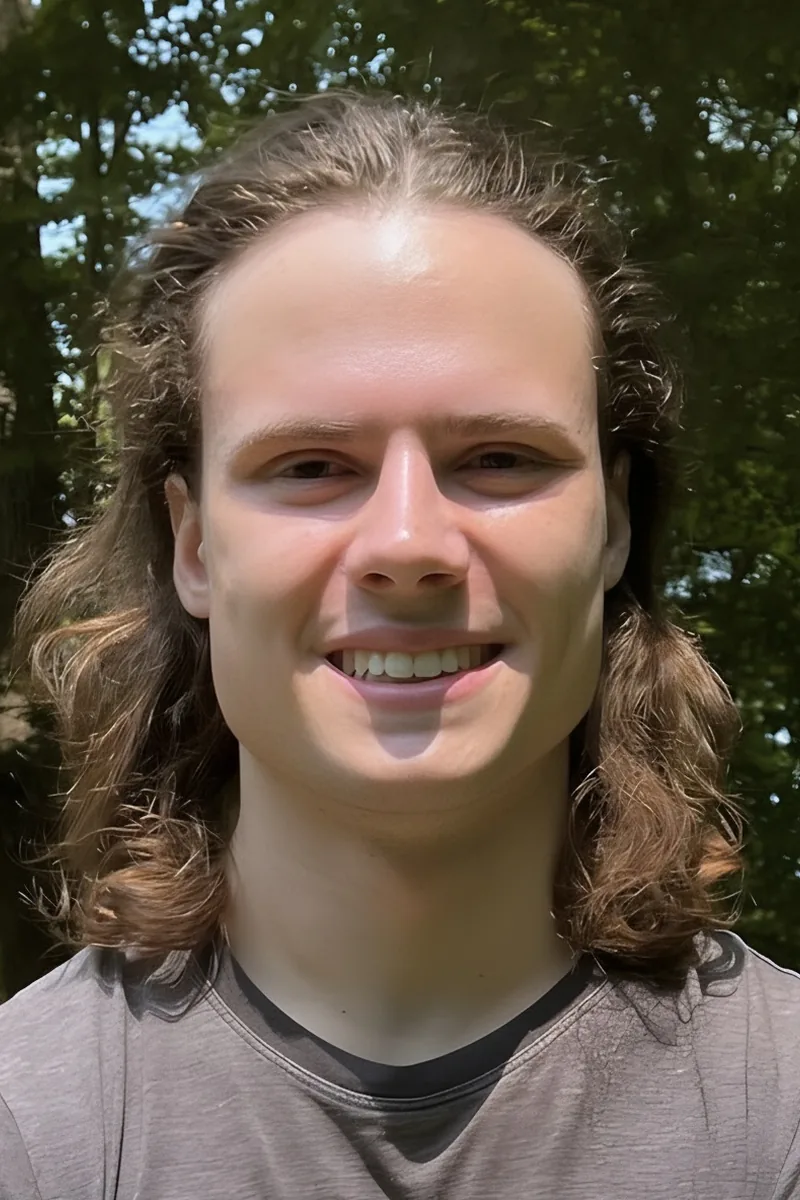
Evan's game development work in Unity — building systems that rely on abstraction layers, event-driven logic, and efficient data handling — maps directly onto the computational thinking AP CSP tests. He uses his own projects to show students how pseudocode translates into real design decisions, which makes the Create Task feel like building something instead of checking rubric boxes. His 34 ACT reflects the kind of cross-disciplinary reasoning this exam rewards.
Statistics training builds exactly the kind of thinking AP CSP actually tests — reading data representations, reasoning through algorithms on paper, and understanding how information gets encoded and compressed. Kyle applies that quantitative lens to the course's Big Ideas, turning abstract pseudocode traces and binary problems into structured, solvable puzzles. Rated 4.9 by students.
Matthew codes in Java, C++, Python, and JavaScript — so when AP CSP asks students to reason about algorithms or explain how a program works in pseudocode, he can ground those abstractions in actual programming logic most students haven't seen yet. His Harvard math and CS coursework also means he's sharp on the data analysis and binary representation questions that trip up students who only studied the vocabulary. Rated 4.9 by students.
AP CSP covers a surprisingly wide range — the internet, data analysis, cybersecurity, and the societal impacts of computing — without going deep into any single programming language. Samuel connects these broad topics back to concrete examples from his own CS studies at Florida Tech, making the create task and multiple-choice exam feel far more manageable. Rated 5.0 by students.
Susanna codes in Java, Python, and MATLAB — but for AP CSP, she shifts gears from syntax to the bigger questions: how does data move across the internet, why does abstraction matter, and what makes an algorithm efficient? Her physics training at UC Berkeley means she's used to translating messy real-world problems into clean logical models, which is exactly the skill the Create Task and exam reward.
Daniel's electrical engineering coursework at Vanderbilt means he writes actual code in Java and works with hardware-software interfaces daily — background that makes the pseudocode and abstraction concepts in AP CSP click faster for students. He zeroes in on algorithm design and data representation, breaking down how binary encoding and compression work at the circuit level so the logic sticks. His 36 ACT composite speaks to the kind of structured, analytical thinking he brings to Create Task coaching and exam prep.
Studying computational science at Stanford while coming from a creative arts background at Juilliard's Pre-College program, Julia brings an unusual lens to AP CSP — she naturally bridges the course's technical units on algorithms and data representation with its emphasis on the societal and creative dimensions of computing. Her 1560 SAT and 5.0 tutoring rating back up the analytical chops, but it's that crossover between engineering and the arts that makes her especially effective at coaching the Create Task, where students need both programming logic and clear written explanation.
Sasha's computer engineering degree means the hardware side of AP CSP — binary encoding, logic gates, how data physically moves through networks — isn't abstract theory but something she's built circuits around. She uses that hands-on perspective to make the course's Big Ideas feel grounded, especially when students hit the units on data representation and internet protocols that tend to blur together without a concrete mental model. Rated 4.9 by students.
Most AP CSP students get tripped up not by the technical content but by the exam's pseudocode — reading and tracing algorithms written in a language nobody actually codes in. Maxwell's math and physics training means he thinks naturally in abstractions and logical structures, so he can teach students to parse those pseudocode questions the way he'd parse a proof: step by step, tracking what changes and why. Rated 5.0 by students.
Manideep's day-to-day at Northwestern splits between biology coursework and programming in Python for data analysis, which maps directly onto AP CSP's emphasis on how computing intersects with other fields. He teaches the algorithmic thinking and data representation concepts by tying them to problems he's actually solved — like modeling biological datasets — so the exam's Big Ideas feel grounded rather than abstract. Rated 5.0 by students.
Pratik doesn't come from a traditional CS background, but his premed training at Cornell — where he regularly works with data sets, statistical models, and logical reasoning — maps directly onto the computational thinking AP CSP tests. He's especially effective at breaking down the data analysis and algorithm units, translating abstract pseudocode into the kind of step-by-step problem solving he uses in biology and chemistry every day.
Most AP CSP students get tripped up not by the coding but by the Big Idea questions that ask them to reason about how computing affects the world — privacy, bias in algorithms, digital divide issues. Susie pairs her Duke CS coursework with a genuine interest in the humanities side of tech, which means she can coach students through both the conceptual exam material and the written responses on the Create Task without defaulting to jargon.
Bryan codes in Java, C++, Python, and JavaScript daily as a CS major at Penn, which means the programming and algorithm design portions of AP CSP come naturally — but he's equally sharp on the conceptual side, like explaining how data travels across the internet or why abstraction matters in system design. He scored a 35 ACT and holds a 5.0 tutoring rating, and he's particularly effective at coaching students through the written response component of the Create Task, where clear technical communication counts as much as the code itself.
Testimonials
Because the right AP Computer Science Principles tutor makes all the difference.
Average Session Rating – Based on 3.4M Learner Ratings
Nearby AP Computer Science Principles Tutors
Other Louisville Tutors
Related Technology and Coding Tutors in Louisville
Frequently Asked Questions
AP Computer Science Principles covers five big ideas: creative development, data, algorithms, programming, and computing systems. The course emphasizes computational thinking, real-world applications, and the societal impact of computing. For students in Louisville, understanding this broad scope helps you prepare for both the multiple-choice exam (2 hours) and the Create Performance Task, which requires you to design and code a program demonstrating your understanding of these concepts.
During your first session, a tutor will assess your current programming skills, comfort level with computational thinking, and identify which topics need the most focus. They'll discuss your goals—whether you're aiming for a 3, 4, or 5—and create a personalized study plan. This initial conversation helps establish a foundation so your tutoring is targeted and efficient from day one.
Many students struggle with the Create Performance Task, which requires designing and implementing a program while documenting your process—it's not just about coding, but explaining your thinking. Others find the transition from visual block-based programming (like Snap!) to written code challenging, or they underestimate the emphasis on algorithms and data representation. Tutors can help you break down these components, practice explaining your code clearly, and develop strategies for tackling the performance task systematically.
Score improvement depends on your starting point and consistency with tutoring. Students who work regularly with a tutor typically see gains of 1-2 score points by focusing on weak areas, mastering test-taking strategies, and practicing the performance task thoroughly. The key is identifying whether you need help with programming fundamentals, algorithm design, or test strategy—personalized tutoring targets exactly what you need rather than generic review.
Practice tests are essential for AP CSP because they help you understand the question formats, manage your time during the 2-hour exam, and identify content gaps before test day. A tutor can guide you through released exams, help you analyze which types of questions slow you down, and teach you strategies for the multiple-choice section. Regular practice also builds confidence and reduces test anxiety.
Yes—the Create Performance Task is a major component of your AP CSP grade, and tutors can help you select a project idea, develop your code, and most importantly, learn how to document and explain your process clearly. Tutors can review your written responses about your program's purpose, design decisions, and algorithms to ensure you're meeting the College Board's requirements. They can also help you practice explaining your code in a way that demonstrates deep understanding.
AP CSP is language-agnostic, so you can use any programming language for the Create Performance Task—Python, JavaScript, Java, and others are all acceptable. However, many schools use Snap! (a visual block-based language) or AppLab during the course. A tutor can help you choose a language that fits your comfort level and learning style, then guide you through coding and documentation in that language.
Look for tutors with strong programming skills, experience teaching AP CSP or introductory computer science, and familiarity with the College Board's exam format and performance task requirements. Tutors who can explain both the 'how' and 'why' of coding, and who understand computational thinking concepts, will help you develop deeper understanding. Varsity Tutors connects you with experienced tutors who specialize in AP Computer Science Principles and can tailor their approach to your learning style.
Let’s find your perfect tutor
Answer a few quick questions. We’ll recommend the right plan and match you with a top 5% tutor.