Award-Winning Middle School Tutors
serving Palm Bay, FL
Award-Winning
Middle School
Tutors in Palm Bay
Private 1-on-1 tutoring, weekly live classes for academic support, test prep & enrichment, practice tests and diagnostics, and more to elevate grades and test scores.
Based on 3.4M Learner Ratings
UniversitiesSchools & Universities
DeliveredHours Delivered
ProficiencyGrowth in Proficiency
Who needs tutoring?
No obligation. Takes ~1 minute.
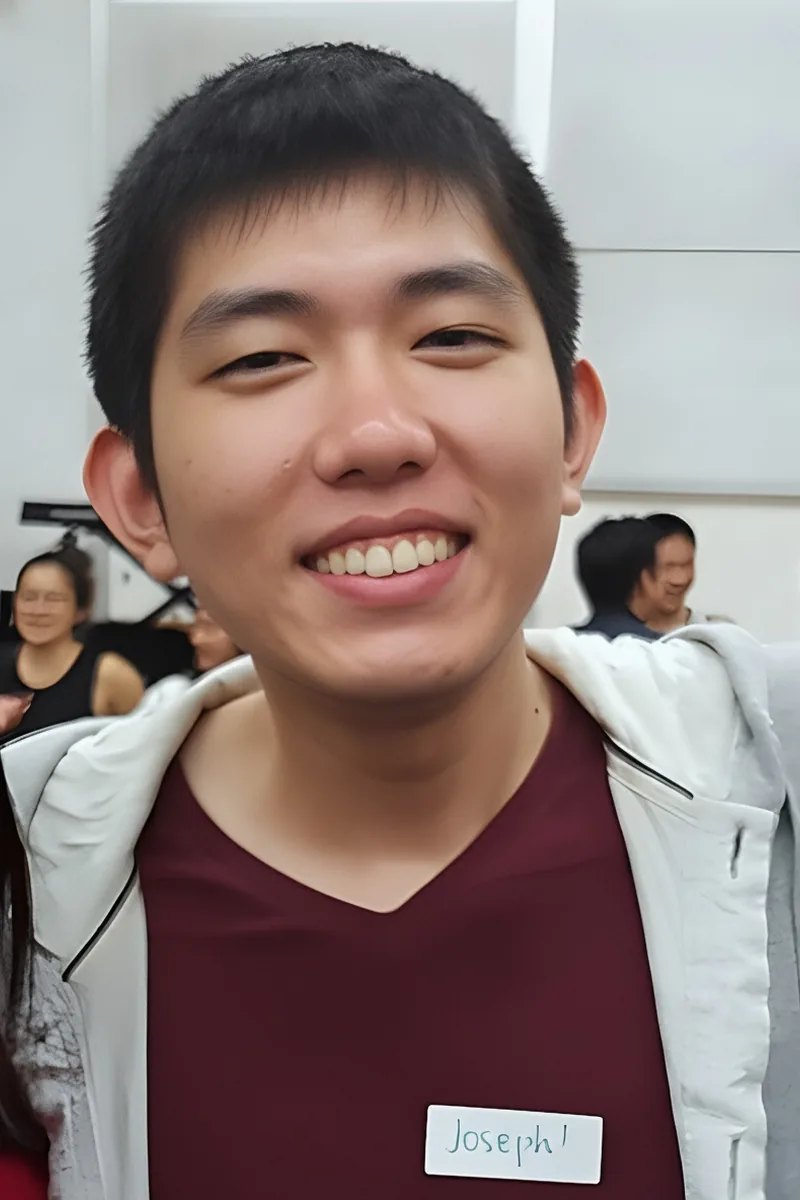
A biology double-major at UCLA who's now at Yale for public health, Joseph brings genuine depth to the science side of middle school while covering the full spread — math, reading, writing, and study skills. His 1530 SAT speaks to across-the-board academic strength, and his science training means he can show a seventh grader how to actually read a textbook passage for meaning rather than just skimming for bolded vocabulary words. Rated 4.9 by families.

Acting training in New York City gave Marc something surprisingly useful for tutoring middle schoolers: the ability to read a room instantly and shift energy when attention starts drifting — a skill that matters when you're covering math, writing, and reading across a single session. His triple-major background in public policy and the arts means he can connect a pre-algebra concept to a real-world policy question or turn a dry reading assignment into something worth arguing about, which tends to wake up a disengaged twelve-year-old fast.
That Jeopardy! contestant audition wasn't a fluke — Paula is genuinely the kind of person who absorbs information across disciplines for fun, which turns out to be exactly what middle schoolers need when they're bouncing between pre-algebra, science, and essay writing in a single homework session. Her psychology and communication studies training gives her a read on how a student processes information, so she can shift her approach mid-session when something isn't landing. Rated 4.8 by families.
Completing the full IB diploma program in high school — while juggling extracurriculars and earning a 35 ACT — gave Dalton firsthand experience with exactly the kind of academic balancing act middle schoolers are just starting to face. He covers math, writing, English, Spanish, and history at this level, and his Mass Communications degree from Penn means he's especially sharp at helping a student figure out how to say what they actually mean in an essay or class presentation. Rated 4.9 by families.
Penn's neurobiology program requires constant code-switching between dense biology lectures, physics problem sets, and lab write-ups — so Emily knows what it takes to stay organized across multiple subjects at once, which is exactly the skill middle schoolers are learning to develop. She covers math, science, writing, and study skills at this level, and her science-heavy background means she's especially good at breaking down the logic behind a tricky word problem or explaining how to actually prepare for a test instead of just rereading notes. Rated 5.0 by families.
Neurobiology at Penn trains you to think across disciplines — connecting biology, psychology, chemistry, and dense academic reading in a single semester — which is surprisingly close to what a sixth or seventh grader faces when toggling between a math worksheet, a science project, and an English essay in one night. Natalie's Spanish minor and healthcare coursework add genuine range on the humanities side, and her one-on-one tutoring experience in West Philadelphia means she's already familiar with adapting mid-session when a student needs to pivot from pre-algebra to paragraph structure.
Building weekly lesson plans for students from preschool through 12th grade at Chautauqua Institution taught Emma how to read a room fast and adjust — a skill that matters most with middle schoolers, who can swing from engaged to checked out in minutes. Her Cornell Human Development coursework gives her a developmental lens on that age group, so she understands why a seventh grader's executive functioning suddenly lags behind their intellect, and she covers the full mix of math, writing, reading, science, and study skills. Rated 5.0 by families.
A biology degree from UCLA and medical school at the Medical College of Wisconsin mean Abrahim has spent years rapidly context-switching between dense subjects — anatomy one hour, biochemistry the next — which is essentially the middle school experience scaled up. He channels that into helping younger students build the organizational and study habits that keep them from drowning when six different classes assign homework the same night, and his 34 ACT reflects the kind of cross-subject fluency that makes him comfortable jumping from pre-algebra to a science worksheet to an essay outline in a single session. Rated 5.0 by families.
Teaching fellowships in political philosophy at Harvard and research stints in history and political science mean Vanessa is wired to connect ideas across disciplines — which is exactly what middle school demands when a student has a social studies essay, a reading assignment, and a grammar worksheet all due the same week. She's also mentored students one-on-one through complex application processes, so she knows how to build the organizational habits and independent thinking that tend to separate kids who coast through middle school from those who actually grow during it. Rated 5.0 by families.
Engineering students learn to break complex problems into manageable steps — a skill Joshitha applies directly when working with middle schoolers tackling everything from pre-algebra to essay structure. Her experience mentoring robotics teams means she's comfortable with the energy and pace of younger students, and she teaches problem-solving strategies they can reuse across subjects. Rated 5.0 by students.
Psychology majors learn to read people — and Heather uses that skill to pick up on when a middle schooler is nodding along but actually lost, especially during multi-step math problems or writing assignments where the instructions alone can feel overwhelming. Her own 1550 SAT speaks to genuine academic range across subjects, and her experience tutoring kids who get easily frustrated means she's built real strategies for keeping a session productive when patience runs thin. Rated 5.0 by families.
The jump to middle school brings harder content, more independence, and new expectations all at once — and not every student adjusts smoothly. Yan taught middle school in Boston for several years, so she understands exactly where students struggle with the transition, from organizing multi-step math problems to writing paragraphs that develop a real argument. Her teaching degree and master's in Curriculum and Instruction mean she can adapt her approach to fit how each learner thinks.
Teaching math daily in Chicago Public Schools gives Elizabeth a real-time read on what middle schoolers are actually being asked to do — the specific pre-algebra concepts, the writing expectations, the study habits teachers are grading on — which means she's never guessing about what matters this semester. Her 34 ACT and broad subject range across math, science, English, grammar, and history let her handle a full evening's homework spread, but her classroom instinct is what makes her especially good at turning a kid who says 'I'm not a math person' into one who stops dreading seventh period. Rated 5.0 by families.
Engineering students learn to break big, messy problems into smaller pieces — which is exactly what Corrina does when a middle schooler sits down with a backpack full of math homework, a science worksheet, and an essay draft all due tomorrow. Her mechanical engineering degree and 1580 SAT mean she's genuinely strong across both the quantitative and reading/writing sides of the middle school workload, and her computer science and robotics background gives her a way to make abstract concepts tangible when a student's attention starts drifting.
A physics major at Duke on a full merit scholarship, Nima brings serious analytical horsepower to the middle school subjects he covers — math through pre-algebra, science, and beyond — and his 1580 SAT confirms he can perform across disciplines, not just his home turf. What sets him apart at this level is his ability to translate the precise, step-by-step reasoning physics demands into clear explanations for a sixth or seventh grader wrestling with fractions, ratios, or their first real lab report. Rated 4.7 by families.
Middle schoolers juggling math, science, writing, and organizational skills for the first time get a tutor who can cover all of it without switching between specialists. Lauren's neuroscience background at Duke gives her range across STEM and humanities, and she's particularly good at breaking multi-step problems into manageable pieces that build confidence early.
As a lead teacher at a classical academy's after-school program, Hasan works across subjects daily — from breaking down pre-algebra concepts to leading discussions on novels and short stories. His Brown University training in both literary and visual arts means he can connect middle schoolers' assignments to bigger ideas that actually hold their attention. Rated 5.0 by students.
A biological sciences degree means Allan is used to connecting concepts across disciplines — reading dense material, solving quantitative problems, and writing structured lab reports — which maps neatly onto the middle school experience of bouncing between math homework, a science chapter, and an English essay in one night. His own SAT prep journey, where he methodically raised his score by 200 points over two months, gave him a concrete system for identifying weak spots and targeting them, a habit he brings to everything from pre-algebra gaps to disorganized writing.
Five years of preparing New York City students for high school admissions means Benjamin has coached middle schoolers through the exact pressure point where math, writing, and study habits all need to come together at once — and where weak spots in any one area start dragging down the others. His sociology coursework at Harvard sharpens his read on the social and motivational dynamics that shape how a twelve-year-old actually engages with schoolwork, which makes a difference when the real issue isn't the content but the confidence or organization around it.
Before graduating from Notre Dame, Rebecca spent time tutoring local middle school students in reading and writing, specifically preparing them for standardized tests. She knows how to break down reading comprehension passages and teach paragraph structure at a level that clicks for students still building those foundational skills. That hands-on experience with younger learners sets the tone for her patient, structured approach.
Peter's Master's in English Education and journalism degree give him a particular edge when middle schoolers hit the stage where every subject suddenly demands stronger writing — lab reports in science, document analysis in social studies, essays in ELA. He knows how to teach the underlying reading and writing mechanics that cut across all those assignments, so a student isn't relearning how to structure an argument from scratch in each class. Rated 4.7 by families.
Between her IB Diploma, a 33 ACT, and a Yale neuroscience curriculum, Stephanie has spent years learning how to absorb and synthesize material across wildly different disciplines — which is exactly what she brings to middle schoolers navigating the jump from single-teacher classrooms to six-subject schedules. She's a native Spanish speaker who also covers math, science, reading, and writing at this level, and her volunteer tutoring experience with pre-algebra through geometry students means she's already familiar with the specific conceptual gaps that tend to snowball in grades six through eight. Rated 5.0 by families.
Middle schoolers juggle a wide range of subjects at once, and Rithi's background spans math, science, and analytical writing at levels well beyond what's required in grades 6–8. She breaks tricky concepts — whether it's fraction operations, the scientific method, or paragraph structure — into steps that click the first time. Rated 4.9 by students.
Three years working on organic farms and sustainable land projects taught Dylan something you can't get from a textbook — how to explain complex systems to people with zero background, whether that's soil ecology to a volunteer or pre-algebra to a sixth grader. His policy analysis training at Cornell gives him a structured, analytical approach to the reading, writing, math, and study skills side of middle school, and his 32 ACT reflects genuine range across subjects. He's heading to graduate school for Environmental Management this fall, so he knows what strong academic habits look like from the inside.
Four years of tutoring younger students in violin taught Miguel something most academic tutors take longer to learn: how to keep a middle schooler engaged when the material feels tedious, whether that's practicing scales or working through grammar exercises. His range across math, writing, history, Spanish, and science means he can cover a full evening's homework in one sitting, and his linguistics training at MIT gives him an unusually sharp ear for how students process and articulate what they're learning — useful for catching confusion before it snowballs across subjects.
A Spanish degree from Loyola Marymount and current grad work in digital communication mean Iselee moves comfortably between language arts and analytical subjects — covering math, reading, writing, and science at the middle school level in a single session. Her bilingual background is especially useful when breaking down grammar and syntax concepts that trip up students who've never had to think about how language is actually structured, and her ESL tutoring experience gives her a quick read on where comprehension is genuinely breaking down versus where a student just needs a concept reframed. Rated 4.8 by families.
A neuroscience degree from Rhodes College — plus a chemistry and English minor — means Saniya can genuinely cover both sides of the middle school workload, from pre-algebra and science to reading and writing, without faking fluency in any of them. She's continued auditing anatomy and physiology courses since graduating, so the science content stays sharp, and her English training gives her a real handle on the essay-structuring and grammar skills that sixth and seventh graders are just starting to wrestle with. Rated 5.0 by families.
A PhD in neuroscience means Elliot understands how the brain actually learns and retains information — useful knowledge when a seventh grader needs to absorb new concepts across math, science, English, and writing in a single evening. His cognitive science training gives him a sharp read on whether a student is struggling with the content itself or with the underlying skills like attention, organization, or reading comprehension that quietly drive performance in every class. Rated 5.0 by families.
I'm excited to work with you or your child either on standardized test preparation or on generally improving performance in history, English, and social studies!
Brown's Education and American Studies program trains Anna to think about how students actually learn — not just what they need to learn — which matters most at the middle school level, when kids are expected to suddenly manage reading, writing, math, and social studies with real independence. Her experience as a museum educator gave her a toolkit for making material click through engagement rather than repetition, and she's especially strong on the humanities side, where she can connect a history assignment to an English essay in ways that reinforce both. Rated 5.0 by families.
A philosophy degree trains you to read carefully, argue precisely, and write clearly — which turns out to be exactly what middle schoolers need as assignments shift from simple recall to actual analysis across subjects. Dakota pairs that background with a Master's degree and a 33 ACT, covering math through pre-algebra, science, writing, and grammar, and her philosophy training makes her especially sharp at teaching students how to structure an argument or break a multi-step problem into logical pieces.
Between a Brown degree in English and Psychology and her current neuroscience PhD at Columbia, Kahini has genuine depth across the subjects middle schoolers are tackling — from pre-algebra and science to essay writing and reading comprehension. She's especially strong at connecting ideas across disciplines, like showing how the logical thinking behind a math problem applies to structuring a persuasive paragraph. Her 1550 SAT score reflects the same cross-subject fluency she brings to each session.
Five years of working with kids from kindergarten through high school means Sara has a sharp sense of how middle schoolers think differently from both the younger students who need constant scaffolding and the older ones who can self-direct — they're in that tricky in-between where they need structure but resent being babied. Her anthropology coursework at WashU actually reinforces this, training her to read social and behavioral cues that help her adjust on the fly whether she's covering pre-algebra, writing, science, or French. Rated 4.7 by families.
A Duke biology grad and current Yale medical student, Lenique has tutored everyone from kindergarteners to college students — but middle school is where she's spent the most time, covering math, science, reading, writing, and beginner Spanish across that pivotal transition when students first need to manage multiple subjects with real independence. Her Caribbean background and art teaching experience also mean she connects with a wide range of kids on a personal level, which matters enormously at an age when a student's relationship with a tutor can determine whether they actually ask for help or just nod along.
Middle schoolers juggling math, science, writing, and organizational skills for the first time benefit from Selamawit's broad academic range — she holds degrees that span public health and the liberal arts, so she can pivot from helping with a pre-algebra assignment to editing an English essay in the same session. She also weaves in study habits early, teaching students how to take notes and manage deadlines before high school demands it.
A psychology degree and neuroscience minor from the University of Minnesota mean Alex understands how adolescent brains actually process and retain new information — useful knowledge when a seventh grader is trying to absorb science vocabulary, pre-algebra concepts, and a reading assignment in the same evening. She covers both the STEM and language arts sides of middle school, and her path into occupational therapy has sharpened her instinct for adapting how she explains something based on how each student learns best. Rated 5.0 by families.
M.S. 216 in Queens was James's home base for years, teaching in one of the most diverse middle schools in New York City. That experience across math, science, reading, and writing means he understands the specific academic jump students face between elementary and high school — especially organizing multi-step problems and writing structured paragraphs. He adapts quickly to each student's weak spots because he's seen nearly every version of them.
I am graduated from Penn State University in Industrial Engineering in 2017. I've tutored ever since I was in high school, and I love helping people! I like to help my students understand math (and other topics) instead of just doing it blindly. My goal is to help my students improve their math (and other topics) and build skills that will help them find learning easier in the future! Fun fact, I used to work for Disney and I like to salsa dance!
Duke trained Michelle in both computer science and sociology, which means she's used to switching between analytical problem-solving and close reading of complex texts — the same mental gear-shifting middle schoolers face every night across math, science, English, and history homework. Her coding background gives her a particularly structured approach to breaking multi-step problems into smaller pieces, whether that's a pre-algebra word problem or outlining a five-paragraph essay. Rated 5.0 by families.
Speech-language pathology training at Vanderbilt gave Mary a clinical lens on how middle schoolers process language — which quietly drives everything from reading comprehension to following multi-step directions in math class. She pairs that with genuine depth in writing, Latin, and philosophy, so she can handle the full homework spread while catching the underlying literacy or communication gaps that other tutors might miss. Rated 5.0 by families.
Testimonials
Because the right Middle School tutor makes all the difference.
Average Session Rating – Based on 3.4M Learner Ratings
Nearby Middle School Tutors
Other Palm Bay Tutors
Related Other Tutors in Palm Bay
Frequently Asked Questions
Middle school is a critical transition period where students juggle multiple subjects, increased homework demands, and evolving social dynamics. Many students struggle with organization, time management, and adapting to different teaching styles across classes. Personalized tutoring helps students build these foundational skills while staying on track with their coursework, which is especially valuable during this foundational period.
In a classroom with an average student-teacher ratio like Palm Bay's 16.8:1, teachers must pace instruction for the whole group, which can leave some students behind or unchallenged. Personalized 1-on-1 instruction allows tutors to adapt teaching methods to your student's learning style, fill specific knowledge gaps, and move at a pace that builds confidence. This targeted approach often leads to faster progress and a deeper understanding of concepts that students find difficult.
The first session focuses on understanding your student's strengths, challenges, and learning goals. The tutor will assess current skill levels in key areas, discuss what's working and what isn't in their classes, and identify specific topics to prioritize. This foundation helps create a personalized plan that aligns with their school's curriculum and addresses the areas where they need the most support.
Varsity Tutors connects you with expert tutors who understand middle school standards and can work with your student's specific curriculum, whether it's math fundamentals, language arts skills, science concepts, or social studies. Tutors can review your student's assignments, tests, and class materials to ensure instruction complements what's happening in the classroom while filling gaps and building confidence in challenging areas.
Many students show noticeable improvements in understanding and confidence within the first few weeks of consistent tutoring, especially when addressing specific skill gaps. Grade improvements typically follow as students build foundational knowledge and develop better study habits. The timeline depends on your student's starting point and how frequently they receive tutoring, but personalized instruction accelerates progress compared to classroom-only learning.
Yes, Varsity Tutors connects you with tutors who specialize in the subjects your student needs most—whether that's math, reading, writing, science, social studies, or test preparation. Some students benefit from support in one subject, while others need help balancing multiple classes. You can adjust focus areas and subjects as your student's needs change throughout the school year.
Simply reach out to connect with Varsity Tutors, share your student's grade level and areas where they need support, and you'll be matched with a tutor who fits your needs. The process is straightforward—you can discuss scheduling, goals, and any specific curriculum details during the initial consultation. Most students can begin personalized instruction within days of connecting with their tutor.
Expert tutors working with Varsity Tutors have strong subject-matter knowledge and experience helping middle school students navigate this important transition. They understand grade-level expectations, common learning challenges, and how to explain concepts in ways that build understanding and confidence. Many have backgrounds in education, subject expertise, and proven success helping students improve academically.
Let’s find your perfect tutor
Answer a few quick questions. We’ll recommend the right plan and match you with a top 5% tutor.