Award-Winning Physical Chemistry Tutors
serving Washington, DC
Physical Chemistry
Tutors in Washington
Private 1-on-1 tutoring, weekly live classes for academic support, test prep & enrichment, practice tests and diagnostics, and more to elevate grades and test scores.
Based on 3.4M Learner Ratings
UniversitiesSchools & Universities
DeliveredHours Delivered
ProficiencyGrowth in Proficiency
Who needs tutoring?
No obligation. Takes ~1 minute.

Two years as an organic chemistry lab TA at the college level gave Maha hands-on experience with the reaction kinetics and thermodynamic reasoning that form the backbone of any p-chem sequence. Now pursuing graduate work in public health at Johns Hopkins, she approaches topics like equilibrium constants and energy diagrams through the lens of someone who's had to apply them in real experimental settings, not just derive them on paper. Rated 5.0 by students.
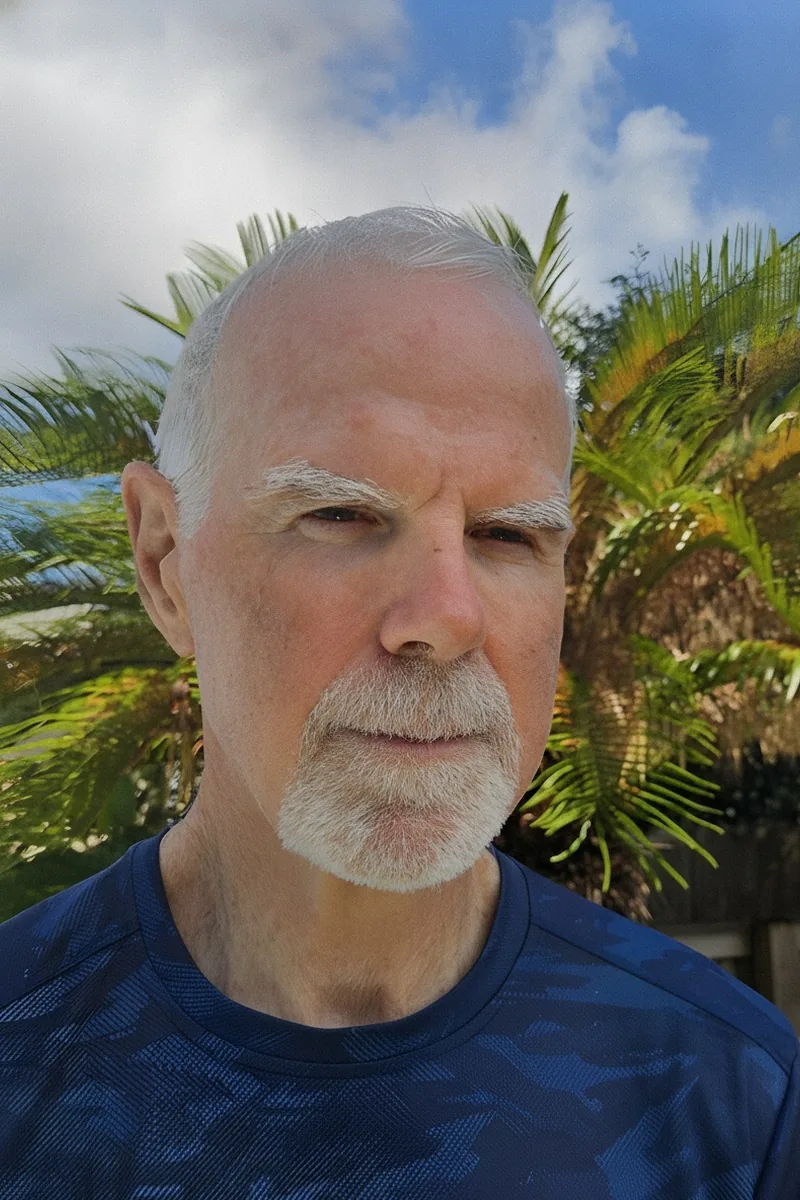
Decades as a PhD chemical engineer meant Steven was solving Clausius-Clapeyron problems, reaction kinetics models, and energy balance derivations long before they were textbook exercises — they were daily work. He breaks down p-chem's toughest material by explaining a concept one way, re-explaining it from a different angle, then grounding it in a real engineering application where the math actually matters. Rated 4.9 by students.
Thermodynamics, kinetics, and quantum mechanics all converge in physical chemistry — and that's exactly where Monika's biochemistry and molecular biology training intersects. She breaks down intimidating topics like Gibbs free energy calculations and reaction rate laws by tying them to real chemical systems she studied during her PhD research. Rated 4.8 by students.
Pre-med coursework at Rice plus dual degrees in environmental sciences and ecology meant Daniel was solving energy balance problems and applying thermodynamic reasoning to natural systems well before encountering p-chem's formal derivations. His lab technician work at Rice keeps the quantitative skills sharp — setting up calculations involving enthalpy, equilibrium, and kinetic models is part of the daily routine, not a distant textbook memory.
I am most passionate about biology and chemistry. I am a firm proponent of education, believing it to be absolutely necessary for an improved quality of life, and I try to impart this appreciation to all of my students.
Environmental statistics at Rice required Alex to work extensively with the same calculus-heavy quantitative methods — differential equations, statistical modeling, multivariable analysis — that students encounter in thermodynamics and kinetics derivations throughout a p-chem sequence. His geography background adds a surprising edge: understanding energy balances and phase transitions in Earth systems translates directly to making sense of state functions and equilibrium in a chemistry context.
Enric holds a PhD in Chemistry, which means p-chem wasn't just a course requirement — it was the foundation his entire research career was built on, from quantum mechanical modeling to thermodynamic analysis at the graduate level. He teaches the subject by slowing down at the exact calculus step where a derivation goes from followable to opaque, rebuilding the physical reasoning behind each manipulation before moving forward. Rated 5.0 by students.
Genetics PhD work is surprisingly calculus-intensive — population dynamics, statistical mechanics of molecular interactions, and the thermodynamic stability of nucleic acid structures all demand the same quantitative reasoning that drives p-chem. Nicholas brings that background to topics like free energy calculations and kinetic modeling, where his comfort with both the math and the molecular biology underneath it keeps derivations grounded in actual chemical behavior. Rated 4.8 by students.
A physics degree gives Cory something many p-chem tutors lack — native comfort with the quantum mechanics and statistical mechanics that chemistry students often encounter for the first time in this course. He treats topics like wave functions, partition functions, and thermodynamic state variables as extensions of the physics he already thinks in, then builds the chemical context around them. Rated 4.9 by students.
Teaching high school chemistry daily means Kathleen regularly translates thermodynamic concepts like enthalpy, entropy, and equilibrium into language that clicks — a skill that carries directly into the more calculus-heavy treatment those same ideas get in a p-chem course. Her M.S.Ed from Penn and chemistry degree give her both the content depth and the instinct for spotting exactly where a derivation stops making sense to a student. Rated 5.0 by students.
Pursuing a PhD in Analytical Chemistry at UIUC means Whitney spends her days immersed in the quantitative rigor that makes p-chem so demanding — thermodynamic derivations, kinetic modeling, and the statistical mechanics underlying instrumental techniques. She's currently TAing college-level chemistry courses, which keeps her sharp on exactly where students lose the thread in topics like Gibbs free energy, phase diagrams, and partition functions. That combination of active research and daily teaching gives her a practical read on which derivations need more physical intuition and which just need cleaner math.
Mechanical engineering at Rice means Aleksey has been solving thermodynamic cycles, heat transfer problems, and differential equations for years — the exact mathematical toolkit that p-chem throws at students in a chemistry wrapper. He breaks down topics like entropy, enthalpy, and phase equilibria by treating them as engineering problems first, then layering in the molecular-level chemistry that gives each variable its meaning. Rated 5.0 by students.
Two chemistry degrees — bachelor's and master's — mean Chad has gone through the full p-chem gauntlet himself, from quantum mechanical models and statistical thermodynamics to the calculus-dense derivations of chemical kinetics. He teaches the subject by zeroing in on where the math and the molecular picture disconnect for each student, whether that's a tricky partial derivative in a thermodynamic identity or the logic behind a partition function. Rated 4.8 by students.
Testimonials
Because the right Physical Chemistry tutor makes all the difference.
Average Session Rating – Based on 3.4M Learner Ratings
Other Washington Tutors
Related Science Tutors in Washington
Frequently Asked Questions
Physical Chemistry combines concepts from both chemistry and physics to explain why chemical reactions occur and how they work at the molecular level. Common topics include thermodynamics (energy and heat in reactions), kinetics (reaction rates and mechanisms), quantum mechanics (atomic structure and bonding), equilibrium, electrochemistry, and spectroscopy. Many courses also include laboratory work where students verify theoretical predictions through experiments. Understanding these interconnected topics helps students see chemistry not just as facts to memorize, but as a predictable science governed by fundamental principles.
Physical Chemistry requires you to think abstractly—visualizing molecular behavior, understanding energy diagrams, and connecting math to chemical reality all at once. Many students struggle with the math-heavy nature of the subject, especially when it comes to calculus-based equations and unit conversions. A tutor can break down these abstract concepts into concrete steps, help you practice problem-solving strategies, and connect theory to real lab observations. This approach builds both your content knowledge and your scientific reasoning skills, making even difficult topics like quantum mechanics or thermodynamic calculations more manageable.
Physical Chemistry labs focus on measuring and verifying theoretical predictions rather than observing reactions or making products. You might measure reaction rates under different conditions, determine thermodynamic values like enthalpy or entropy, or use instruments like spectrophotometers to study light-matter interactions. These experiments require careful data collection, statistical analysis, and the ability to compare your results to theoretical models. Tutoring can help you understand what the theory predicts, design experiments properly, analyze data correctly, and write lab reports that connect your observations back to the underlying principles.
Memorization might help you recall a formula or definition for a test, but Physical Chemistry rewards deep understanding. For example, memorizing the ideal gas law is less useful than understanding why gas particles behave predictably at different temperatures and pressures. A tutor helps you move beyond memorization by asking you to explain concepts in your own words, apply them to new problems, and predict what would happen if variables changed. This approach develops scientific thinking skills that serve you not just in Physical Chemistry, but in upper-level chemistry, physics, and related fields.
These foundational skills trip up many Physical Chemistry students because they require both systematic thinking and attention to detail. Balancing equations involves understanding atom conservation and oxidation states; unit conversions require you to set up dimensional analysis correctly every time. Rather than practicing blindly, a tutor helps you develop a reliable step-by-step process, identify where you typically make mistakes, and build confidence through targeted practice. Once these skills become automatic, you can focus mental energy on the more complex conceptual work in Physical Chemistry.
Many students find Physical Chemistry abstract because you can't directly see molecules, energy states, or probability distributions. Effective visualization uses multiple approaches: sketching energy diagrams, using molecular modeling software, working through thought experiments, and connecting concepts to real-world examples. For instance, understanding entropy becomes easier when you think about disorder in familiar systems before jumping to statistical definitions. A tutor can guide you through visualization strategies tailored to how you learn best, making abstract concepts feel concrete and memorable.
Look for tutors with strong backgrounds in both chemistry and mathematics, ideally with experience teaching or tutoring Physical Chemistry specifically. They should be able to explain difficult concepts clearly, connect theory to experiments and real applications, and help you develop problem-solving skills rather than just drilling answers. Varsity Tutors connects you with expert tutors who understand Physical Chemistry at a deep level and know how to make it accessible. When you get matched with a tutor, you can discuss your specific challenges—whether it's thermodynamics, quantum mechanics, or lab skills—so your tutoring is personalized to your needs.
Let’s find your perfect tutor
Answer a few quick questions. We’ll recommend the right plan and match you with a top 5% tutor.