Award-Winning Science Tutors
serving New Haven, CT
Science
Tutors in New Haven
Private 1-on-1 tutoring, weekly live classes for academic support, test prep & enrichment, practice tests and diagnostics, and more to elevate grades and test scores.
Based on 3.4M Learner Ratings
UniversitiesSchools & Universities
DeliveredHours Delivered
ProficiencyGrowth in Proficiency
Who needs tutoring?
No obligation. Takes ~1 minute.
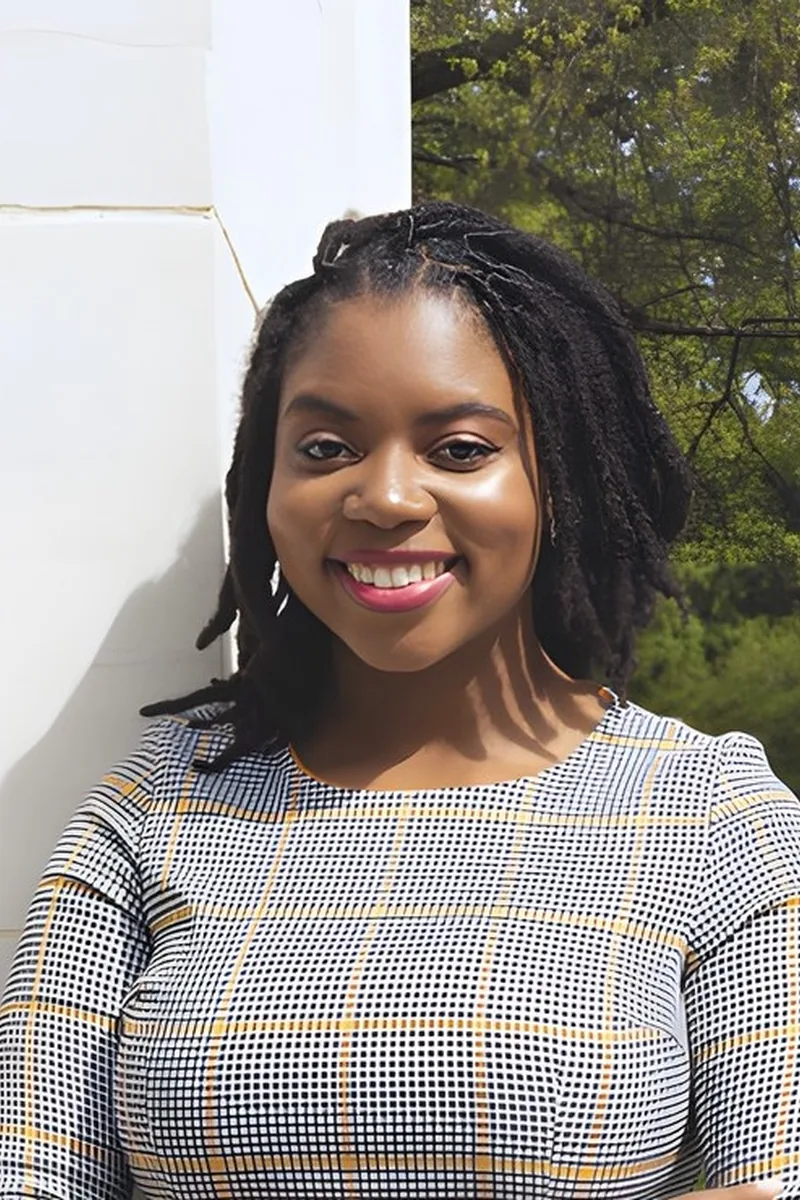
A double major in International Studies and French might not scream science, but Xaviera's self-study discipline — the same approach that landed her in the top 1% of LSAT takers — means she knows how to break down unfamiliar material into learnable systems, which is exactly what students need when facing new scientific terminology and processes. She treats science concepts the way she'd treat a legal argument: identify the claim, trace the evidence, and make sure every step in the reasoning actually holds up.

Physics was Anthony's first academic love, and he earned his BS in it from Yale before pivoting to economics. He teaches science by emphasizing how to translate a word problem into a diagram and then into equations — the skill that separates students who understand from students who just memorize formulas.
Sami's computer science coursework at Duke gave him a strong grounding in scientific reasoning — forming hypotheses, interpreting data, and understanding experimental design. He approaches science tutoring the same way, teaching students to read graphs carefully and connect observations to underlying principles rather than treating each topic as an isolated set of facts.
Studying molecular and developmental biology at Yale while running original stem cell research gives Maxwell a depth in science that stretches well beyond any single textbook chapter. Whether a student is struggling with cell organelle functions, the basics of genetics, or how to interpret a data table, he explains the underlying logic so the details stick rather than blur together.
A pre-med track at UCLA followed by graduate work at Yale's School of Public Health means Jon has spent years immersed in biology, chemistry, and research design — the core of what science courses actually test. He's particularly strong at walking students through how to read experimental setups and connect results back to underlying mechanisms, whether that's cellular biology or basic physics. He also teaches across MCAT prep, which keeps his scientific reasoning sharp and current.
Having studied both math and humanities at Yale — where paleography demands the same meticulous observation and pattern recognition as any lab discipline — James brings an unusually precise eye to scientific material, especially when students need to read data carefully or trace cause-and-effect through unfamiliar systems. His 1590 SAT confirms he can handle the quantitative and reasoning demands of science coursework, and he's particularly effective at connecting the math embedded in science problems (rates, proportions, graphing) to concepts students already understand.
Brittany's Yale history training — heavy on evaluating primary sources, weighing competing evidence, and constructing arguments from incomplete records — mirrors the analytical process science demands when students need to interpret data, assess experimental validity, or explain unexpected results. She's especially useful for the reading-intensive side of science: parsing dense textbook passages, extracting meaning from diagrams, and translating observations into clear written explanations. Rated 4.9 by students.
Tessa's approach to science leans on the same analytical thinking that drives her Yale math coursework: she teaches students to understand why a formula works before applying it. Whether the topic is stoichiometry, kinematics, or cell biology, she connects each concept back to the core principles so students can reason through unfamiliar problems instead of relying on memorized steps.
Studying Neuroscience at Yale means Stephanie lives in the sciences daily — from cellular biology and organic chemistry to experimental design and data interpretation. She brings that current, hands-on knowledge to younger students tackling topics like the scientific method, ecosystems, or basic chemistry, making abstract concepts tangible with real examples from her coursework.
A computer science major at Yale, Patrycja spends her coursework immersed in the same logical reasoning and systematic problem-solving that science demands — forming hypotheses, testing them against data, and revising when results don't match predictions. She's especially strong on the quantitative side, helping students work through unit conversions, graph analysis, and the kind of step-by-step experimental design that mirrors how she debugs code. Her 34 ACT confirms she can handle science content well beyond the introductory level.
Ethan's environmental science degree required deep coursework across biology, chemistry, and data analysis — the trifecta that most science classes draw from. Whether a student is struggling with stoichiometry, cell transport, or interpreting experimental data, he connects each concept back to something tangible and observable.
Niko isn't a lab scientist, but his analytical training as a PhD researcher translates well to general science tutoring — reading data, understanding experimental design, and connecting vocabulary to underlying concepts. He's especially effective for students who struggle with the reading-heavy side of science courses: interpreting textbook passages, understanding what a question is really asking, and writing clear lab reports. His approach treats science literacy as a skill that can be taught, not a talent you either have or don't.
Studying both biology and Latin at Yale means Maddie lives in two worlds — wet labs and ancient texts — but both demand careful observation and evidence-based reasoning. She applies that dual lens to science tutoring, whether a student is struggling with energy transfer in ecosystems, Punnett squares, or interpreting experimental data. Her Socratic questioning style pushes students to articulate *why* a hypothesis holds, not just recite the textbook answer.
While science isn't the core of her Yale studies, Mia brings the same analytical reading and evidence-evaluation skills she uses in Religious Studies to scientific material — parsing lab reports, interpreting data tables, and understanding how hypotheses get tested. She's a strong fit for students who need support connecting scientific vocabulary and concepts to what's actually happening in an experiment.
Aaron's math degree means he's comfortable with the quantitative backbone of science — calculating rates, converting units, graphing relationships, and interpreting data sets — which is often where students start losing confidence in the subject. He treats every science problem like a math problem in disguise, walking students through how to extract numbers from a word-heavy prompt and figure out what they're actually being asked to solve. Holds a 5.0 rating.
Covering biology, chemistry, and physics across his tutoring roster, Max breaks down scientific concepts by connecting them to real-world applications — whether that's explaining cellular respiration through energy flow or Newton's laws through everyday motion. His 5.0 rating from students speaks to an ability to make dense material click across all three core science disciplines.
I am a musician, educator, and philosopher based in New Haven, Connecticut. I studied at UCLA graduating Cum Laude with degrees in Music Performance, Education, and Philosophy. I have been tutoring private music lessons and academic subjects for over 5 years now, and I work as a substitute teacher across Connecticut. My favorite subjects to tutor are Music, English, and Reading/Writing Skills, but I am capable of tutoring various Historical subjects, Math, and Science as well.
A Yale education heavy on breadth — Nathan took courses well beyond his music major — means he can connect science concepts to the kind of cross-disciplinary thinking that makes topics like energy, waves, and acoustics feel intuitive rather than abstract. His quantitative chops (he also tutors calculus, GRE quant, and SAT math) give him a solid handle on the measurement and data-analysis skills that underpin most science coursework.
Louie is currently pursuing a degree in Exercise Science, which means he's actively immersed in biology, anatomy, and physiology coursework on a daily basis. He unpacks scientific concepts — from cellular respiration to force and motion — by connecting them to real-world examples students can visualize. That habit of grounding abstract ideas in something tangible makes dense material far easier to retain.
Mechanical engineering at Yale means Luke lives in physics and applied math daily — force diagrams, energy conservation, fluid dynamics, and the kind of quantitative reasoning that underpins every science course. He breaks down scientific concepts by connecting them to real-world engineering problems, making abstract formulas feel tangible and logical.
Yossi lives inside scientific thinking every day as a mechanical engineering student at Yale, where coursework spans physics, thermodynamics, and materials science. He unpacks scientific concepts by connecting them to tangible, real-world examples — explaining pressure through hydraulic systems or energy transfer through everyday machines — which makes abstract ideas concrete.
Studying psychology at Yale means Stephen designs and critiques real experiments — manipulating independent variables, controlling for confounds, interpreting statistical output — which is the scientific method in action, not just a textbook diagram. He brings that lab-trained instinct to science tutoring, particularly when students need to move from memorizing steps like "hypothesis, procedure, conclusion" to actually understanding why each step matters. His 1500 SAT score confirms the quantitative and analytical reasoning chops to back it up.
I am a PhD student in Inorganic Chemistry at Yale University. I've been spreading my love of chemistry for the past several years as a TA for general chemistry, and I'm excited to share my passion with you! Prior to Yale, I got my B.S. in chemistry from Caltech, where I also served as a TA for both general chemistry lab and advanced inorganic chemistry. Outside of teaching and research, I enjoy fencing, reading, and playing piano.
Between an MBBS degree and a graduate program in physiology, Muhammad has spent years inside the sciences — biology, chemistry, physics, microbiology, immunology — and knows how these disciplines overlap. He unpacks scientific concepts by tracing them back to real mechanisms in the body or the natural world, which makes memorization-heavy material far more intuitive for students.
A biochemistry and molecular biology degree means Joana can teach science the way it actually works — connecting cellular respiration to enzyme kinetics, or explaining why pH shifts matter in a living system. She breaks down complex processes like DNA replication and metabolic pathways into logical, step-by-step sequences that stick.
While science isn't her core specialty, Sophie's interdisciplinary Humanities program at Yale requires engaging with scientific reasoning and evidence-based analysis. She's a strong fit for students who need support connecting scientific concepts to broader themes or strengthening their ability to interpret data and write lab reports clearly.
Ryan's psychology training included research methods, experimental design, and statistical analysis — skills that translate directly to the scientific reasoning younger students need to develop. He teaches students to read data tables, form hypotheses, and understand variables, connecting abstract science concepts to the kind of evidence-based thinking his university courses demanded.
Christina tackles science through the lens of quantitative reasoning and data interpretation, skills she's sharpened across years of standardized test prep and her MBA coursework at Yale. She's especially effective at teaching students how to read graphs, set up unit conversions, and connect experimental results back to underlying concepts.
Julia's two years teaching fifth graders covered earth science and life science units alongside history, giving her hands-on experience explaining concepts like ecosystems, the water cycle, and basic scientific methodology to younger learners. She connects science topics to real-world examples and emphasizes how to read diagrams and interpret simple data — skills that carry forward into middle school and beyond.
Patrick's MBA training means he's comfortable with the quantitative backbone of science — reading graphs, interpreting data sets, and working through problems that require careful unit analysis and logical reasoning. He tends to anchor abstract concepts like energy, rates, or systems in concrete, real-world scenarios that give students something to hold onto when the textbook language gets dense.
Jill's communication and rhetoric degree trained her to dissect how arguments are built from evidence — a process that looks a lot like evaluating hypotheses and drawing conclusions from experimental data in science. Her 32 ACT confirms she can handle the quantitative and reading-heavy demands of science material, and her strength in nonfiction writing makes her a natural fit for students who struggle to articulate lab results or explain scientific concepts in their own words.
Testimonials
Because the right Science tutor makes all the difference.
Average Session Rating – Based on 3.4M Learner Ratings
Practice Science
Free practice tests, flashcards, and AI tutoring for Science
Nearby Science Tutors
Other New Haven Tutors
Related Science Tutors in New Haven
Frequently Asked Questions
Many students struggle with connecting abstract scientific concepts to real-world applications, especially in chemistry and physics where visualization is critical. Others find it difficult to balance memorization of facts with deeper conceptual understanding, or they lack confidence in lab work and experimental design. Personalized tutoring addresses these gaps by breaking down complex topics into manageable pieces and building understanding at your pace, rather than moving at a classroom's average speed.
Tutors work with students across New Haven's 10 school districts and understand Connecticut's science standards and grade-level expectations. Whether you're in middle school earth science, high school biology, chemistry, or physics, tutors can align instruction with your specific course requirements and help you master both the content and the skills your teachers emphasize. This ensures tutoring directly supports your classroom success.
Yes—lab skills and experimental design are core parts of science education, and personalized tutoring is excellent for building confidence in these areas. Tutors can help you understand the reasoning behind lab procedures, interpret data correctly, write strong lab reports, and develop the critical thinking skills needed for hands-on work. This is especially valuable since classroom time for individual lab guidance is often limited.
Tutors help you identify weak areas, practice problem-solving strategies, and build test-taking skills specific to science. Whether you're preparing for unit exams, AP Science exams, or standardized assessments, personalized instruction focuses on the concepts you find most challenging and teaches you how to approach different question types. Regular practice with feedback accelerates improvement far more than studying alone.
Struggling with fundamentals like the scientific method, data analysis, or basic physics and chemistry concepts is common and very fixable with targeted help. Tutors can identify exactly where understanding breaks down—whether it's math skills needed for science, vocabulary, or conceptual gaps—and rebuild that foundation step by step. This prevents frustration from piling up as you move to more advanced topics.
Absolutely. Whether you're excelling in AP Biology, AP Chemistry, AP Physics, or honors science courses, tutors help advanced students deepen their understanding, tackle challenging problem sets, and prepare for competitive exams. Personalized instruction is especially valuable at advanced levels, where you need someone who can push your thinking and address nuanced conceptual questions.
The first session is about understanding your specific needs—what topics are most challenging, what your goals are, and how you learn best. Tutors will assess your current understanding, answer your questions, and create a personalized plan to help you improve. You'll leave with clarity on next steps and a sense of how personalized instruction can support your science success.
In a classroom with a 12.2:1 student-teacher ratio, instruction moves at an average pace and teachers have limited time for individual questions. Personalized tutoring lets you learn at your own speed, ask as many questions as you need, and focus entirely on the concepts that challenge you most. This targeted approach, combined with immediate feedback and customized explanations, typically leads to faster and deeper understanding than classroom learning alone.
Let’s find your perfect tutor
Answer a few quick questions. We’ll recommend the right plan and match you with a top 5% tutor.