Award-Winning College Physics Tutors
serving Bridgeport, CT
College Physics
Tutors in Bridgeport
Private 1-on-1 tutoring, weekly live classes for academic support, test prep & enrichment, practice tests and diagnostics, and more to elevate grades and test scores.
Based on 3.4M Learner Ratings
UniversitiesSchools & Universities
DeliveredHours Delivered
ProficiencyGrowth in Proficiency
Who needs tutoring?
No obligation. Takes ~1 minute.

A dual BS in physics and math from Yale means Anthony didn't just take college physics — he took the honors sequence and then kept going through differential equations, multivariable calculus, and upper-division mechanics. His PhD work in economics at Yale still draws on that training daily, since building economic models requires the same setup-and-solve discipline as a multi-step Newton's law problem. Rated 5.0 by students.
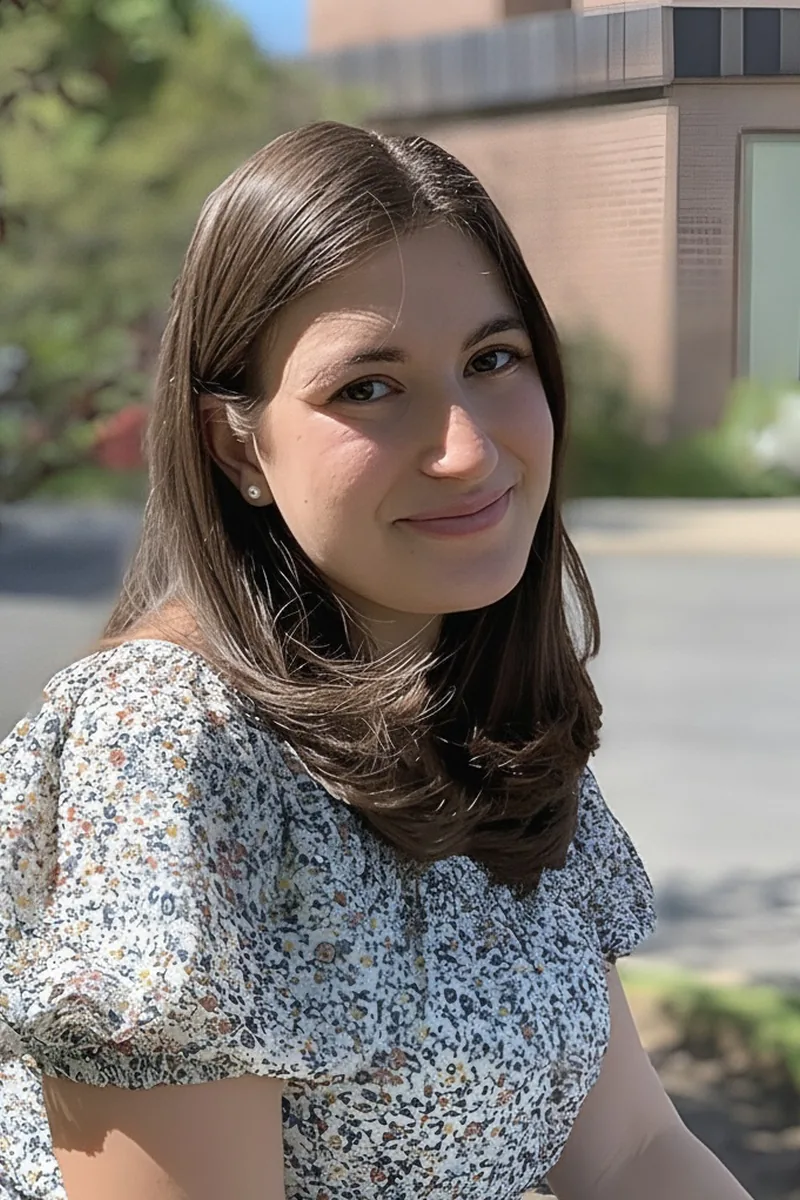
The Socratic method turns out to be surprisingly effective for physics — Maddie, a Classics and biology student at Yale, walks students through force diagrams and energy conservation problems by asking targeted questions at each step until they can articulate the reasoning themselves. Her biology background means she's comfortable with the calculus-based physics sequence and can connect topics like fluid dynamics and wave mechanics to the life-science applications that make them click for pre-med students.
Hello, my name is Yosef and I would be happy to serve as a math tutor. I place strong emphasis on a good balance between knowledge of mathematical content and proficiency in problem-solving, reasoning, and conveying mathematical ideas in writing. There are times when a student needs to be informed of a solution, times when he or she also needs to hear the explanation of why the solution works, and times when he or she should be guided to finding the solution on his or her own. It is important for the tutor to recognize which approach is appropriate. Frequently, when students struggle, it is because they do not understand the notation or terminology in use. In such cases, it is important to reassure the student, reminding him or her that he or she is only struggling with understanding a single word, not the entire mathematical concept. As a rule, people perform better and are better motivated when they have self-confidence, not when the task ahead seems frighteningly daunting. It is also important to recognize that different students learn best through different means. As an example, some students are visual learners and can understand the material best through pictures and gestures. Other students learn best through hearing the procedures vocalized, while still others learn best through writing out the steps of the solution procedure. I know to adapt my teaching style to the individual student. with these considerations in mind, I promise to provide the best assistance that I can, taking your individual needs into consideration.
A master's in mathematics paired with a bachelor's in physics means James has taken — and aced — the full sequence of calculus-based physics courses that most students find punishing, from Newtonian mechanics through electromagnetic theory and beyond. He leans into the mathematical scaffolding behind each topic, walking through how to set up integrals for continuous mass distributions or derive wave equations from first principles rather than just handing students a formula sheet. His 34 ACT reflects the kind of cross-disciplinary sharpness that keeps complex, multi-step physics problems from spiraling out of control.
Majoring in Mathematical Physics at UConn means Alice lives in the overlap between rigorous math and physical intuition — she's not just solving textbook problems but working through the calculus-based derivations that make college-level mechanics and electromagnetism click. She spent time as an instructional assistant in college courses, so she knows exactly where students lose the thread between setting up a free-body diagram and actually solving the differential equation it produces. Rated 5.0 by students.
Molecular biology might seem like a different world from physics, but Annabel's coursework lives in the overlap — understanding diffusion requires thermodynamics, membrane potentials are voltage problems, and imaging techniques depend on wave optics and electromagnetism. She brings that life-sciences lens to college physics topics like energy conservation and fluid dynamics, making the material click for pre-med students who need to see why these concepts matter beyond the problem set.
A PhD in biomedical engineering means Andrew has spent years applying physics to biological systems — modeling forces on joints, analyzing fluid flow through tissues, understanding how electromagnetic fields interact with the body. That depth in mechanics, thermodynamics, and E&M carries directly into the calculus-based problem solving college physics courses demand. Rated 4.9 by students.
Building things that actually work — which is what mechanical engineering is — means Vania spent her degree applying Newton's laws to real structures, calculating heat transfer through materials, and analyzing fluid flow, not as textbook exercises but as design requirements. That hands-on engineering intuition shows up when she breaks down free-body diagrams or walks through energy conservation problems, because she's solved versions of them that had to hold up in the physical world. Her 1590 SAT underscores the quantitative precision she brings to calculus-based problem solving.
Studying computer science and applied math at Harvard means Derek uses physics constantly — from electromagnetism in circuit design to mechanics in computational modeling. He tackles college-level topics like Lagrangian dynamics and wave equations by connecting the math to physical intuition, making dense derivations feel less abstract.
Three science-focused bachelor's degrees — including biology — meant Garrett sat through the full calculus-based physics sequence and kept coming back to it in physiology and physical chemistry, where concepts like fluid dynamics, pressure gradients, and energy transfer show up again and again. That repeated exposure across disciplines gives him an intuitive feel for when to apply conservation of energy versus momentum, or how to reason through a thermodynamics problem without getting lost in the formalism. His 1530 SAT speaks to the quantitative sharpness he brings to each session.
A computer science degree from UCLA means Michael spent semesters deep in the physics that underpins simulation and graphics — kinematics, force modeling, energy systems — and his 1560 SAT confirms the quantitative chops to handle calculus-based problem solving. He teaches students to treat each physics problem like debugging code: isolate what you know, identify the governing principle, then execute step by step until the answer falls out.
College-level physics ramps up fast, and the jump from textbook examples to exam problems can be brutal. Bryan earned his B.S. in Physics and tackles that gap by teaching problem-solving frameworks — symmetry arguments in electrostatics, constraint equations in multi-body dynamics — that transfer across chapters instead of requiring a new trick every week.
Biomedical engineering at VCU meant Waleed spent years applying physics to biological systems — modeling forces on prosthetic joints, analyzing fluid flow through vessels, understanding the electromagnetic principles behind imaging equipment like MRI and ultrasound. That gives him a concrete hook for the mechanics, thermodynamics, and E&M topics that fill college physics problem sets, since he can ground abstract equations in systems students can actually picture. Holds a 5.0 rating.
Ava's strength in college physics isn't a deep engineering background — it's her ability to teach students how to actually study the material. She breaks down problem-solving into structured steps, emphasizing how to read a force diagram or energy scenario before jumping to equations, and builds note-taking systems tailored to physics courses where lecture moves fast and notation piles up quickly.
As a senior physics major at Yale, Ian tackles college-level topics like electromagnetism, rotational dynamics, and wave optics with the fluency of someone who uses them daily. He breaks intimidating derivations into logical steps, connecting the math to physical intuition so that concepts like Gauss's Law or Lagrangian mechanics actually make sense rather than feeling like symbol-pushing.
Studying molecular biophysics at Brown means Srini lives at the intersection of physics and biology — applying thermodynamics, electromagnetism, and wave mechanics to understand how molecules actually behave in living systems. That dual perspective makes him especially effective at unpacking the conceptual reasoning behind problems in mechanics, circuits, and optics that trip up so many college students.
Environmental engineering is essentially physics with consequences — Kate's master's work required her to model fluid flow, heat transfer, and pressure systems in real infrastructure, which means she's solved the same types of problems that show up on college physics exams but with actual design constraints attached. That applied perspective makes her particularly effective at teaching students to set up force balances and energy equations from a physical scenario rather than reverse-engineering from a formula sheet. Rated 4.9 by students.
Testimonials
Because the right College Physics tutor makes all the difference.
Average Session Rating – Based on 3.4M Learner Ratings
Nearby College Physics Tutors
Other Bridgeport Tutors
Related Science Tutors in Bridgeport
Frequently Asked Questions
College Physics typically covers mechanics (motion, forces, energy), waves and sound, thermodynamics, electricity and magnetism, and often includes introductory modern physics. The course emphasizes both theoretical understanding and practical problem-solving, with lab work designed to help you see these concepts in action through experiments and real-world applications. Your tutor can focus on whichever units your course emphasizes most.
Physics relies heavily on visualizing forces, fields, and motion that we can't directly see—which is why many students struggle. Personalized tutoring helps by breaking down abstract ideas into concrete models, using diagrams and real-world examples to make concepts tangible. A tutor can also show you how to translate word problems into visual representations, making it easier to set up and solve equations correctly.
Effective physics problem-solving requires understanding the underlying concepts first, then systematically identifying what you know, what you need to find, and which equations apply. Many students jump straight to formulas without this foundation, which leads to careless errors. Tutors work with you to develop a structured approach—drawing diagrams, checking units, and verifying that your answer makes physical sense—so you build real problem-solving skills rather than just memorizing steps.
Yes. Beyond helping you understand the physics concepts being tested in lab, tutors can guide you through experimental design, data analysis, and scientific reasoning—skills that are just as important as the content itself. Whether you're struggling to interpret results, understand sources of error, or write a clear lab report, personalized instruction helps you develop the scientific thinking skills that make labs meaningful rather than just a checklist.
Students often struggle with unit conversions, setting up equations correctly from word problems, and understanding when to apply different formulas. Another major challenge is connecting theoretical concepts to real-world situations—knowing that F=ma is important, but understanding what it means physically and when to use it is harder. Tutors address both the mechanics of problem-solving and the deeper conceptual understanding that makes physics click.
Your first session focuses on understanding your specific challenges and learning style. A tutor will review what you're currently studying, identify where concepts are unclear, and discuss your goals—whether that's improving your grade, preparing for an exam, or building confidence. From there, you'll work together to create a personalized plan that targets your biggest pain points and builds your problem-solving skills from the ground up.
Varsity Tutors connects you with expert tutors who have strong backgrounds in physics and experience helping students master the subject. You can specify what topics you need help with, your schedule, and your learning preferences, and you'll be matched with someone who's a great fit for your needs. The process is straightforward—once matched, you can start personalized instruction right away.
Understanding concepts is far more important than memorization. Physics is about reasoning through problems and applying principles—if you truly understand why F=ma matters and when to use it, you can solve countless problems without memorizing specific formulas. Tutors emphasize conceptual understanding first, which actually makes problem-solving easier and helps you retain information longer than pure memorization ever could.
Let’s find your perfect tutor
Answer a few quick questions. We’ll recommend the right plan and match you with a top 5% tutor.