Award-Winning Reading Tutors
serving Denver, CO
Reading
Tutors in Denver
Private 1-on-1 tutoring, weekly live classes for academic support, test prep & enrichment, practice tests and diagnostics, and more to elevate grades and test scores.
Based on 3.4M Learner Ratings
UniversitiesSchools & Universities
DeliveredHours Delivered
ProficiencyGrowth in Proficiency
Who needs tutoring?
No obligation. Takes ~1 minute.
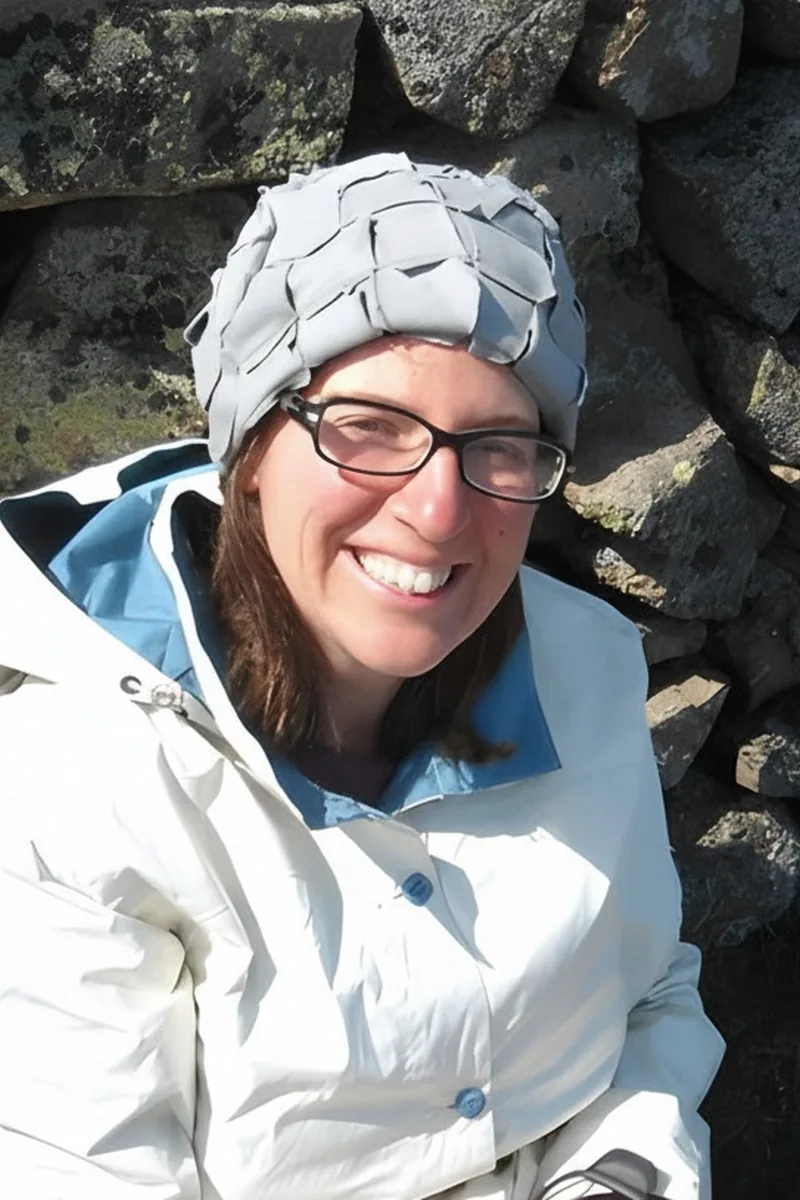
Decoding words is only the beginning — real reading skill means a student can summarize, question, and make inferences about what's on the page. Tara uses engaging, age-appropriate texts to build those comprehension strategies, encouraging readers to interact with a passage rather than passively scan it. Her love of literature and storytelling makes sessions feel less like drills and more like conversations about ideas.
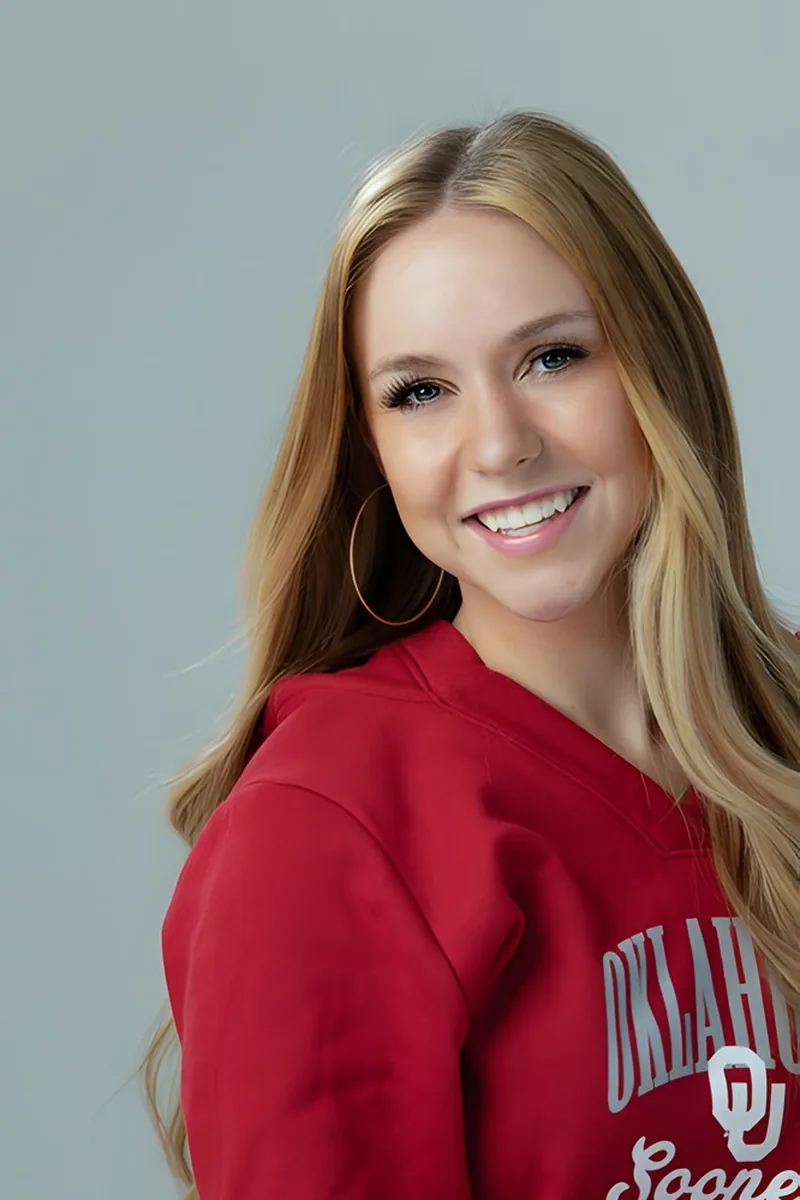
Decoding words is only half of reading; the other half is comprehension — making inferences, identifying main ideas, and connecting what's on the page to what a student already knows. Emma's elementary education training specifically covers how reading skills develop at each stage, so she can pinpoint whether a student needs phonics reinforcement, vocabulary building, or strategies for tackling longer passages. That diagnostic eye makes her tutoring sessions efficient from the start.
Breaking down a dense passage into its core argument is a skill Katie sharpened through years of reading both ecological research papers and literary texts. She teaches students to identify an author's purpose, track how evidence supports claims, and distinguish between what a text says and what it implies. That dual background in science and the humanities gives her a versatile toolkit for tackling any reading challenge.
I am currently pursuing my PhD in Literature/Creative Writing at the University of Denver. Prior to beginning my doctoral studies, I was a creative writing/English lecturer at Washington University in St. Louis where I completed my MFA and senior post-graduate teaching fellowship. I received my BA in Philosophy from Carleton College in 2009. Before my time in St. Louis and Denver, I taught English Literature at the Loomis Chaffee School in Connecticut and, earlier, at Germantown High School in Philadelphia. During my time at Loomis and Germantown, I taught English Lit I/III, Contemporary Literature, 10th grade grammar and expository writing seminars, Literature of the Sea, Experimental Novel, and Creative Writing. At Wash U, I taught Fiction Writing I, II, and Microfiction, and last year I facilitated pedagogy training for Wash U MFA graduate students. I currently tutor at DU's Writing Center and, beginning this fall, I will teach undergraduate fiction classes. I have a marked interest in modern and contemporary fiction, though I very much look forward to helping students with all craft/literature/essay writing/verbal test taking endeavors.
I am an experienced tutor who is passionate about math and science education. I have a deep understanding of math and science. I recently graduated from Brown University with a Bachelor of Science in Mathematics, coursework in both the physical and natural sciences, and a GPA of 3.87. I also studied at an IB high school and graduated with the highest marks in my class.
I am a certified teacher in English as a foreign language, certified to teach high school science abroad, and have developed my own independent program to teach elementary school children. I have tutored in all levels of algebra as well as geometry. I have 4 years of experience teaching biology, from AP/Honors level biology to 3rd grade level "Making Neuroscience Fun" programs.
I am not tutoring, I am studying to be an EMT. I also love backpacking and adventuring.
I am a lifelong learner, and I would love to be your next tutor!
Philosophy trained Eric to do one thing relentlessly: read a passage and figure out what's actually being argued beneath the surface — what's assumed, what's implied, what the writer hopes you won't question. He brings that same interrogative approach to reading sessions, teaching students to track an author's logic and catch the moves that separate a strong argument from a weak one. His 1560 SAT reflects the kind of precise, deliberate reading that skill requires.
Growing up studying Spanish since elementary school and later living with a host family in Barcelona taught Jasmyn something about reading that most tutors learn from textbooks — that comprehension is really about context, picking up meaning from what surrounds a word or idea rather than panicking over what's unfamiliar. She applies that same principle to English reading sessions, walking students through how to use clues within a sentence or paragraph to decode tough vocabulary and track what an author is actually saying. Her 1410 SAT reflects the kind of deliberate, strategic reading she brings to every session.
I am a student at the Georgia Institute of Technology studying Chemical Engineering. For the past several years, I have worked with students extensively. Through hosting events for younger kids to learn about STEM and for older teens to practice empathetic design, I know the importance of teaching students in ways that engage them rather than frustrate them, which I apply to my teaching. I have tutored high school students in a drop-in resource center in various subjects including math of all levels, chemistry, and English, making me adequately equipped in a variety of topics. I have also tutored several students long-term. Establishing relationships with students and exploring their unique learning styles is my favorite part of tutoring. I prioritize helping students discover HOW to learn in a manner that is the most effective for them, so they can begin to use those skills on their own throughout their education. Learning is a lifelong skill that requires practice for improvement; I strive to help my students gain confidence in their ability to learn.
Philosophy trained Paige to treat every text like an argument — finding the thesis buried in a paragraph, questioning assumptions, and figuring out what an author means versus what they actually wrote. That analytical habit, sharpened through years as a licensed high school teacher across humanities subjects, makes her especially effective at teaching students to read critically rather than passively. Rated 5.0 by students.
Struggling readers often skip the step that makes everything else easier: identifying what a passage is structured to do before diving into details. Hannah teaches active reading strategies — annotation, summarizing paragraphs in the margins, distinguishing main claims from supporting evidence — that build genuine comprehension across fiction and nonfiction alike.
Strong reading isn't just decoding words — it's asking the right questions about what an author is doing and why. Carson's English training sharpened his ability to unpack tone, inference, and textual evidence, skills he now teaches to students working on everything from standardized-test passages to independent novels.
Teaching reading across four countries — including to ESL learners in Japan and Jordan — gave Sarah an unusually clear understanding of how comprehension actually develops. She builds specific skills like identifying main ideas, making inferences from context, and distinguishing between stated and implied meaning, adjusting her approach based on each student's starting point.
I am a graduate of the University of Colorado at Boulder. I received my Bachelor of Arts in Biochemistry as well as MCD (Molecular, Cellular, and Developmental) Biology while minoring in Chemistry in 2015. I love exploring all of the cool things that this world has to offer. By dabbling in a little of everything I can set my sights on what really holds my attention. My primary interests lie in the sciences, where learning what makes our world turn drives my passion for knowledge.
I am a junior mechanical engineering student at Oklahoma Christian University. I have tutored middle school, high school, college, and post college age groups, primarily in math based subjects. Math and physics based subjects are my personal favorite to tutor people in, as these subjects are most of the foundation that makes up my mechanical engineering degree. I also enjoy tutoring students in ACT Prep, and it is my firm belief that the ACT is not as daunting as it may seem. Outside of academia, I am a passionate car enthusiast, and I also love skiing, eating, traveling, and photography.
I am a rising sophomore at the University of Colorado Boulder studying International Relations and Journalism. In high school, I completed the International Baccalaureate program and select AP courses (AB Calc, Biology). Though I have experience teaching students in French and English/ESL, I am able to tutor in most middle and high school course subjects. My teaching philosophy relies on patience, repetition and simplifying difficult concepts in a way that takes the intimidation out of learning new material. In my free time, I love to discover new music, write and practice photography.
I am currently a Masters student in Indo-Tibetan Buddhism at Naropa University in Boulder, CO. Previously, I had attended the Colorado School of Mines earning a bachelor's degree in Engineering Physics. I aspire to become a professor of Buddhist philosophy integrating contemplative studies with rigorous scientific and formal logics. Apart from scholastic endeavors, I spend much of my time wandering the Colorado mountains, practicing the piano, and studying the world around me.
I am a graduate of Trinity University with a B.S. in biology and a minor in spanish. I am available for tutoring in math and science courses, as well as beginner spanish and ACT prep. In my tutoring experience, I have primarily worked with high school students in science and math courses, and have really enjoyed the opportunity to encourage enthusiasm for their classes during these sessions. I work to help my students understand the material at a conceptual level so that they can build upon what they have learned in the future, and also focus on organization in problem-solving methods. Outside of tutoring, I study physical therapy at UCD and spend my free time running and hiking with friends.
I am quite passionate about education, since I feel it is the key to any sort of satisfying life. As the saying goes, knowledge is power, and knowledge can give you comfort and help guide you through a world that is often frustrating, convoluted, and dissatisfying. I have channeled this passion into teaching astronomy, which I majored in. I also taught some history and religion topics as head of a secular club in college.
I am a freshman at the University of Colorado Boulder majoring in astrophysics and chemistry with a 4.00 GPA. I have been passionate about science and STEM topics my whole life, focusing on them in both high school and college classes. In my free time, you can usually find me exploring forest preserves by day and surveying the skies with my telescope by night.
I am so excited to start tutoring with Varsity Tutors! Previously, I have experience tutoring students in English and math at a high school tutoring center. I am comfortable assisting students of any grade level with English or writing. From brainstorming to editing, I have lots of tips and tricks to help students improve the writing and grammar. In arithmetic, I decided to offer tutoring services for only Algebra I, middle school, and elementary math because I feel I am better suited to explain these concepts; however, my math skills are proficient up to the Calculus II level. During high school, I volunteered for 2 years with a youth development program at an elementary and middle school in my community. I really enjoyed building relationships with younger students, and I hope to continue doing so in the future. I look forward to meeting future clients and helping them reach their academic goals!
I am currently an undergraduate studying Computer Science at the University of Kansas, and am also a member of the KU Honors Program. As a native of Colorado, I love the great outdoors and have done everything from skydiving to climbing a few "14ers". I place great value on education and see the importance in attaining a deep understanding of academic subjects. I have a casual teaching style and do my best to teach my students the value of what they are learning. I specialize in Math and ACT and SAT prep.
I'm a failure" to "the subject is hard but I can do it" does wonders for keeping them confident and engaged.
A Government major at Harvard might seem like an unlikely reading tutor, but Richard's coursework lives in dense political theory, Supreme Court opinions, and policy arguments where misreading a single clause changes the entire interpretation. That habit of precise, skeptical reading — plus a year as a math course assistant where he learned to break complex material into digestible steps — gives him a structured way to teach students how to track an author's argument and pull meaning from challenging texts.
Strong readers don't just decode words — they identify an author's argument, evaluate evidence, and make inferences across paragraphs. Reid approaches reading comprehension as a teachable skill set, breaking down strategies for annotating, summarizing, and distinguishing main ideas from supporting details. His experience spans middle school through college-level texts.
Struggling readers often need something more targeted than "read more" — they need someone who can pinpoint whether the breakdown is in decoding, fluency, vocabulary, or comprehension and then address that specific gap. Liz's Master's in Special Education gave her diagnostic tools and intervention strategies for students with learning disabilities, dyslexia, and ADHD, and she's applied them across a wide range of learners in Boston classrooms. She builds reading stamina and comprehension simultaneously, using texts matched to each student's level and interests.
A background in cognitive science means Sugi understands how the brain processes text — why some students lose track of an author's argument mid-paragraph, and what strategies actually improve comprehension and retention. She teaches concrete techniques like annotation mapping and active questioning that turn passive reading into engaged analysis. Her perfect ACT score confirms she practices what she teaches.
Comprehension breaks down for different reasons depending on the reader: some rush past unfamiliar vocabulary, others lose track of the author's argument between paragraphs. Yan diagnoses the specific bottleneck and targets it, whether that means practicing annotation techniques, building inference skills, or strengthening vocabulary in context. Four years of classroom teaching sharpened her ability to spot exactly where understanding stalls.
Engineering textbooks and MBA case studies don't forgive sloppy reading — Caroline learned to extract the core argument from dense, technical material at WashU and MIT Sloan, where missing a single qualifier in a problem set or case brief could derail an entire analysis. She teaches that same disciplined approach: how to identify what a passage is actually saying, separate key claims from supporting detail, and re-read strategically instead of just pushing forward. Rated 5.0 by students.
Struggling readers often aren't lacking intelligence — they're missing a strategy for pulling meaning from dense or unfamiliar texts. Meghan teaches active reading techniques like annotation, context-clue vocabulary building, and identifying an author's argument before getting lost in details. Her PhD work in American Literature at UConn means she's spent thousands of hours doing exactly this kind of close, purposeful reading.
Struggling readers often skip over context clues and lose track of an author's argument across paragraphs — two habits Courtney specifically targets. She uses annotation strategies borrowed from how scientists read research papers: marking claims, identifying evidence, and summarizing sections in the margins. This active-reading approach builds comprehension skills that pay off in every subject, not just English.
Virginia Woolf's stream-of-consciousness prose doesn't exactly read itself — and Alex's English Literature training at Brown means he spent four years learning to stay with difficult, layered writing until it opens up. He brings that same patience and close-reading discipline to students who need to slow down, track what's happening sentence by sentence, and build the confidence to tackle passages that feel intimidating at first glance.
Strong reading comprehension isn't just about understanding vocabulary — it's about tracking an author's argument, recognizing tone shifts, and distinguishing main ideas from supporting details. Tom, who scored a 1520 on the SAT, applies the same close-reading techniques from his literary training to help students decode everything from standardized test passages to dense nonfiction.
Studying religion and philosophy at Pomona meant Miranda spent four years reading texts where every word carries weight — sacred scriptures, dense philosophical arguments, competing interpretations of the same passage separated by centuries. That training in close, careful reading translates directly to teaching students how to track an author's reasoning, weigh what's stated against what's implied, and hold multiple meanings in mind at once. Rated 5.0 by students.
When a passage feels confusing, the issue is usually that a student is reading every line at the same speed instead of adjusting strategy by text type. Eileen — who scored 1550 on the SAT and a perfect 36 on the ACT — teaches active reading techniques like annotation, context-clue vocabulary decoding, and identifying an author's purpose within the first few sentences. These skills transfer directly to both standardized tests and classroom assignments.
Testimonials
Because the right Reading tutor makes all the difference.
Average Session Rating – Based on 3.4M Learner Ratings
Nearby Reading Tutors
Other Denver Tutors
Related English Tutors in Denver
Frequently Asked Questions
Denver students often struggle with reading comprehension—understanding what they've read—and literary analysis, which requires deeper thinking about a text's themes, symbolism, and author's purpose. Many students also find it challenging to support their interpretations with specific evidence from the text, especially when writing essays or answering open-ended questions. Personalized tutoring can target these specific areas, helping students move beyond surface-level reading to develop critical thinking skills that apply across all subjects.
Expert tutors work with students on proven comprehension strategies like previewing texts before reading, asking questions while reading, and summarizing key ideas afterward. Tutors also help students understand how to identify main ideas versus supporting details, recognize text structure, and make connections between what they're reading and what they already know. Through personalized 1-on-1 instruction, tutors can adjust their approach based on each student's learning style and pace, making reading more interactive and engaging than classroom instruction alone.
When you connect with a reading tutor through Varsity Tutors, you'll want someone with strong knowledge of literature and reading instruction, as well as experience working with students at your child's grade level. It's valuable to find a tutor who can explain their teaching approach clearly and who understands the specific reading curriculum and standards in Denver's school districts. Varsity Tutors matches students with tutors based on their needs, learning style, and availability, so you can get personalized support that fits your situation.
Reading comprehension focuses on understanding what a text says—the main ideas and plot points. Literary analysis goes deeper by examining how and why the author creates meaning through techniques like symbolism, imagery, tone, and narrative perspective. Students writing literary analysis essays need to make claims about a text and support them with specific evidence, which requires both critical thinking and strong writing skills. Tutors can help students learn to identify these literary elements and construct well-reasoned arguments about their significance.
Reading skill development varies depending on the student's starting point and the specific challenges being addressed. Some students see improvements in comprehension and confidence within a few weeks of consistent tutoring, while building deeper analytical skills takes more time. Most students benefit from ongoing support throughout a semester or school year, combined with regular practice outside of tutoring sessions. Tutors can help establish goals and track progress, so you'll have a clear sense of what's improving and where to focus next.
Yes—personalized tutoring is particularly effective for test preparation because tutors can focus on the specific reading and comprehension skills tested in standardized assessments, AP exams, or state-level evaluations. Tutors can teach test-taking strategies like managing time, identifying what questions are really asking, and eliminating answer choices. They can also help students practice with sample passages and questions while providing immediate feedback, which builds confidence and identifies areas that need more work before test day.
Absolutely. Advanced readers benefit from tutoring that challenges them to think more critically about complex texts, explore different literary genres, and develop sophisticated analytical skills. Tutors can guide advanced students toward deeper engagement with challenging literature, help them prepare for advanced placement courses, or support their independent reading goals. Whether a student is struggling or excelling, personalized instruction allows tutors to meet them at their current level and push them further.
Let’s find your perfect tutor
Answer a few quick questions. We’ll recommend the right plan and match you with a top 5% tutor.